All Guides

Guides

Every technical article, build log, and curing walkthrough — organized for reference.

Inkbird Curing Chamber Controller Upgrade Guide
Building a Curing Chamber

Inkbird Curing Chamber Controller Upgrade Guide

The Inkbird upgrade that turns a basic fridge into a real curing chamber is a pair of plug-and-play controllers: an ITC-308 dual-stage temperature controller on the compressor and an IHC-200 humidity controller driving both a humidifier and a dehumidifier. Together they hold the chamber at roughly 13 °C and 78% RH without you touching it, […]

Read 6 min read
Farmers Market for Charcuterie: Stall, Cold Chain & Rules
Selling & Cottage Food

Farmers Market for Charcuterie: Stall, Cold Chain & Rules

Selling charcuterie at a farmers market is a cold-chain problem before it is a sales problem. You can only be there at all if you already hold the correct license to produce what you are selling — the market does not grant that — and once approved, your real daily challenge is holding cured meat […]

Read 7 min read
Patchy vs Full Mold Bloom: Is Uneven Coverage a Problem?
Salami & Fermented Sausage

Patchy vs Full Mold Bloom: Is Uneven Coverage a Problem?

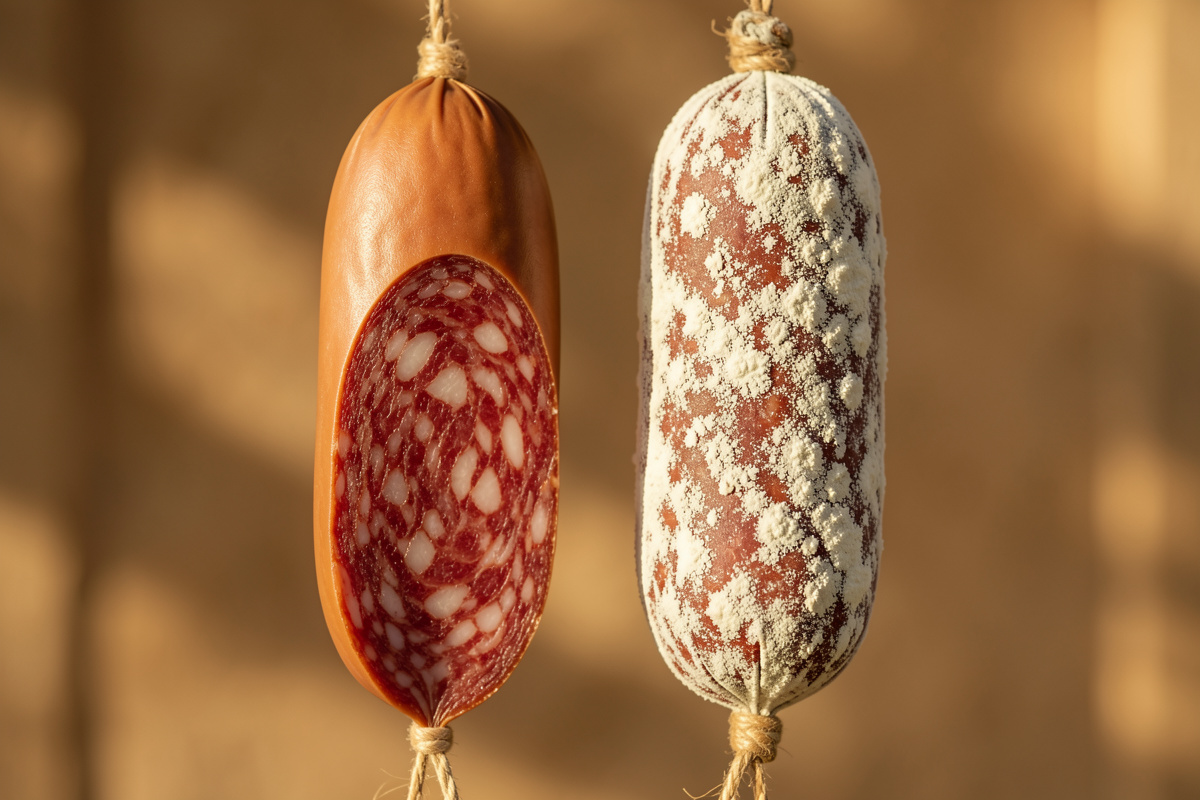
Patchy white mold is usually cosmetic, not a defect — the protective effect scales with coverage, so a salami that’s 60% bloomed still gets most of the benefit, it just looks less finished than a fully-coated one. Uneven coverage only becomes a real problem in two cases: when the bald areas invite other molds to […]

Read 9 min read
Collagen Casing Won’t Take Mold: Why and What to Do
Salami & Fermented Sausage

Collagen Casing Won’t Take Mold: Why and What to Do

Collagen casings resist white mould because their surface is smooth, processed, and often treated in a way that gives Penicillium nalgiovense nothing to grip. Natural casings are a porous protein membrane the mould can root into; extruded collagen is a uniform film that frequently stays bald no matter how carefully you spray it. If your […]

Read 9 min read
Why Did My Lardo Go Yellow? Rancid Fat vs Normal Aging
Curing Fat: Lardo, Salo & Fatback

Why Did My Lardo Go Yellow? Rancid Fat vs Normal Aging

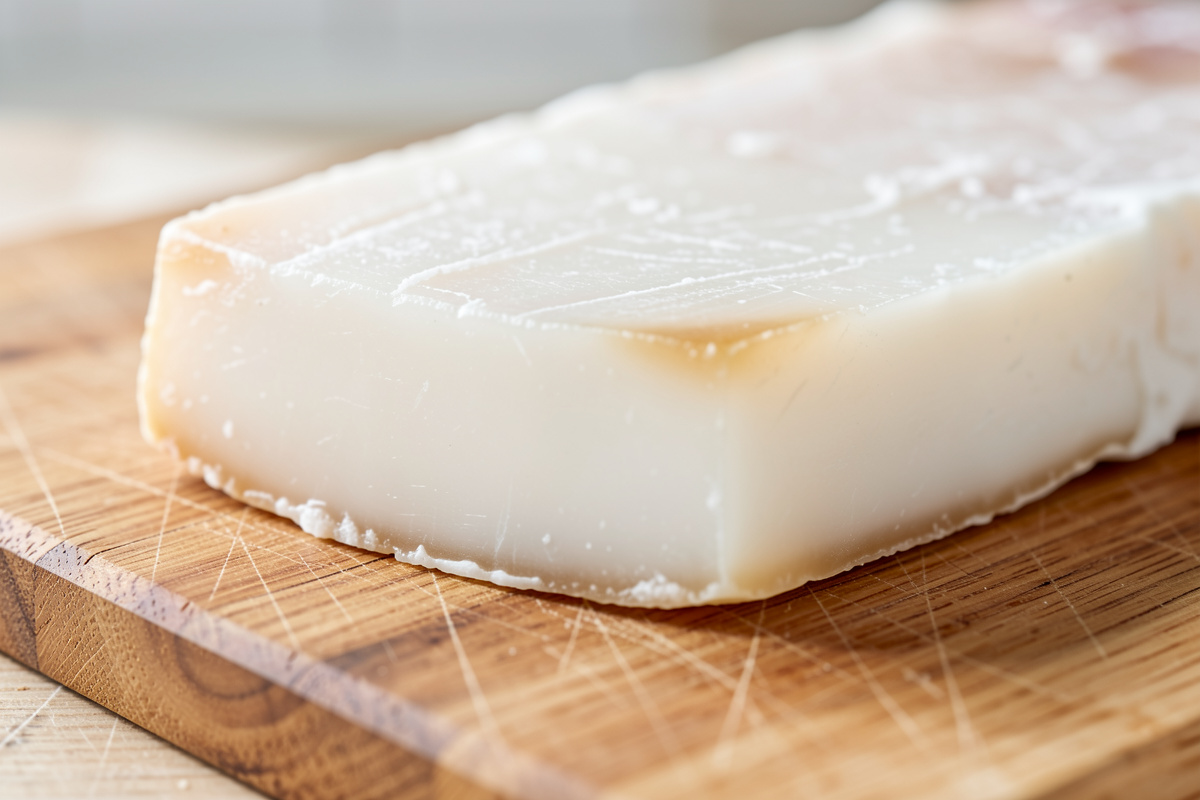
Yellowing lardo is often normal — fat oxidizes slowly and deepens from white toward straw over weeks to months of aging, and a faint tint on a well-kept slab is fine. What is not fine is a sharp, crayon-like or paint-thinner smell, a greasy slick, or a bitter taste: those mean the fat has gone […]

Read 7 min read
Is Spreadable Salami Safe? The Fermentation Rules for Soft Cured Sausage
Salami & Fermented Sausage

Is Spreadable Salami Safe? The Fermentation Rules for Soft Cured Sausage

Yes — spreadable salami like ‘nduja and sobrasada is safe when it is made by the rules: the correct curing salt (Cure #2 for a long ferment and dry), a starter culture that drops the pH below 5.3, salt around 2.75%, a controlled warm-humid fermentation, and enough drying to pull the water activity down. Safety […]

Read 8 min read
How to Clean and Reset a Chamber Between Batches
Building a Curing Chamber

How to Clean and Reset a Chamber Between Batches

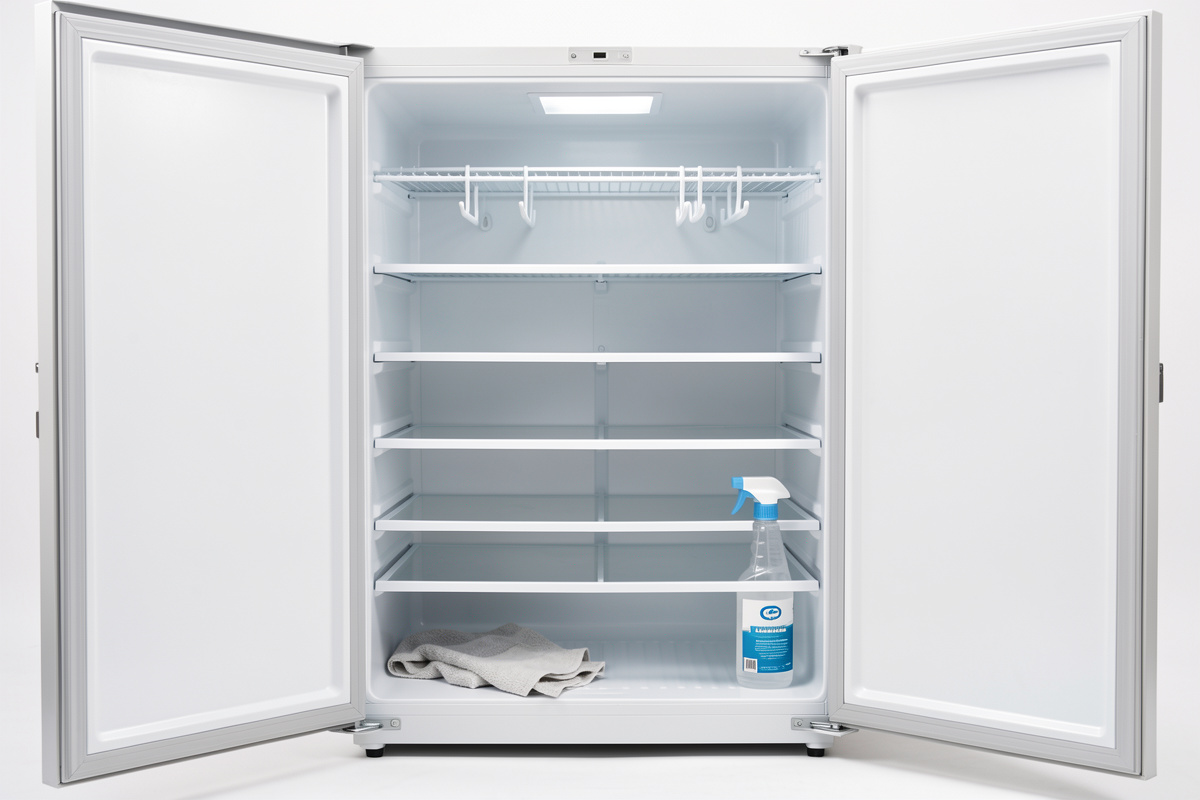
To clean and reset a curing chamber between batches, strip it empty, remove all debris and drips, wipe the surfaces down, and let it dry fully before reloading — but how deep you go depends entirely on how the last batch ended. A clean, fully-bloomed batch needs only a light wipe that preserves your house […]

Read 8 min read
How to Store Leftover Salted Casings for Months
Salami & Fermented Sausage

How to Store Leftover Salted Casings for Months

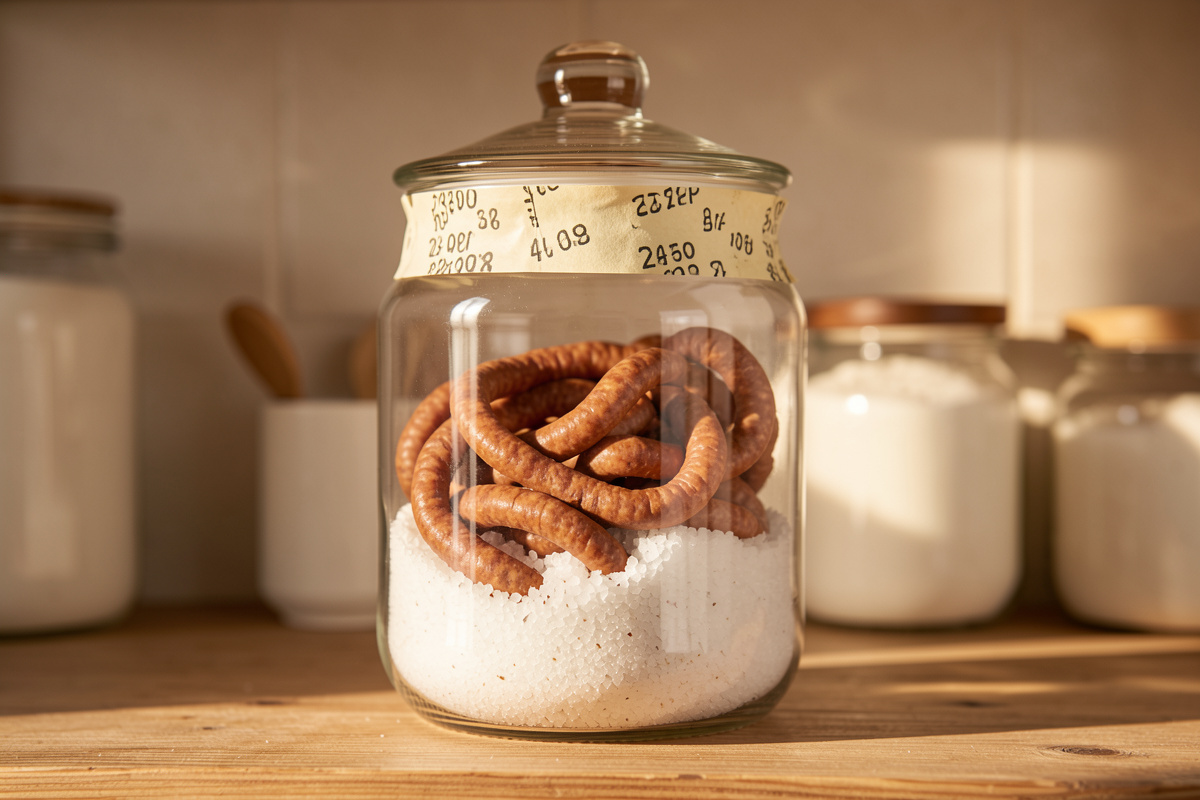
Repack leftover natural casings in plenty of plain non-iodised salt, seal them airtight, and refrigerate — stored that way they keep for a year or more. Salt drops the water activity so low that spoilage bacteria simply cannot function. The enemies of stored casings are not time but drying out, moisture creeping back in, and […]

Read 9 min read
Why Are My Sausages Rubbery? Fixing Overworked and Over-Bound Texture
Fresh & Cooked Sausage

Why Are My Sausages Rubbery? Fixing Overworked and Over-Bound Texture

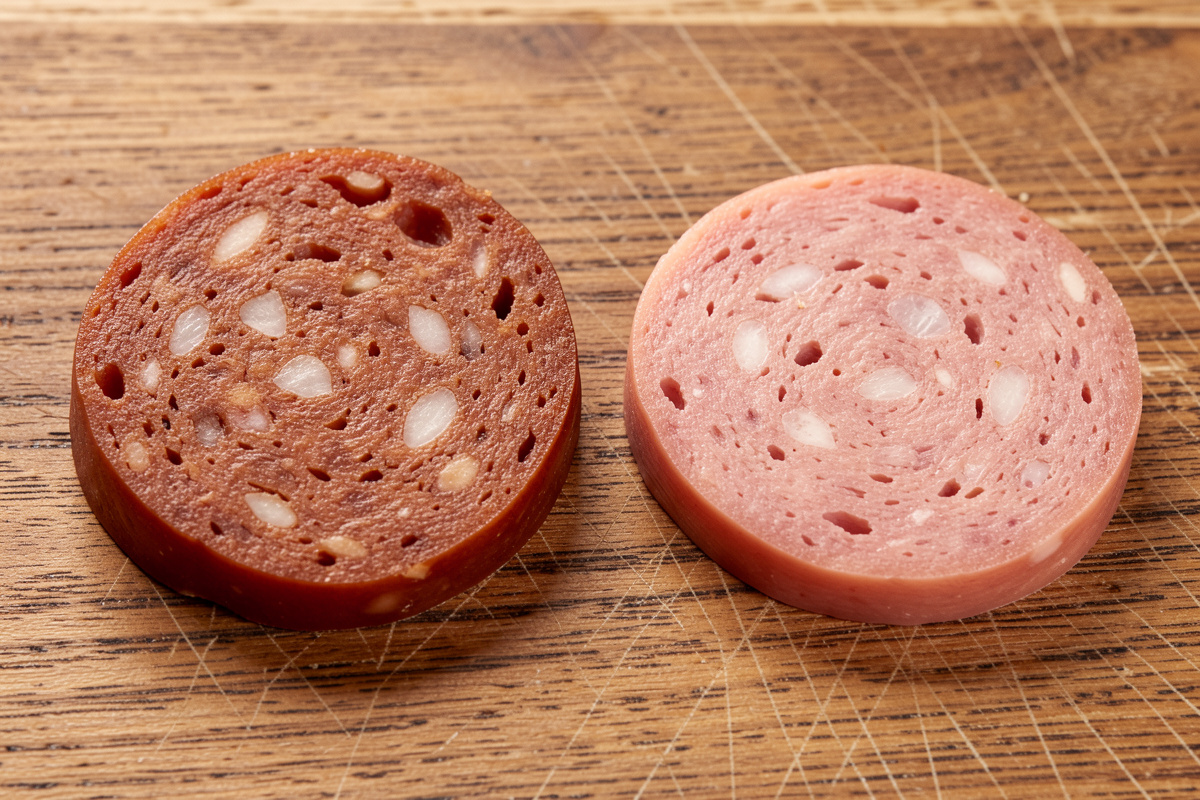
A rubbery sausage is over-bound — too much muscle protein was extracted, so the cooked texture reads as tight, bouncy, and resistant rather than tender and yielding. The usual causes are over-mixing, salt above about 2.5%, too much added water, or cooking too fast and too hot, and the fix is to stop mixing the […]

Read 11 min read
Why Won’t White Mold Grow in My Chamber? Humidity and Spore Fixes
Troubleshooting & Food Safety

Why Won’t White Mold Grow in My Chamber? Humidity and Spore Fixes

White mold won’t grow in your chamber for one of five reasons, in rough order of likelihood: humidity too low for spores to germinate, chlorinated water that killed the culture when you rehydrated it, a chamber running too warm or too cold, residual sanitizer suppressing the mold, or a dead or improperly stored culture. Fix […]

Read 9 min read
Country Pâté (Pâté de Campagne) at Home
Confit, Rillettes & Terrines

Country Pâté (Pâté de Campagne) at Home

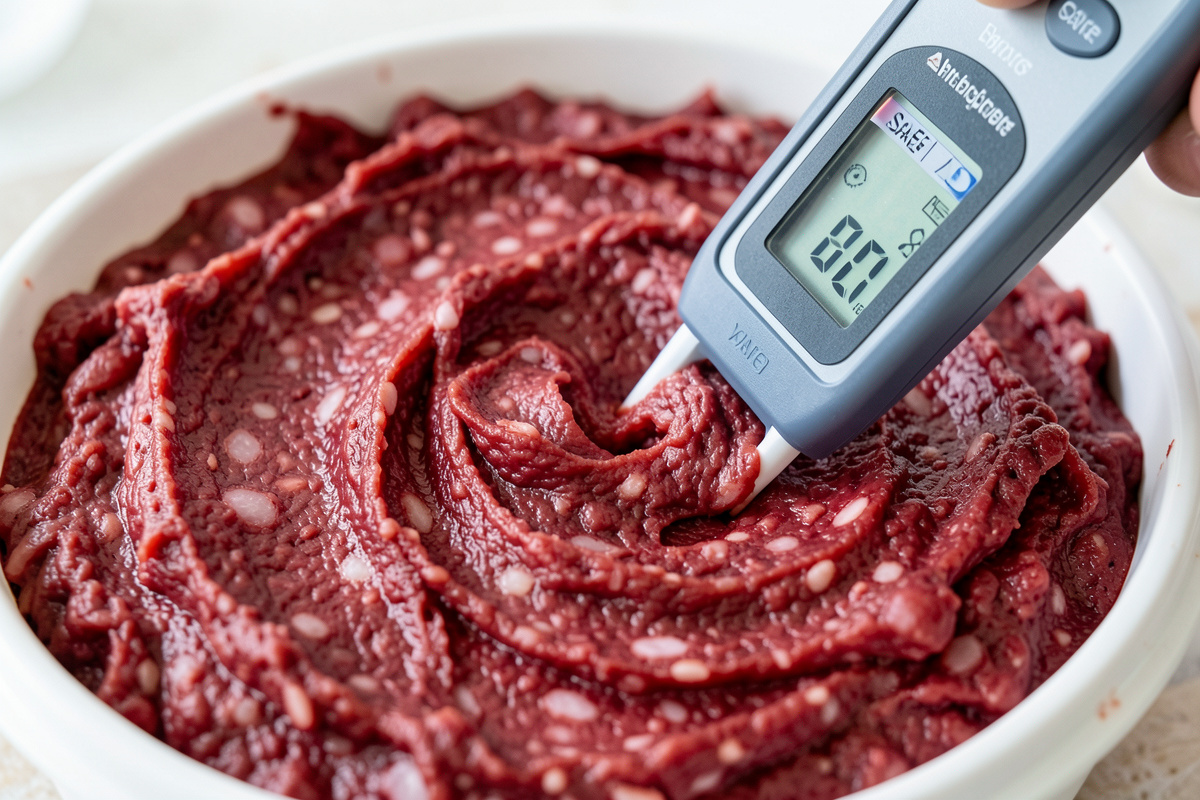
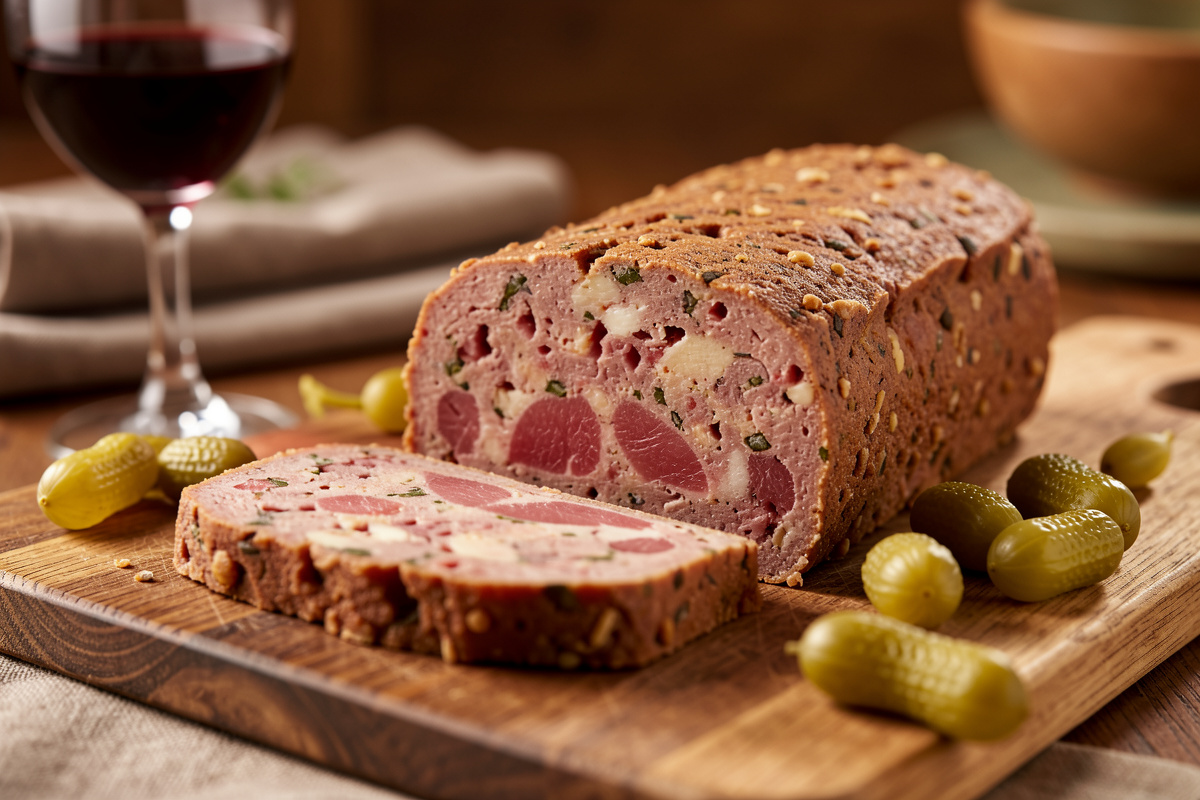
Country pâté — pâté de campagne — is a coarse forcemeat of ground pork, pork fat and usually liver, seasoned, bound with egg, packed into a lined terrine mould and baked in a water bath to an internal temperature of 65–70 °C (150–160 °F). A measured dose of cure #1 at 2.5 g per kilo of forcemeat gives […]

Read 7 min read
Charcuterie Board Business Guide: Start Legally
Selling & Cottage Food

Charcuterie Board Business Guide: Start Legally

A charcuterie board business is the lowest-barrier way into selling charcuterie, because you assemble boards from commercially produced, already-inspected meats and cheeses rather than manufacturing a hazardous food yourself. In many places that puts you under cottage food or a simple food-handler permit instead of full meat-processing licensing — and because you are paid for […]

Read 7 min read