All Guides

Temperature & Humidity Science

Every technical article, build log, and curing walkthrough — organized for reference.

Curing Chamber Data Logger: Monitor Without the Door
Temperature & Humidity Science

Curing Chamber Data Logger: Monitor Without the Door

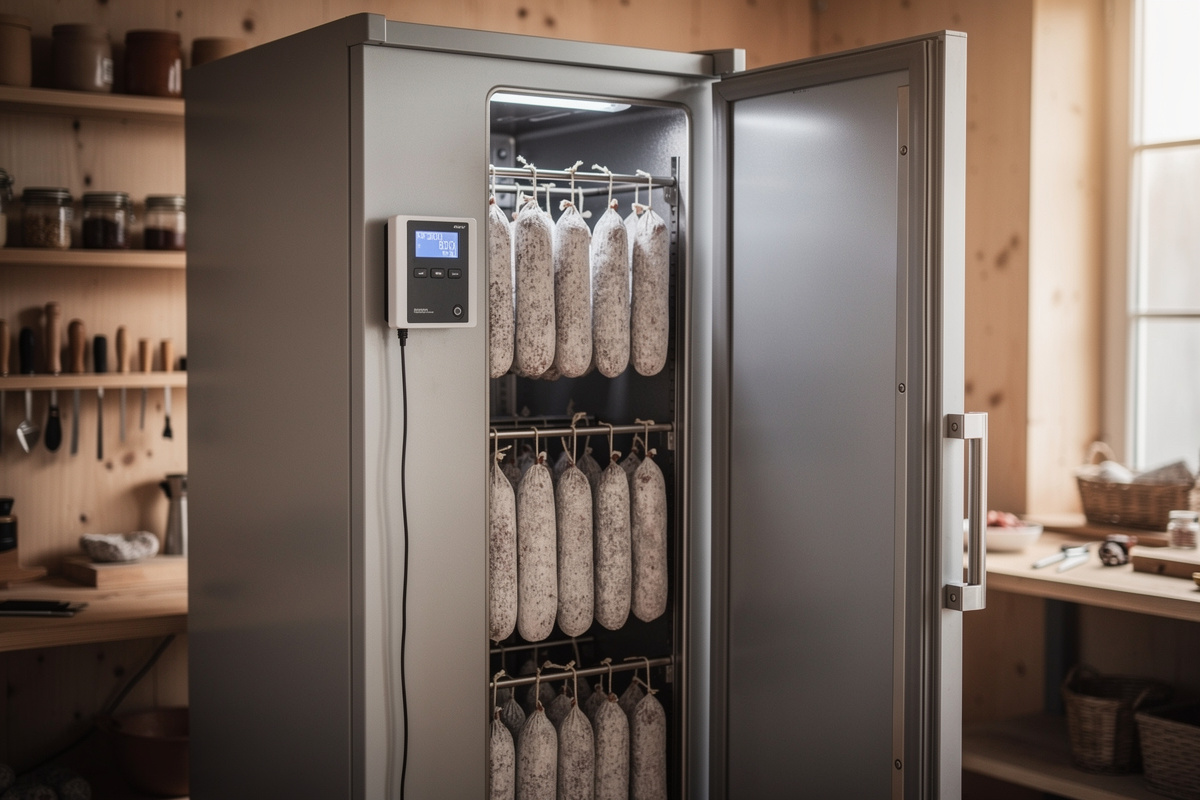
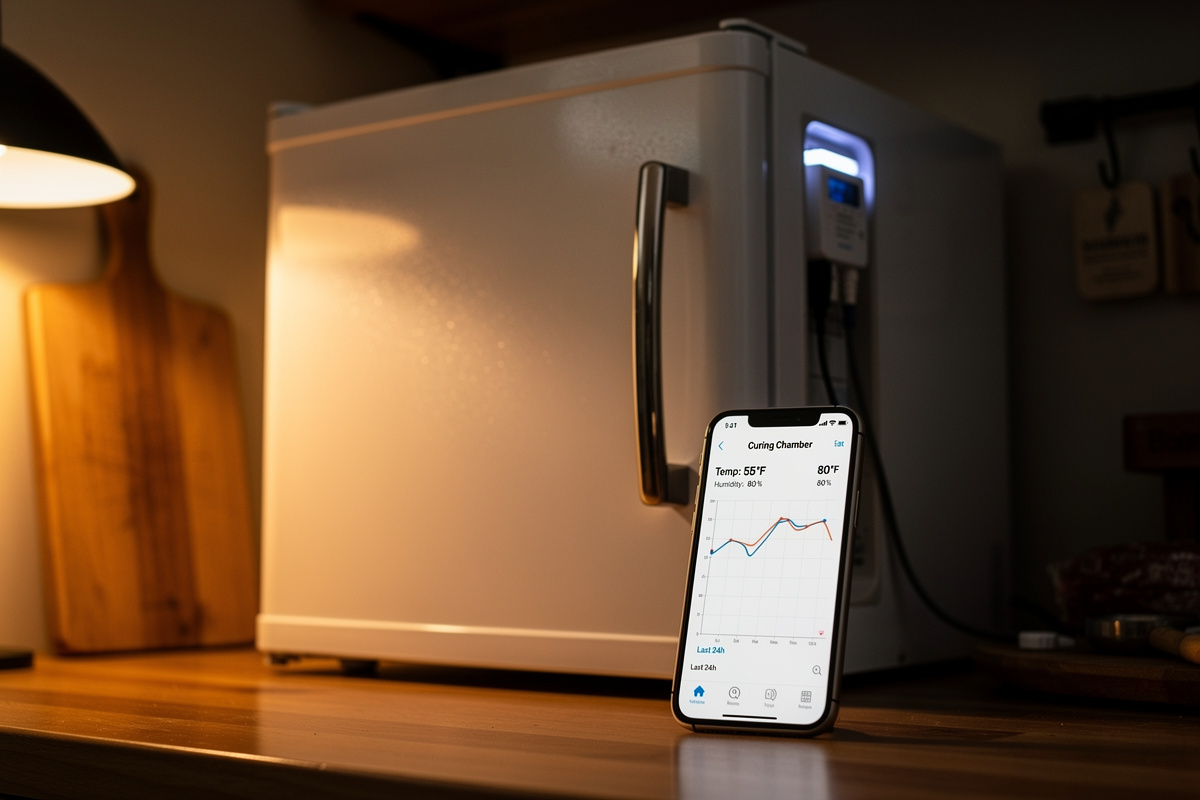
The best way to log curing chamber data without opening the door is a wireless sensor that streams temperature and humidity to your phone — a Bluetooth logger like SwitchBot or a WiFi-gateway sensor like SensorPush. Every door-open dumps your climate; remote logging lets you watch a four-week cure without ever breaking the envelope. Opening […]
Read 8 min read
Calibrate Curing Chamber Sensors: Salt and Ice Tests
Temperature & Humidity Science

Calibrate Curing Chamber Sensors: Salt and Ice Tests

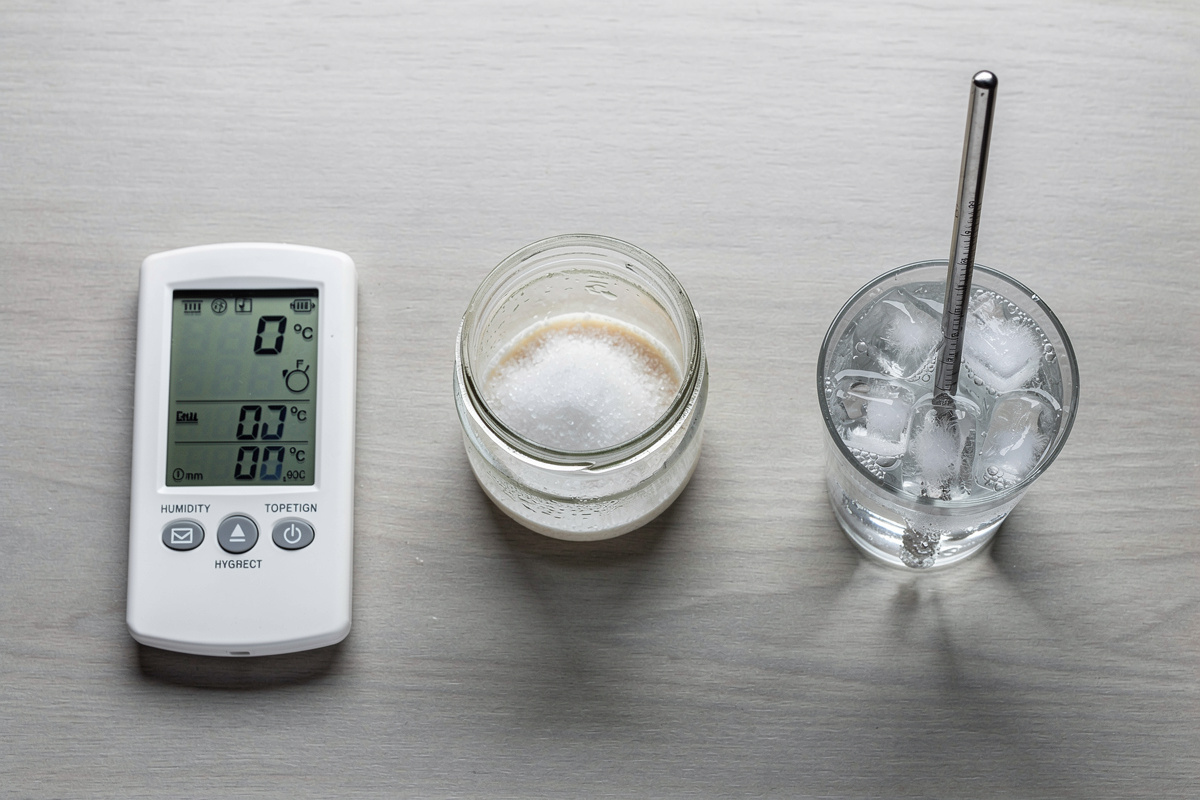
To calibrate curing chamber sensors, use the saturated salt test for hygrometers (a salt-water paste in a sealed container reads exactly 75% RH at 25°C) and the ice-water test for thermometers (a stirred ice bath reads 32°F / 0°C). Both take household materials and a few hours. Every control decision your chamber makes — humidifier […]

Read 8 min read
Curing Chamber Airflow: Fan Size, Placement, and CFM
Temperature & Humidity Science

Curing Chamber Airflow: Fan Size, Placement, and CFM

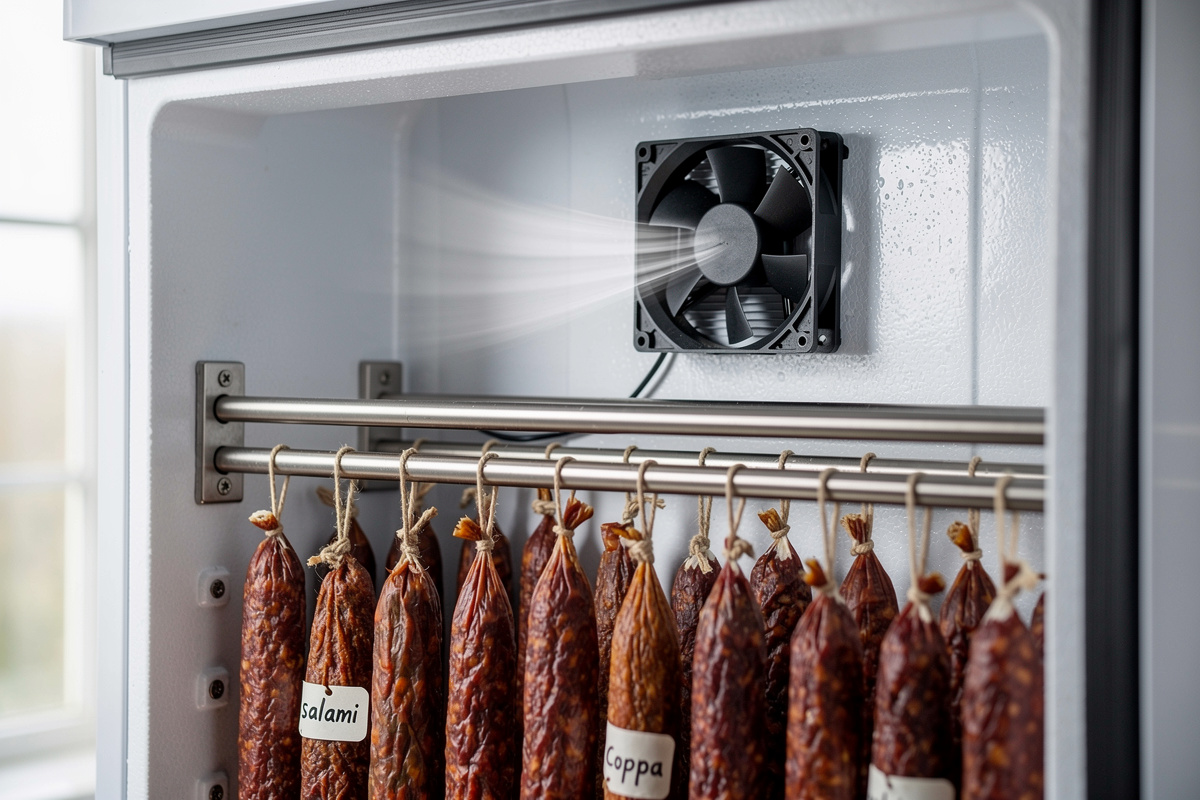
The right curing chamber airflow fan is a 120mm PC fan run at low speed on a 5-minutes-on, 25-minutes-off cycle, mounted to blow across the meat, never at it. You do not need much CFM — gentle, even movement breaks the saturated layer around the meat without case-hardening the surface. Airflow is the most-skipped layer […]

Read 9 min read
Curing Chamber Dehumidifier: When and How to Size It
Temperature & Humidity Science

Curing Chamber Dehumidifier: When and How to Size It

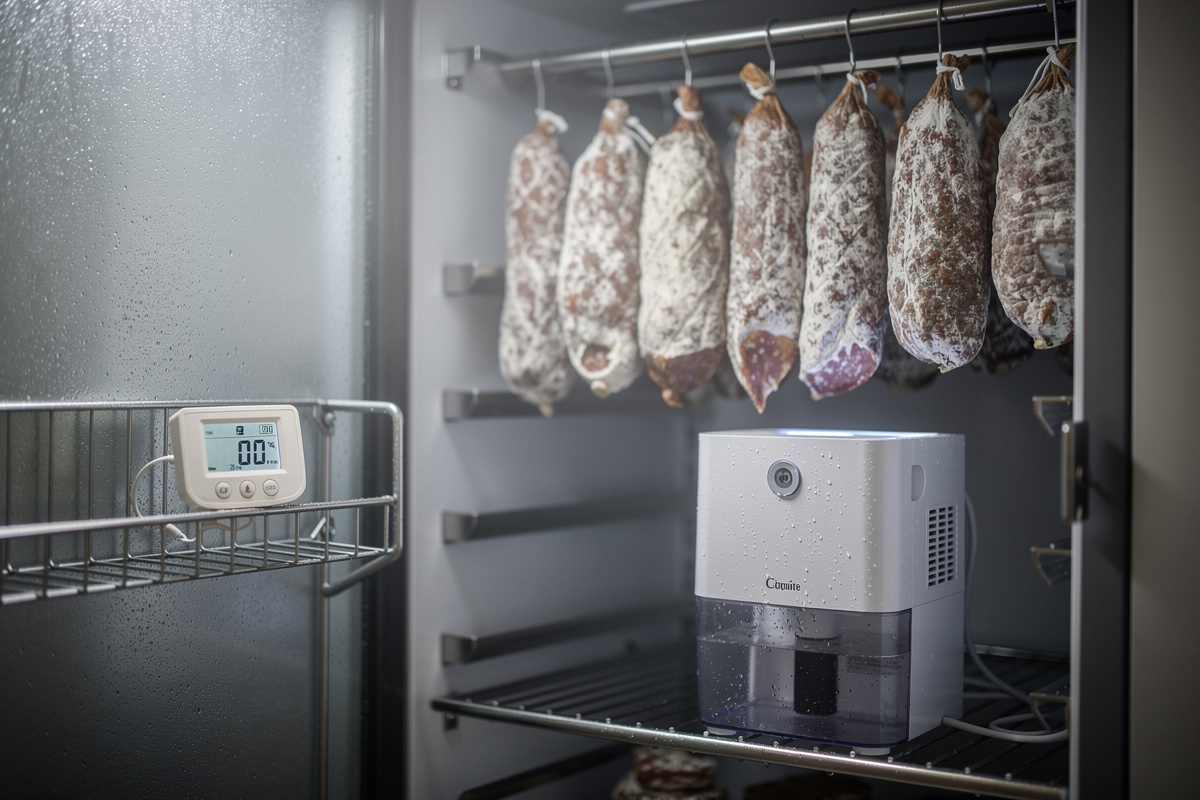
You need a dehumidifier in a curing chamber whenever incoming moisture outpaces what the chamber can shed — the first 48 hours of a fresh batch, humid summers, and auto-defrost spikes. Size it to your chamber volume and moisture load: a small Peltier unit handles most home boxes; a compressor mini handles the worst. Most […]

Read 9 min read
Curing Chamber Humidifier: Ultrasonic vs Wick vs Steam
Temperature & Humidity Science

Curing Chamber Humidifier: Ultrasonic vs Wick vs Steam

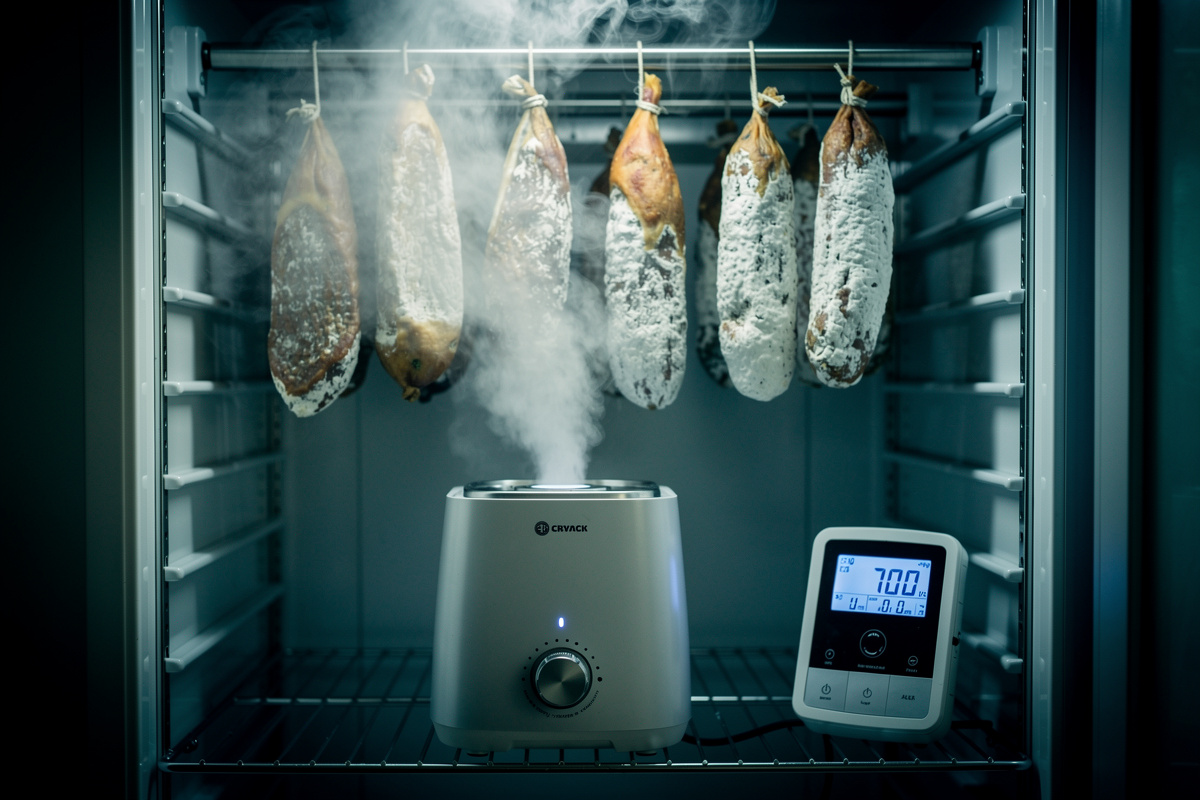
The best humidifier for a curing chamber is a cold-mist ultrasonic unit, because it adds moisture without adding heat — and a curing chamber has to stay near 55°F. Steam and warm-mist humidifiers fight your temperature controller; evaporative wick units self-regulate but cannot keep up. Humidity is the variable that decides whether a coppa finishes […]

Read 9 min read
Inkbird vs Auber vs Willhi Curing Chamber Controller
Temperature & Humidity Science

Inkbird vs Auber vs Willhi Curing Chamber Controller

The best temperature controller for a curing chamber is the Inkbird ITC-308 for most home charcutiers — dual-stage heat and cool, a 1.0°C (about 2°F) differential, and two relay outlets that hold my chambers at 55°F within a degree. Auber wins on precision, Willhi on price. I run three of these side by side across […]

Read 9 min read
Smart Plug Schedules for Curing Chambers: Compressor, Defrost, Fan
Temperature & Humidity Science

Smart Plug Schedules for Curing Chambers: Compressor, Defrost, Fan

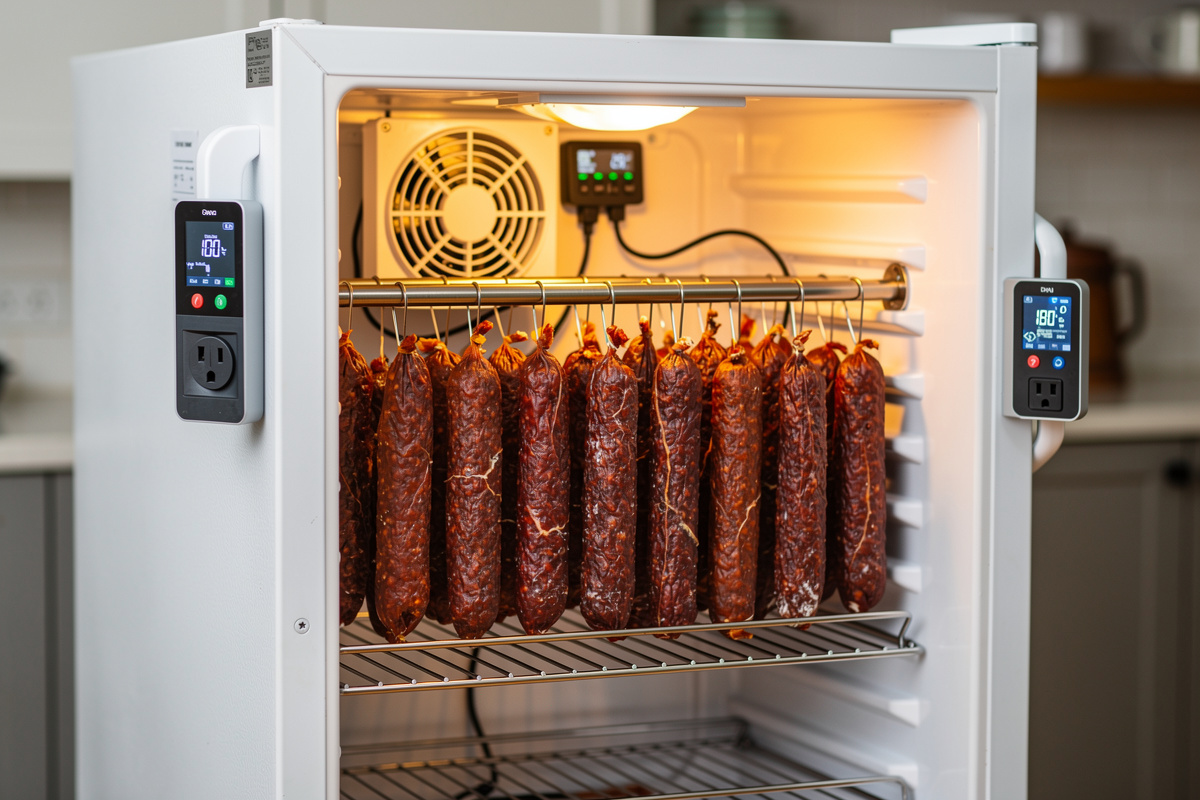
Set the compressor on a TP-Link Tapo P125M smart plug with a 12-minutes-on, 18-minutes-off duty-cycle schedule, and chamber humidity holds within ±2% RH instead of the ±6–8% bounce from an unrestricted thermostat-driven compressor. The defrost cycle, the recirculation fan, and the auxiliary humidifier each run on their own smart plug with their own rule, and […]

Read 9 min read
Curing Chamber Climate Control: The Complete Guide
Temperature & Humidity Science

Curing Chamber Climate Control: The Complete Guide

Curing chamber climate control means holding the box at a target temperature and relative humidity for weeks at a time, with calibrated sensors, sized humidifiers and dehumidifiers, and a cycling fan that breaks the saturated boundary layer around hanging meat. The psychrometric relationship between temperature and relative humidity is why the four layers below have […]

Read 17 min read
Curing Chamber Humidity Control: Adapting Hydroponic Reservoir Tech for Salami
Temperature & Humidity Science

Curing Chamber Humidity Control: Adapting Hydroponic Reservoir Tech for Salami

I borrowed the auto-fill reservoir trick from my hydroponic lettuce setup three years ago — a 5-liter food-grade jug, a $9 float valve, a 24 V ultrasonic fogger (the 24 V Mistking-clone unit from any hydroponic shop is what I run) from a grow shop, and a 4-foot length of silicone tube into the chamber […]

Read 9 min read
Ideal Humidity for Dry Aging Beef vs Charcuterie: Why They Differ
Temperature & Humidity Science

Ideal Humidity for Dry Aging Beef vs Charcuterie: Why They Differ

I run my chamber at 78% RH for whole-muscle beef and drop to 73% RH the moment a salami batch goes in alongside it — switching the Inkbird IHC-200 setpoint takes 15 seconds and the chamber re-equilibrates within an hour, which I confirm on the digital hygrometer I keep at meat height rather than trusting […]

Read 10 min read
Smart Temperature and Humidity Sensors for Curing Chambers: Setup, Logging, and Calibration
Temperature & Humidity Science

Smart Temperature and Humidity Sensors for Curing Chambers: Setup, Logging, and Calibration

I run a SensorPush HT.W at the meat shelf as my trusted reference and an Inkbird IBS-TH3 in the coil zone, cross-checked against each other and logged into Home Assistant. That two-sensor stack costs about $85-90 and has caught two probe-drift events in 18 months that would otherwise have spoiled a 14-week salami run. A […]

Read 9 min read
Curing Chamber Too Humid: How to Fix Oversaturation Fast
Temperature & Humidity Science

Curing Chamber Too Humid: How to Fix Oversaturation Fast

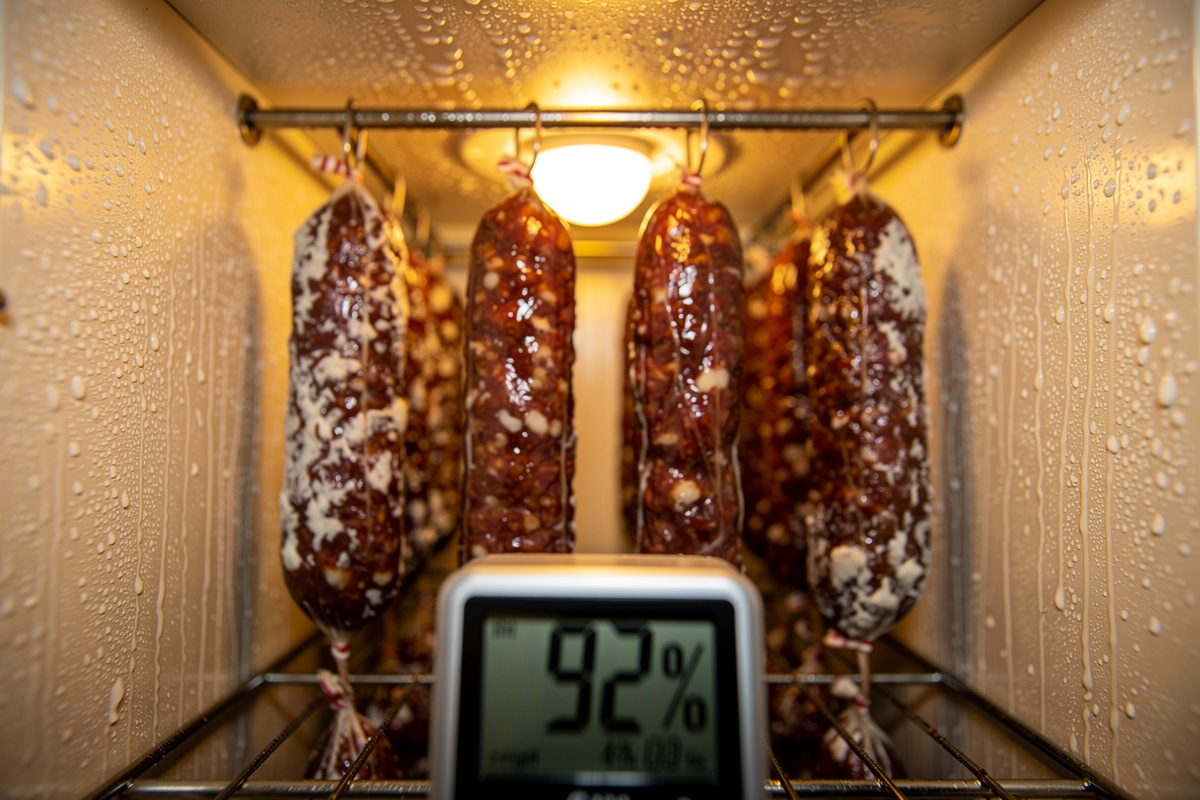
I drop curing chamber humidity from 90%+ down to 75% in under 4 hours by combining three immediate actions: unplug the humidifier completely, increase fan run-time by 50%, and add a 2-pound tray of dry rice or coarse salt to the chamber floor as a desiccant. The salt-or-rice tray absorbs about 2 to 4% of […]

Read 9 min read