All Guides

Guides

Every technical article, build log, and curing walkthrough — organized for reference.

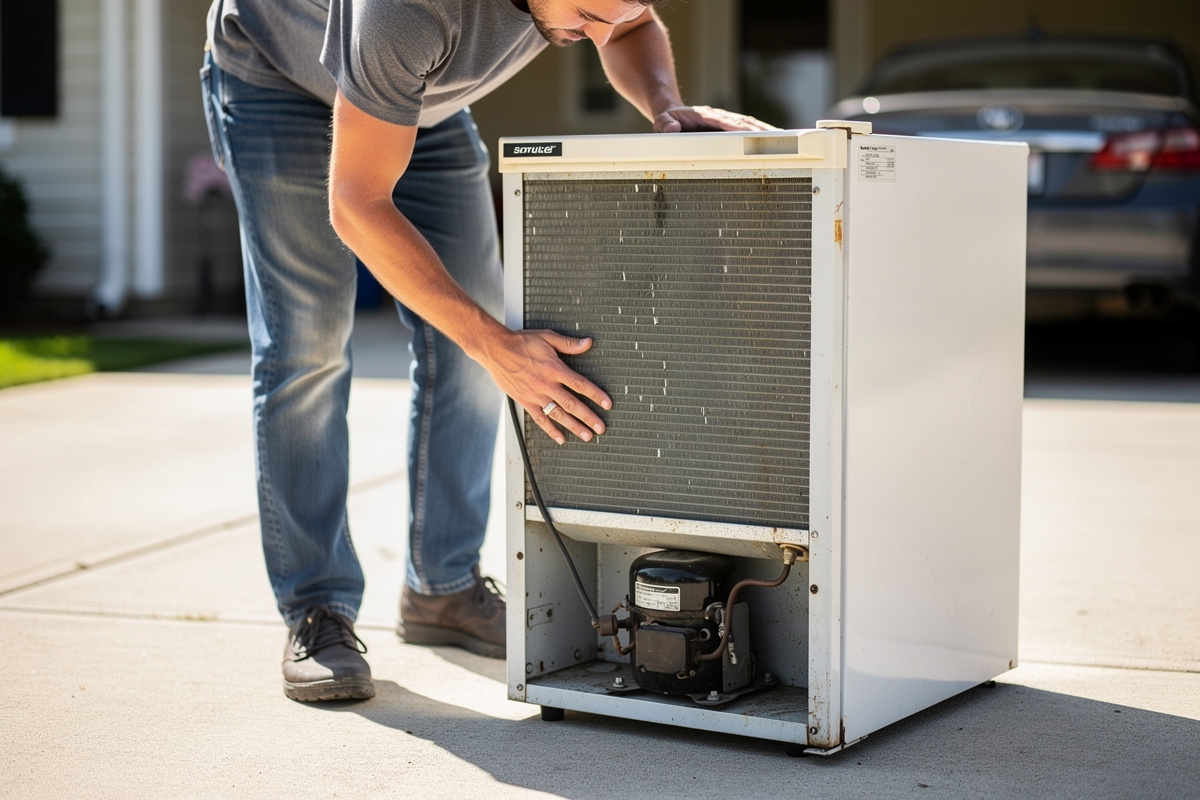
Used Fridge Curing Chamber Inspection: What to Check Before Buying on Marketplace
Building a Curing Chamber

Used Fridge Curing Chamber Inspection: What to Check Before Buying on Marketplace

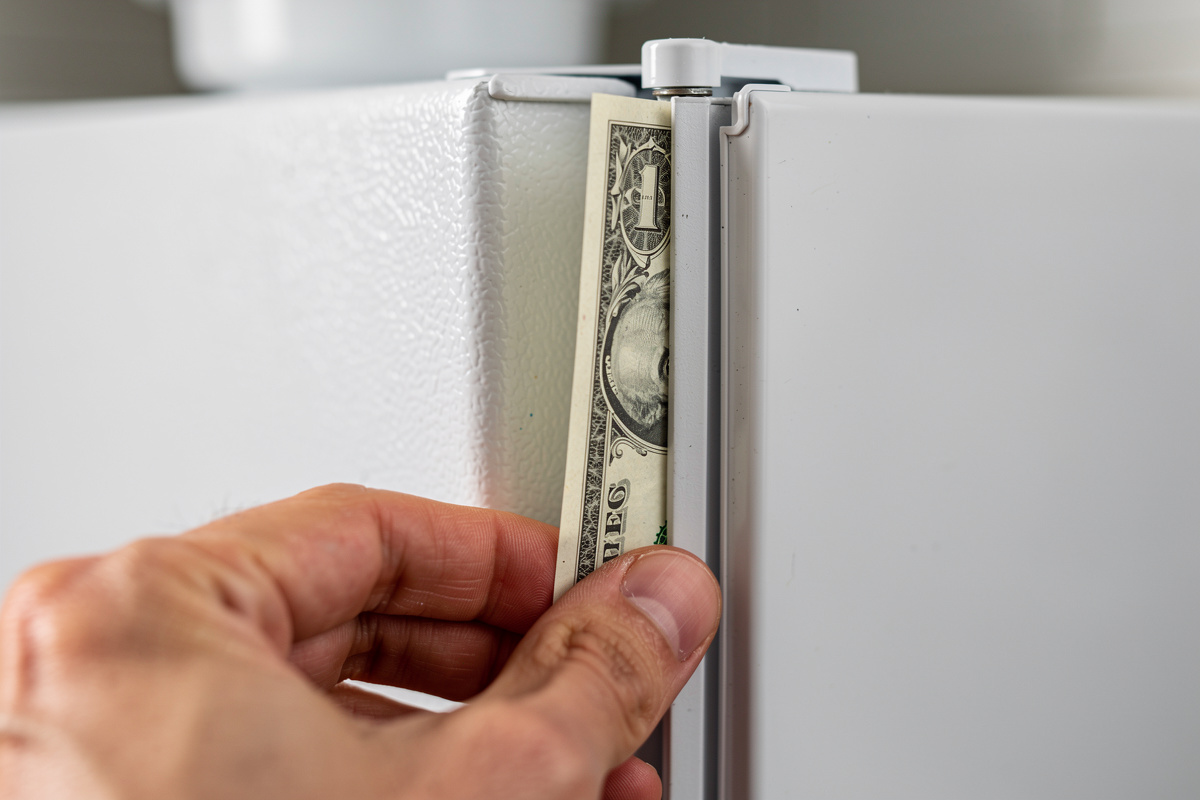
Before handing over $40 to $80 for a used fridge on Marketplace, check three things in this order: plug it in and confirm the compressor kicks on and the interior drops to 40°F or below within thirty minutes, run the dollar-bill test around the entire door gasket with the fridge unplugged and cold, and open […]
Read 11 min read
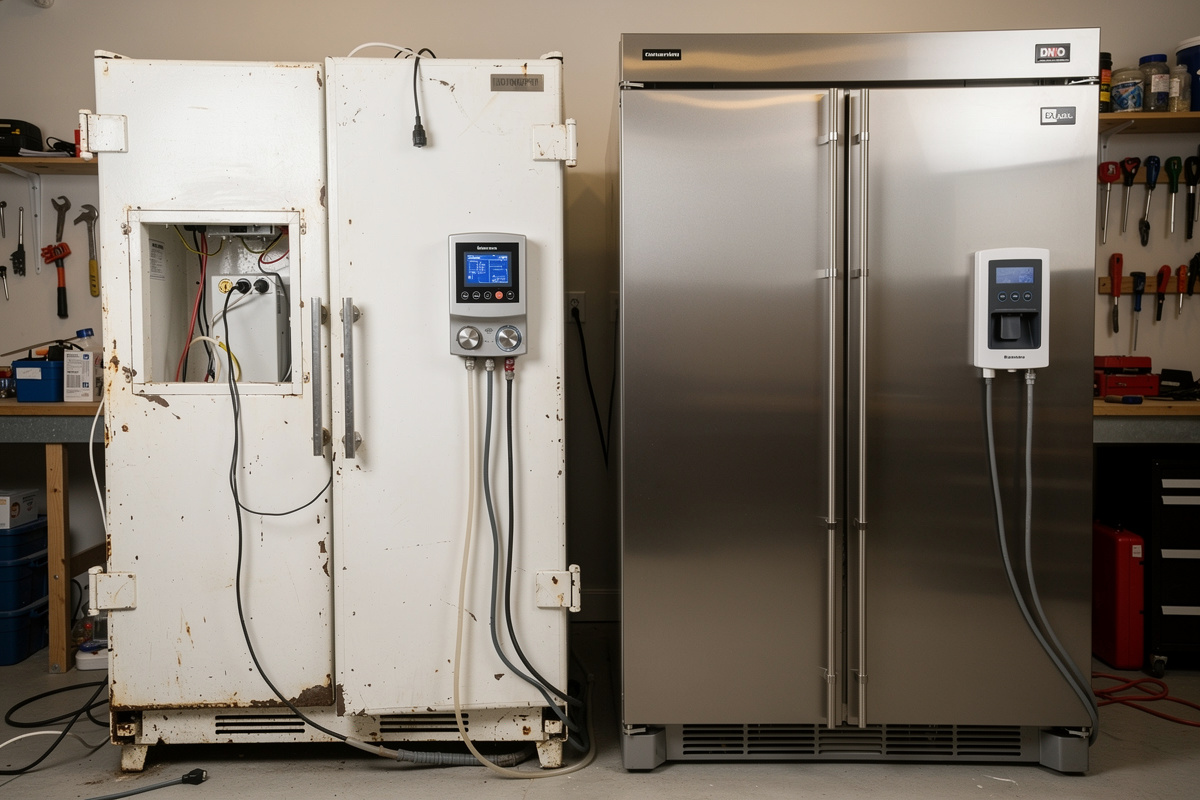
Budget vs Premium Curing Chamber Build: What Extra $200 Gets You
Building a Curing Chamber

Budget vs Premium Curing Chamber Build: What Extra $200 Gets You

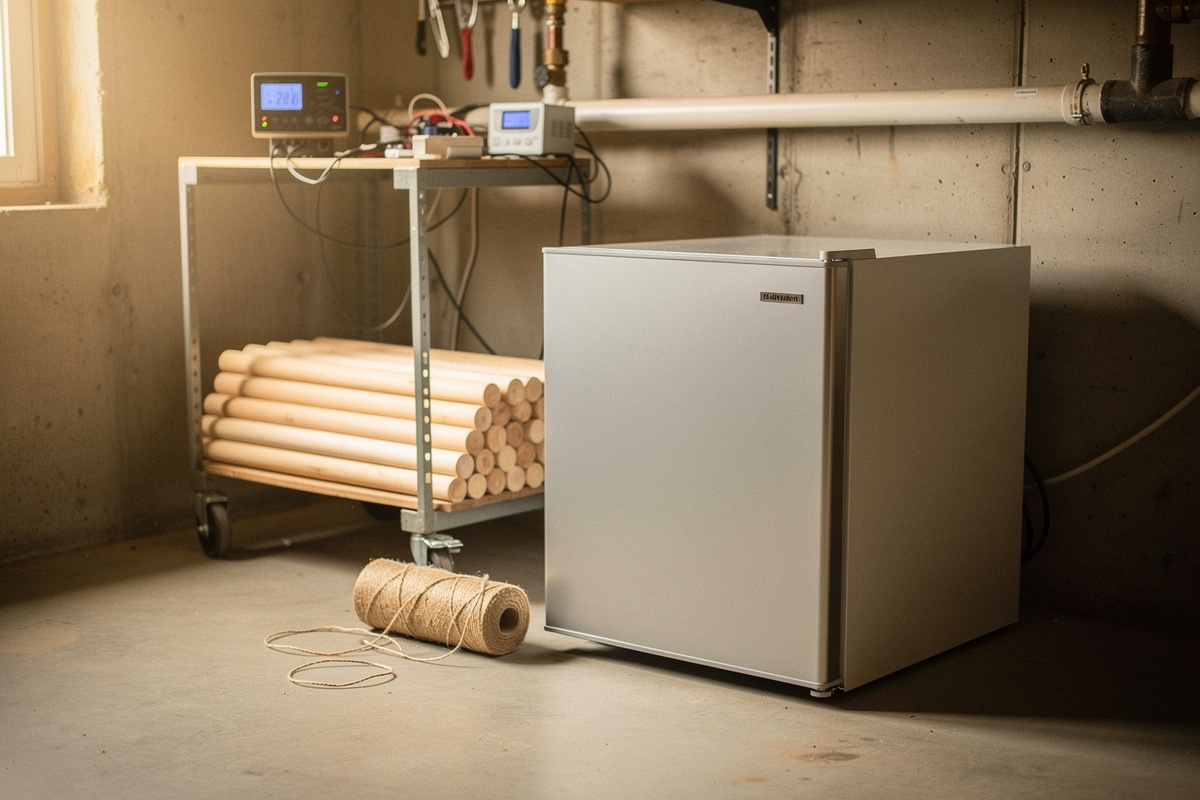
A budget curing chamber costs $130 to $175 using a used mini fridge, an Inkbird ITC-308 temperature controller, a basic ultrasonic humidifier, and no dedicated dehumidifier — and it cures salami and whole muscles reliably for two to three years if the used fridge compressor holds up. Spending an extra $200 or so upgrades to […]

Read 9 min read
Curing Chamber Lighting Setup: Does Light Affect Meat Curing? What to Install
Building a Curing Chamber

Curing Chamber Lighting Setup: Does Light Affect Meat Curing? What to Install

Light accelerates fat oxidation in curing meat — the same UV and visible-spectrum wavelengths that make a steak display case look appealing are actively degrading the fat in your salami and bresaola every hour the light stays on. A curing chamber should be dark 23.5 hours a day, with a low-wattage cool-white LED switched on […]

Read 10 min read
Curing Chamber Door Seal: How to Test Gaskets, Replace Latches, and Stop Odor Leaks
Building a Curing Chamber

Curing Chamber Door Seal: How to Test Gaskets, Replace Latches, and Stop Odor Leaks

A curing chamber door seal fails quietly — the gasket loses its spring at one corner, room air slips in, and three days later your humidity setpoint is unreachable because the dehumidifier is fighting a quarter-inch gap that costs you 10% RH every hour. The dollar-bill test catches a failing gasket in thirty seconds, and […]

Read 11 min read
Curing Chamber Shelving Material: Wood vs Stainless Steel vs Plastic-Coated Wire
Building a Curing Chamber

Curing Chamber Shelving Material: Wood vs Stainless Steel vs Plastic-Coated Wire

Two materials touch the meat in a curing chamber that works long-term: unfinished hardwood dowels for hanging salami and whole muscles, and 304 stainless steel wire shelves for flat cuts like pancetta and cheese. The wood wicks surface moisture from the casings; the stainless takes 75% humidity for years without rusting or leaching. Plastic-coated wire, […]

Read 10 min read
How to Drill a Curing Chamber Without Breaking Refrigerant Lines
Building a Curing Chamber

How to Drill a Curing Chamber Without Breaking Refrigerant Lines

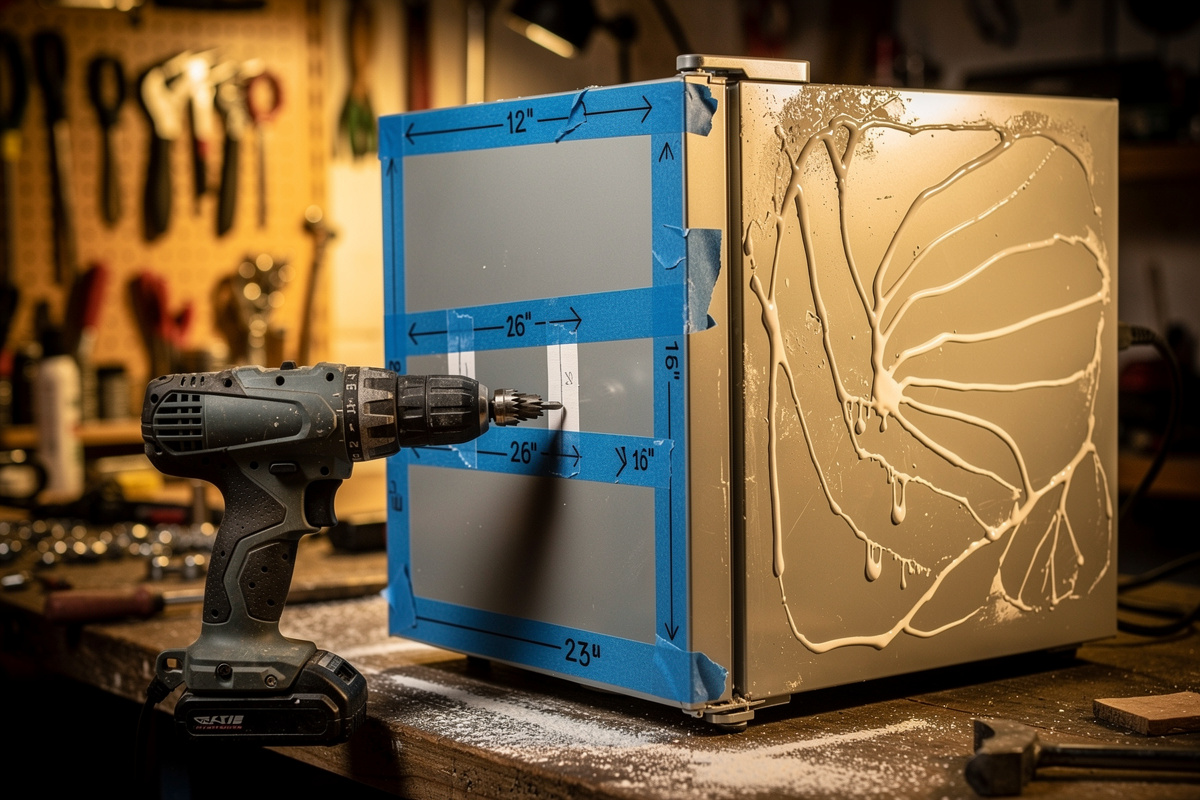
Drill through the fridge door — never the back wall — and map any side-panel route with a cornstarch-and-alcohol slurry before you pick up a step bit. The refrigerant lines run in the back wall, both side walls near the rear corners, and sometimes the top, always within 2 inches of the outer skin. Hit […]

Read 13 min read
Best Fridge for a Curing Chamber Conversion: Size, Type, Door Orientation
Building a Curing Chamber

Best Fridge for a Curing Chamber Conversion: Size, Type, Door Orientation

Skip the frost-free models, skip the ice-maker models, and skip anything over 7 cubic feet — the right refrigerator for a home curing chamber is a 4.4-cubic-foot manual-defrost mini fridge with a flat-back evaporator plate. Magic Chef and Danby units run $140 to $180 new and fit two whole bresaola plus three salami ropes with […]

Read 11 min read
Salami Fermentation Chemistry: pH Drop, Lactic Bacteria, Sauerkraut Science
Salami & Fermented Sausage

Salami Fermentation Chemistry: pH Drop, Lactic Bacteria, Sauerkraut Science

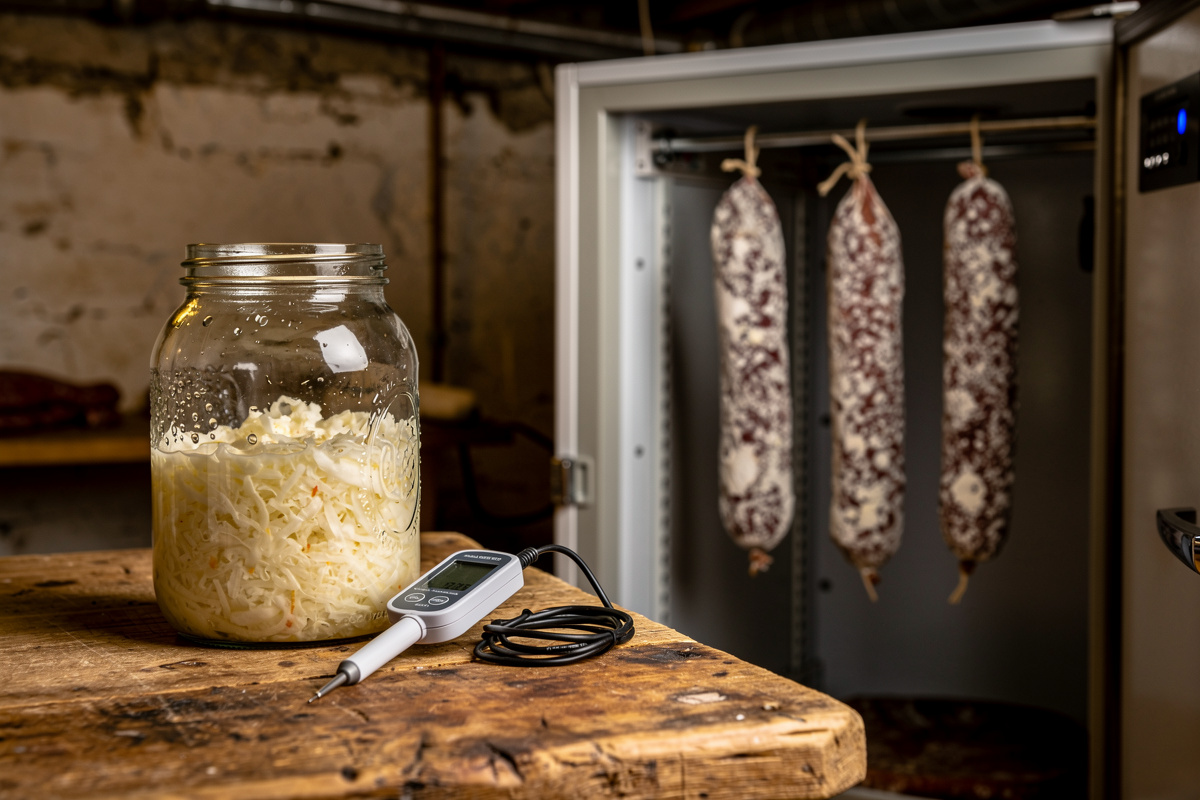
The same lactic acid bacteria that drop sauerkraut from neutral pH 6.5 to acidic pH 3.5 in five days are doing nearly identical work inside a curing salami over six weeks — the pH drop that finishes a salami is the same chemistry that ferments sauerkraut, same bacteria family, different substrate, which is the crossover […]

Read 9 min read
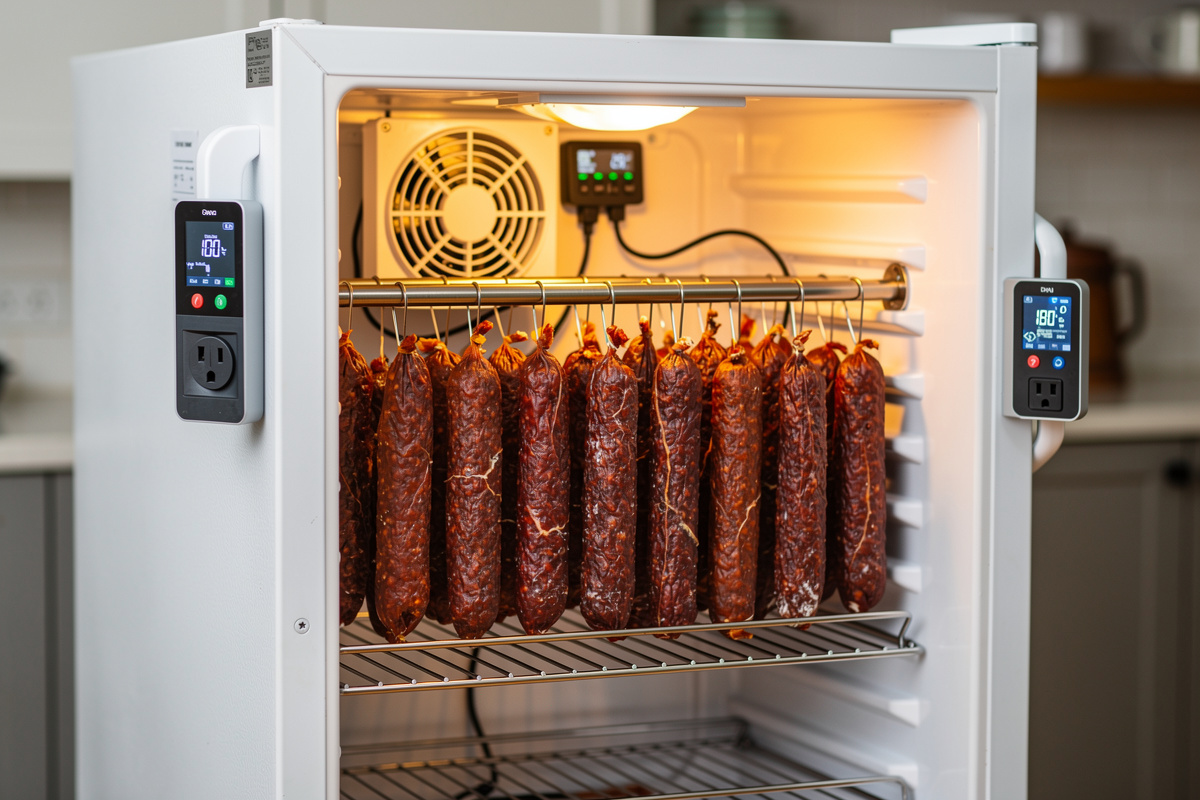
Smart Plug Schedules for Curing Chambers: Compressor, Defrost, Fan
Temperature & Humidity Science

Smart Plug Schedules for Curing Chambers: Compressor, Defrost, Fan

Set the compressor on a TP-Link Tapo P125M smart plug with a 12-minutes-on, 18-minutes-off duty-cycle schedule, and chamber humidity holds within ±2% RH instead of the ±6–8% bounce from an unrestricted thermostat-driven compressor. The defrost cycle, the recirculation fan, and the auxiliary humidifier each run on their own smart plug with their own rule, and […]

Read 9 min read
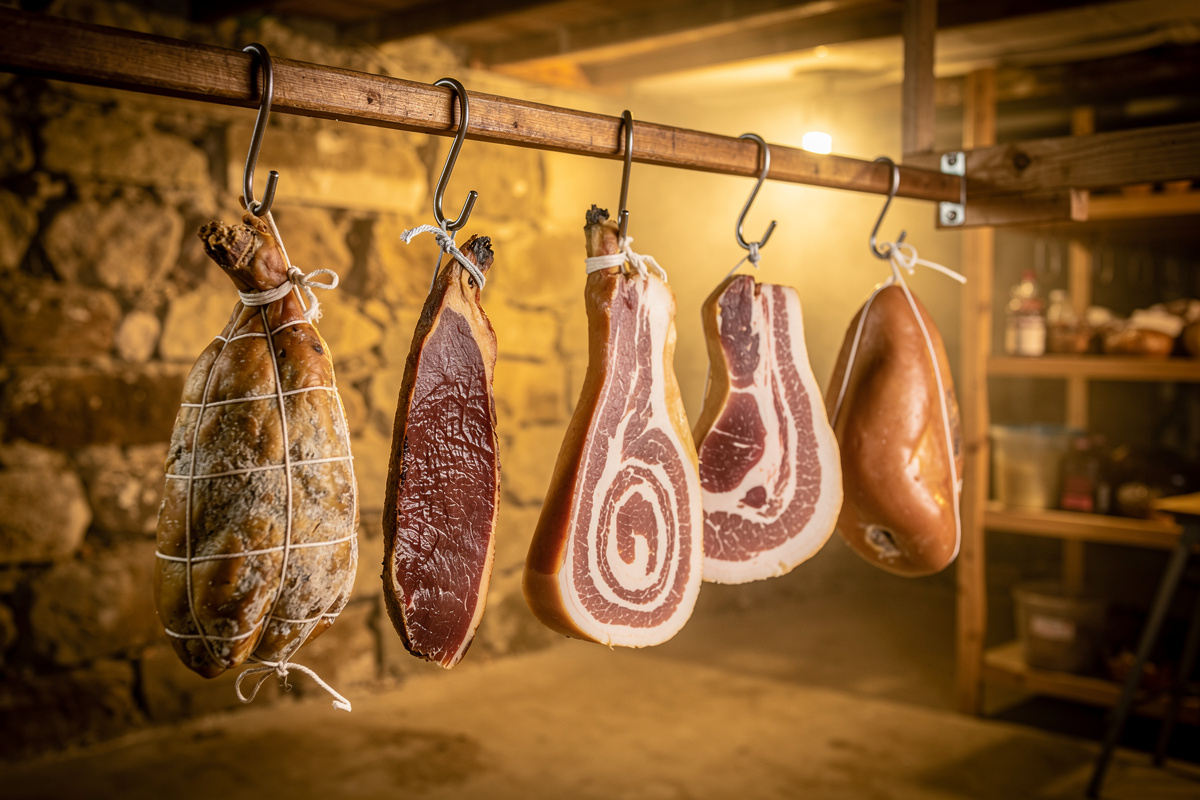
Whole Muscle Charcuterie: The Complete Guide
Whole Muscle Charcuterie

Whole Muscle Charcuterie: The Complete Guide

Whole-muscle charcuterie is the family of dry-cured meats made from intact muscle pieces — prosciutto, bresaola, coppa, lonza, lardo, speck, pancetta — rather than ground meat in casings. As an Amazon Associate I earn from qualifying purchases. Each piece is salt-and-cure-cured for days to weeks — the salt plus sodium nitrite/nitrate combination that inhibits Clostridium […]

Read 17 min read
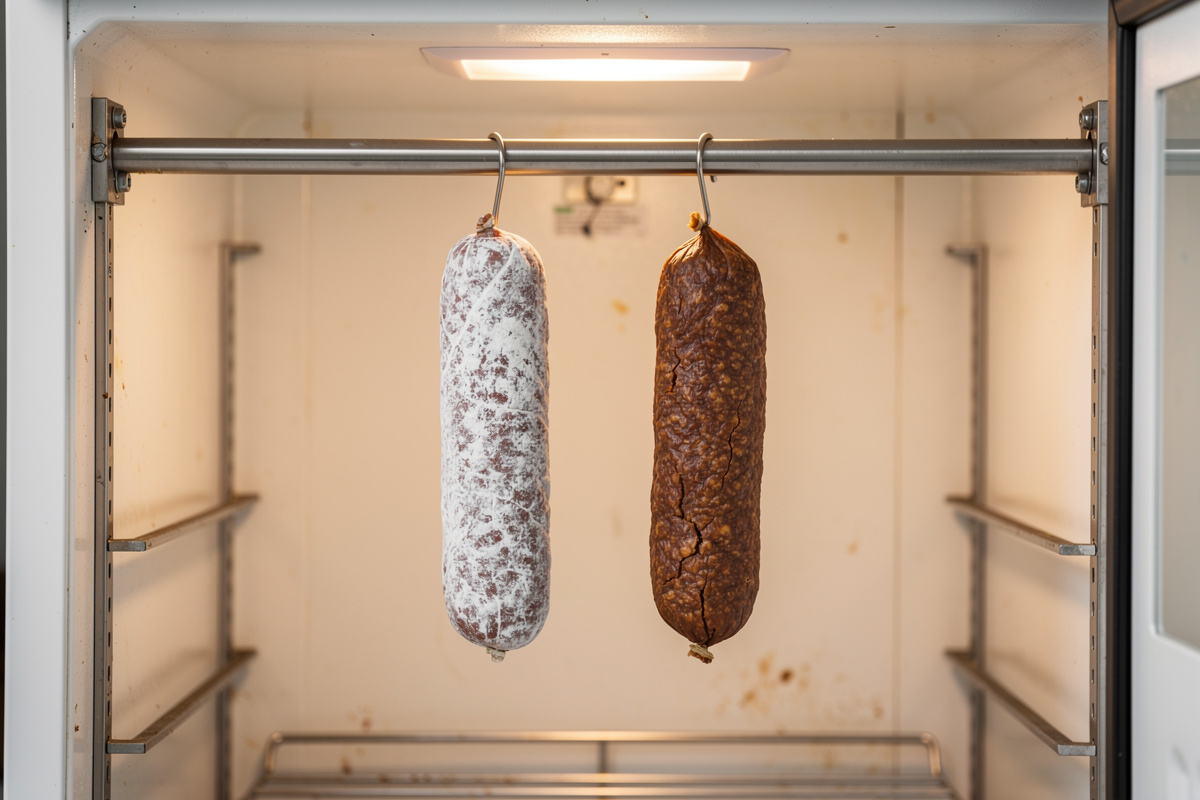
Curing Chamber Troubleshooting: The Complete Guide
Troubleshooting & Food Safety

Curing Chamber Troubleshooting: The Complete Guide

Most curing chamber problems trace back to four root causes: climate drift (temperature or humidity outside the safe band), insufficient air movement (saturated boundary layer around hanging meat), wrong starter culture or salt percentage (fermentation failure to hit the pH 5.0-5.3 / water-activity 0.90-0.94 shelf-stability thresholds documented in published dry-sausage validation guidance), or sensor drift […]

Read 16 min read
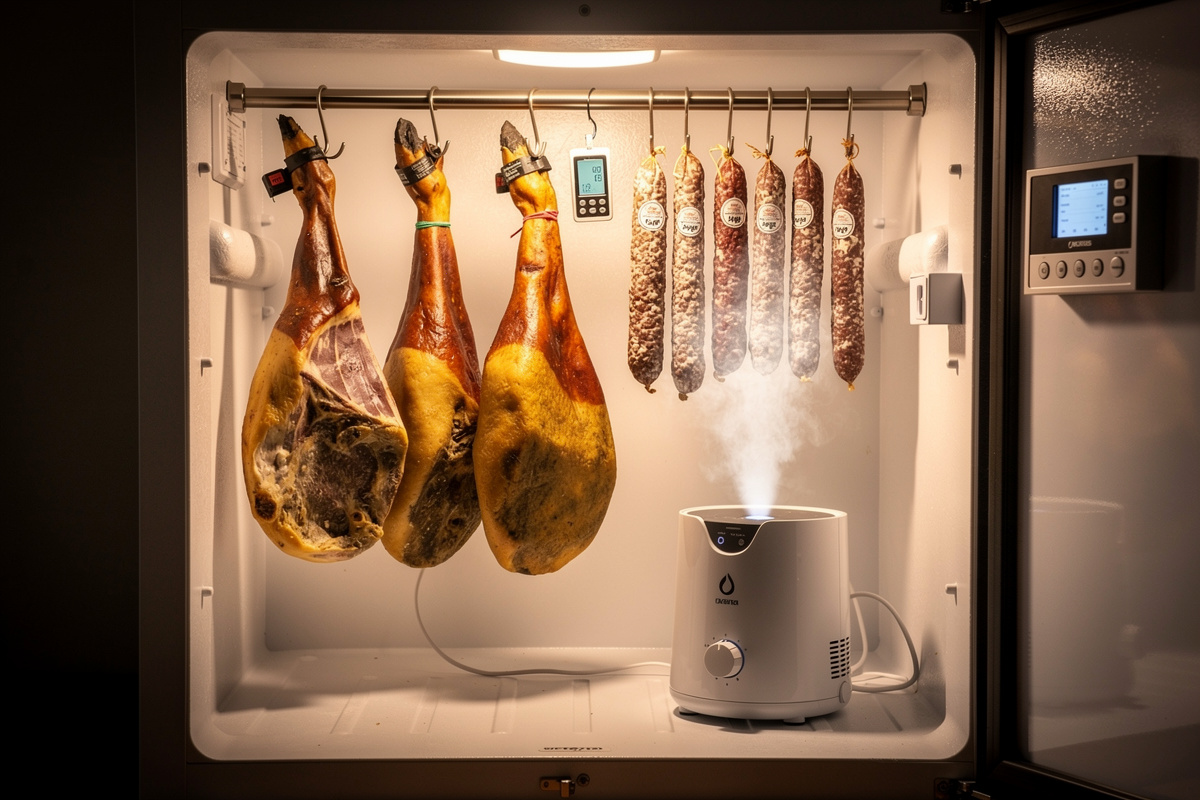
Curing Chamber Climate Control: The Complete Guide
Temperature & Humidity Science

Curing Chamber Climate Control: The Complete Guide

Curing chamber climate control means holding the box at a target temperature and relative humidity for weeks at a time, with calibrated sensors, sized humidifiers and dehumidifiers, and a cycling fan that breaks the saturated boundary layer around hanging meat. The psychrometric relationship between temperature and relative humidity is why the four layers below have […]

Read 17 min read