All Guides

Troubleshooting & Food Safety

Every technical article, build log, and curing walkthrough — organized for reference.

Why Won’t White Mold Grow in My Chamber? Humidity and Spore Fixes
Troubleshooting & Food Safety

Why Won’t White Mold Grow in My Chamber? Humidity and Spore Fixes

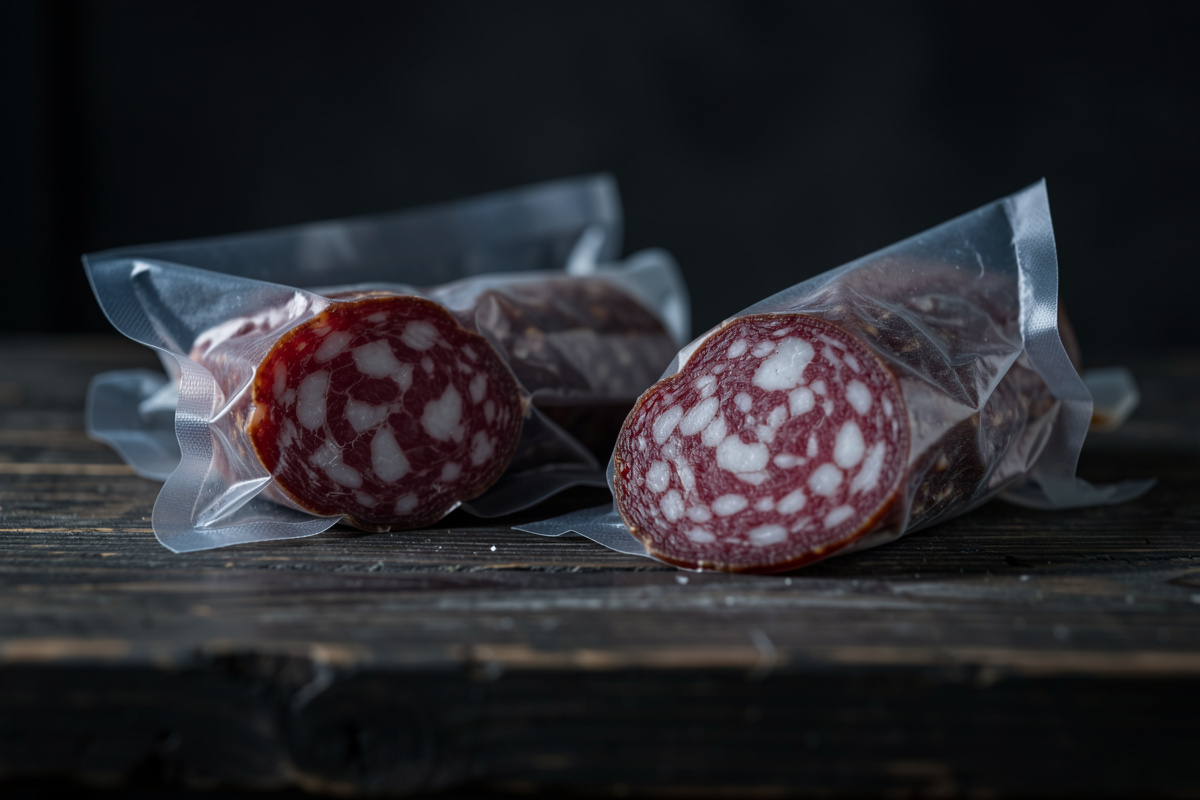
White mold won’t grow in your chamber for one of five reasons, in rough order of likelihood: humidity too low for spores to germinate, chlorinated water that killed the culture when you rehydrated it, a chamber running too warm or too cold, residual sanitizer suppressing the mold, or a dead or improperly stored culture. Fix […]
Read 9 min read
How to Wipe Off Unwanted Mold Without Killing the Cure
Troubleshooting & Food Safety

How to Wipe Off Unwanted Mold Without Killing the Cure

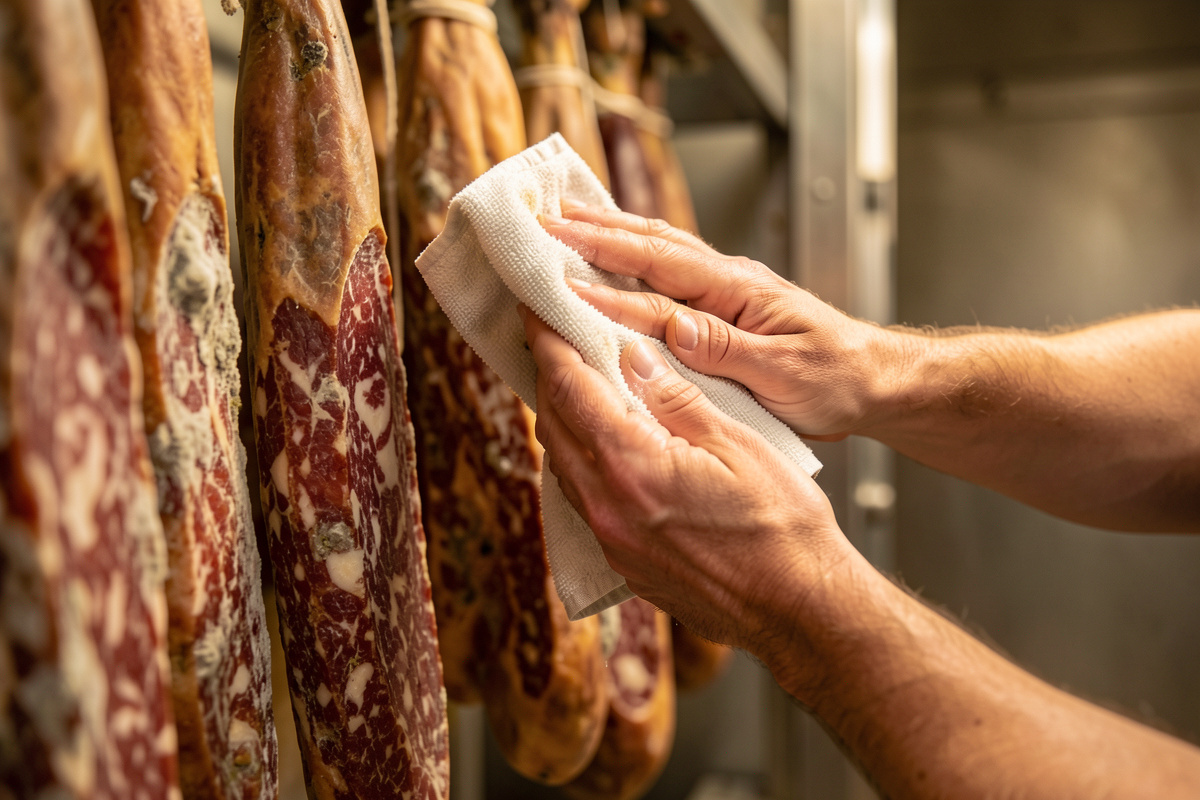
To wipe unwanted mold off a salami without killing the cure, dampen a cloth in saturated salt brine or a 1:1 white-vinegar-and-water solution, and wipe the casing gently in one direction until the patch lifts. The cure lives inside the meat — the salt and nitrite locked in during curing — so scrubbing a surface […]

Read 8 min read
Will Mold Spread Between Pieces in the Same Chamber?
Troubleshooting & Food Safety

Will Mold Spread Between Pieces in the Same Chamber?

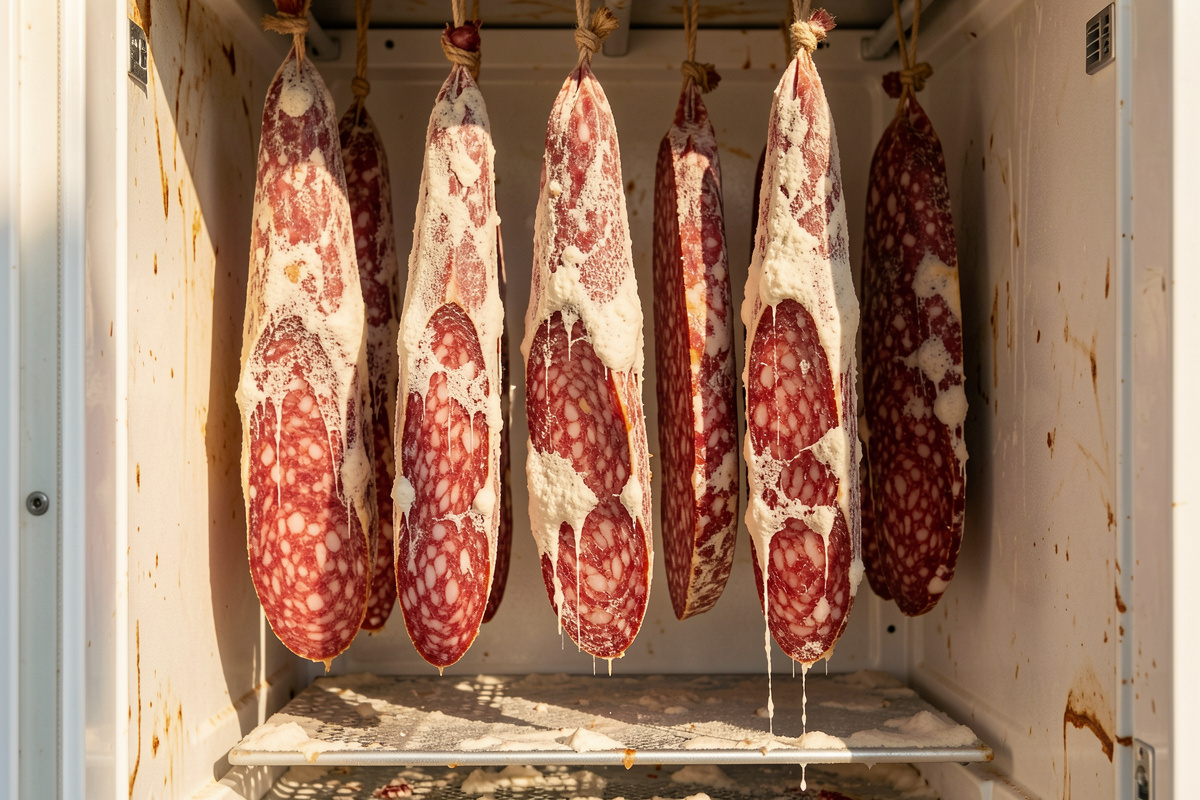
Yes — mold spreads readily between pieces in the same curing chamber, carried on the shared air and by direct contact. For the white Penicillium coat you want, that spread is a gift: a strong bloom on one salami colonizes its neighbors and builds a “house culture” over successive batches. For the green, grey, and […]

Read 9 min read
Managing Mold in Your Curing Chamber: Complete Guide
Troubleshooting & Food Safety

Managing Mold in Your Curing Chamber: Complete Guide

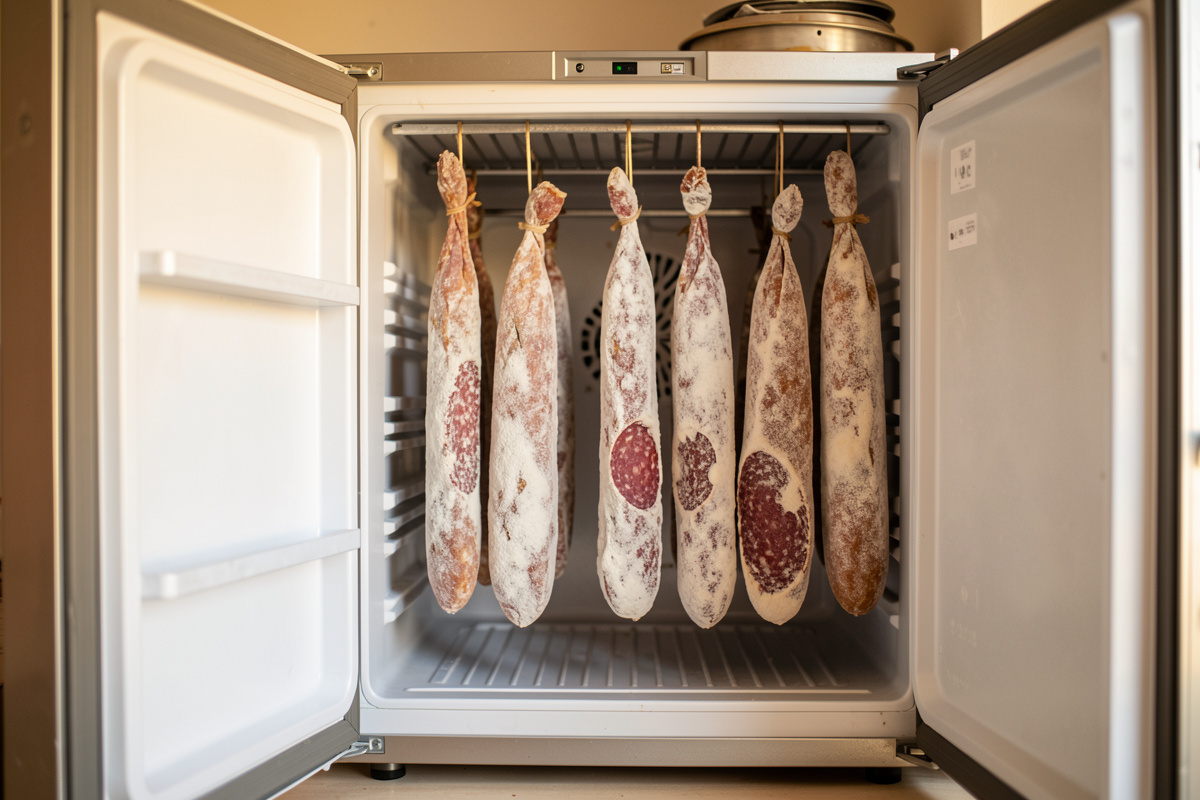
Managing mold in a curing chamber is not a one-time spray-and-forget job — it is an ongoing balancing act between the white mold you want covering your salami and the green, grey, and black molds you do not. Hold the chamber at roughly 12–15 °C and 80–85% RH early on, seed the good mold deliberately, and […]

Read 15 min read
Water Activity and Food Safety in Charcuterie
Troubleshooting & Food Safety

Water Activity and Food Safety in Charcuterie

Water activity is the amount of free water available to bacteria in a piece of meat, measured on a scale from 0 to 1.0, and it is the hurdle that finally makes dry-cured charcuterie shelf-stable. It is not the same as how wet the meat feels: most strains of Clostridium botulinum stop growing below water […]

Read 8 min read
Pink Salt and Nitrates Explained for Charcuterie
Troubleshooting & Food Safety

Pink Salt and Nitrates Explained for Charcuterie

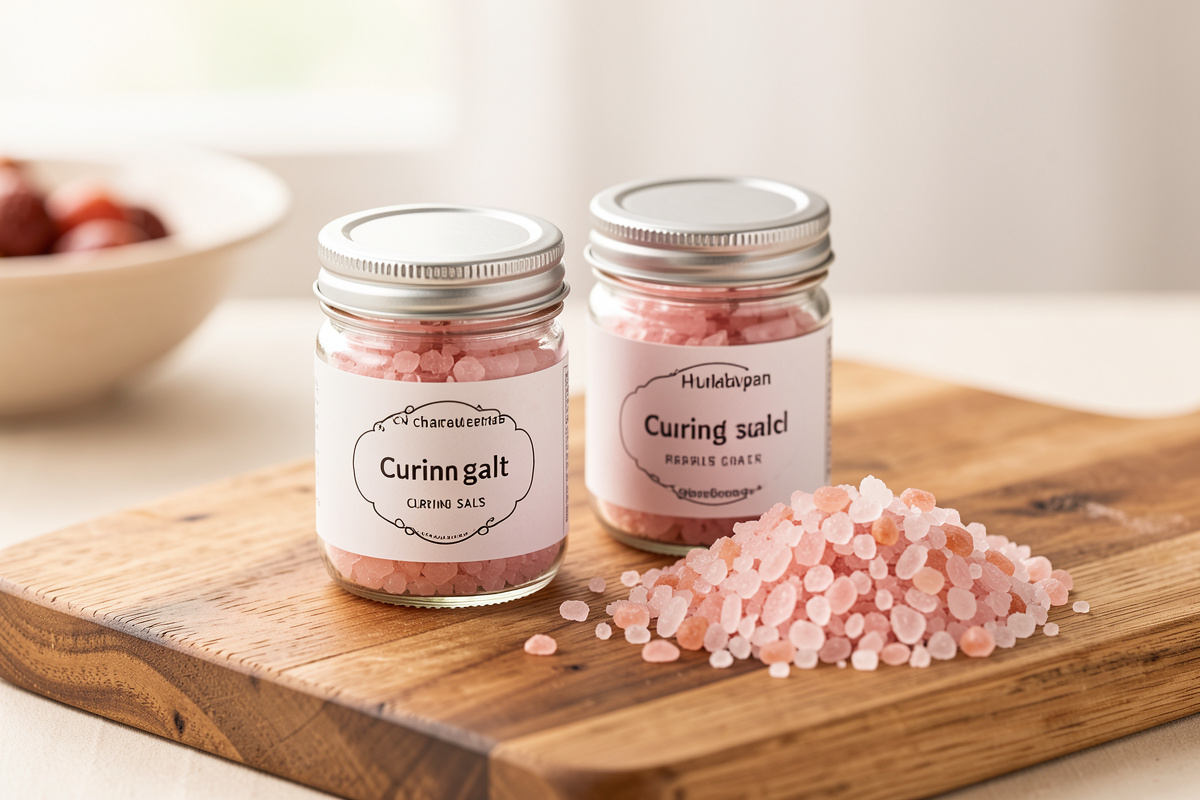
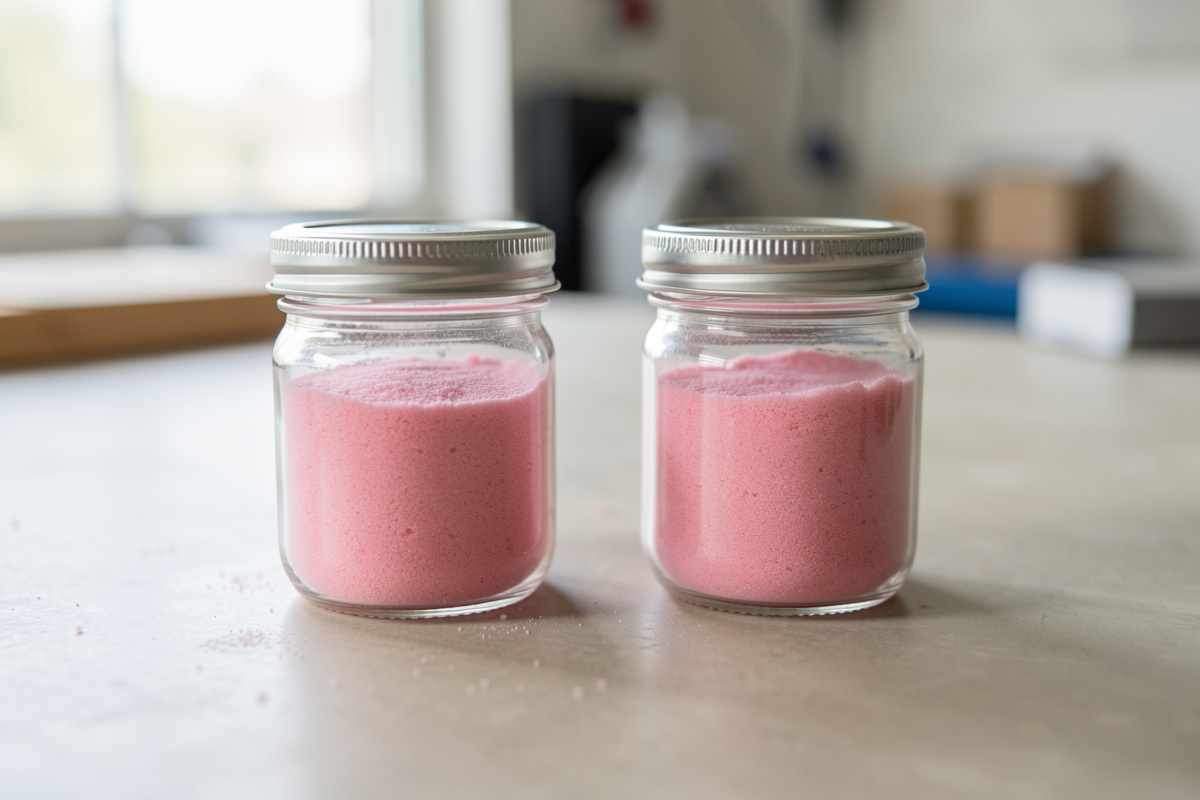
Pink salt in charcuterie is not the rosy Himalayan rock salt sold for grinders — it is curing salt, dyed pink on purpose so you never mistake it for table salt, and its active ingredient is sodium nitrite (with sodium nitrate added in the long-cure version). At the standard home dose of 2.5 grams per […]

Read 8 min read
Charcuterie Food Safety: The Complete Guide
Troubleshooting & Food Safety

Charcuterie Food Safety: The Complete Guide

Charcuterie food safety comes down to one idea: you are not “preserving meat” so much as making it a place where dangerous bacteria cannot grow. The four levers that do that work are salt, curing salt (nitrite/nitrate), acidity, and water activity, and a finished dry-cured piece typically needs to lose about 30–40% of its starting […]

Read 15 min read
Salvaging Under-Salted Charcuterie: Can You Fix It Safely?
Troubleshooting & Food Safety

Salvaging Under-Salted Charcuterie: Can You Fix It Safely?

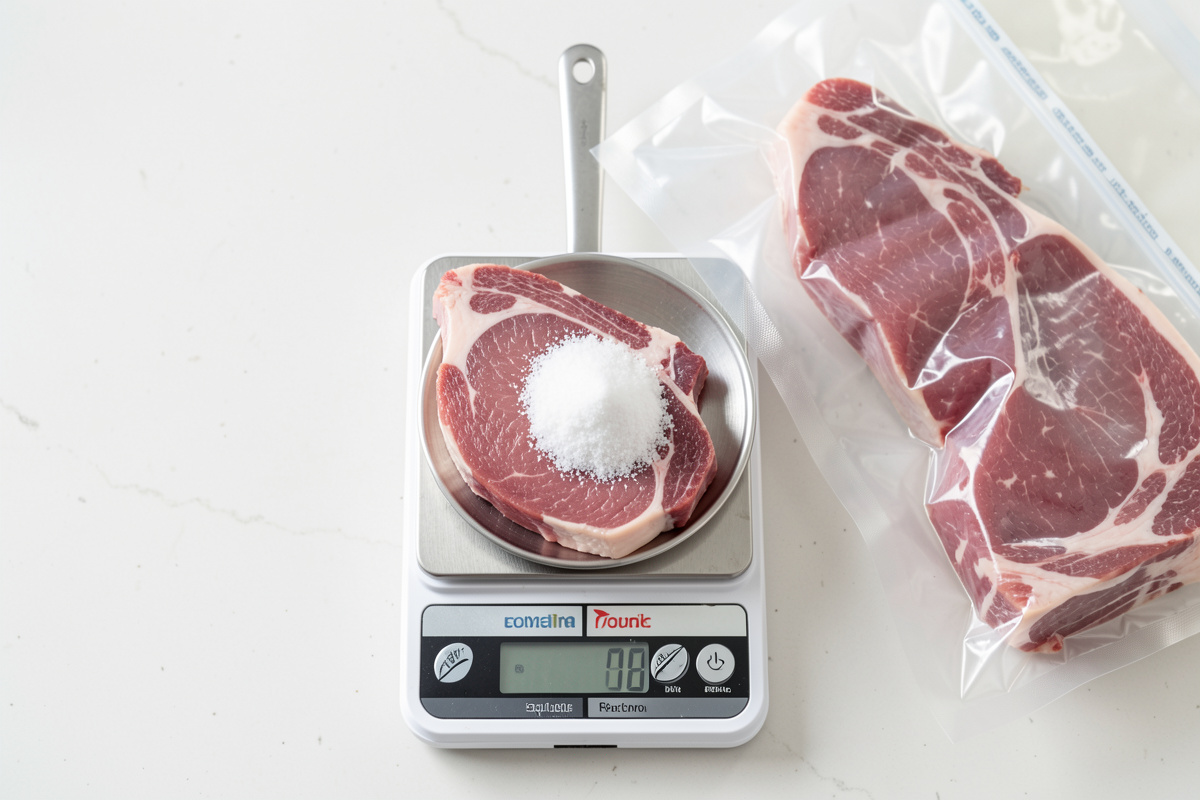
Under-salting is the quietest mistake in dry curing, and the most dangerous one. A piece that’s a little short on salt doesn’t announce itself the way a slimy casing or black mold does. It just sits in the chamber looking almost right, tasting flat, and slowly losing the safety margin you were counting on. I’ve […]

Read 8 min read
Cured Meat Headache and Nitrates: What the Research Actually Says
Troubleshooting & Food Safety

Cured Meat Headache and Nitrates: What the Research Actually Says

If you have ever pulled a slice of salami off the board, eaten three rounds with cheese, and felt a dull throb start behind one eye twenty minutes later, you have probably wondered the same thing I did the first time it happened in my kitchen: is it the nitrates? It is one of the […]

Read 9 min read
Prague Powder #1 vs #2 Mixup: How to Tell and What to Do
Troubleshooting & Food Safety

Prague Powder #1 vs #2 Mixup: How to Tell and What to Do

Two small bags of pink salt sit on my cure shelf. One is Prague Powder #1, one is Prague Powder #2. They are the same colour, the same texture, and they smell the same. The only thing that tells them apart is the label — and the day a label rubs off, or you decant […]

Read 8 min read
Green Ring in Dry-Cured Sausage: What It Means and Is It Safe?
Troubleshooting & Food Safety

Green Ring in Dry-Cured Sausage: What It Means and Is It Safe?

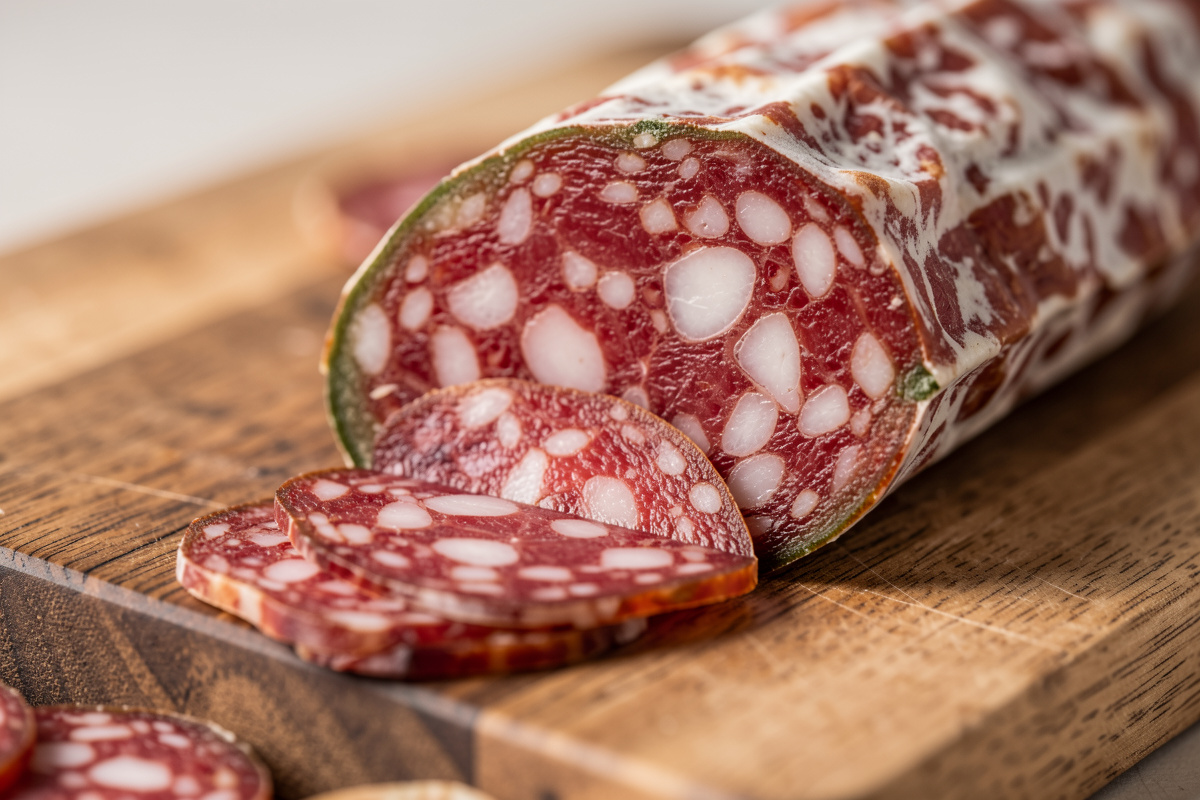
You cut into a salami that has been hanging in the chamber for ten weeks, the weight log says it has lost the right amount, the inside is a clean rosy cured color — and then you see it. A thin greenish band near the edge of the cut face, or a faint ring sitting […]

Read 9 min read
Rancidity in Cured Meats: Why It Happens and How to Prevent It
Troubleshooting & Food Safety

Rancidity in Cured Meats: Why It Happens and How to Prevent It

Every cured-meat maker eventually pulls a piece that looks fine but tastes wrong: a faint cardboard, paint-thinner, or crayon note riding under the cure, with fat that has gone from creamy white to a dull yellow. That is rancidity, and it has nothing to do with mold or microbial spoilage. It is the fat itself […]

Read 8 min read