All Guides

Dry Aging Beef

Every technical article, build log, and curing walkthrough — organized for reference.

Serving Dry-Aged Beef Restaurant-Style at Home
Dry Aging Beef

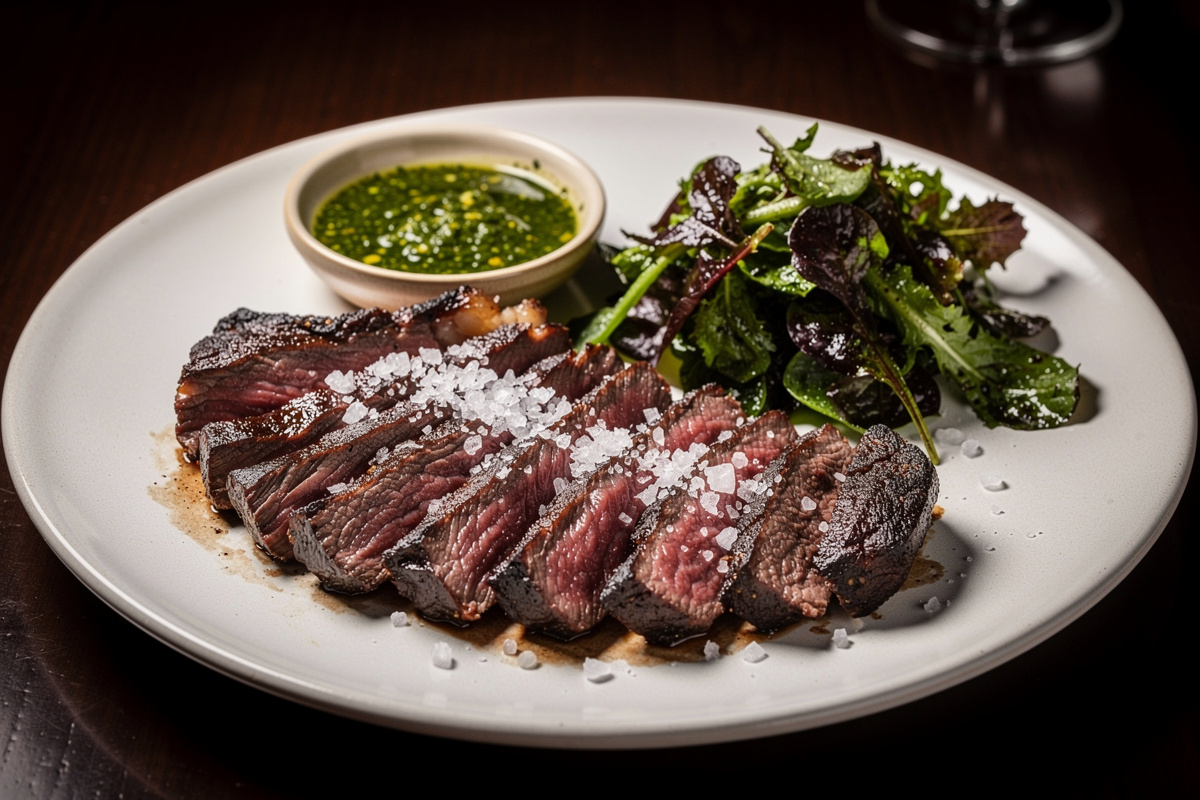
Serving Dry-Aged Beef Restaurant-Style at Home

To serve dry-aged beef restaurant-style, rest the cooked steak 5-10 minutes, slice it thick against the grain on a bias, fan it on a warm plate, finish with flaky salt, and keep the sauce minimal so the funk leads. The dry-age flavor is the star — your job is to frame it, not bury it. […]
Read 8 min read
Dry Aging Pork at Home: Safe Limits and How to Do It
Dry Aging Beef

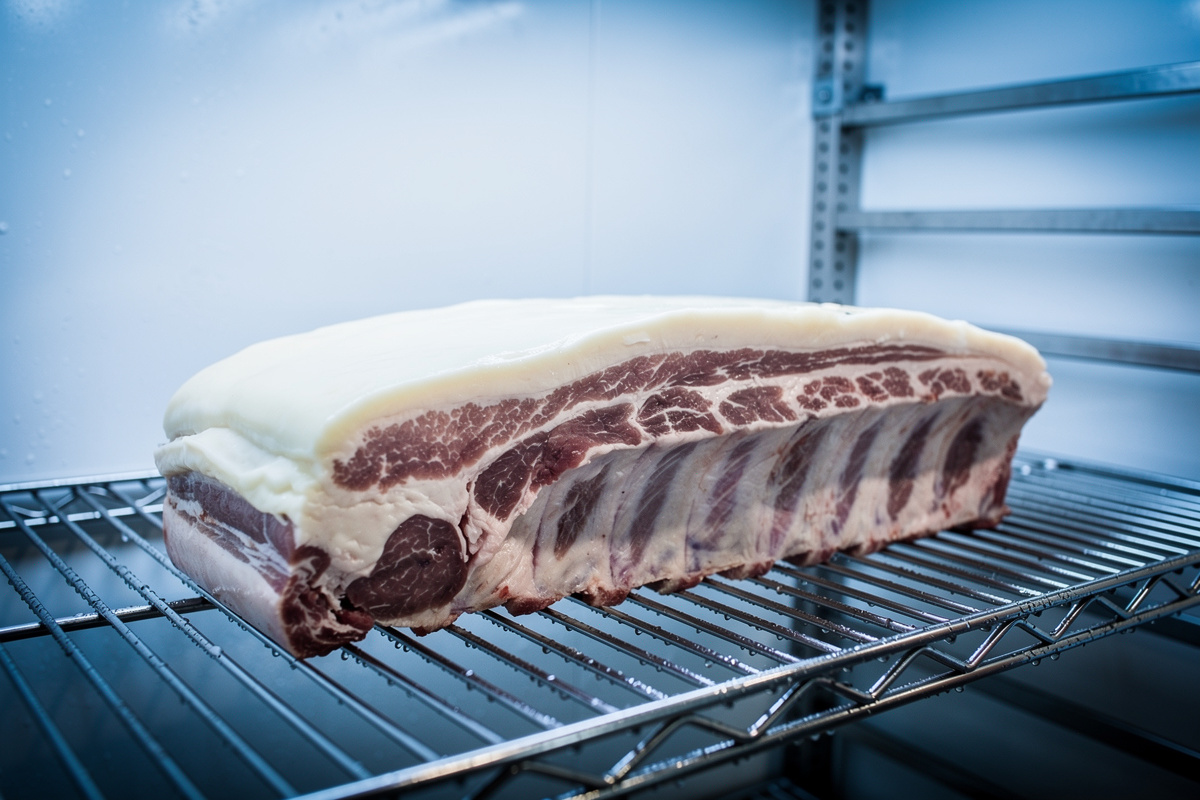
Dry Aging Pork at Home: Safe Limits and How to Do It

You can dry age pork at home, but treat it nothing like beef: keep it short — about one to two weeks maximum — on bone-in, well-fatted cuts held at 33-40°F (1-4°C), because pork fat turns rancid far faster than beef fat. For anything longer, the safe path is curing with cure #2, not dry […]

Read 9 min read
Butter-Basting a Dry-Aged Steak: Technique and Temps
Dry Aging Beef

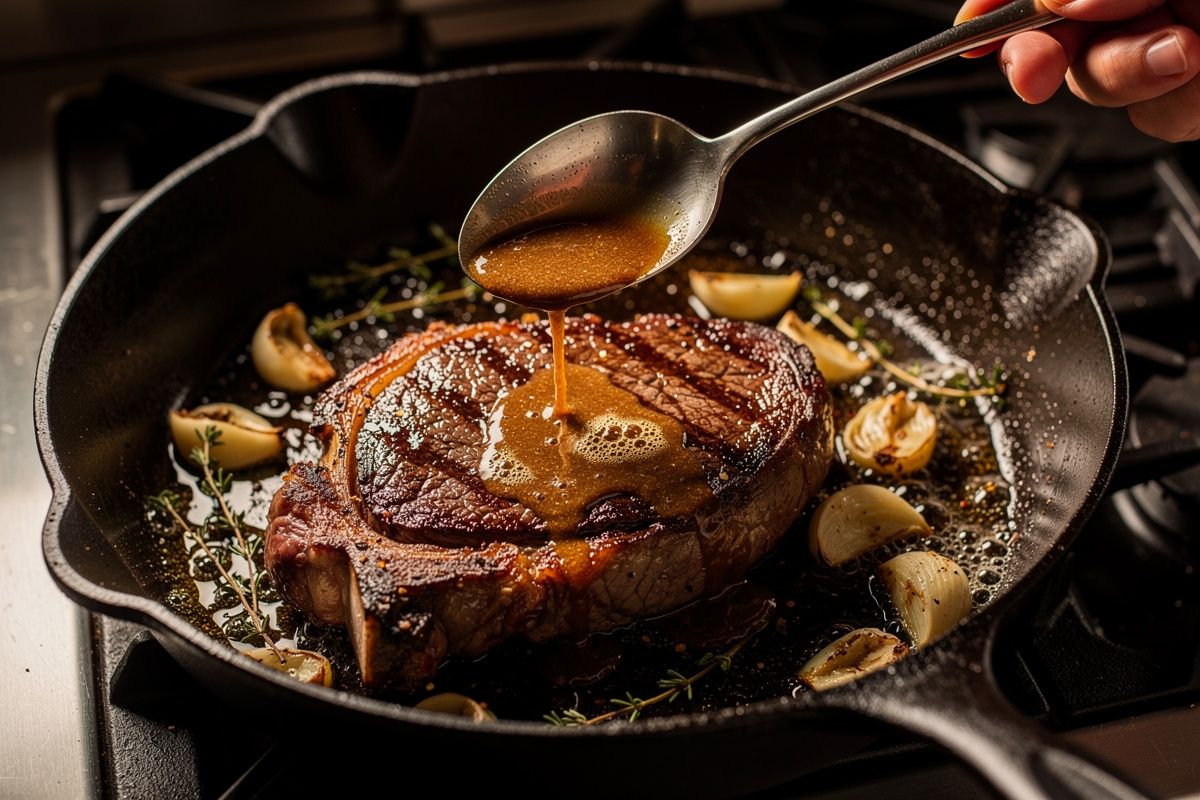
Butter-Basting a Dry-Aged Steak: Technique and Temps

To butter-baste a dry-aged steak, sear it first in neutral high-heat oil, then add butter, smashed garlic, and thyme in the last 1-2 minutes, tilt the pan, and spoon the foaming butter over the meat until it hits 125°F for a 130-135°F medium-rare after rest. Add the butter late — dry-aged steak is drier and […]

Read 9 min read
Dry Aging Bag vs Open Air: Which Method Wins?
Dry Aging Beef

Dry Aging Bag vs Open Air: Which Method Wins?

A dry-aging bag and open-air aging both dry-age beef, but the bag is a permeable membrane that works in any kitchen fridge with a modest yield edge (roughly 60-70% versus open air’s 50-55%) and milder funk, while open-air aging in a dedicated chamber gives the deepest flavor at the cost of more trim and far […]

Read 10 min read
How to Trim a Dry-Aged Steak: Bark, Fat, and Portioning
Dry Aging Beef

How to Trim a Dry-Aged Steak: Bark, Fat, and Portioning

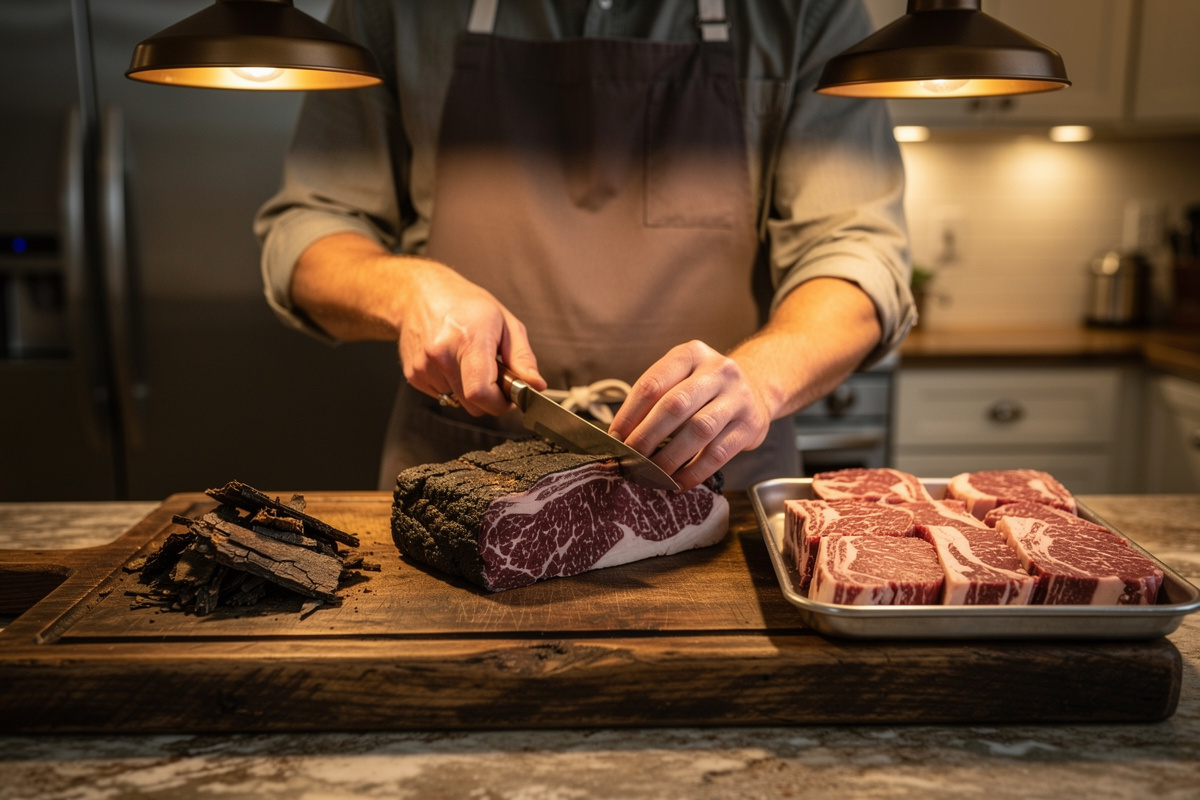
To trim a dry-aged steak, work the whole subprimal cold on a sanitized board: slice off the hard dark bark on every exposed face down to moist red meat, cut away any oxidized exterior fat, then portion into steaks. Expect to discard 30-40% of the aged weight as bark and rancid fat — that loss […]

Read 9 min read
Dry Aging vs Wet Aging Beef: A Side-by-Side Taste Test
Dry Aging Beef

Dry Aging vs Wet Aging Beef: A Side-by-Side Taste Test

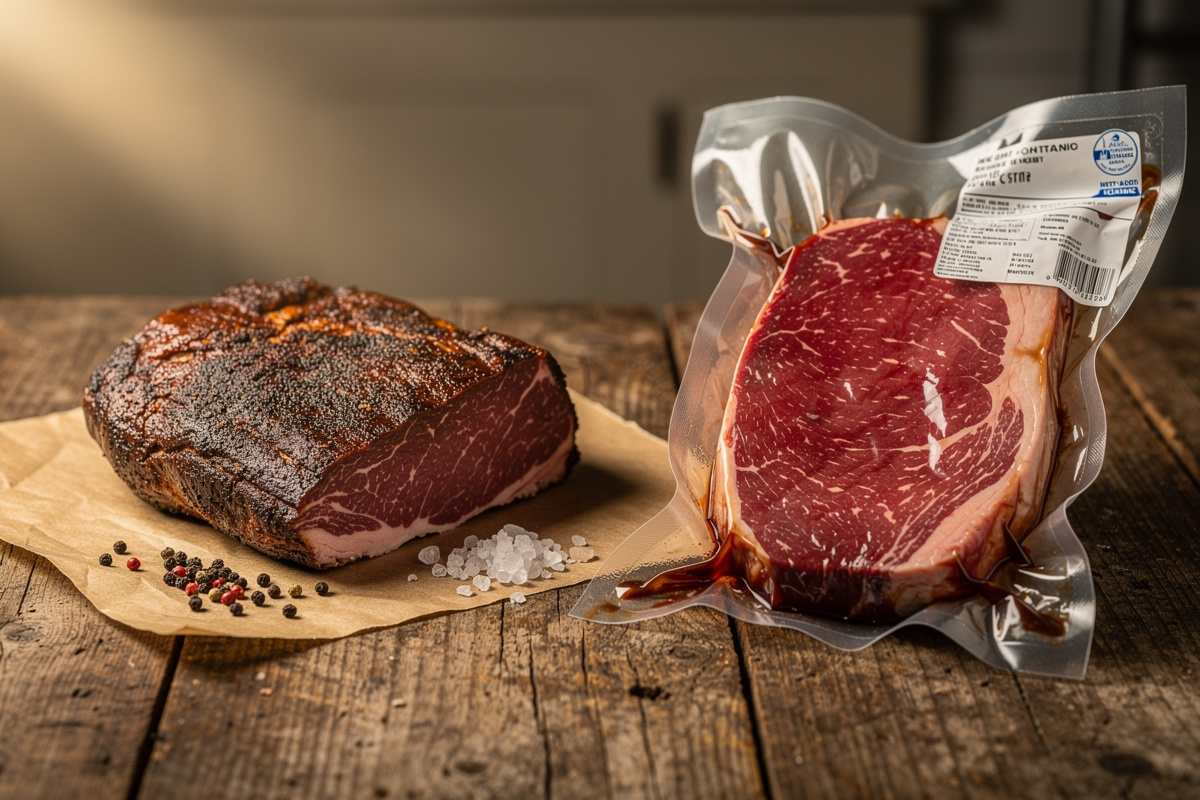
Dry aging holds beef in open, refrigerated air so it loses water and grows a funky bark; wet aging seals it in vacuum plastic so it tenderizes in its own juices with no evaporation. Dry aging concentrates and deepens flavor; wet aging only tenderizes. In a side-by-side taste they are not close. I aged two […]

Read 9 min read
How Long to Dry Age Beef: 21, 35, 60, and 100 Days
Dry Aging Beef

How Long to Dry Age Beef: 21, 35, 60, and 100 Days

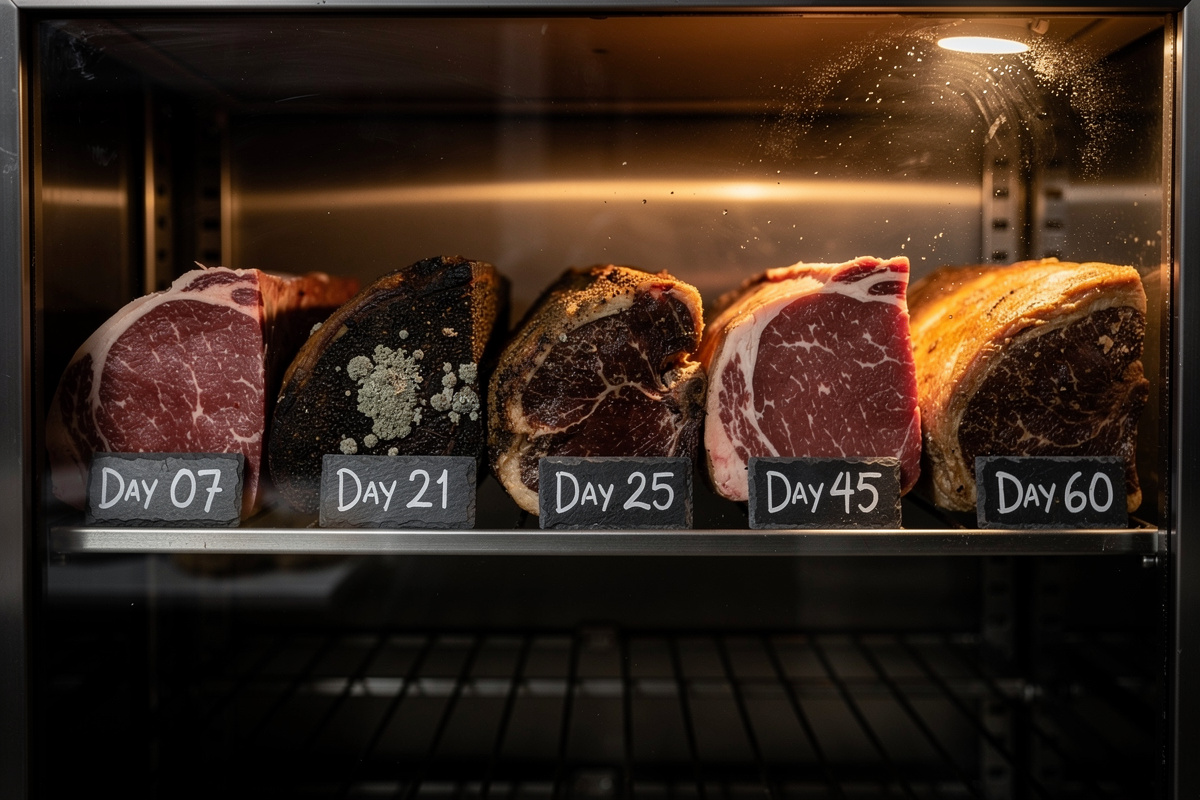
Dry age beef for 21 days for a clean first result, 28 days for the classic steakhouse profile, 35-45 days for pronounced blue-cheese funk, and 60-100 days only as an expert project. There is no single right number — each window produces a recognizably different steak. I have pulled cuts at every one of these […]

Read 11 min read
Best Beef Cuts for Dry Aging: Ribeye vs Striploin vs Sirloin
Dry Aging Beef

Best Beef Cuts for Dry Aging: Ribeye vs Striploin vs Sirloin

The best beef cuts for dry aging are whole subprimals with a heavy fat cap and enough mass to survive trim: bone-in ribeye first, striploin second, top sirloin a budget third. Pre-cut steaks and lean roasts lose too much to evaporation and bark to be worth it. I have aged all three across my converted-fridge […]

Read 9 min read
Dry Aging Beef at Home: The Complete Guide
Dry Aging Beef

Dry Aging Beef at Home: The Complete Guide

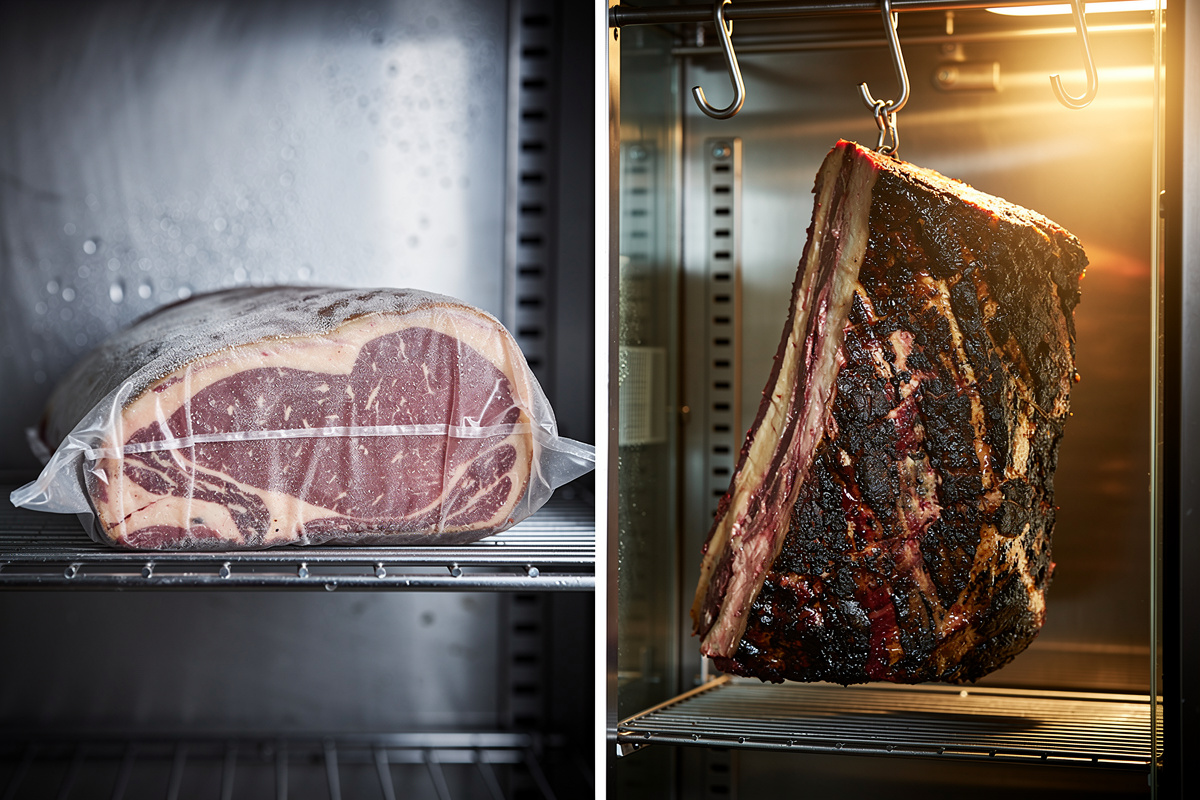
Dry aging beef at home holds a beef subprimal at 33-40°F (1-4°C) and 75-85% relative humidity for 14 to 45 days while enzymes break down muscle proteins, water evaporates from the surface, and a hard outer bark forms that is later trimmed off. The result is a more tender, deeply concentrated steak that grocery-store wet-aged […]

Read 15 min read
Best Dry Aging Bags: UMAi vs DryAgePro vs DryBagSteak Tested
Dry Aging Beef

Best Dry Aging Bags: UMAi vs DryAgePro vs DryBagSteak Tested

I have run a 35-day Umai Dry on a 4-pound USDA Choice ribeye, a 21-day DryAgePro on a 6-pound striploin, and a 28-day DryBagSteak.com bag (their own budget line) on a 3-pound boneless ribeye. The Umai produced the best crust development; the DryAgePro held its seal the most reliably of the three on the first […]

Read 13 min read
Dry Aging Smell: What Is Normal vs What Means Trouble
Dry Aging Beef

Dry Aging Smell: What Is Normal vs What Means Trouble

I run a 45-day dry-aged ribeye in my chamber every winter, and the daily 2-second smell check at the chamber door is the single most useful diagnostic in the whole process. Healthy dry-aged beef smells nutty, slightly cheesy, and earthy — described by professional dry-aging operators as “blue cheese rind” or “browned butter” with a […]

Read 9 min read