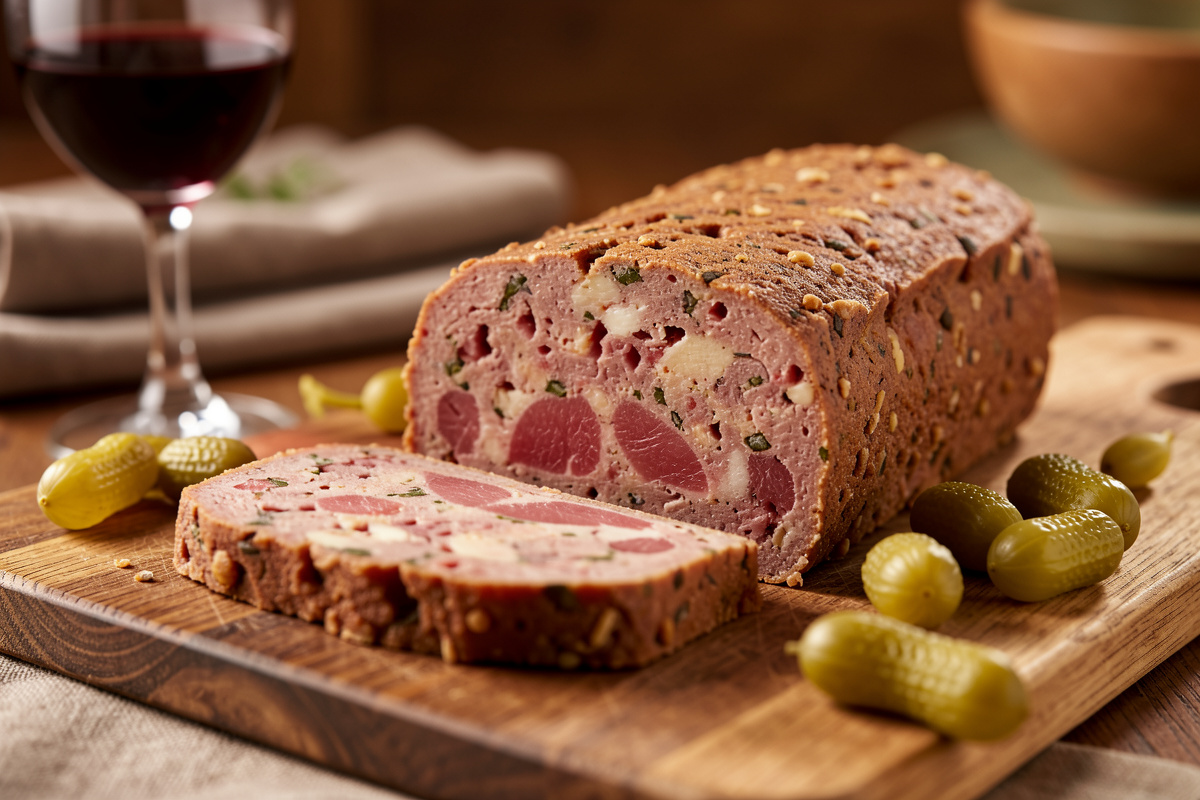

Country pâté — pâté de campagne — is a coarse forcemeat of ground pork, pork fat and usually liver, seasoned, bound with egg, packed into a lined terrine mould and baked in a water bath to an internal temperature of 65–70 °C (150–160 °F). A measured dose of cure #1 at 2.5 g per kilo of forcemeat gives it the rosy colour, the savoury cured depth, and a margin of safety across the slow cook and the few days of cold storage. It is the rustic, achievable end of the terrine world.
This is the recipe where the cooked side of charcuterie starts to feel like real craft. After the relaxed shredding of rillettes and the submerge-and-wait of confit, a country pâté asks you to build a structured forcemeat that slices cleanly and tastes seasoned all the way through. It sits at the heart of the confit, rillettes and terrines guide, and the technique here is the foundation for every terrine you will ever make.
The forcemeat: meat, fat, liver and binder
A good country pâté is built on ratios, not guesswork. The backbone is fatty pork shoulder, with added pork back fat to hit roughly a 25–30% fat content overall — too lean and the baked pâté is dry and crumbly; the fat is what keeps it moist and sliceable. Liver (pork or chicken) at around 15–20% of the meat weight gives the characteristic earthy depth; use less if you want a milder result, more if you love it. The whole thing is bound with egg and a panade — bread soaked in milk, or a spoon of flour — which holds the slice together and stops it crumbling.
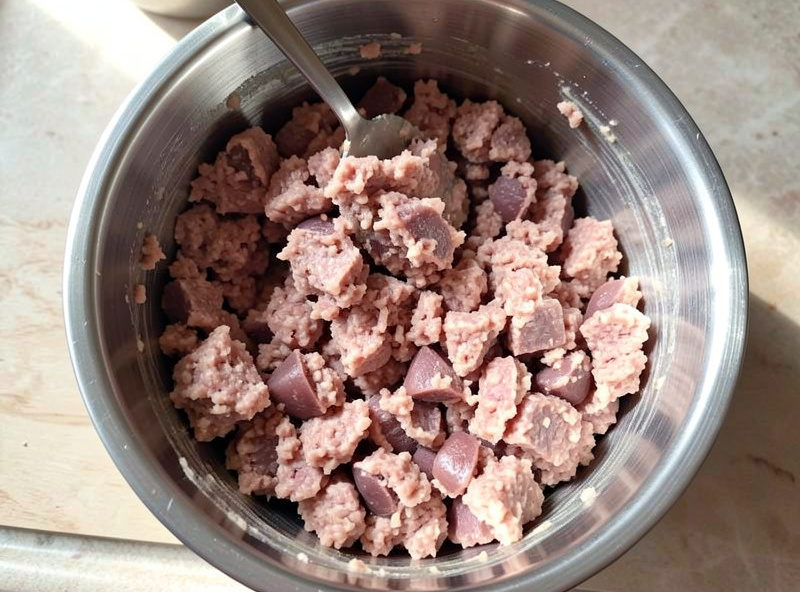
Grind the chilled meat and fat through a coarse plate for that rustic country texture (the same grinder discipline I use for coarse salami — keep everything cold so the fat stays in distinct flecks rather than smearing). Reserve a portion ground finer, or purée the liver, so you get a mix of coarse and smooth that binds well. Mix in seasonings, then fry off a tiny test patty and taste it before you commit — cold pâté needs to taste assertively seasoned when warm, because chilling mutes salt and spice.
Salt, cure #1, and getting the numbers right
This is the one recipe in the cluster where curing salt genuinely earns its place, so the numbers have to be exact — measured by weight on a scale that reads to 0.1 g, never by eye — the scale I weigh every cure on lives next to the grinder, and for the underlying numbers the National Center for Home Food Preservation is the reference I trust over any forum thread. Salt the forcemeat at 16–18 g per kilo of total mix (1.6–1.8%) for seasoning. Then add cure #1 — the 6.25% sodium-nitrite “pink salt” — at 2.5 g per kilo of total forcemeat, which lands you at the standard, safe 156 ppm nitrite.
Cure #1 does three things in a pâté: it holds the appetising rosy-pink cured colour instead of letting the meat bake to a dull grey, it builds the savoury “cured” flavour, and it adds a safety margin against Clostridium during the long, slow, low-temperature bake and the days of refrigerated rest that follow. It is genuinely optional for a pâté you will eat the same day — but if you are keeping it, use it. Critically, this is cure #1, not cure #2: cure #2 contains nitrate for slow release over the weeks-long dry of a raw salami or coppa, and has no place in a cooked product. The distinction, and why mixing the two up matters, is laid out in pink salt and nitrates explained, and the measured, evidence-based view on nitrite is in nitrates and the research. If you want to understand percentage-based dosing in general, the equilibrium-curing maths uses the same arithmetic.
| Ingredient / addition | Rate (per kg of total forcemeat) | Role |
|---|---|---|
| Salt | 16–18 g (1.6–1.8%) | Seasoning and texture |
| Cure #1 (6.25% nitrite) | 2.5 g → 156 ppm nitrite | Colour, cured flavour, safety margin |
| Fat content (total) | 25–30% | Moisture, sliceability |
| Liver | 15–20% of meat weight | Earthy depth |
| Egg + panade | 1 egg + soaked bread per ~1 kg | Binds the slice together |
Lining, packing and baking in a water bath
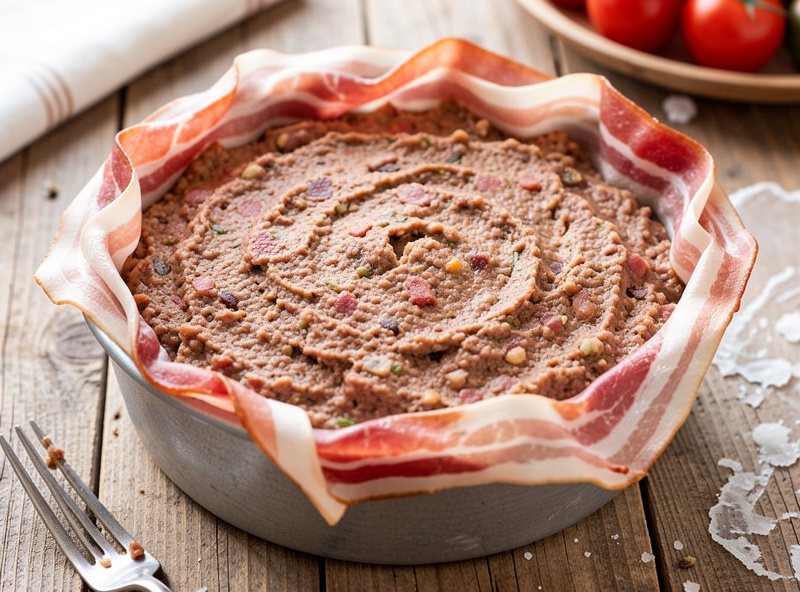
Line your terrine mould or loaf tin with thin streaky bacon, pancetta or caul fat, leaving overhang to fold over the top — this bastes the pâté as it cooks and gives a neat finished edge. Pack the forcemeat in firmly to drive out air pockets, mounding it slightly, fold the lining over, and cover with the lid or a double layer of foil.
Bake it in a bain-marie: stand the mould in a roasting tray and pour in hot water to come halfway up the sides, then bake in a moderate oven (around 150–160 °C / 300–325 °F) until the centre reaches 65–70 °C (150–160 °F) on an instant-read thermometer. The water bath is not optional — it buffers the heat so the outside does not overcook and weep fat before the middle sets. Pull it at temperature; pushing well past 70 °C dries the forcemeat and forces the fat to render out, leaving a greasy, crumbly slice.
Press, rest, and serve
This is the step impatient cooks skip and regret. Once baked, let the pâté cool a little, then press it: lay a piece of card or a board cut to fit on top, weight it down (a couple of tins work), and chill it overnight. Pressing compacts the forcemeat as it sets so the slices hold together instead of crumbling, and it pushes the rendered fat into a sealing layer around the edges. Then — and this is the hard part — leave it at least two to three days in the fridge before you cut it. Like many cured things, a country pâté is markedly better after a rest; the salt, spice and cure settle and the flavour rounds out.
Served in thick slices with cornichons, grainy mustard, pickles and good bread, a country pâté is the anchor of a charcuterie board. Kept whole and refrigerated it holds up to about a week (the cure and the fat edge help); slice only what you need, keep the cut face covered, and freeze a portion if you have made a big terrine. As with everything potted and cooked in this cluster, it is fridge food — and the moment it smells sour, turns slimy, or grows fuzzy mould, it goes in the bin, no salvage. The full safety picture is in the charcuterie food safety guide.
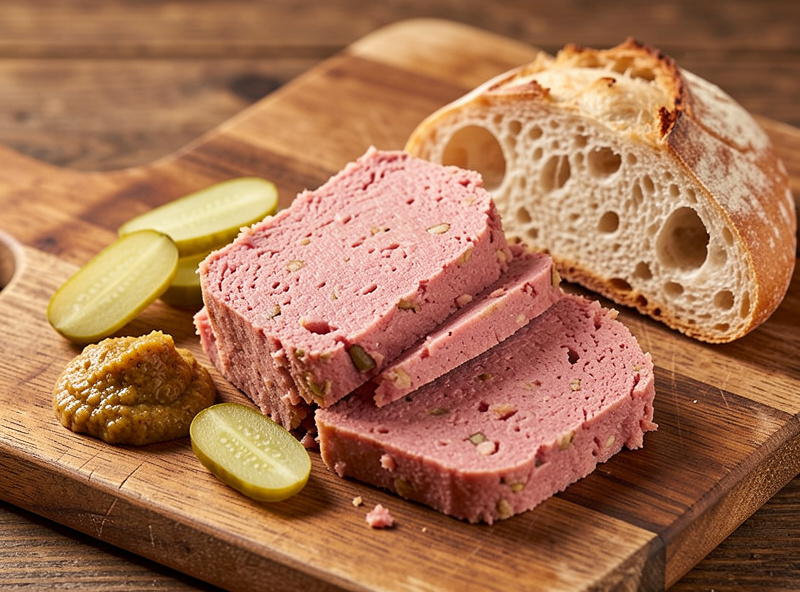
A proper lidded terrine mould makes neat, even slices, but a standard loaf tin and a piece of foil will get your first country pâté on the board just fine.
As an Amazon Associate I earn from qualifying purchases.
Frequently Asked Questions
Do I need pink salt (cure #1) for country pate?
It is optional if you eat the pate the day you bake it, but recommended if you keep it. Cure #1 at 2.5 g per kilo of forcemeat (156 ppm nitrite) holds the rosy cured colour, builds cured flavour, and adds a safety margin during the slow bake and days of cold storage. Use cure #1, never cure #2.
What internal temperature should a country pate reach?
Bake it in a water bath until the centre reaches 65 to 70 C (150 to 160 F) on an instant-read thermometer. Below that it will not set properly; much above 70 C the forcemeat dries out and the fat renders out, leaving a greasy, crumbly slice.
Why is my pate dry and crumbly?
Usually too little fat, no binder, or overbaking. Aim for 25 to 30 percent fat overall, bind with egg and a bread or flour panade, and pull the pate at 65 to 70 C internal. Pressing it under a weight overnight also helps the slices hold together.
What is the difference between pate and a terrine?
A pate is the forcemeat mixture itself, and a terrine is the lidded mould it is traditionally cooked in, though the words are used loosely. Country pate (pate de campagne) is the coarse, rustic style most home cooks start with before moving to layered or pressed terrines.
How long does country pate keep in the fridge?
Kept whole and refrigerated, a country pate holds up to about a week; the cure and the fat edge help it last. Slice only what you need and keep the cut face covered. For longer storage, freeze a portion. It is refrigerated food, never stored at room temperature.
Why rest the pate for a few days before eating?
Resting lets the salt, spice and cure settle and the flavour round out, much like other cured products. Press the baked pate under a weight overnight to set the texture, then leave it at least two to three days in the fridge before slicing for the best flavour and a clean cut.
Related Guides
- Confit, Rillettes and Terrines: The Complete Guide
- Terrine Making Guide
- Pork Rillettes Recipe
- Pink Salt and Nitrates Explained
- Charcuterie Food Safety Guide