All Guides

Guides

Every technical article, build log, and curing walkthrough — organized for reference.

Dry Aging vs Wet Aging Beef: A Side-by-Side Taste Test
Dry Aging Beef

Dry Aging vs Wet Aging Beef: A Side-by-Side Taste Test

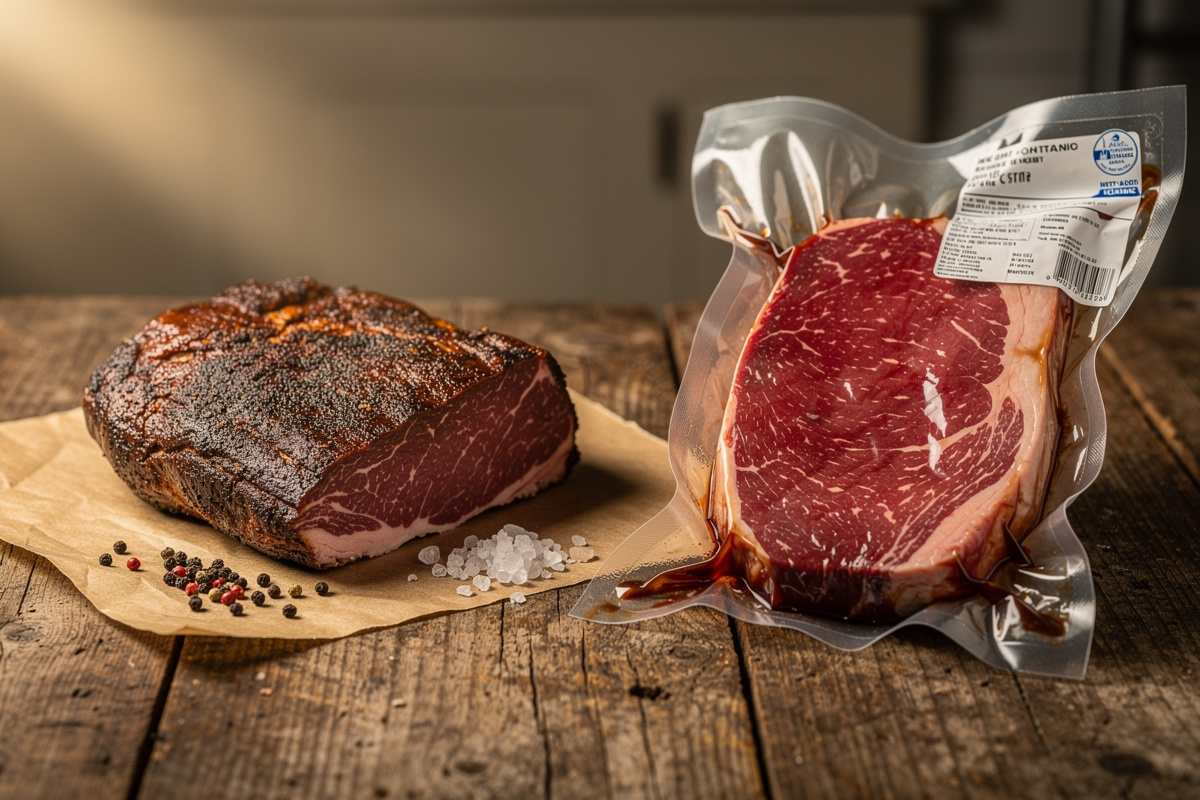
Dry aging holds beef in open, refrigerated air so it loses water and grows a funky bark; wet aging seals it in vacuum plastic so it tenderizes in its own juices with no evaporation. Dry aging concentrates and deepens flavor; wet aging only tenderizes. In a side-by-side taste they are not close. I aged two […]
Read 9 min read
How Long to Dry Age Beef: 21, 35, 60, and 100 Days
Dry Aging Beef

How Long to Dry Age Beef: 21, 35, 60, and 100 Days

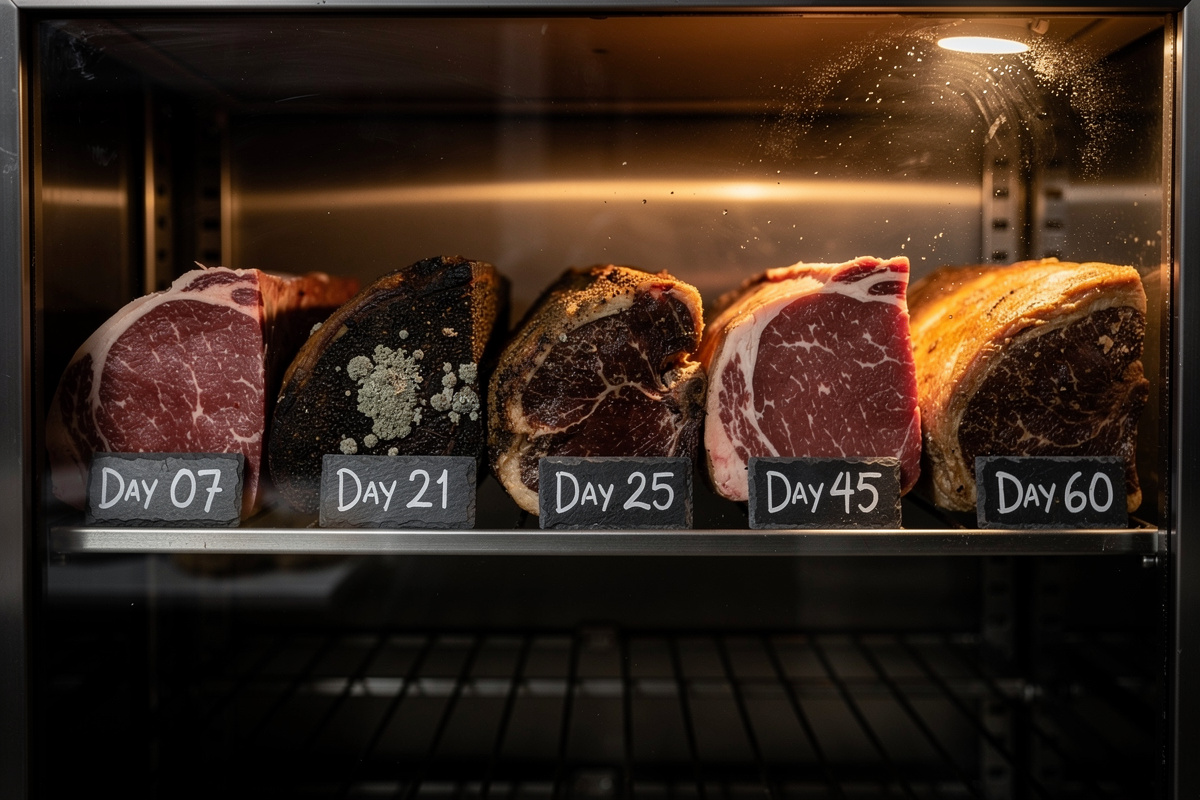
Dry age beef for 21 days for a clean first result, 28 days for the classic steakhouse profile, 35-45 days for pronounced blue-cheese funk, and 60-100 days only as an expert project. There is no single right number — each window produces a recognizably different steak. I have pulled cuts at every one of these […]

Read 11 min read
Best Beef Cuts for Dry Aging: Ribeye vs Striploin vs Sirloin
Dry Aging Beef

Best Beef Cuts for Dry Aging: Ribeye vs Striploin vs Sirloin

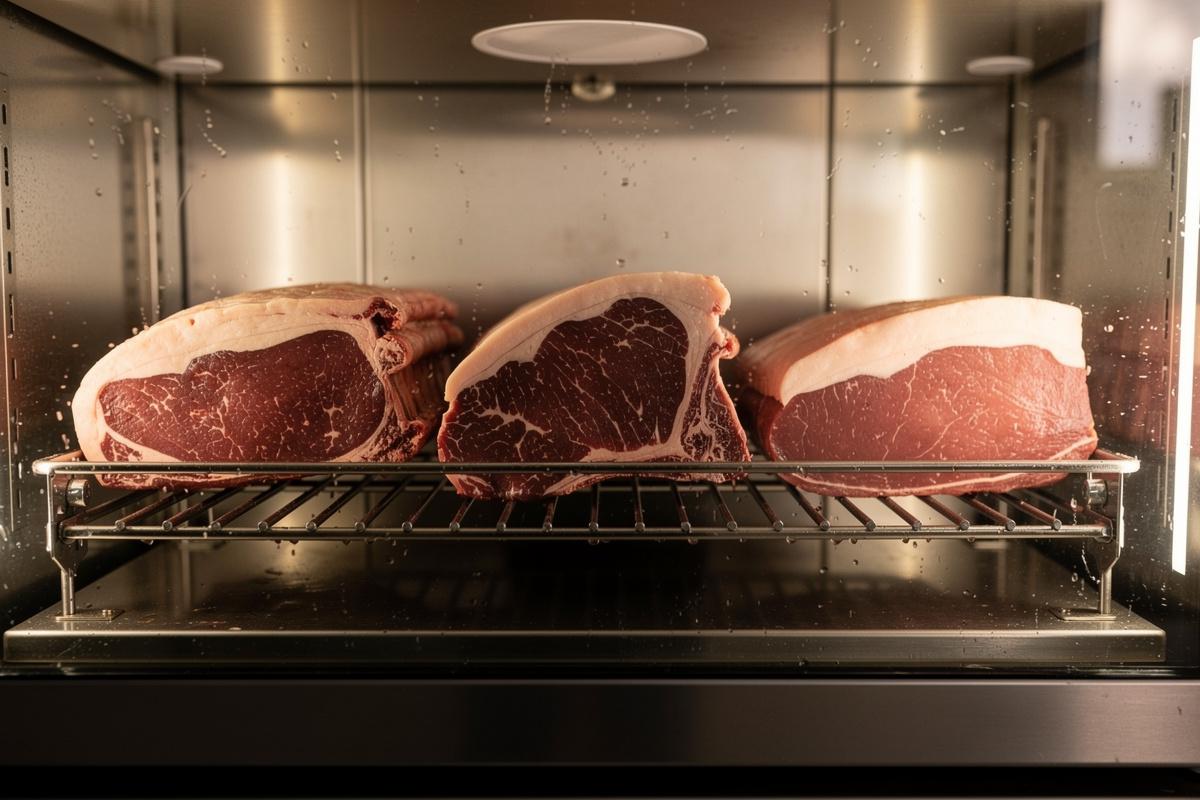
The best beef cuts for dry aging are whole subprimals with a heavy fat cap and enough mass to survive trim: bone-in ribeye first, striploin second, top sirloin a budget third. Pre-cut steaks and lean roasts lose too much to evaporation and bark to be worth it. I have aged all three across my converted-fridge […]

Read 9 min read
Curing Chamber Data Logger: Monitor Without the Door
Temperature & Humidity Science

Curing Chamber Data Logger: Monitor Without the Door

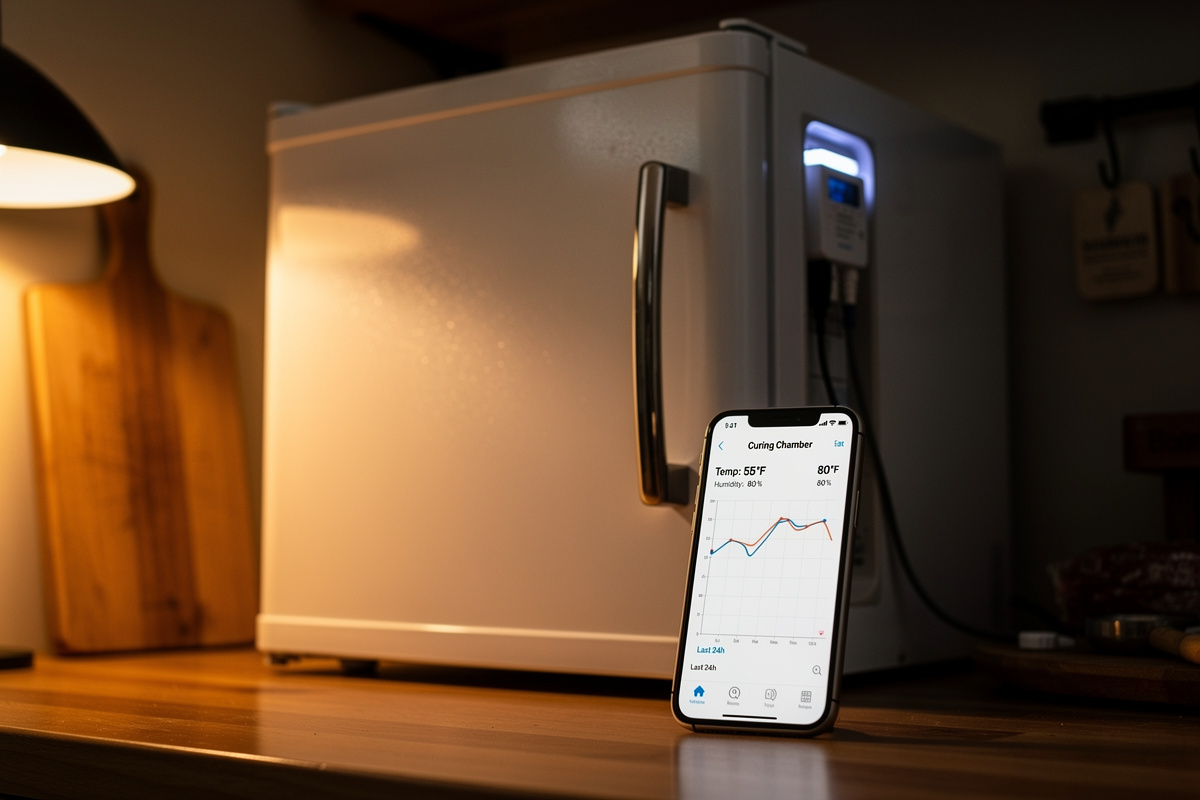
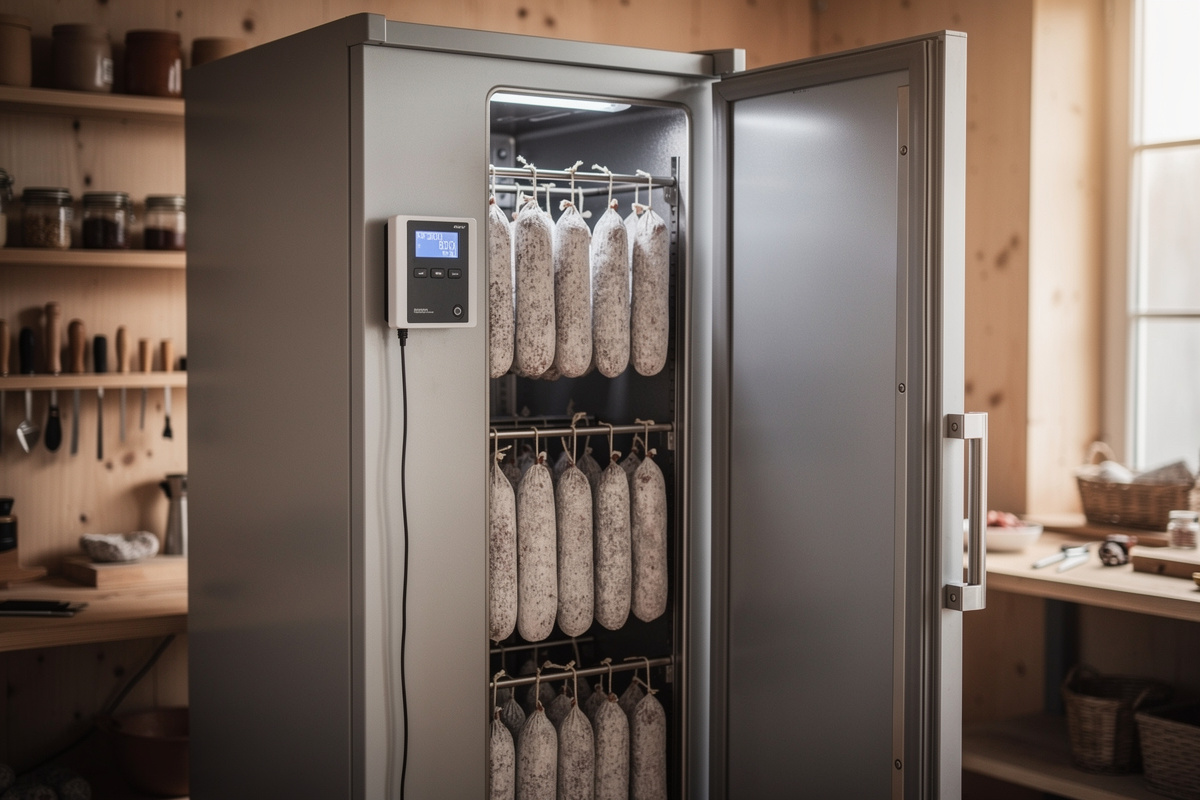
The best way to log curing chamber data without opening the door is a wireless sensor that streams temperature and humidity to your phone — a Bluetooth logger like SwitchBot or a WiFi-gateway sensor like SensorPush. Every door-open dumps your climate; remote logging lets you watch a four-week cure without ever breaking the envelope. Opening […]

Read 8 min read
Calibrate Curing Chamber Sensors: Salt and Ice Tests
Temperature & Humidity Science

Calibrate Curing Chamber Sensors: Salt and Ice Tests

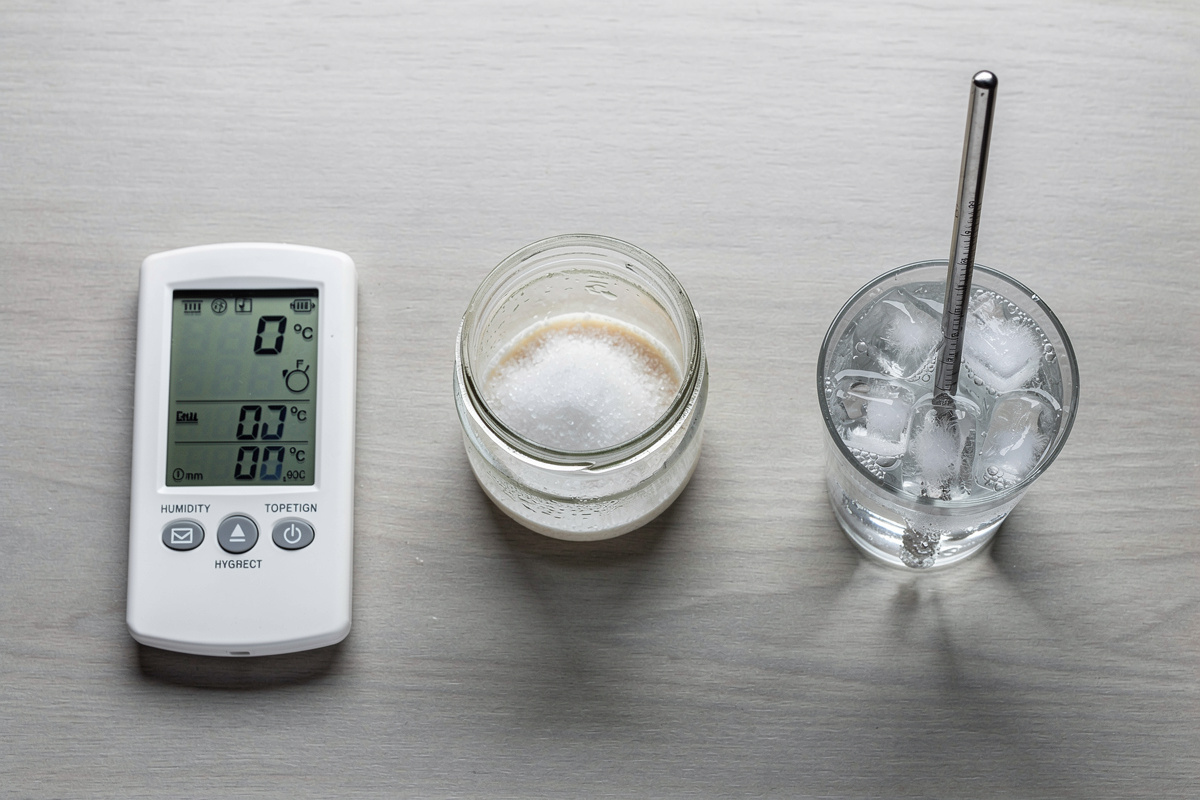
To calibrate curing chamber sensors, use the saturated salt test for hygrometers (a salt-water paste in a sealed container reads exactly 75% RH at 25°C) and the ice-water test for thermometers (a stirred ice bath reads 32°F / 0°C). Both take household materials and a few hours. Every control decision your chamber makes — humidifier […]

Read 8 min read
Curing Chamber Airflow: Fan Size, Placement, and CFM
Temperature & Humidity Science

Curing Chamber Airflow: Fan Size, Placement, and CFM

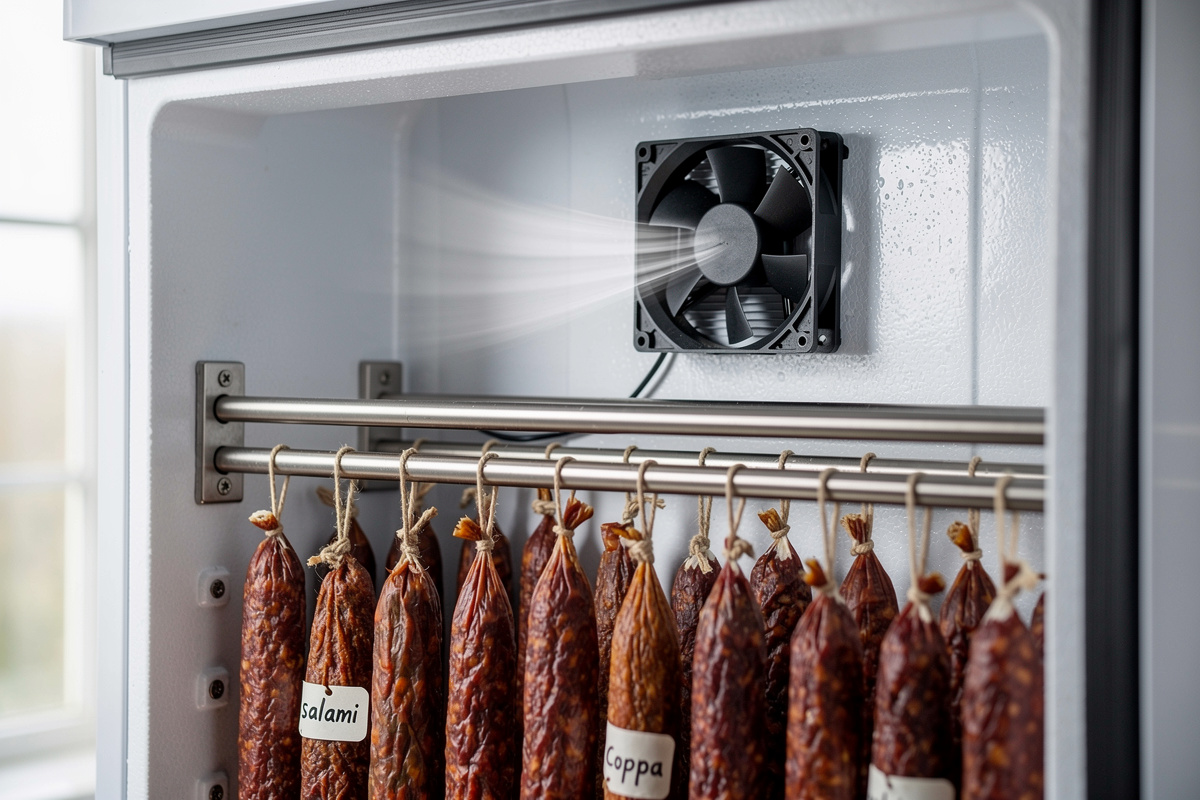
The right curing chamber airflow fan is a 120mm PC fan run at low speed on a 5-minutes-on, 25-minutes-off cycle, mounted to blow across the meat, never at it. You do not need much CFM — gentle, even movement breaks the saturated layer around the meat without case-hardening the surface. Airflow is the most-skipped layer […]

Read 9 min read
Curing Chamber Dehumidifier: When and How to Size It
Temperature & Humidity Science

Curing Chamber Dehumidifier: When and How to Size It

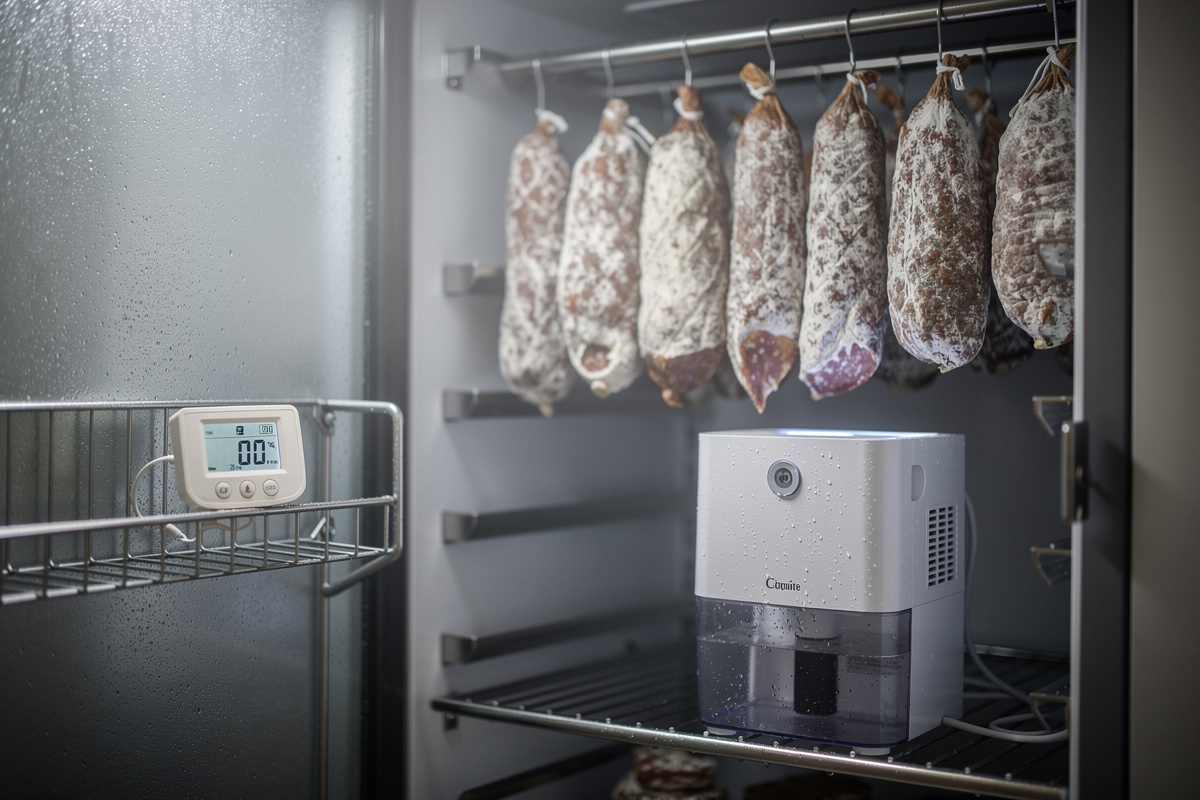
You need a dehumidifier in a curing chamber whenever incoming moisture outpaces what the chamber can shed — the first 48 hours of a fresh batch, humid summers, and auto-defrost spikes. Size it to your chamber volume and moisture load: a small Peltier unit handles most home boxes; a compressor mini handles the worst. Most […]

Read 9 min read
Curing Chamber Humidifier: Ultrasonic vs Wick vs Steam
Temperature & Humidity Science

Curing Chamber Humidifier: Ultrasonic vs Wick vs Steam

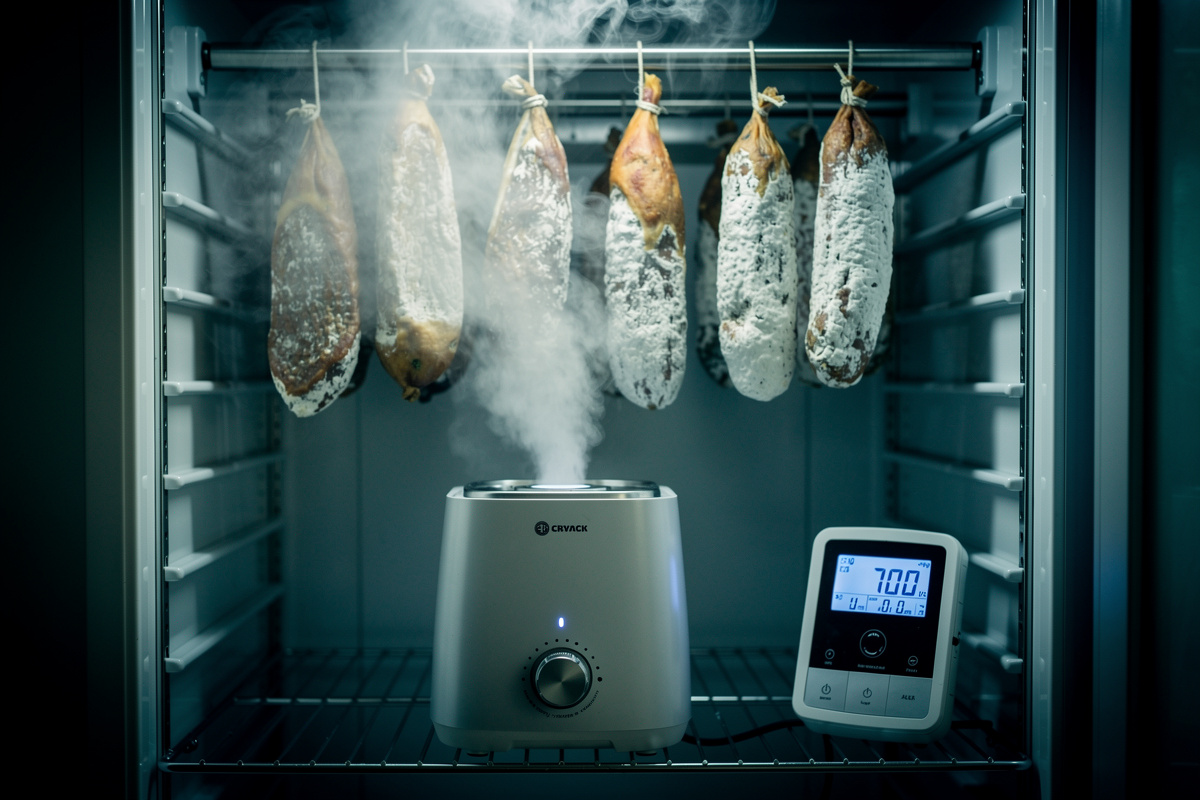
The best humidifier for a curing chamber is a cold-mist ultrasonic unit, because it adds moisture without adding heat — and a curing chamber has to stay near 55°F. Steam and warm-mist humidifiers fight your temperature controller; evaporative wick units self-regulate but cannot keep up. Humidity is the variable that decides whether a coppa finishes […]

Read 9 min read
Inkbird vs Auber vs Willhi Curing Chamber Controller
Temperature & Humidity Science

Inkbird vs Auber vs Willhi Curing Chamber Controller

The best temperature controller for a curing chamber is the Inkbird ITC-308 for most home charcutiers — dual-stage heat and cool, a 1.0°C (about 2°F) differential, and two relay outlets that hold my chambers at 55°F within a degree. Auber wins on precision, Willhi on price. I run three of these side by side across […]

Read 9 min read
Stainless Steel Smoker Build: How to Weld a Cold-Smoking Cabinet for Home Charcuterie
Cold Smoking

Stainless Steel Smoker Build: How to Weld a Cold-Smoking Cabinet for Home Charcuterie

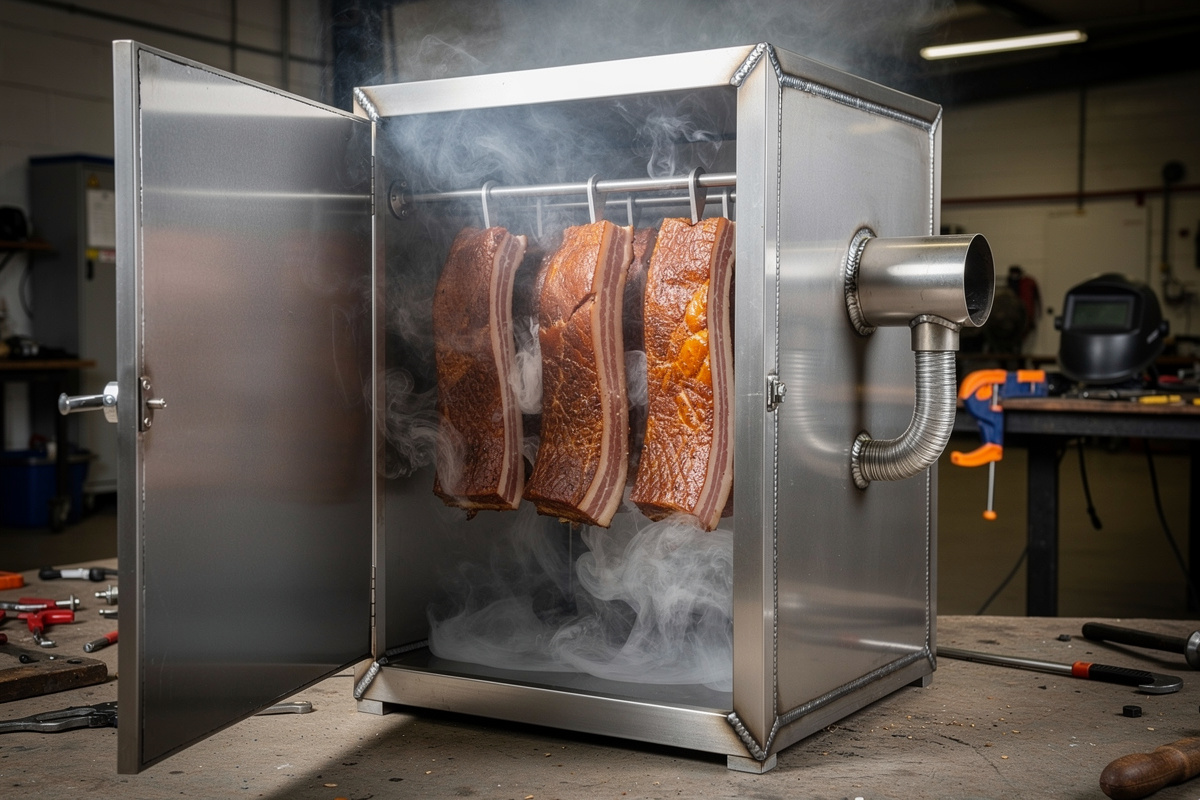
A welded stainless steel cold-smoking cabinet costs $300 in materials — a sheet of 304 stainless, a spool of 308L MIG wire, a door gasket, and two hours of argon mix — and replaces a $1,200 commercial unit. As an Amazon Associate I earn from qualifying purchases. The difference is the labor, and the labor […]

Read 10 min read
Growing Your Own Curing Spices: Juniper Coriander Fennel and Bay from Garden to Cure
Whole Muscle Charcuterie

Growing Your Own Curing Spices: Juniper Coriander Fennel and Bay from Garden to Cure

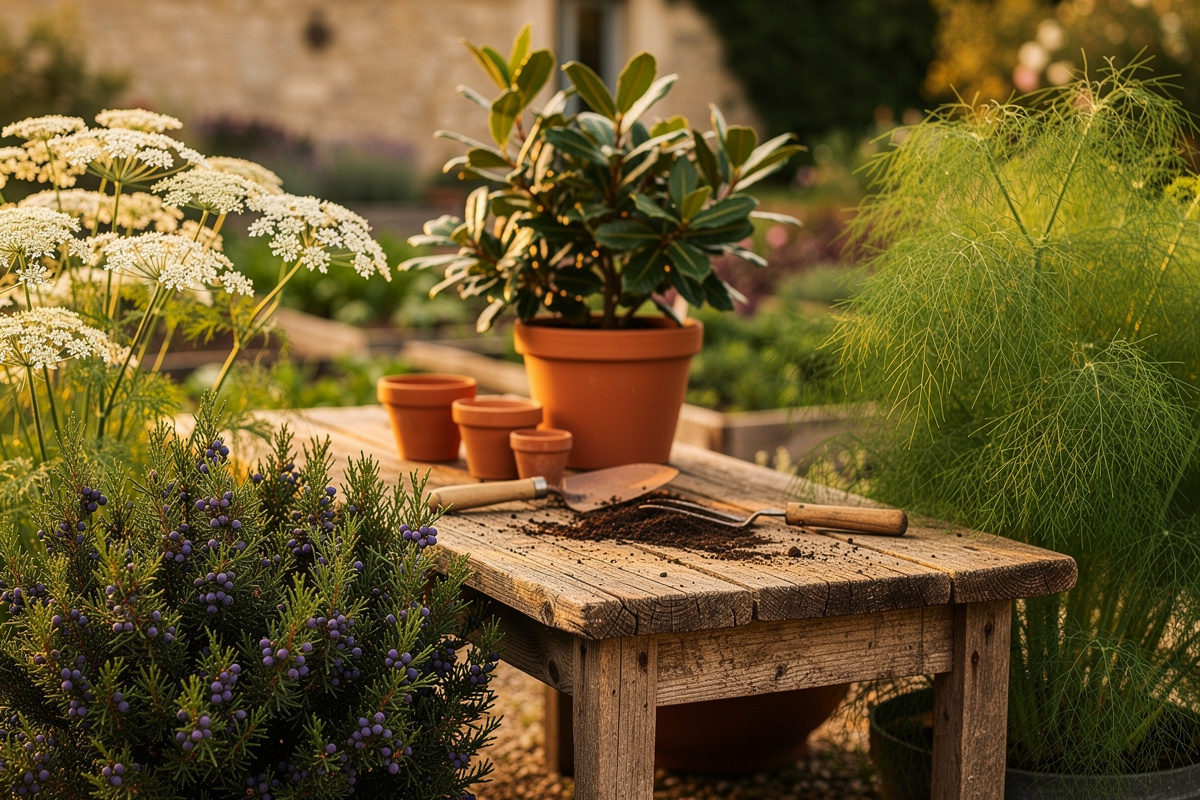
Growing juniper, coriander, fennel, and bay laurel in your garden gives you a direct pipeline from soil to curing chamber, cutting the cost of dried spices by roughly 80% while adding a freshness dimension that factory-packaged spice jars from 2023 cannot match. A single mature juniper bush produces approximately 200 grams of berries per season […]

Read 7 min read
Mold Science Cross-Training: What Mushroom Cultivation Teaches About Charcuterie Cleanliness
Salami & Fermented Sausage

Mold Science Cross-Training: What Mushroom Cultivation Teaches About Charcuterie Cleanliness

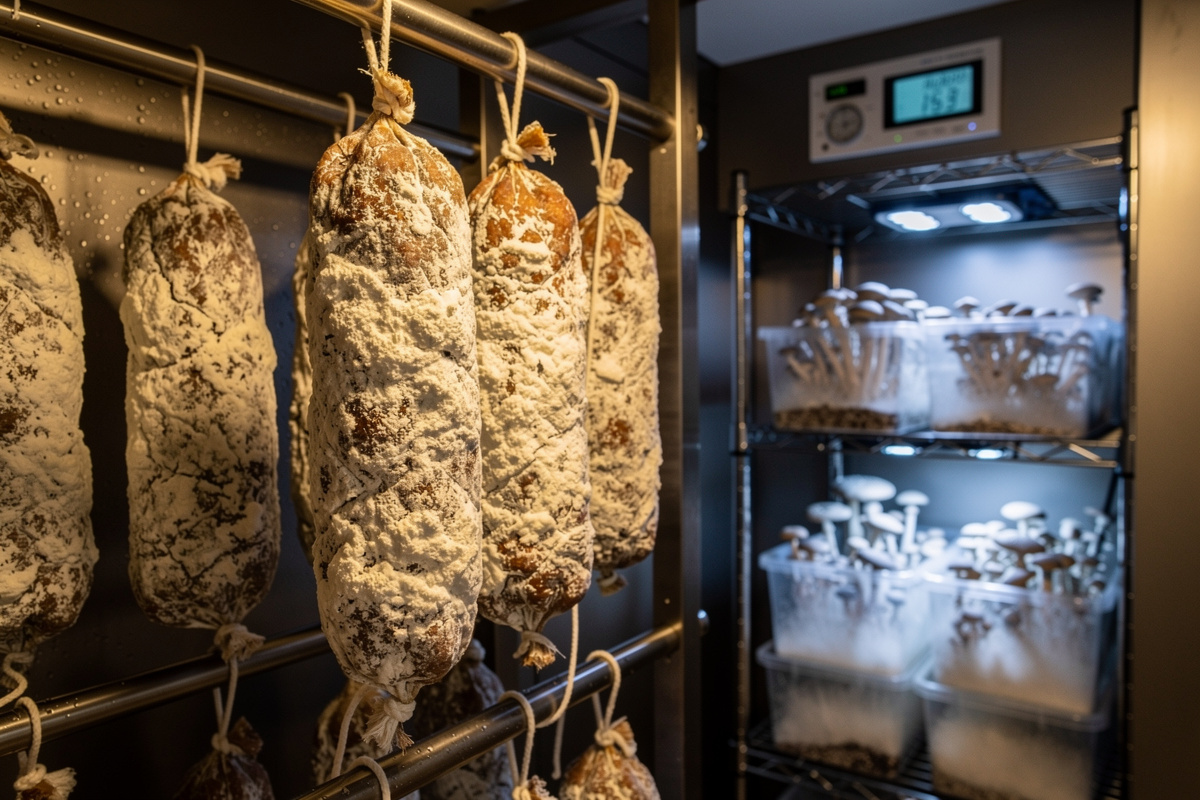
Penicillium nalgiovense is the white mold you want on salami. Trichoderma is the green mold that ruins mushrooms. Same kingdom, same conditions — 55–65°F, 75–85% RH. Different outcome. Mushrooms teach charcuterie mold management faster than any salami book. I run both hobbies — the curing chamber in the basement and the mushroom fruiting chamber in […]

Read 9 min read