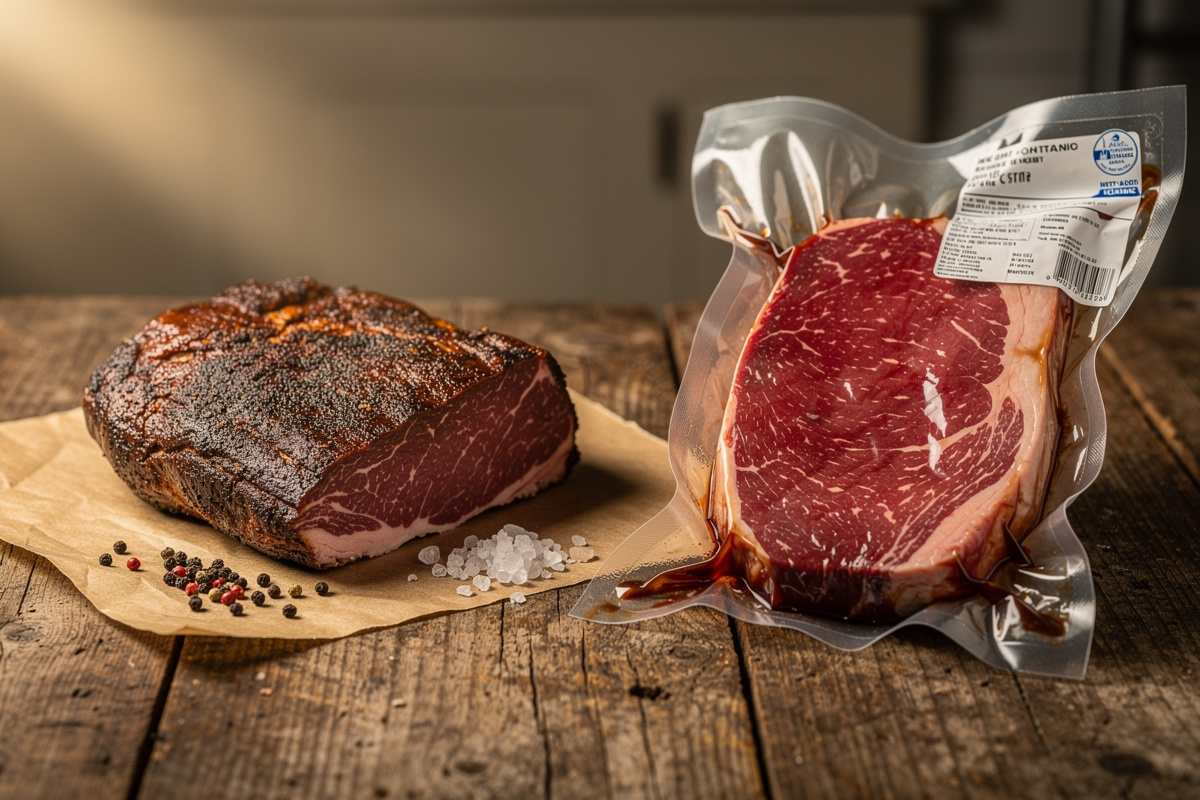

Dry aging holds beef in open, refrigerated air so it loses water and grows a funky bark; wet aging seals it in vacuum plastic so it tenderizes in its own juices with no evaporation. Dry aging concentrates and deepens flavor; wet aging only tenderizes. In a side-by-side taste they are not close.
I aged two halves of the same striploin both ways — one in cryovac in the fridge, one open in the chamber — and tasted them the same evening. This is what the difference actually is, when each is the right choice, and why almost all the steak you have ever eaten was wet-aged without you knowing it.
What Dry and Wet Aging Actually Are
Both methods use the same enzymes to tenderize beef, but the environment is opposite. Dry aging exposes the meat to cold, moving air so water evaporates and surface flora develop. Wet aging seals the meat airtight in vacuum plastic, so it tenderizes in its own moisture with no water loss and no funk.
In both cases, the same endogenous enzymes — cathepsins and calpains — break down muscle proteins and make the meat more tender over time. That part is identical. What differs is everything around it. In dry aging, the cut sits in open air at 32-39°F (0-4°C) and 75-85% relative humidity; published research puts evaporative loss at roughly 10% by day 21 climbing toward 20-25% by day 451, on top of which the hard bark gets trimmed off, and the meat picks up nutty, blue-cheese-adjacent flavors from the surface mold. In wet aging, the cut is vacuum-sealed and held at the same 32-39°F, but it cannot lose water — it sits in its own purge, tenderizing without concentrating. No bark, no funk, almost no yield loss. Nearly all retail “fresh” beef is wet-aged in its cryovac during the days or weeks it spends in transit and storage.
The Taste Test: Same Striploin, Both Ways
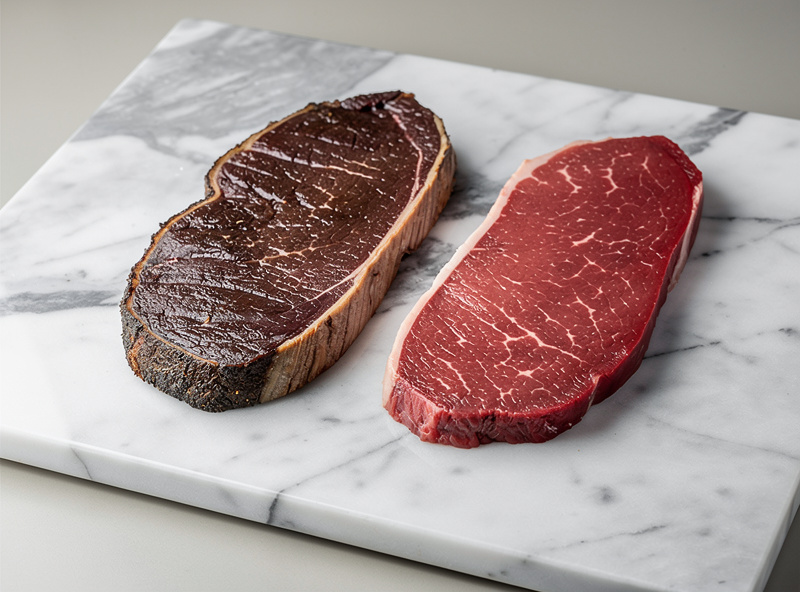
Tasted side by side, the dry-aged steak wins on depth and the wet-aged wins on convenience. The dry-aged strip was nutty, savory, and complex with a concentrated beefiness; the wet-aged strip was clean, tender, and mild with a faint metallic-sour tang. Same animal, same cut, completely different eating experience.
I took one striploin, split it, vacuum-sealed half and dry-aged half in the chamber, both for 28 days, then cooked them identically. The dry-aged half had the headline dry-age character — that nutty, mushroomy, gently funky concentration that makes the style worth the trouble. The wet-aged half was genuinely tender and pleasant, but the flavor was simply beef: clean and a little wet-metallic, what some people call “wet-aged tang,” with none of the developed complexity. The texture gap was smaller than I expected — both were tender — but the flavor gap was enormous. If tenderness is all you want, wet aging gets you most of the way there cheaply. If you want the dry-age flavor, nothing about wet aging delivers it.
Why the Flavor Diverges
The flavor split comes from water and air. Dry aging removes roughly a tenth to a quarter of the meat’s water over a typical age, concentrating every flavor compound that remains, and the open surface lets mold and yeast contribute notes no sealed bag can. Wet aging removes nothing and adds nothing aromatic — it only softens.
Concentration is the heart of it. When that much water leaves a dry-aged subprimal, the beef flavor that remains is packed into less mass, so each bite is more intense. On top of that, the surface colony of beneficial mold and yeast produces the signature funk over weeks five through twelve of a long age. A vacuum bag blocks both mechanisms: water stays in, air stays out, no colony forms. The trade-off wet aging makes for that lost complexity is purge — the meat sits in its own released liquid, which is where the faint sour or metallic note comes from, and why a long wet age can drift toward an unpleasant tang while a long dry age drifts toward magnificent funk.
Dry vs Wet Aging Compared
Here is the head-to-head on the variables that decide which method fits your goal, your equipment, and your budget. Read it as a decision tool: pick the column whose trade-offs you can live with.
| Attribute | Dry Aging | Wet Aging |
|---|---|---|
| Environment | Open air, 32-39°F, 75-85% RH | Vacuum-sealed, 32-39°F |
| Typical duration | 21-45+ days | 4-28 days |
| Weight / yield loss | ~10-25% evaporation plus bark trim | Negligible (minus purge) |
| Flavor result | Nutty, funky, concentrated | Clean, mild, faint metallic tang |
| Tenderness | Very tender | Very tender |
| Equipment needed | Dedicated chamber or aging bag | Vacuum sealer and fridge |
| Best for | Deep flavor, special occasions | Cheap tenderness, everyday steaks |
The clearest split is flavor versus economy. Dry aging costs you 40-50% of the meat and weeks of climate management to gain complexity; wet aging costs you almost nothing and gains only tenderness. Neither is “better” in the abstract — they answer different questions. For home cooks who want the dry-aged side without building a chamber, the best dry aging bags let you age a subprimal in any standard fridge.
The Safety Difference
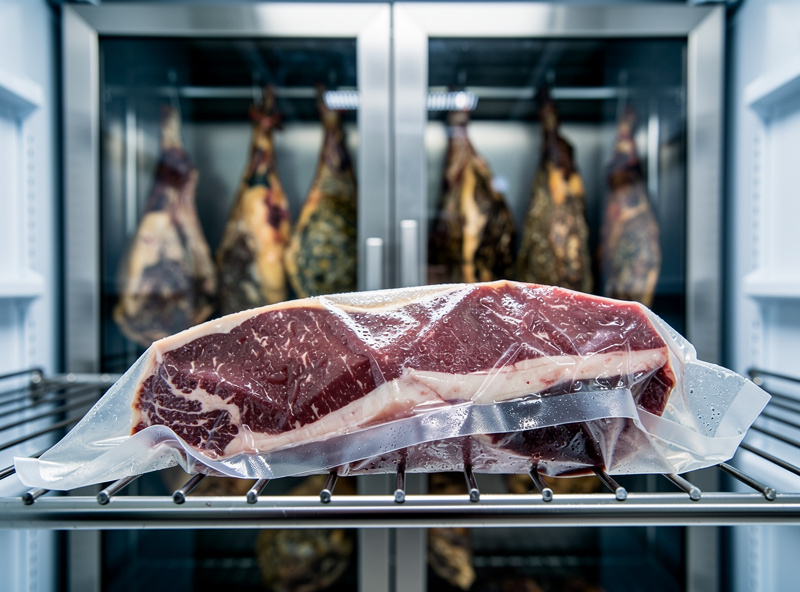
Both methods are safe at 32-39°F, but they fail differently. Dry aging’s bark is a protective sacrificial layer, and smell is your warning system. Wet aging depends entirely on an intact vacuum seal — if the seal fails, oxygen enters and the meat can spoil quickly, so a compromised bag means discard, not push on.
For dry aging, the safeguards are climate stability and your nose: a deepening nutty-funky aroma is good, while sharp ammonia, sour-vinegar, or rotten notes mean inspect immediately — the full diagnosis is in dry aging smell: what is normal vs what means trouble. For wet aging, the single point of failure is the seal. Check the bag for tightness; any loss of vacuum, ballooning, or off odor on opening means the cut is no longer safe. Keep wet-aged beef strictly in the 32-39°F band and don’t confuse “the bag looks intact” with “extend indefinitely” — published consumer research on wet-aged longissimus found flavor and juiciness declining well before any safety concern, with quality dropping most sharply past about 35 days and clearly falling off by 63 days even under an intact seal2, so treat four weeks as the point to start tasting your way forward rather than a hard safety wall. When unsure, throw it out; that conservative call holds for both methods regardless of how many days are on the calendar.
The Middle Ground: Dry-Age Bags
Dry-age bags are a hybrid that captures most of the dry-aged flavor with most of the wet-aged convenience. The bag is a permeable membrane: it bonds to the meat and lets moisture migrate out while blocking contamination, so you get true dry-age concentration in an ordinary kitchen fridge without a dedicated chamber.
If you do not have a chamber but want more than wet aging gives, the bag method is the answer. It produces real evaporation and real dry-age flavor — not as deep as a 45-day open-chamber run, but far beyond anything a vacuum bag can do — while protecting the meat in a fridge full of other food. The yield is better than open-air aging because the bag limits how much surface you lose to hard bark. The head-to-head bag testing across the major brands is in best dry aging bags: Umai vs SteakAger vs DryBagSteak tested. A box of dry aging bags plus a decent vacuum sealer covers both styles from one kitchen fridge.
As an Amazon Associate I earn from qualifying purchases.
Which Should You Choose?
Choose dry aging when flavor is the goal and you can dedicate a chamber or bag for weeks; choose wet aging when you want tender everyday steaks cheaply and quickly. Most home cooks should wet-age routinely and dry-age occasionally for special cuts — they are tools for different jobs, not rivals.
Practically, I wet-age nothing on purpose because the butcher already did it — most beef arrives wet-aged. I reserve the chamber and the bags for cuts I want to transform, and I match the cut to the method using the yield logic in best beef cuts for dry aging and the age window in how long to dry age beef. If you are deciding whether to build a chamber at all, the honest answer is that you only need one if you specifically want dry-age flavor often enough to justify it; for tenderness alone, a dedicated aging refrigerator is overkill, but for regular dry-aging it is the cleanest path. For the climate logic behind a chamber build, see dry aging beef at home.
Frequently Asked Questions
What is the difference between dry aging and wet aging beef?
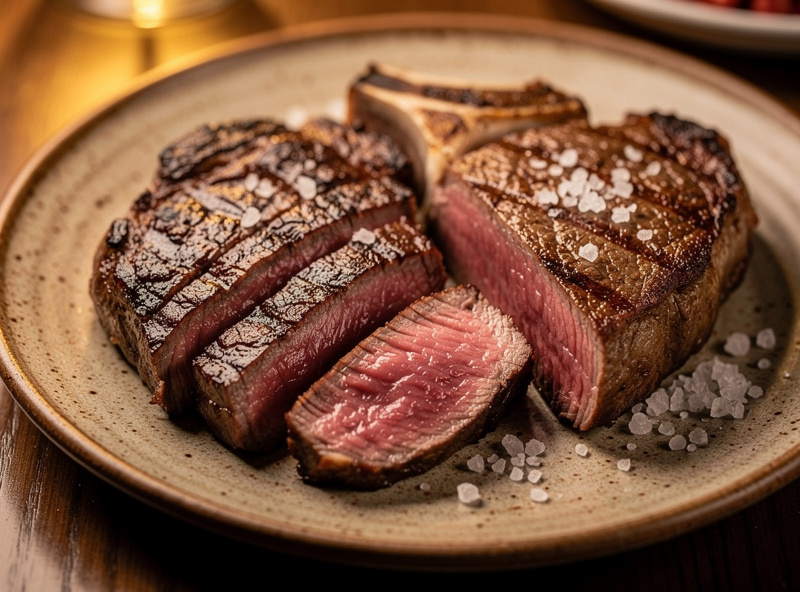
Dry aging holds beef in open refrigerated air so it loses water and grows a funky bark, concentrating and deepening flavor. Wet aging seals beef airtight in vacuum plastic so it tenderizes in its own juices with no evaporation and no funk. Both tenderize; only dry aging develops complex flavor.
Does dry-aged or wet-aged beef taste better?
Dry-aged beef tastes more complex — nutty, savory, and concentrated — while wet-aged beef is clean, tender, and mild with a faint metallic tang. In a side-by-side test the flavor gap is large but the tenderness gap is small. Dry aging wins on flavor; wet aging wins on cost and convenience.
Is most store-bought beef wet-aged?
Yes. Nearly all retail fresh beef is wet-aged in its vacuum cryovac during the days or weeks it spends in transit and cold storage before reaching the counter. That is why ordinary supermarket steak is already fairly tender but lacks the concentrated, funky character of dry-aged beef.
Can you wet age beef at home?
Yes. Vacuum-seal the cut and hold it at 32 to 39 degrees F for roughly 4 to 28 days. The seal must stay intact; any loss of vacuum, ballooning, or off odor on opening means discard the meat. Wet aging needs only a vacuum sealer and a reliable refrigerator.
How much weight does each method lose?
Dry aging loses roughly 10 to 25 percent of the meat’s weight to evaporation (published research puts it at about 10 percent by day 21, climbing toward 20-25 percent by day 45) plus more to bark trim, leaving roughly half the starting weight as usable steak. Wet aging loses almost nothing beyond the small amount of purge liquid released inside the bag, so yield is nearly 100 percent.
Is there a method between dry and wet aging?
Yes — dry-age bags. The bag is a permeable membrane that lets moisture migrate out while blocking contamination, producing true dry-age concentration in an ordinary kitchen fridge without a dedicated chamber. It captures most of the dry-aged flavor with most of the convenience of wet aging.
How long can you wet age beef safely?
Wet age beef at 32 to 39 degrees F, keeping the vacuum seal intact for the whole age; a compromised seal at any point means discard rather than aging further. Safety comes from the seal and temperature, not the day count. Quality is a separate question: published consumer research on wet-aged beef found flavor and juiciness starting to decline past about 35 days and clearly dropping off by 63 days, even under an intact seal, so four weeks is a good point to start tasting rather than a safety cutoff. When unsure, throw it out.
Related Articles
- Dry Aging Beef at Home: The Complete Guide — the full climate, cut, and yield framework for the dry side.
- Best Dry Aging Bags: Umai vs SteakAger vs DryBagSteak Tested — the hybrid method between dry and wet.
- Best Beef Cuts for Dry Aging: Ribeye vs Striploin vs Sirloin — which cuts justify the dry-age yield loss.
- How Long to Dry Age Beef: 21 vs 35 vs 60 vs 100 Days — matching age to the flavor you want.
- Dry Aging Smell: What Is Normal vs What Means Trouble — your safety read-out during a dry age.