Best Fridge for a Curing Chamber Conversion: Size, Type, Door Orientation
May 12, 2026

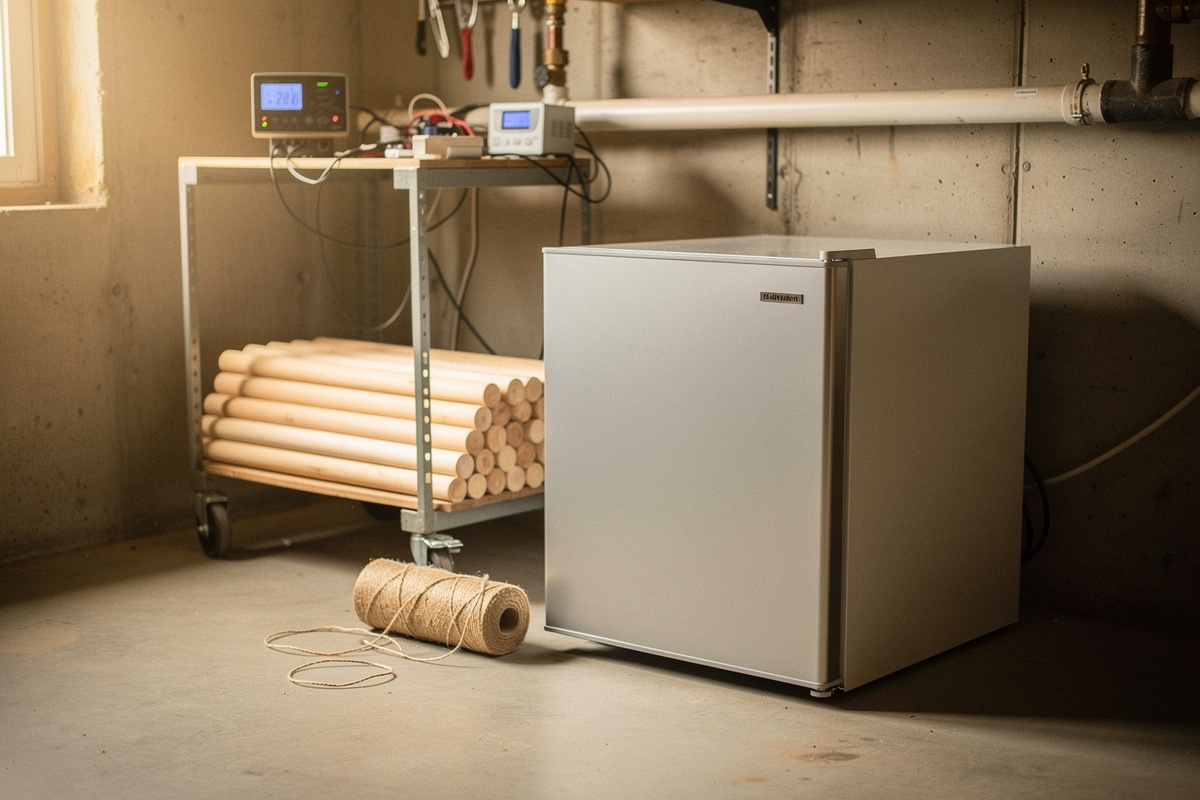
Skip the frost-free models, skip the ice-maker models, and skip anything over 7 cubic feet — the right refrigerator for a home curing chamber is a 4.4-cubic-foot manual-defrost mini fridge with a flat-back evaporator plate. Magic Chef and Danby units run $140 to $180 new and fit two whole bresaola plus three salami ropes with room for airflow.
I have converted three fridges into curing chambers over four years, and the fridge you pick decides more about your cure results than any other single choice. Get a frost-free model with an auto-defrost cycle and you will fight humidity management for the life of the chamber. Get a fridge with a freezer compartment you cannot remove and you lose 30% of your hanging space before you even hang a single coppa. This guide covers the exact selection criteria I use now — cabinet style, size, door orientation, and the make-or-break features that look fine on Marketplace and then ruin a panchetta six weeks later.
Fridge Types for Curing Chambers: What Works and What Does Not
The four fridge types that come up in every chamber-build thread are compact mini fridges, full-size kitchen refrigerators, beverage coolers, and chest freezers. Each has a different relationship with humidity and temperature stability, and three of them cause more problems than they solve.
A compact mini fridge without a freezer compartment is the sweet spot for a first build or a second/overflow chamber. These units run 4.4 to 7.0 cubic feet, use a compressor-driven cooling plate at the back wall, and have no auto-defrost cycle to wreck your humidity setpoint. The cooling plate cools by conduction, not by ducted air, so the chamber environment stays stable. My own primary chamber is a taller full-height larder fridge for more hanging space, but the compact-fridge principle is identical — I hold the compressor side at 55°F on an Inkbird ITC-308 dual-stage temperature controller and hold 75% RH on a separate Inkbird IHC-200 humidity controller, and the compressor only cycles two or three times per hour once the thermal mass of the meat stabilizes — the full sensor-and-controller setup is covered in the climate control guide.
Full-size kitchen fridges work mechanically but create space problems most people do not anticipate. A 18-cubic-foot fridge holds four times the hanging capacity of a mini fridge but the compressor runs a 1200-BTU cooling loop sized for a family of four opening the door twelve times a day. Overpowered cooling in a small thermal load means the compressor short-cycles — two minutes on, two minutes off — and the dehumidification spikes that come with every compressor start are sharper and faster. Manageable with a dehumidifier on a sensitive controller, but the full-size route adds constant correction that a mini fridge simply does not need.
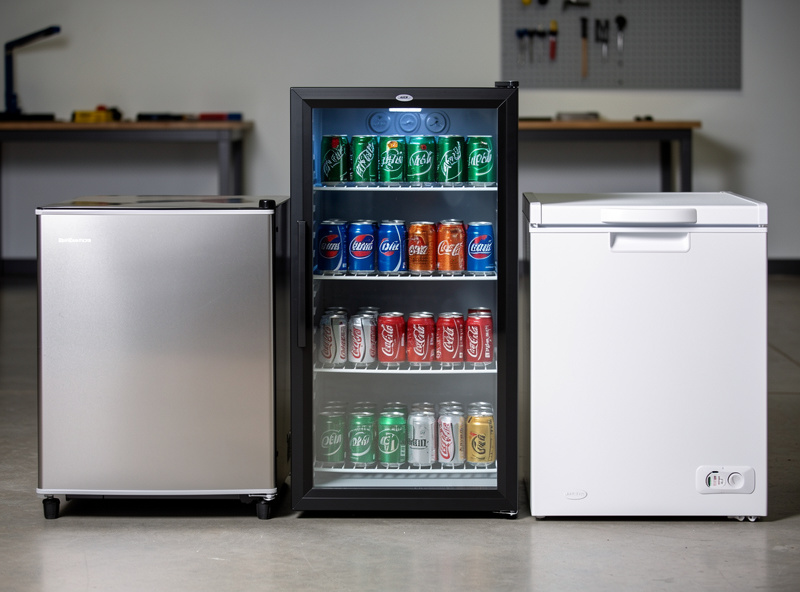
Beverage coolers and wine fridges are tempting because they already sit in the 50-60°F band with glass doors that look great. The problem is thermoelectric cooling. Most beverage coolers use Peltier cooling plates, not compressor cycles, and they cannot pull heat out fast enough when the chamber has 15 pounds of room-temperature pork shoulder loaded in. The internal temperature drifts 8-10°F above setpoint for four to six hours after loading, which breaks the time-temperature window that USDA-FSIS-derived dry and semi-dry sausage validation guidance uses as the lethality reference (a five-log reduction of E. coli O157:H7) for fermented and dry-cured sausages. Thermoelectric units also cannot dehumidify — there is no cold coil for condensation, so humidity always trends upward.
Chest freezers work as curing chambers but require two modifications that eliminate the budget advantage. First, you need a collar extension to hang anything taller than pancetta flats because chest freezers are deep and short. Second, the chest orientation pools cold air at the bottom — salami hanging near the lid cures faster than salami near the bottom, creating a 5-7% humidity difference top to bottom. A ducted fan loop fixes the stratification, but at that point the project cost matches a mini fridge build with more fabrication hours.
Why Frost-Free Refrigerators Are Curing Chamber Killers
Frost-free refrigerators use a heating element to melt ice off the evaporator coil in a timed defrost cycle, typically fifteen to twenty minutes every eight hours. That heating element sends the internal chamber temperature from 55°F to 68-72°F and craters the humidity from 75% to 35% RH. Your Inkbird controller sees the temperature spike and kills the compressor — which is already off because the defrost cycle overrides it — and your humidifier runs full-blast trying to recover. When the defrost ends, the compressor restarts, the cold coil condenses the excess moisture out of the air, and humidity drops again. You get a sawtooth pattern that repeats every eight hours for the life of the chamber.
The fix is finding a manual-defrost fridge or a dorm-style compact fridge that skips the auto-defrost entirely. Most mini fridges under 5.0 cubic feet with a flat-back evaporator plate are manual-defrost. If the fridge listing says “auto-defrost” or “frost-free,” skip it. If you are looking at a used unit and cannot tell, plug it in for thirty minutes and listen — a frost-free fridge makes a distinct timer-tick sound from the defrost control board. A manual-defrost fridge just hums.
Size, Shelf Removal, and Door Orientation
The hanging capacity math is simple: a 4.5-cubic-foot mini fridge holds six to eight chubs of salami or three whole-muscle pieces plus three salami ropes. A 7.0-cubic-foot apartment fridge holds twelve to fourteen chubs plus four whole-muscle pieces. The capacity number on the box includes the freezer compartment if there is one, so subtract 20-30% if the fridge has a fixed freezer shelf that cannot be removed. For reference, my complete chamber build guide walks the full equipment list and wiring plan for both mini-fridge and full-size configurations.
Interior dimensions matter more than cubic feet. You need at least 14 inches of vertical hanging space for whole-muscle pancetta and coppa, and 8-10 inches for salami links. Measure the interior height from the floor to the bottom of the cooling plate, not to the ceiling — the plate takes 2-3 inches of headroom. All internal glass shelves and door bins must come out. The plastic shelf tabs molded into the liner walls can usually be cut off with a utility knife. I score them shallow and snap them — too deep and you pierce the inner liner, which is where condensation collects and mold colonies start.
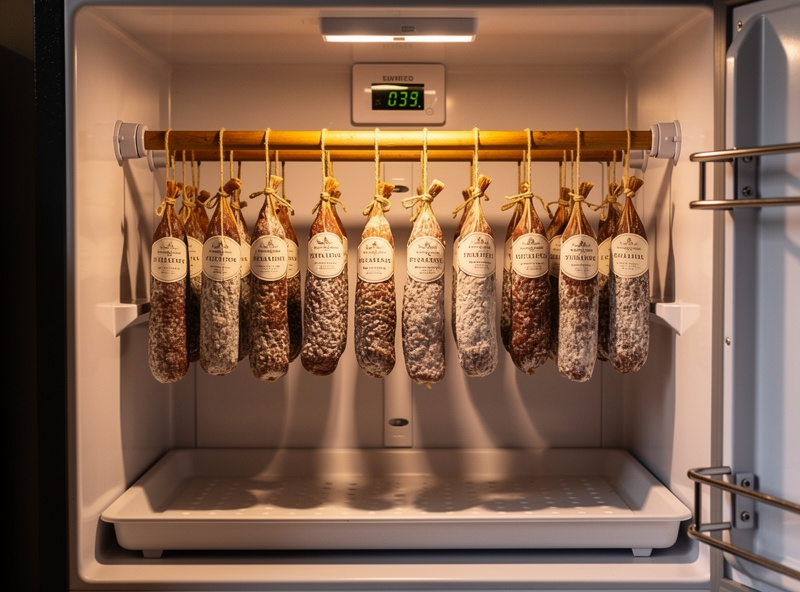
Door orientation is the underrated factor. The fridge door needs to open away from the wall it sits against, and you need 28-30 inches of clearance in front of the open door to hang and inspect meat. A right-hinge door against a left wall blocks access entirely. If you find the right fridge with the wrong hinge, some models have reversible doors — Danby and Magic Chef mini fridges almost always do, requiring a screwdriver and ten minutes. Full-size kitchen fridges are about 50/50 on reversibility.
New vs Used: The Marketplace Math
A new 4.4-cubic-foot Magic Chef runs $140 to $180 at Home Depot or Walmart. A used mini fridge on Facebook Marketplace runs $40 to $80. The $100 difference buys a known-good compressor, a clean liner without embedded odors, and a door gasket that seals. I have built one chamber from a new fridge and two from used fridges, and the used builds both needed two weeks of vinegar-and-baking-soda scrubbing plus a $25 gasket replacement before they were food-safe. The full build-cost breakdown tracks every dollar from fridge to finished chamber, including the gasket-and-scrub tax that hits used builds.
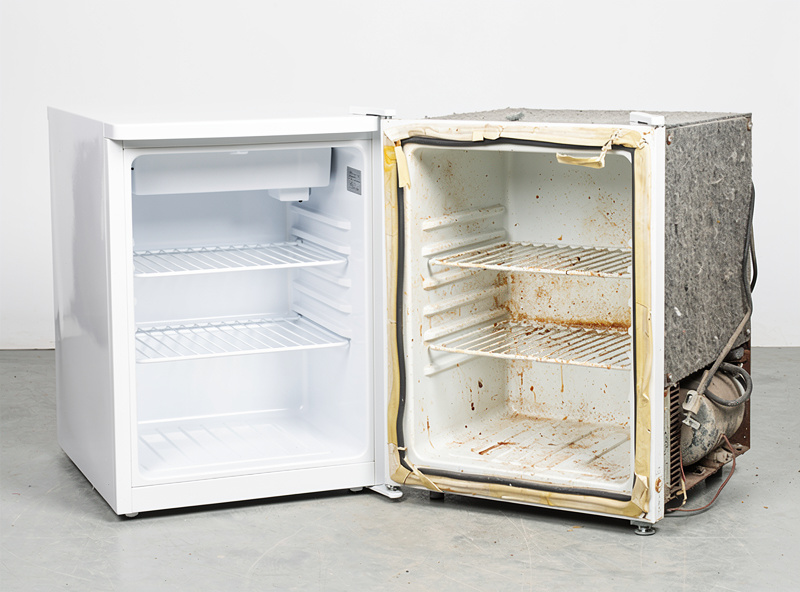
The budget play is a used fridge from someone moving out of a dorm or apartment — these are usually 12-24 months old, lightly used, and the seller just wants them gone. The risky play is a ten-year-old fridge from a garage or basement that “still works great.” A compressor with ten years of runtime has a finite remaining lifespan, and a compressor failure at week five of an eight-week prosciutto cure costs you the meat and the electricity — the same way a failed sensor mid-cure can cost you a batch of salami.
| Fridge Type | Price Range | Humidity Stability | Hanging Capacity | Best For |
|---|---|---|---|---|
| Compact Mini Fridge (4.4-4.7 cu ft) | $140-$180 new | Excellent | 6-8 salami + 2 whole muscle | First build, single-chub batches |
| Apartment Fridge (7.0-10.0 cu ft) | $200-$350 new | Good | 14-20 salami + 4 whole muscle | Dual-purpose charcuterie + cheese aging |
| Full-Size Kitchen Fridge (18+ cu ft) | $500-$900 new | Fair (needs ducting) | 30+ salami + 8 whole muscle | Commercial-scale or bulk batches |
| Beverage/Wine Cooler | $150-$300 new | Poor (thermoelectric) | 4-6 salami | Not recommended |
| Chest Freezer (7.0-15.0 cu ft) | $200-$400 new | Good (with fan mod) | 10-15 salami + 4 whole muscle | High-hanging-need builds with fabrication time |
The Four Features That Make or Break a Curing Chamber Fridge
Flat-back evaporator plate, not ducted cooling. Fridges with a flat metal plate at the back wall cool by conduction and produce gentle, even cooling. Fridges with ducted fans blow cold air from a hidden coil, which creates micro-drafts that dry meat surfaces unevenly. You can feel the difference: open the door on a flat-plate fridge and the air feels still. Open a ducted-fridge door and there is a breeze. For charcuterie, still air with targeted fan circulation is the goal — the breeze is uncontrollable.
No ice maker, no water dispenser. Ice makers and water lines are food-safety risks in a curing chamber. The water line carries stagnant water that grows biofilm, and the ice maker cavity becomes a condensation trap where mold colonizes fast — on every used mini fridge I have pulled an ice maker out of, the cavity behind the chute already had visible mold on first inspection, cure or no cure. Commercial ice machines get scheduled teardown-and-sanitize service for exactly this failure mode, and a home fridge ice maker was never built with that kind of access in mind. If the fridge has an ice maker you cannot fully remove and seal off, look for a different fridge.
Drain hole at the chamber floor. Every fridge has a condensation drain, usually a small hole at the back of the floor that routes water to an evaporation pan under the unit. In a curing chamber this drain handles the 200-300 milliliters of water that the dehumidifier pulls out of the air daily. If the drain clogs, water pools on the chamber floor and the meat sitting lowest in the rack sits in a puddle. I run a 3-inch length of 1/4-inch vinyl tubing from the drain port down into a small jar outside the chamber — clean the jar once a week and the floor stays dry.
Light switch that can be defeated. The fridge interior light adds 15-40 watts of heat and accelerates fat oxidation. If the light stays on when the door closes — which it does on most fridges because the door plunger switch is a door-closed sensor, not a door-open sensor — the chamber runs 2-4°F warmer than the controller reads. The fix is removing the bulb and taping the socket, or unplugging the light harness from the control board. Do not just unscrew the bulb and leave the socket exposed in a 75% humidity environment — it corrodes and shorts the control board.
How I’d Build It Today
If I were starting a first curing chamber build this weekend — or adding another overflow chamber to the fleet — I would buy a new 4.4-cubic-foot Magic Chef from Walmart for $160, choose the variant with a reversible door so it fits either side of the basement, and skip the local Marketplace listings entirely. The $100 I save on a used fridge gets spent on two weeks of bleaching, gasket replacement, and odor purging that every used unit needs before it is ready for meat — that math worked out the same on both used builds I ran. With a new fridge, salami casings go into the chamber the morning after delivery. The next step is the climate control wiring, where the ITC-308 dual-stage temperature controller, the separate IHC-200 humidity controller, and the Peltier dehumidifier all go in.
Frequently Asked Questions
What size fridge do I need for a curing chamber?
A 4.4 to 4.7 cubic foot mini fridge fits 6-8 salami chubs and 2 whole-muscle pieces, which is enough for a home hobbyist curing three to four batches per year. A 7.0-cubic-foot apartment fridge doubles the capacity to 14-20 chubs plus 4 whole-muscle pieces for more ambitious charcuterie rotations.
Can I use a frost-free fridge as a curing chamber?
Frost-free fridges cycle a defrost heater every 8 hours that spikes temperature from 55°F to 68-72°F and drops humidity from 75% to 35%. This sawtooth climate pattern causes case hardening and uneven weight loss. A manual-defrost compact fridge avoids the problem entirely.
Should I buy a new or used fridge for a curing chamber?
A new 4.4-cubic-foot Magic Chef costs $140 to $180 and comes with a clean liner and a sealing door gasket. A used mini fridge from Marketplace costs $40 to $80 but often needs a $25 gasket replacement and days of vinegar scrubbing to remove embedded food odors from the plastic liner.
Can I use a chest freezer instead of a fridge?
A chest freezer works as a curing chamber with two modifications: a collar extension for hanging height and a ducted fan loop to prevent 5-7% humidity stratification between the bottom and top. The extra fabrication cost usually matches a mini fridge build that needs no modifications.
Why does door orientation matter for a curing chamber?
The fridge door needs to open away from the wall it sits against, with 28-30 inches of clearance for hanging and inspecting meat. A right-hinge door against a left wall blocks access entirely. Many compact fridge models like Danby and Magic Chef have reversible doors that flip with a screwdriver.
Can I use a beverage cooler or wine fridge?
Beverage coolers use thermoelectric Peltier cooling that cannot pull heat out fast enough when 15 pounds of meat is loaded in, causing 8-10°F temperature drift. They also cannot dehumidify because there is no cold condensation coil, which means humidity always trends upward beyond the 80% ceiling.
Related Articles
- How to Build a Curing Chamber: The Complete Guide
- How to Convert a Fridge Into a Curing Chamber: Step-by-Step Guide
- Curing Chamber Build Cost: What I Spent on My $200 Setup
- Curing Chamber Climate Control: Temperature, Humidity, and Airflow Science
- Home Salami Making: The Complete Guide from Grind to Cure