Green Ring in Dry-Cured Sausage: What It Means and Is It Safe?
June 16, 2026

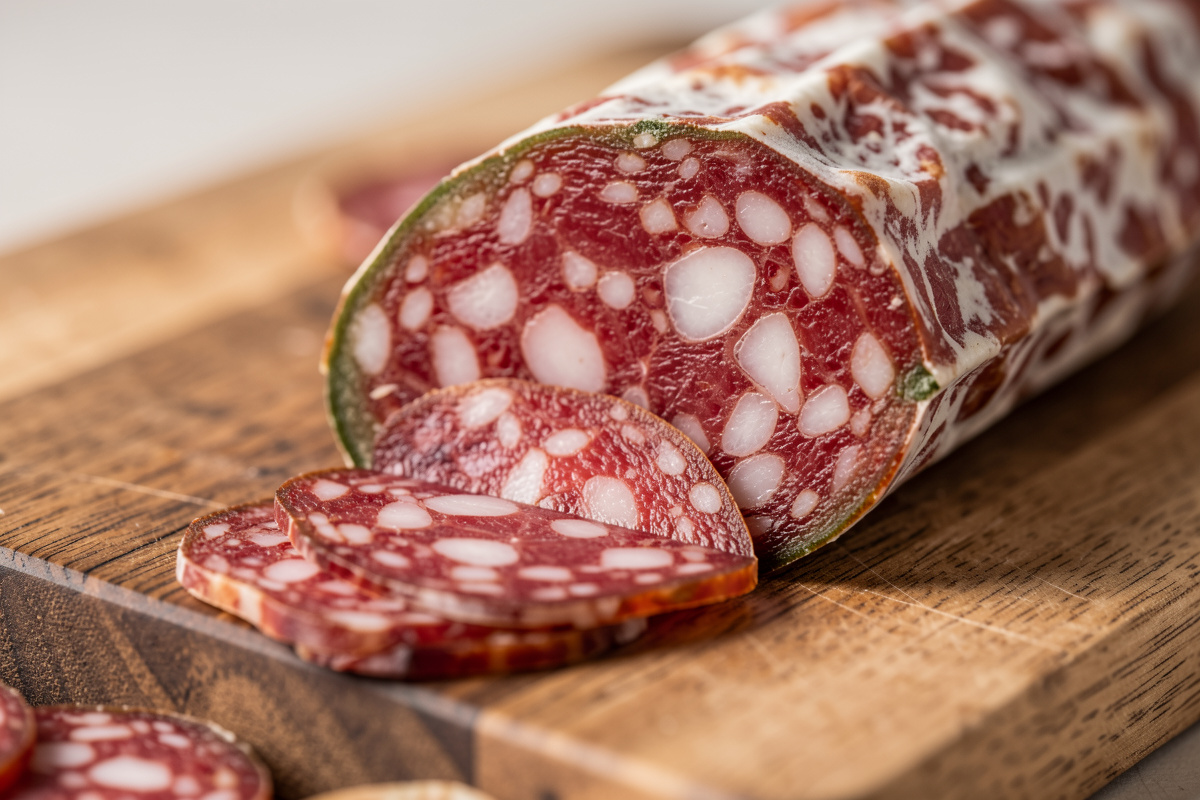
You cut into a salami that has been hanging in the chamber for ten weeks, the weight log says it has lost the right amount, the inside is a clean rosy cured color — and then you see it. A thin greenish band near the edge of the cut face, or a faint ring sitting between the pink exterior and a slightly paler core. Your stomach drops. After years of running converted-fridge chambers, I have seen this exact green more times than I can count, and most of those salami were perfectly good to eat. But “most” is not “all,” and the difference is a safety call worth getting right.
A thin green ring on a properly cured, correctly fermented salami that dropped pH and lost the right amount of weight is almost always cosmetic oxidation of the cured pigment by light and oxygen — harmless. Green that comes with slime, an off or sour-rotten smell, or that shows up in an under-cured or under-fermented batch is spoilage. Smell, texture, and your weight-and-pH log decide it, not the color alone.
What the green actually is
The pink of cured meat is not the meat’s natural color. It is nitrosomyoglobin (and its cooked form, nitrosohemochrome) — the pigment that forms when nitrite from your cure breaks down to nitric oxide and binds the iron in myoglobin. That cured-pink molecule is stable but not invincible. Expose it to oxygen and light and the bond degrades, oxidizing the pigment toward grey, brown, or green. Michigan State University Extension puts it plainly: the cured color “is subject to fading of the pink color when exposed to air and light.” A fresh-cut salami face is exactly that — a raw pigment surface meeting both at once.
The most common cause: oxidative greening on the cut face
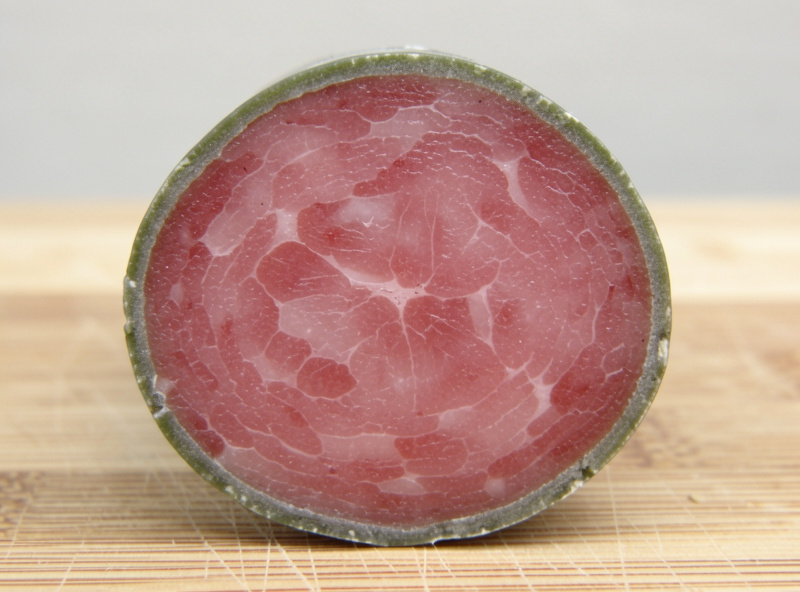
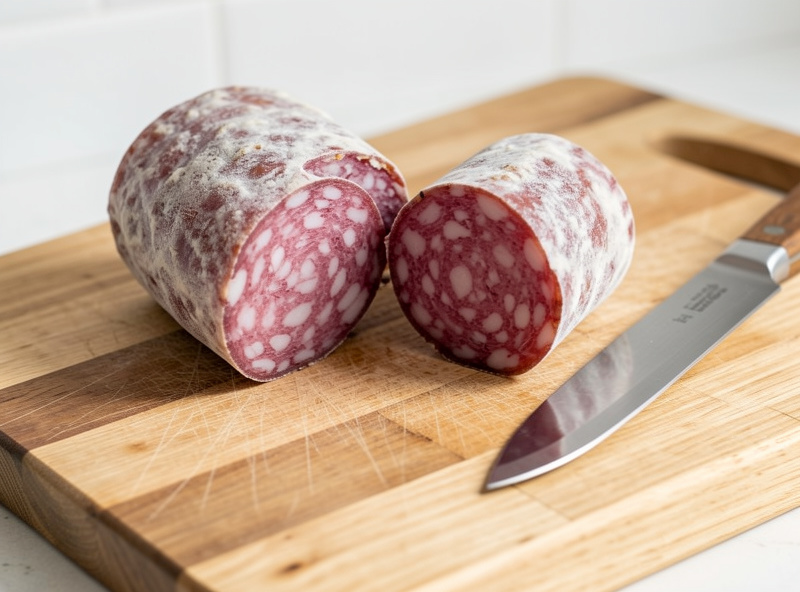
The green you most often see on a home salami is oxidative. You slice the chub, the cut face hits chamber light and oxygen, and over hours to a day the outermost layer of pigment oxidizes faster than the protected interior. The result is a thin discolored rim or a faint ring where the freshly exposed surface has shifted while the core stays rosy. This is the same chemistry as the grey edge on a deli slice left on the counter, just tinted green by how the porphyrin ring breaks down.
The uneven-cure ring
A second flavor of harmless-to-cosmetic green is a true ring inside the meat: a band where the cured-pink exterior meets a slower-cured core. In whole-muscle work this is the cure simply not having reached the center evenly. In salami it is usually fine because the cure is mixed through the mince, but a poorly mixed batch or a fat-heavy core can leave a zone that took up nitrite differently and oxidizes on a different schedule once cut. In my setup, the chubs I mixed sloppily are the ones that show a ring; the ones I mixed cold and thoroughly do not.
Too much, or too little, cure
Cure penetration cuts both ways. Too little nitrite and parts of the meat never fully convert to the stable cured pigment, leaving zones that oxidize readily and can green. Too much — a genuine overdose, well past correct rates — produces what the trade calls nitrite burn, a green-brown cast from excess nitrite reacting with the pigment. Nitrite burn is a manufacturing defect, not spoilage, but it is a sign the cure was weighed or mixed wrong. This is exactly why I weigh cure to the gram against meat weight rather than eyeballing it: Cure #2 (sodium nitrite plus nitrate, for long-dried ferments like salami) and Cure #1 (sodium nitrite only, for short-cure or cooked products) both have target rates that exist for safety, not decoration. Confusing the two is a serious error — the Prague Powder 1 vs 2 mixup guide covers exactly where and why home curers swap them accidentally.
Bacterial greening: when microbes do it
Here is where it gets safety-adjacent. Certain lactic acid bacteria — including hydrogen-peroxide producers — can drive greening directly. Under the low-oxygen conditions of curing or vacuum packing they multiply quietly; once oxygen reaches them, they generate hydrogen peroxide, which attacks the cured pigment, strips the iron, and breaks the porphyrin ring into green compounds. Some of these organisms tolerate salt and nitrite, which is precisely why a correct, fast pH drop during fermentation matters. A vigorous starter culture acidifying the batch crowds out the unwanted flora before they establish; a sluggish or absent fermentation leaves the door open.
Bacterial greening on its own is not automatically dangerous — but it travels in bad company. If the same conditions that let peroxide-producing bacteria green your sausage also let spoilage organisms grow, the green is a flag, not the whole story. That is why the smell and texture checks below override the color every time.
Real spoilage greening: the one you toss
Genuine spoilage green looks and behaves differently. It comes with a slimy or sticky surface, a sour-rotten, putrid, or ammonia-like smell rather than the clean tangy-funky aroma of a good ferment, and it typically shows up in a batch whose numbers were already wrong — pH that never dropped, weight loss that stalled, a chamber that ran too warm or too humid. Slime plus off-smell plus green is not a cosmetic question. That sausage goes in the bin, and I do not taste-test to confirm.
The ID framework: how I actually call it
When I find green, I run the same checklist before deciding. The color is the last thing I trust, not the first.
Where is the green?
A thin rim only on the freshly cut face, appearing after the slice meets air, points to oxidation. A clean interior ring between pink and paler meat points to cure distribution. Patchy green spread through the meat, especially with surface slime, points toward microbial trouble. Location is the single most useful clue.
Smell and texture
Clean cured smell — tangy, nutty, fermented-funky — and a firm, dry texture: the green is almost certainly cosmetic. Sour-rotten or ammonia smell, or any slime, stickiness, or moisture that should not be there: stop, regardless of how the color looks.
Check the log
This is where keeping a weight-and-pH record earns its keep. A salami that fermented down to a safe pH (a proper acidification, not a stall) and then dried to its target weight-loss percentage has hit the two hurdles that make dry-cured sausage safe. Green on that piece is a cosmetic footnote. Green on a chub whose pH never dropped or that never lost the weight is a different conversation entirely.
Oxidative green vs spoilage green at a glance
| Factor | Harmless oxidative / cure green | Spoilage green |
|---|---|---|
| Location | Thin rim on cut face, or a clean internal ring | Patchy, spreading, often surface-wide |
| Smell | Clean cured, tangy, fermented-nutty | Sour-rotten, putrid, or ammonia-like |
| Texture | Firm and dry, no slime | Slimy, sticky, or wet |
| Batch history | pH dropped, weight-loss target hit | Stalled pH or weight loss; warm/humid chamber |
| Safe to eat? | Typically yes — cosmetic | No |
| Action | Trim the rim if you like, vacuum-store the rest | Discard the whole piece |
How I prevent green in the first place
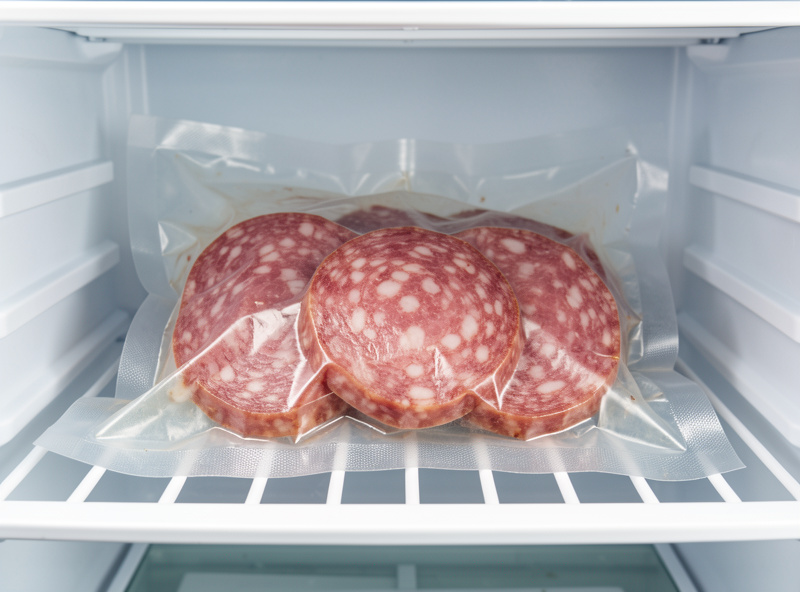
Most greening is preventable upstream. Mix the cure evenly and cold so every gram of mince gets the same nitrite exposure — uneven distribution is the root of most cure-related rings. Weigh Cure #2 to the correct rate for the meat weight; do not improvise, and never substitute a no-nitrate “natural” approach for the real curing salt on a long dry-cure. If you suspect the salt dose itself fell short, the undersalted charcuterie fix guide covers how to recalculate and whether the batch is salvageable. Use a proper starter culture with dextrose so fermentation drives a fast, decisive pH drop. Hold the chamber in the band that suits the stage — fermentation warmer, then drying around 12 to 15 degrees C and roughly 75 to 80 percent RH in my chambers. After the salami is finished, the single biggest move is limiting the cut face’s exposure: slice what you need, then vacuum-seal the rest to cut off oxygen and light. The pigment that never meets air does not green.
The honest bottom line
A thin green ring on a salami that cured correctly, fermented to a safe pH, and dried to its target weight loss is, in my experience, a cosmetic event — the cured pigment oxidizing where the knife exposed it. Trim it if it bothers you and eat the rest. If you notice headaches after eating cured meat and suspect the nitrates, the cured meat headache and nitrates guide breaks down what the research actually says about nitrite sensitivity and cured-meat reactions. But the color never gets to vote alone. The moment green arrives with slime, an off smell, or a batch log that says the safety hurdles were missed, it stops being cosmetic and becomes a reason to throw the whole piece out. When the data and the smell disagree with the color, trust the data and the smell.
Is a green ring in dry-cured sausage safe to eat?
Usually yes if it is a thin oxidative ring on a sausage that fermented to a safe pH and hit its weight-loss target, has a clean cured smell, and is firm. Green with slime or an off smell is spoilage and should be discarded.
Why does my salami turn green only after I slice it?
The cut face exposes the cured pigment, nitrosomyoglobin, to light and oxygen at once. Within hours to a day the surface layer oxidizes faster than the protected core, leaving a thin green or grey rim. It is the same fading chemistry that greys a deli slice left out.
What is the difference between oxidative green and bacterial greening?
Oxidative green is pigment breakdown from light and oxygen on a cut surface and is cosmetic. Bacterial greening comes from peroxide-producing lactic bacteria attacking the pigment, and is a flag that conditions favored unwanted flora. Smell, slime, and your pH log tell them apart.
Can too much cure cause green sausage?
Yes. A genuine nitrite overdose, well past correct rates, causes nitrite burn, a green-brown cast from excess nitrite reacting with the pigment. It is a defect from a mis-weighed cure, not spoilage, but it means you should re-check your Cure number 2 rate against meat weight.
How do I stop my dry-cured sausage from greening?
Mix the cure evenly and cold, weigh Cure number 2 to the correct rate, use a starter culture for a fast pH drop, and dry in range. After it is finished, slice only what you need and vacuum-seal the rest to keep oxygen and light off the cut face.
Related Reading
- Curing chamber troubleshooting hub — diagnose the temperature, humidity, and mold problems behind most defects.
- How to make salami at home — the full fermented-and-dried workflow that keeps greening from starting.
- Salami starter culture guide — getting the fast pH drop that crowds out peroxide-producing bacteria.
- Black mold on charcuterie — the other surface discoloration call, and when it is a toss.
- Meat grinding for salami — cold, even mixing so the cure distributes and rings do not form.
- Homemade soppressata recipe — a worked example with cure rate and weight-loss targets.