
Water activity is the amount of free water available to bacteria in a piece of meat, measured on a scale from 0 to 1.0, and it is the hurdle that finally makes dry-cured charcuterie shelf-stable. It is not the same as how wet the meat feels: most strains of Clostridium botulinum stop growing below water activity 0.93, and a finished dry-cured piece is generally aimed at 0.90 or lower. The honest home proxy for hitting that band is weight loss — roughly 30 to 40 percent off the starting weight.
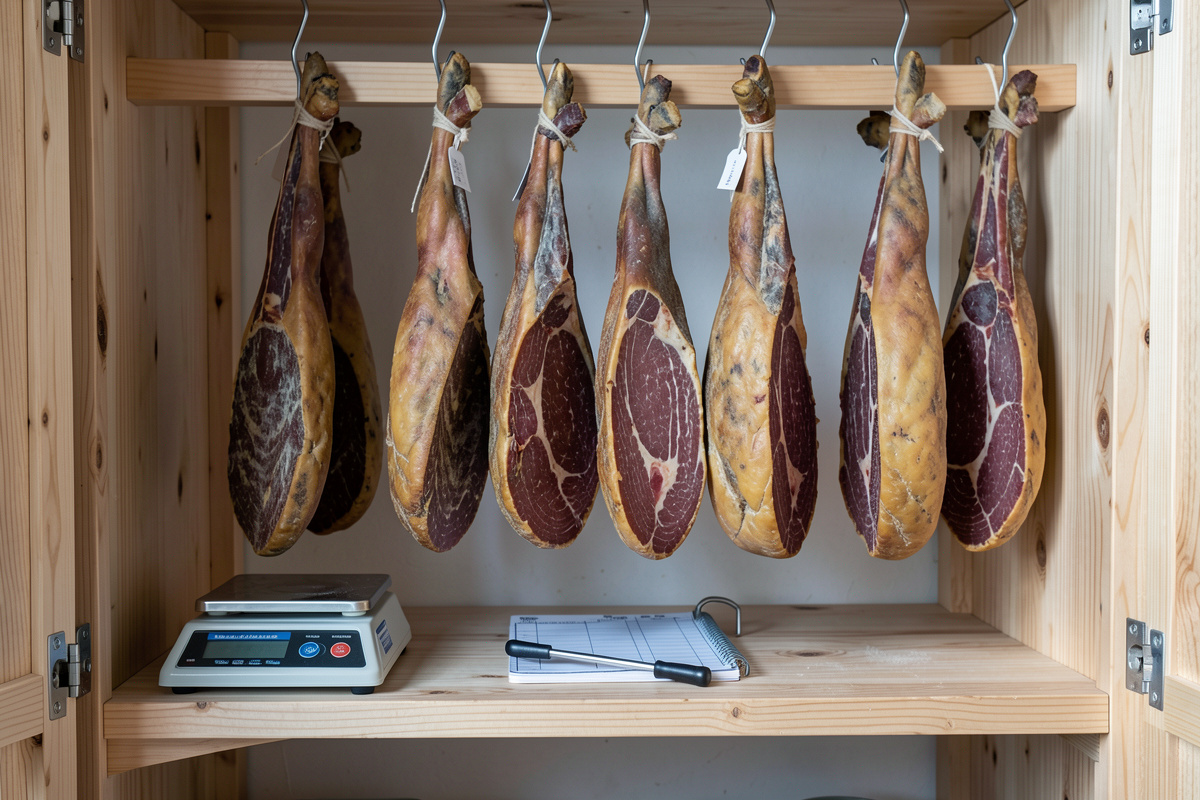
I run converted-fridge curing chambers in Sweden and I log the weight of every piece I hang, because that scale reading is how I watch water activity drop without a laboratory on the bench. This guide explains what water activity actually is, why it matters more than moisture content, the thresholds that keep specific pathogens from growing, and how to translate the science into a number you can read off a kitchen scale.
Water Activity Is Not Moisture Content
This is the distinction that trips up almost everyone starting out. Moisture content is simply how much total water is in the meat. Water activity is how much of that water is available — free to dissolve nutrients, free for bacteria to use. Salt and sugar bind water chemically, and drying removes it physically, so two pieces with the same total moisture can have very different water activity depending on how much salt is holding that water hostage.
Bacteria cannot use bound or removed water. That is the whole trick of curing: you lower water activity by salting (binding free water) and by drying (removing it), and below certain thresholds specific pathogens simply cannot grow, regardless of how much total moisture technically remains. A heavily salted, partly dried piece can sit at a safe water activity while still feeling far from bone-dry. This is also why under-salting is dangerous even when a piece looks dry on the outside — the free water inside never dropped enough. When the outside dries too fast and seals while the core stays wet, you get case hardening, which traps high water activity exactly where you cannot see it; I cover that failure in case hardening in curing chambers.
The Thresholds That Stop Each Pathogen
Different organisms give up at different water activity levels, and knowing the key numbers tells you why the targets are set where they are. The most dangerous one, Clostridium botulinum, is blocked below about 0.93 for the common proteolytic strains — though the cold-tolerant nonproteolytic strains need an even higher water activity to grow, which is part of why cold-smoked products get extra scrutiny. Listeria monocytogenes, which grows even at fridge temperatures, hangs on down to about 0.92. Staphylococcus aureus can grow lower but stops producing its toxin below roughly 0.87. Below about 0.85, bacterial pathogen growth essentially halts, which is the genuinely shelf-stable zone.
| Organism | Stops growing below aw | Why it matters in charcuterie |
|---|---|---|
| C. botulinum (proteolytic) | ~0.93 | The deadly anaerobic toxin risk; the reason for curing salt |
| C. botulinum (nonproteolytic) | ~0.97 | Cold-tolerant; relevant to cold-smoked, less-dried products |
| Listeria monocytogenes | ~0.92 | Grows at fridge temperature; survives in damp, under-dried pieces |
| Salmonella | ~0.94 | Surface contamination risk on fresh meat going into a cure |
| Staph. aureus (toxin) | ~0.87 | Thrives in warm, salty, low-oxygen meat early in fermentation |
| General pathogen halt | ~0.85 | The conservative fully shelf-stable target |
Read that table alongside the other hurdles, because water activity rarely works alone. A salami also has acidity from fermentation and nitrite from Cure #2 backing it up, so the safe finished water activity for a fermented, cured sausage can sit a touch higher than it would for an unsalted, unfermented food. The full hurdle picture is in the charcuterie food safety guide, and the botulism-specific reasoning in testing for botulism prevention.
Weight Loss: The Home Proxy You Can Actually Read
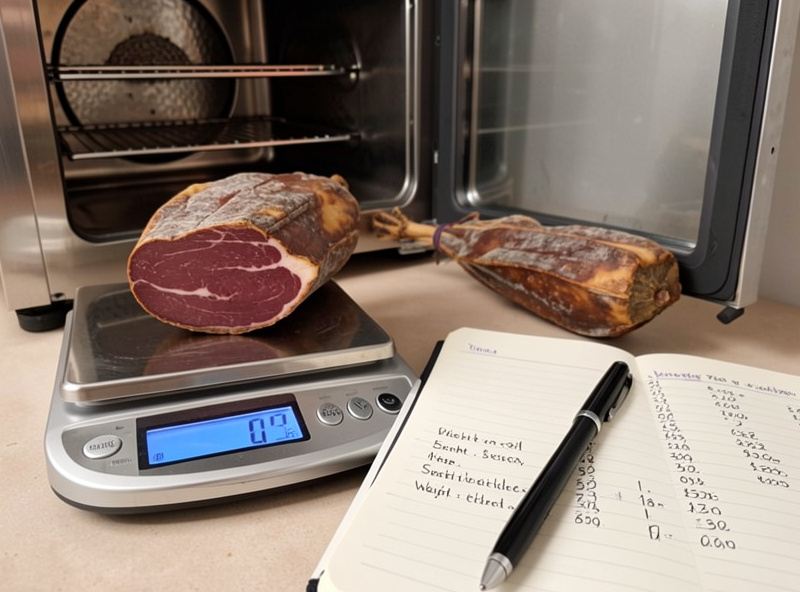
Here is the practical heart of it. Without a meter I cannot read water activity directly, so I read weight loss instead, and across the pieces I have hung the relationship is reliable enough to build a hobby on: a whole-muscle piece that has lost 30 to 40 percent of its green (starting) weight has dropped its water activity into the safe band near 0.90 or below. That is why I weigh every coppa, bresaola, and lonzino the day it goes in, write the number on a tag, and weigh it again as it dries. The scale, not the calendar, tells me when a piece is done.
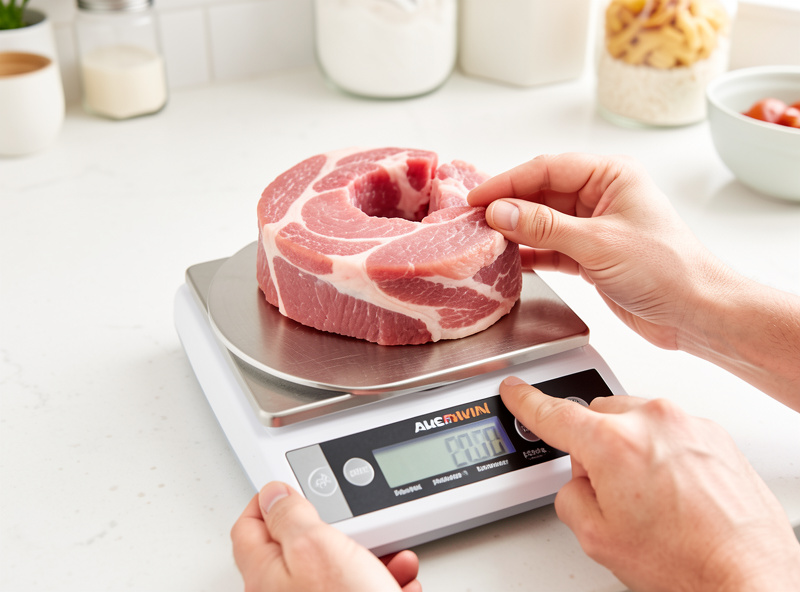
The arithmetic is simple. Record the green weight. Your target weight is the green weight times 0.65 for a 35 percent loss (or times 0.60 for 40 percent). When the piece hits that number and holds it, the drying has done its job. The exact target within the 30 to 40 percent range depends on the cut and how lean it is — a lean bresaola reads done a little differently from a fattier coppa — which is the judgment I walk through in when whole-muscle charcuterie is done. As an Amazon Associate I earn from qualifying purchases. The one piece of gear this method genuinely needs is a reliable digital gram scale you trust to repeat the same reading.
How the Drying Curve Behaves
Water activity does not fall in a straight line, and understanding the shape of the curve keeps you from panicking or rushing. In the first days a piece sheds weight quickly as surface and near-surface free water leaves easily, so the early loss is steep. Then it slows: the remaining water sits deeper, bound tighter, and has to migrate to the surface before it can evaporate. The last several percent of weight loss is the slowest and the most important, because that is the stretch where the core finally drops into the safe band.
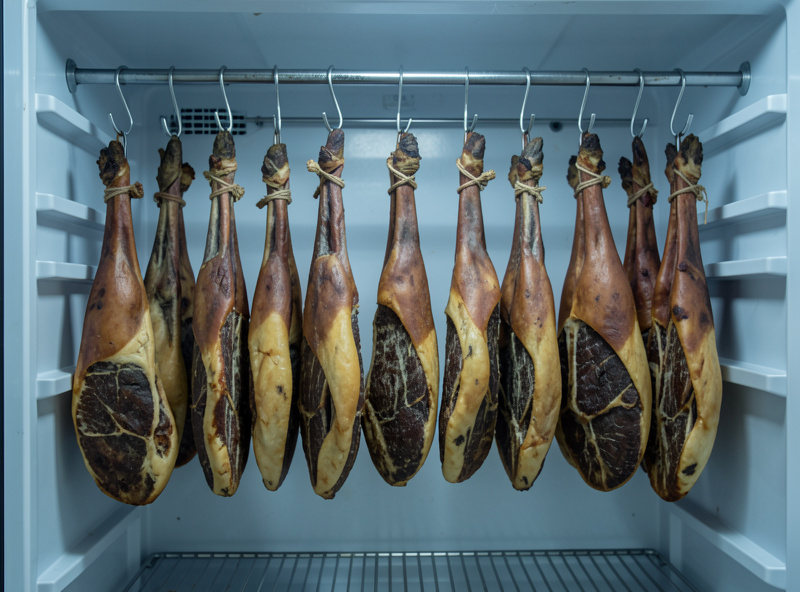
The mistake is to read the fast early loss as progress and the slow finish as a stall, then crank the humidity down to hurry it along. Pushing a piece to dry faster than its core can keep up is precisely how you create case hardening and trap unsafe water activity inside. The right move when the curve flattens is patience and a steady chamber — hold the envelope, keep weighing, and let the deep water find its way out. Steady is faster than fast in the end, because a case-hardened piece either fails or has to be coaxed back. Maintaining that even drying is the whole reason chamber humidity control matters, which I treat as a food-safety system in chamber climate control.
When the Proxy Is Not Enough
Weight loss is an excellent proxy for whole muscle, but it has limits. It assumes the piece dried evenly — case hardening can make the scale read “done” while a wet core still sits at unsafe water activity. It is also less precise for fermented sausages, where the safe endpoint depends on the combination of pH drop and drying rather than weight alone. For those reasons, makers who want certainty measure water activity directly with an instrument rather than inferring it. If you have reached the point where the proxy feels too coarse — selling, gifting, or simply wanting the number — the tools and how to use them are in the aw meter guide for home charcuterie.
For most home dry-curing, though, a disciplined weight log plus the other hurdles is the realistic standard, and it is the one I run on day to day. Keep the chamber in its envelope so drying is even, weigh consistently, and treat the 30 to 40 percent loss as a target to confirm rather than a finish line to rush. And keep finished pieces refrigerated unless you have strong, measured reason to believe they are fully shelf-stable — that is the conservative call, and on a hobby this unforgiving, conservative is correct. This article reports what the thresholds are and how I track them; it cannot certify any individual piece, which is exactly why the margin and the judgment matter.
Frequently Asked Questions
What is water activity in cured meat?
Water activity is the free water available to bacteria, measured from 0 to 1.0. It is different from total moisture because salt binds water and drying removes it, so bacteria cannot use it. Below certain thresholds pathogens cannot grow, which is what makes dry-cured meat safe and shelf-stable.
What water activity is safe for charcuterie?
Finished dry-cured products are generally aimed at water activity 0.90 or lower, with around 0.85 being the conservative fully shelf-stable target. Clostridium botulinum stops below about 0.93 and Listeria below about 0.92, so 0.90 with the support of salt, nitrite, and acidity is the practical home goal.
How do I measure water activity without a meter?
Use weight loss as a proxy. A whole-muscle piece that has lost 30 to 40 percent of its green starting weight has dropped its water activity into the safe band near 0.90. Record the green weight, calculate the target at 60 to 65 percent of it, and weigh until the piece holds that number.
Is water activity the same as moisture content?
No. Moisture content is the total water present; water activity is how much of that water is free and usable by bacteria. Salt and sugar bind water without removing it, so a salty piece can have safe water activity while still containing significant total moisture.
Why is even drying important for water activity?
Because weight loss only proves the average is right, not the core. If the surface dries too fast and seals, case hardening traps high water activity in the center while the scale reads done. Holding the chamber at the right humidity keeps drying even so the whole piece reaches a safe water activity.
Further Reading
- Charcuterie Food Safety: The Complete Guide
- Aw Meter Guide for Home Charcuterie
- When Is Whole-Muscle Charcuterie Done? Weight vs Feel
- Testing for Botulism Prevention in Charcuterie
- Case Hardening in Curing Chambers