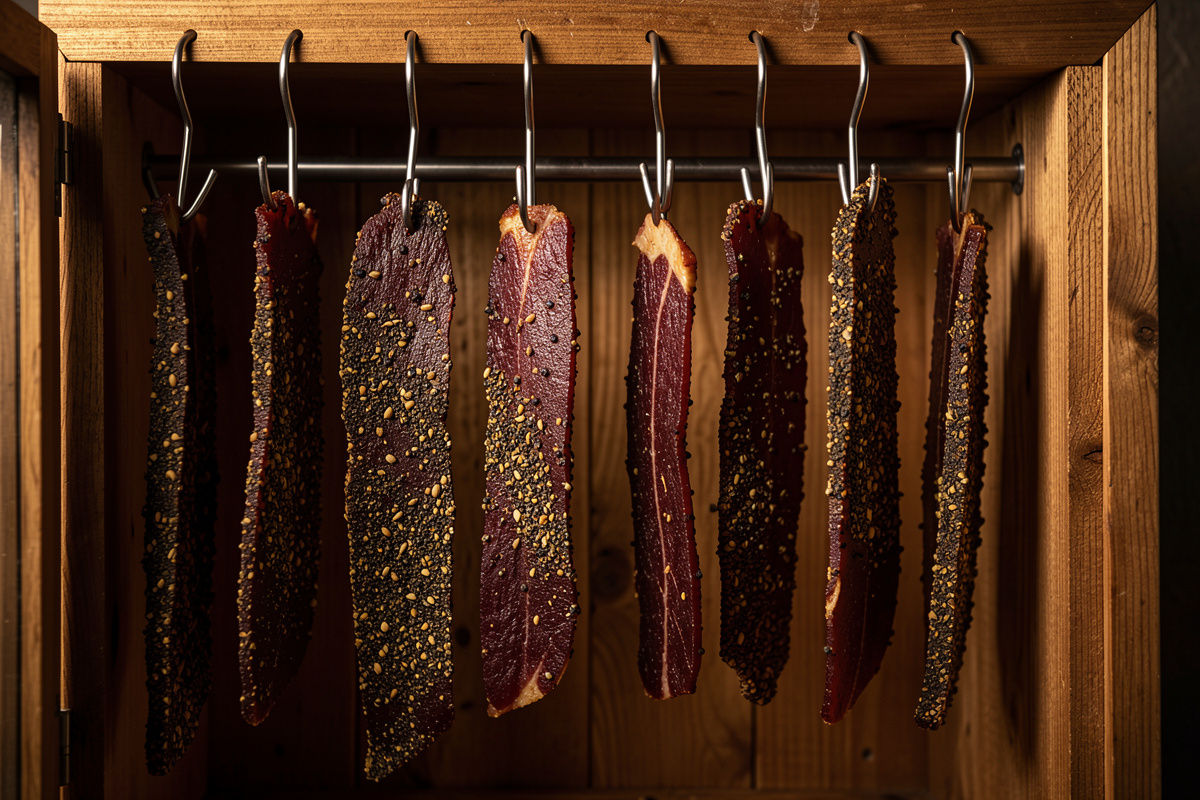

Biltong is air-dried, vinegar-cured beef that does not follow the curing-chamber rulebook. Where a bresaola hangs for eight weeks at 12–15 °C and 75–80% RH, biltong dries in 3–7 days in a warm, dry, breezy box and is finished at roughly 50% weight loss. Different chemistry, different climate, different gear.
I have run converted-fridge chambers for years — coppa, pancetta, bresaola, salami — and biltong was the product that broke my chamber instincts. The first batch I tried to dry in my primary chamber went fuzzy in four days, because 80% RH is exactly the wrong environment for vinegar-wet beef. Biltong wants the opposite of everything a slow dry-cure wants. This guide is the map: what biltong actually is, why its safety model is different from the cure #2 charcuterie I usually preach, the climate it needs, and how every piece of the build connects to the deeper spoke guides below.
What Biltong Is (and How It Differs From Chamber Charcuterie)
Biltong is South African air-dried beef: thick strips of lean muscle cut with the grain, marinated in vinegar and spices, salted, and hung to dry in moving air until they lose around half their starting weight. The signature flavour is coarse toasted coriander and black pepper, not the white-mold funk of a coppa. It is eaten raw — never cooked, never hot-smoked — which is exactly why the cure matters.
The difference from the whole-muscle charcuterie I make in the chamber is structural, not cosmetic. A bresaola is one solid lump of eye-of-round that must dry slowly and evenly over weeks so the outside does not seal before the centre lets go of its water. Biltong is the reverse philosophy: thin enough and warm enough to dry fast, before anything can grow on the damp surface. The vinegar and salt hold the line during those first risky hours; speed does the rest.
The Safety Model: Why Biltong Breaks My Own Cure #2 Rule
On most of this site I am dogmatic: long, slow dry-curing and fermented sausage need cure #2, full stop. Biltong is the documented exception, and the reason is worth understanding rather than memorising. Traditional biltong carries no nitrite at all. Its safety rests on three other pillars working together: acetic acid from real vinegar dropping the surface pH, a heavy hit of salt pulling water out, and fast drying in moving, oxygen-rich air. Clostridium botulinum is anaerobic — it cannot establish on a thin, salted, acidified strip drying in a breeze. That aerobic, fast-drying environment is the whole point.
This is the line you must hold: biltong’s no-nitrite safety only works because it dries fast. It is not a licence to skip cure on a slow product. If you try to dry biltong cold and humid in a stagnant chamber over two weeks, you have removed the speed pillar and you are now running an unprotected slow cure — the worst of both worlds. The traditional method is safe; the half-measure is not.
For home makers in damp climates — my Swedish basement in winter is exactly that — I add a small, optional belt-and-suspenders: cure #1 at the standard 2.5 g per kilogram of meat. That is cure #1, not cure #2: biltong is a short cure of days, so it never needs the slow-release nitrate that a months-long bresaola does. Cure #1 buys margin against Listeria and Staphylococcus if your drying runs slower or warmer than ideal. It is genuinely optional for a fast, properly acidified batch; it is cheap insurance if anything about your setup is marginal. The full breakdown lives in the biltong cure and spice guide.
Biltong Climate Is the Opposite of Your Curing Chamber
This is the single biggest mistake chamber owners make, and I made it first. A curing chamber holds high humidity on purpose — 75–80% RH — so whole muscle dries slowly and never case-hardens. Biltong wants the inverse: warm, dry, and breezy. The target box is roughly 25–30 °C with 40–60% RH and constant airflow. At chamber humidity, vinegar-wet beef simply grows mould before it dries.
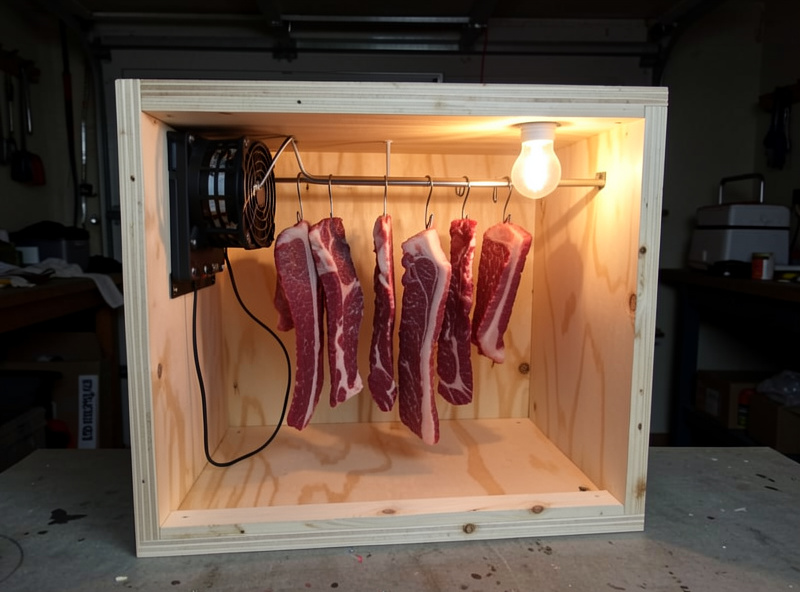
So do not dry biltong in your bresaola chamber. Build or use a dedicated biltong box — a ventilated enclosure with a low-wattage bulb for gentle warmth and a computer fan for air exchange. The bulb is there to lower relative humidity and nudge drying along, never to cook; keep box temperature under about 35 °C. The table below is the cheat-sheet I wish I had on day one.
| Variable | Biltong Box | Curing Chamber (bresaola, coppa) |
|---|---|---|
| Target temperature | 25–30 °C (warm) | 12–15 °C (cool) |
| Target humidity | 40–60% RH (dry) | 75–80% RH (humid) |
| Airflow | Constant, brisk | Intermittent, gentle |
| Drying time | 3–7 days | 6–12 weeks |
| Weight-loss endpoint | ~50% (dry) / ~35% (wet style) | ~35–40% |
| Cure salt | None traditional; cure #1 optional | Cure #2 required |
| Cut orientation | With the grain, thick strips | Whole intact muscle |
| Main risk | Mould if too humid/slow | Case hardening if too dry/fast |
If you already run a chamber, the good news is that most of the monitoring kit transfers. The same Inkbird controller that runs my compressor can switch a biltong-box bulb instead, a calibrated hygrometer tells you whether you are actually in the 40–60% band, and the same smart-plug schedule that cycles my chamber fan can run the box fan. The climate goal is opposite, but the instruments are identical.
Choosing and Preparing the Cut
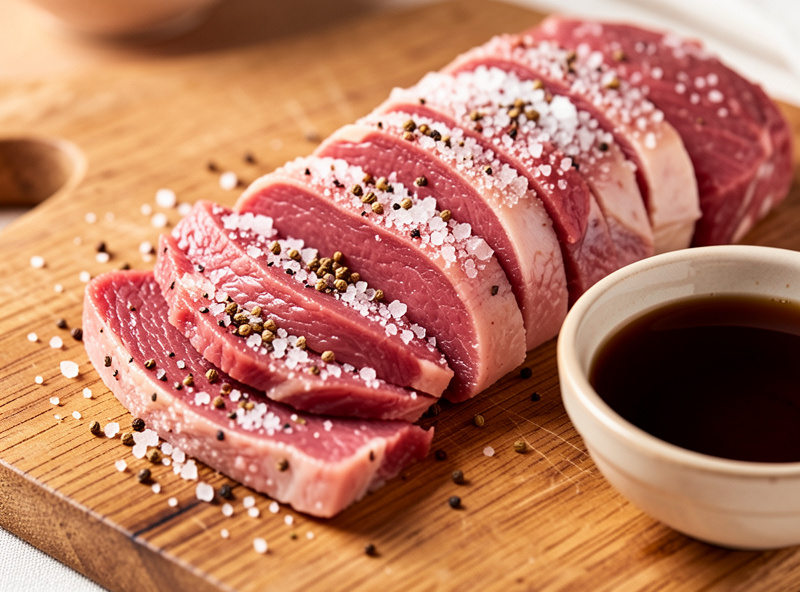
Biltong is a lean-beef product. The classic cut is silverside or topside — the same beef family I use for bresaola, but treated completely differently. You want lean muscle with the silver skin trimmed off and the seams followed, then sliced with the grain into strips roughly 2–3 cm thick and a hand-span long. Cutting with the grain is what gives biltong its long, satisfying chew; jerky goes against the grain for the opposite reason, which is one of the core biltong-versus-jerky distinctions.
Thickness is a safety variable, not just a texture choice. Thicker strips dry slower, and slower drying eats into the speed pillar that keeps no-nitrite biltong safe. If you are working in a humid room or skipping cure #1, keep strips on the thinner side of that range so the surface dries within hours. Fat is a matter of taste: a thin fat cap is fine on biltong you will eat within a couple of weeks, but trim hard if you want long shelf life, because fat goes rancid long before lean meat does.
The Cure and the Spice
The biltong cure is simple and ancient in its logic: salt, vinegar, and a coarse coriander-and-pepper spice. I weigh mine rather than eyeball it. A reliable equilibrium approach is around 2% fine salt by meat weight if you do not want to brush anything off, plus the optional 2.5 g/kg cure #1, with toasted coarsely cracked coriander as the dominant aromatic and black pepper behind it. The vinegar — brown malt, cider, or red wine vinegar — does double duty: it lowers surface pH for safety and it carries flavour.
Never use iodized table salt; the iodine is harsh and unnecessary here. Toast the coriander whole and crack it coarsely — pre-ground coriander tastes flat and dusty by comparison. Brown sugar, garlic, and a splash of Worcestershire are common regional tweaks, but coriander is the non-negotiable signature. The full weighed recipe, the salt-box versus equilibrium debate, and the spice ratios I have settled on are in the cure and spice guide.
Drying: Time, Airflow, and the Weight-Loss Endpoint
Like every product I make, biltong is done by weight, not by calendar. I log the green (starting) weight of each strip or of the whole batch and dry to a target loss. Around 35% loss gives you moist, deep-red “wet” biltong; around 50% loss gives the firmer, classic dry biltong that snaps and chews. In a properly warm, dry, breezy box that is typically 3–5 days for wet and 5–7+ for dry, but the scale is the truth and the days are just a guess.
Airflow is what makes the whole thing work. Stagnant air at any humidity invites mould on the vinegar-damp surface; brisk, constant air carries moisture away and keeps the surface drying. This is the same lesson the chamber teaches with its fan sizing and placement, just dialled up — biltong wants more air, not less. If you see fuzzy growth, your box is too humid, too cold, or too crowded; thin the load, raise the airflow, and consider a small dehumidifier if your ambient is damp. The full endpoint science is in the drying time and moisture guide.
Droewors: The Air-Dried Sausage Cousin
Droewors is biltong’s sausage sibling — a thin, coriander-spiced beef sausage dried the same fast, warm, breezy way. Because it is ground meat in a casing, it has far more surface area and a higher risk profile than a solid strip, so I treat the cure more seriously: cure #1 goes in here as a default rather than an option. Droewors is a fast-dried sausage, not a slow-fermented salami; if you want a fermented product you are in salami territory with starter cultures, a pH drop, and cure #2 — a different build entirely. The fast version, done safely, is in the droewors recipe guide.
Biltong vs Jerky: Not the Same Snack
People lump biltong and jerky together because both are dried beef, but the methods barely overlap. Biltong is sliced thick with the grain, marinated in vinegar, and air-dried raw over days at ambient temperature; its safety comes from acid, salt, and speed. Jerky is sliced thin against the grain and dried with heat — the USDA recommends heating the meat to 71 °C (160 °F) to make it safe — over hours, often with a soy-and-sugar marinade. One is a cured raw product; the other is a cooked-and-dried one. The full side-by-side is in the biltong vs jerky comparison.
Building the Box
You do not need a refrigerator for biltong — you need a ventilated box. The classic build is a plywood or plastic enclosure with a low-wattage bulb at the bottom for gentle convective warmth, a computer fan for air exchange, and hooks or dowels up top to hang strips clear of each other. The bulb and fan are the whole machine. If you already have chamber-building experience, this is a weekend version of the same skills you used in the full chamber build, and many of the same enclosure and ventilation lessons apply at smaller scale. The detailed plans, wattage and fan choices, and a few things I would do differently are in the biltong box design and build guide. A ready-made biltong box kit is a reasonable shortcut if you would rather not cut plywood.
As an Amazon Associate I earn from qualifying purchases.
Wet vs Dry: Choosing Your Style
Biltong is not one texture — it is a spectrum you choose by how far you dry it. “Wet” biltong, pulled at around 35% weight loss, is moist, deep red in the centre, and tender; it is the style most people fall in love with, but it is perishable and best eaten within a week. “Dry” biltong, taken to around 50% loss, is firm, snaps when bent, and keeps far longer because its lower moisture means lower water activity. I run both at once on the same batch by simply pulling pieces off at different weights — the thinner strips hit dry first, the thicker ones stay wet longer.
Beyond moisture, the flavour styles fan out from the same coriander-and-pepper base. A chilli biltong adds dried chilli flakes to the spice; a garlic version leans on granulated garlic; some makers sweeten the edge with a little brown sugar. The constant is toasted coriander — change everything else and it still reads as biltong, drop the coriander and it does not. The full spice playbook is in the cure and spice guide.
A Quick Biltong Failure Map
Almost every biltong problem traces back to the same handful of causes, and naming them makes troubleshooting fast. Surface mould means the box was too humid, too cold, too crowded, or the strips too thick — the surface stayed wet long enough for spores to take. A hard shell over a wet centre is case hardening from too much heat or air that was too dry, the same defect I chase in slow cures and cover in the case hardening guide. A sour, slimy, or off-smelling strip means the cure or acidification failed — when in doubt, throw it out, never taste to check.
And the most common complaint of all, biltong that never seems to finish, is nearly always a humidity or airflow shortfall rather than a problem with the meat. Confirm the numbers with a calibrated hygrometer before blaming anything else, then raise airflow or dry the room. The deeper diagnostics live in the troubleshooting guide, and the moisture science behind the endpoints is in the drying time and moisture guide.
Storing and Eating Biltong
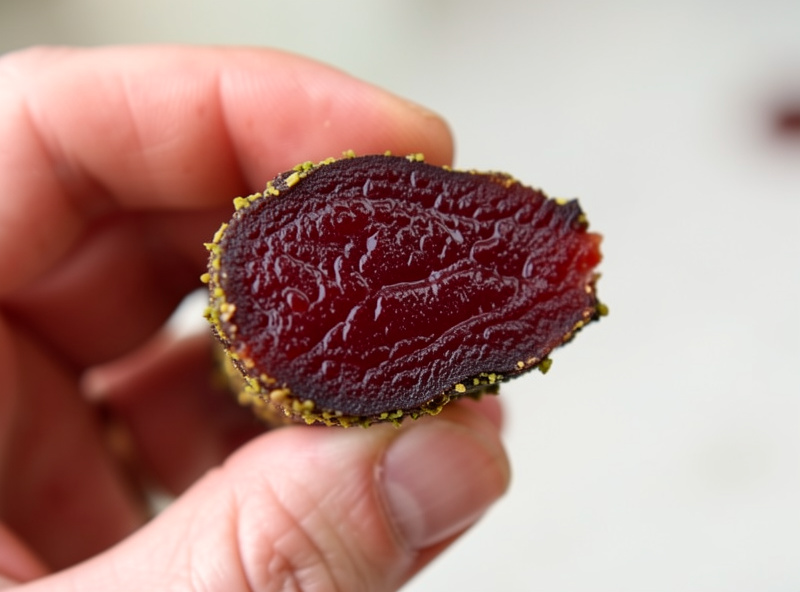
Storage follows directly from dryness. Wet biltong needs the fridge and a short timeline; dry biltong keeps for weeks in a breathable container at cool room temperature. The mistake to avoid is sealing not-quite-dry biltong in an airtight bag, where trapped residual moisture invites mould — paper or a loosely closed jar lets it keep breathing. For long storage, dry it properly first, then vacuum-seal and refrigerate or freeze. Biltong is traditionally sliced across the strip into thin coins for eating, which shows off the gradient from dark dry edge to redder centre. The lower the water activity, the more forgiving every part of storage becomes — below about 0.85 the pathogens that matter can no longer grow — which is the same principle that governs all shelf-stable charcuterie.
Beyond Beef: Game and Other Meats
Beef silverside is the default, but biltong is traditionally made from a range of lean meats, and the method transfers cleanly to any of them. Venison and other game make excellent, deeply flavoured biltong — lean, dense, and well suited to the long chew. Ostrich biltong is a South African staple and dries beautifully because it is so lean. The rule across all of them is the same: leaner meat dries cleaner and keeps longer, while fat shortens shelf life, so trim accordingly. Game also tends to be drier to begin with, so watch the weight loss closely and consider pulling it at a lower percentage than you would beef. Whatever the animal, the three safety pillars do not change — vinegar to acidify, enough salt, and a fast dry in moving air — and the optional cure #1 margin applies exactly as it does to beef. Pork is the one I would steer clear of for raw air-dried strips at home; the whole-muscle pork I make is a slow, cure #2 chamber product, not a fast biltong one.
Frequently Asked Questions
Do I need curing salt (nitrite) to make biltong?
Traditional biltong uses no nitrite. Its safety comes from vinegar acidification, heavy salt, and fast drying in moving air. Cure #1 at 2.5 g per kg is an optional safety margin, useful in humid climates or with thicker strips, but it is never the slow-release cure #2 that long dry-cured whole muscle requires.
Can I dry biltong in my curing chamber?
No. A curing chamber holds 75 to 80 percent humidity at 12 to 15 C so whole muscle dries slowly. Biltong needs the opposite: 25 to 30 C, 40 to 60 percent humidity, and brisk airflow so it dries fast. At chamber humidity, vinegar-wet beef grows mould before it dries.
How do I know when biltong is done?
Go by weight loss, not days. Around 35 percent weight loss gives moist wet-style biltong; around 50 percent gives firm classic dry biltong. Log the starting weight and weigh to your target. In a warm, dry, breezy box that is usually 3 to 7 days.
What is the difference between biltong and jerky?
Biltong is sliced thick with the grain, vinegar-marinated, and air-dried raw over days at room temperature. Jerky is sliced thin against the grain and dried with heat, with the USDA recommending the meat reach 71 C (160 F). Biltong is cured and raw; jerky is cooked and dried.
Why did my biltong grow mould?
Mould means the surface stayed wet too long. The cause is almost always too much humidity, too little airflow, an overcrowded box, or strips cut too thick. Thin the load, raise airflow, lower humidity, and make sure your vinegar wash actually coated the meat. Fuzzy green or black growth means discard the piece.
What cut of beef is best for biltong?
Lean cuts such as silverside or topside, trimmed of silver skin and sliced with the grain into strips about 2 to 3 cm thick. Cutting with the grain gives biltong its long chew. Trim fat hard if you want long shelf life, since fat goes rancid before lean meat does.
Related Guides
- How to Make Biltong at Home
- Biltong Box Design and Build Guide
- Biltong Cure Recipe and Spice Guide
- Droewors Recipe Guide
- Biltong vs Jerky Comparison
- Biltong Drying Time and Moisture Guide
- Water Activity and Food Safety in Charcuterie
- Curing Chamber Troubleshooting