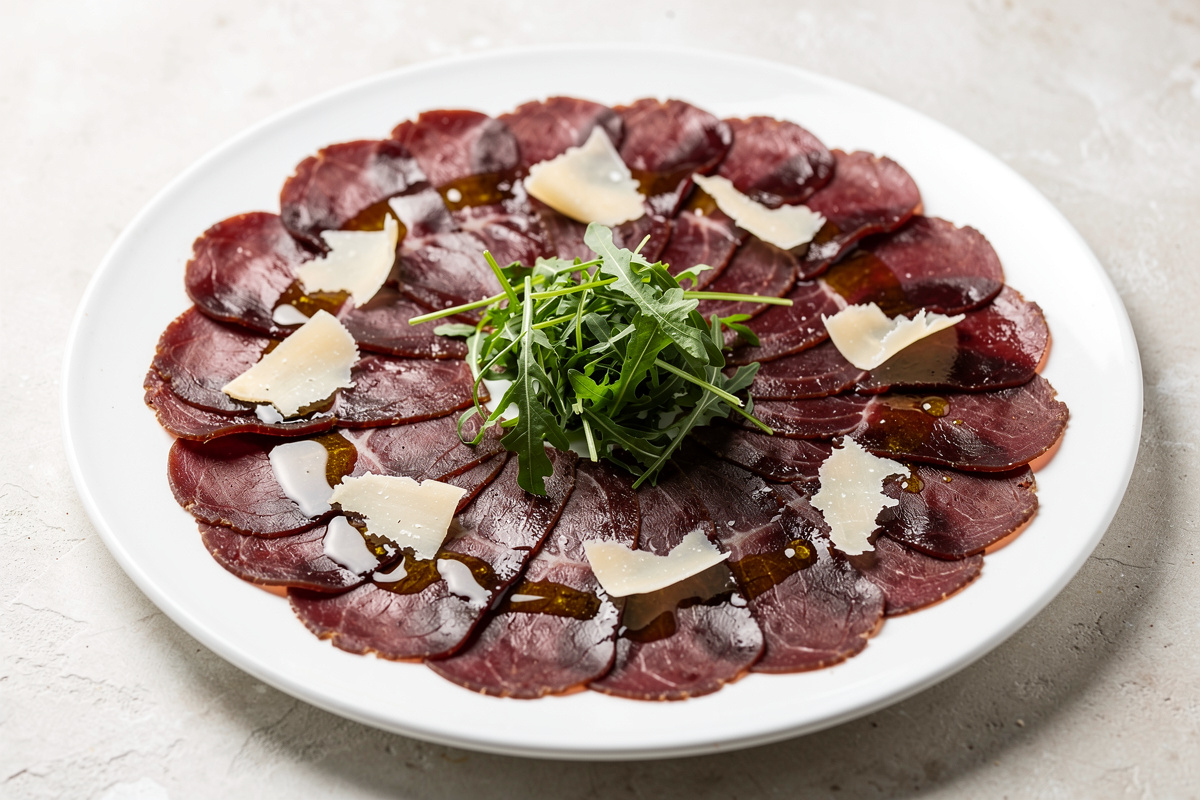

Bresaola is air-dried beef, and it is the cut that taught me the most about chamber control, because there is nowhere to hide. A lean eye-of-round has almost no intramuscular fat to buffer it, so every mistake in humidity and airflow shows up as a hard grey shell over a wet red core. Get it right and bresaola is the most elegant thing in the chamber: deep burgundy, faintly sweet, sliceable to translucency. Get the drying wrong and it case-hardens before your eyes. After years of running bresaola in the smaller overflow chamber, where the pieces are a sensible size, it is still the cure I respect most.
It deserves its own build because lean beef does not behave like fatty pork. The cure is simple; the drying is unforgiving. This is the cut where holding the envelope steady and resisting the urge to dry it fast separates a good piece from a ruined one. The whole muscle charcuterie hub sets bresaola among its cousins; this is the beef-specific method.
The Cut: Eye of Round and Why Lean Is Hard
Classic bresaola is beef eye of round (silverside in some markets), a long, lean, evenly shaped muscle with very little fat. That clean shape is exactly why it is chosen: it dries uniformly and slices into neat coins. The lack of fat is the catch. Fat slows and buffers moisture loss; a lean muscle gives up water fast and from every surface, which is precisely what makes it prone to case hardening if the chamber air is too dry or moving too hard.
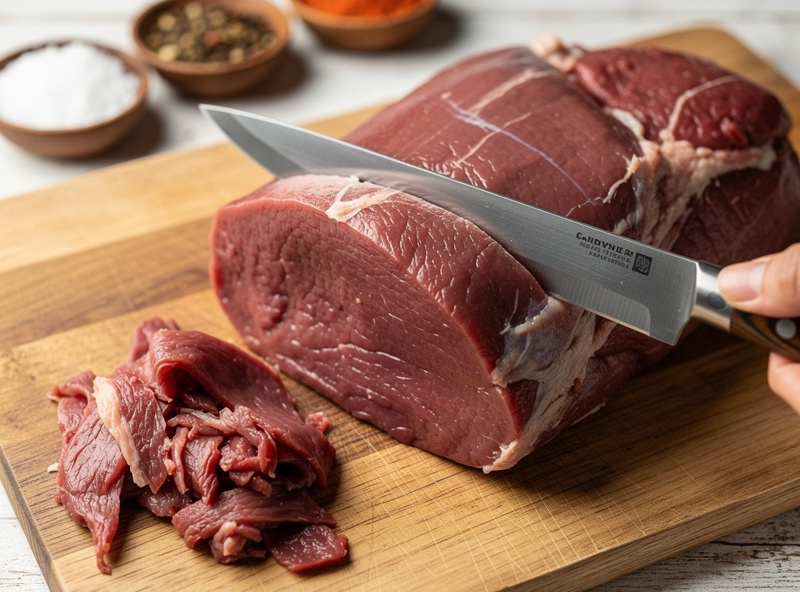
I trim the eye of round clean of any silverskin and surface fat so the cure contacts the muscle evenly, then weigh it and tag the green weight. A home-friendly size is roughly a kilo to a kilo and a half; much bigger and the centre takes a long, risky time to reach the surface’s dryness. Because the piece is lean and the surface dries first, bresaola is the textbook case for patience over speed.
The Cure
I equilibrium-cure bresaola: salt weighed to the meat at 2.5% to 3% fine non-iodised salt by green weight, plus Cure #2 at 0.25% of meat weight. Bresaola hangs for weeks, well past the Cure #1 window, so Cure #2 with its nitrate reservoir is the correct and non-negotiable choice here. The flavour is built on red wine and aromatics: I rub the salt and cure into the beef, then add cracked pepper, juniper, bay, garlic, rosemary, and a splash of red wine, bag it, and equilibrium-cure in the fridge for around ten days to two weeks, flipping daily.
The longer bag cure compared to a pork belly is deliberate: the cure has to reach the centre of a dense, thick muscle, and you want the salt and nitrite fully equalised before it ever hangs. A bresaola that goes into the chamber under-cured at the core is the one that spoils from the inside. The salt-weight arithmetic is the same equilibrium logic worked through on the salt percentage calculator; for a dense beef muscle I sit at the 3% end for a touch more security.
| Stage | Bresaola spec | Why |
|---|---|---|
| Salt | 2.5–3% (I run 3%) | Dense lean muscle, security margin |
| Cure salt | Cure #2, 0.25% | Hangs weeks past Cure #1 window |
| Bag cure | ~10–14 days | Cure must reach the dense centre |
| Target loss | ~35–40% | Lean meat, firm slice, no fat to soften |
Drying: The Part That Punishes Shortcuts
After the bag cure I rinse the beef, pat it dry, and often slip it into a breathable beef-middle casing or a muslin wrap before hanging, specifically to slow surface drying and protect the lean muscle from the air. It dries in the standard envelope, 12 to 15°C and 75 to 80% RH, but with bresaola I run the humidity at the upper end, nearer 80%, and the fan on the gentle side, because a lean muscle wants to lose water slowly and evenly.
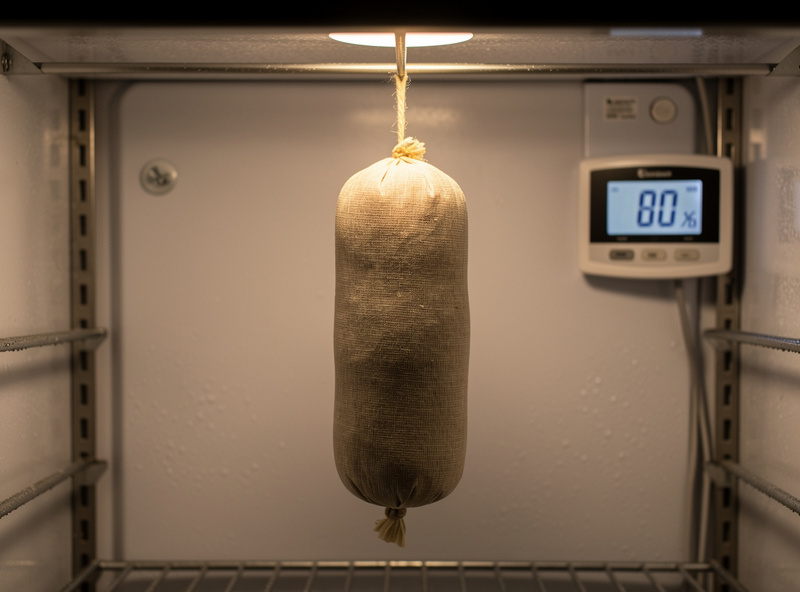
Case hardening is the bresaola killer, full stop. When the surface dries faster than moisture can migrate from the centre, it forms a hard, impermeable shell that traps a wet core, and the piece can spoil inside while the outside looks finished. The casing or muslin wrap is the first defence; holding RH up and airflow gentle is the second. If I see the surface stiffening into a shell, I push humidity up and slow the fan immediately, the standard correction detailed on the case hardening guide. The reason bresaola is so sensitive is its leanness, which is also why beef and pork want subtly different humidity targets, covered on the humidity for beef vs charcuterie piece.
When Is Bresaola Done?
Bresaola is done at around 35% to 40% weight loss, higher than the pork cuts because there is no fat to keep it supple, and a lean muscle needs more water gone to slice cleanly and firm up. I weigh from the tagged green weight and pull at roughly 35% for a slightly more tender slice, closer to 40% for a firmer, more concentrated one. The feel I want is uniform firmness with give, like a ripe avocado pressed through its skin, with no soft squishy zone at the centre.
Bresaola is eaten raw, sliced paper-thin, which is exactly why the Cure #2 and the honest weight loss matter so much: there is no cooking step to fall back on. A piece that feels soft in the middle has not lost enough water and is not safe to slice and eat yet, no matter how good the surface looks. When it is done, it keeps for a couple of weeks wrapped in the fridge; I vacuum-seal portions of anything I am not slicing soon.
As an Amazon Associate I earn from qualifying purchases.
Two tools earn their place on a bresaola. The first is breathable casing or muslin to wrap the lean muscle and slow surface drying; I keep beef middle casings on hand for exactly this. The second is the precision scale for the Cure #2, because 0.25% of a 1.2-kilo eye of round is three grams and nitrite is not an eyeball measurement; I weigh it on a 0.1g precision scale. A sharp knife or slicer for the paper-thin slices is the third, but the casing and the scale are what decide whether the piece survives.
Slicing and Serving
Bresaola is served sliced as thin as you can manage, fanned out, dressed simply with olive oil, lemon, cracked pepper, and shaved parmesan or rocket. The thinness is part of the experience; thick bresaola eats dry and chewy, thin bresaola melts. A firm, well-dried piece holds its shape under a sharp knife, which is one more reason to dry it fully before slicing. Chill the bresaola hard, almost to freezing, before slicing and it cuts thinner and cleaner than at room temperature.
Frequently Asked Questions
What cut of beef is used for bresaola?
Classic bresaola uses beef eye of round, also called silverside in some markets. It is a long, lean, evenly shaped muscle with very little fat, which dries uniformly and slices into neat coins. Trim it clean of silverskin and surface fat before curing. A home-friendly size is roughly one to one and a half kilograms.
Do I need Cure 2 for bresaola?
Yes. Bresaola hangs for several weeks, well past the short Cure 1 window, so Cure 2 at 0.25 percent of meat weight is the correct and non-negotiable choice because its nitrate reservoir protects across the long dry. Bresaola is eaten raw with no cooking step, so the curing salt and a full weight loss are what keep it safe.
Why does my bresaola get hard on the outside?
That is case hardening, and lean beef is the most prone to it. The surface dries faster than moisture can migrate from the centre, forming a hard shell that traps a wet core. Wrap the muscle in a breathable casing or muslin, hold chamber humidity near 80 percent, and keep airflow gentle. If a shell forms, raise humidity and slow the fan to let it rehydrate.
How long does bresaola take to dry?
Dry to weight loss, not days. After about ten to fourteen days curing in the bag, bresaola usually hangs four to eight weeks to reach 35 to 40 percent weight loss, depending on thickness and chamber stability. Weigh from the tagged green weight and pull when the piece is uniformly firm with no soft, squishy centre.
Can you eat bresaola raw?
Yes, bresaola is meant to be eaten raw, sliced paper-thin. That is precisely why it must be cured with Cure 2 and dried to a full 35 to 40 percent weight loss with no soft core. There is no cooking step to fall back on, so a piece that still feels soft in the middle is not ready and should not be sliced and eaten.
More From the Whole Muscle Chamber
- Whole Muscle Charcuterie: The Complete Guide
- Case Hardening: Causes, Prevention, and Fixes
- Humidity for Dry Aging Beef vs Charcuterie
- How to Calculate Salt Percentage for Equilibrium Curing
- Homemade Pancetta: Arrotolata vs Tesa