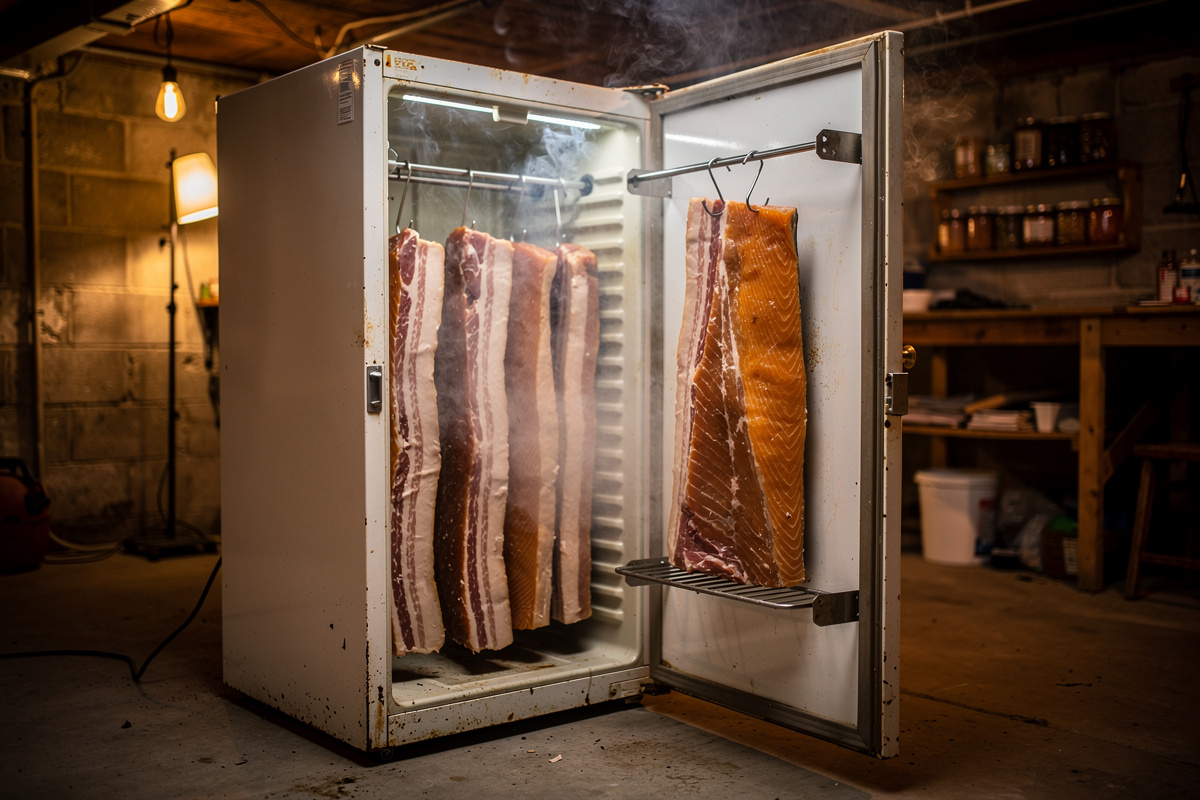

Cold smoking at home holds the smoke-chamber temperature below 80°F (27°C) while exposing food to long, gentle wood-smoke bathing for hours or days. Unlike hot smoking, cold smoking does not cook the food — the smoke only flavors and surface-cures.
Bacon, salmon, cheese, salami, and nuts all take cold smoke beautifully, with setups ranging from a 25 dollar pellet maze in a cardboard box to a custom smokehouse with a dedicated cold-feed line.
The two failure modes of beginner cold smoking are temperature creep above 90°F (which moves you into the food-safety danger zone with raw meat) and inadequate smoke density that produces pale, flavorless results after hours of effort. This guide covers the chamber, the smoke source, the wood, the schedule, and the food-by-food approach I use in my own setup, with safe-temperature notes and the data points that make the difference between hobby smoke and professional-grade depth. My third cold-smoke session, on a too-warm summer day, the chamber air climbed to 86°F for about 90 minutes before I noticed — the Soppressata-style chubs from that batch had a tacky surface that never developed the right white bloom. Now I run the smoke generator outside the chamber and pipe smoke in through a 1-inch silicone tube to keep the heat out.
What Cold Smoking Is and Why It Is Different From Hot Smoking
Cold smoking is the application of wood smoke at temperatures below 80°F (some sources say 90°F) so that the smoke flavors and lightly preserves the food without cooking it. Hot smoking, by contrast, runs at 180-275°F and cooks while smoking. The two techniques solve different problems. Hot smoking finishes a brisket in hours; cold smoking flavors a side of bacon over days while the meat remains raw and depends on cure or drying for safety. The relevant standards are dry and semi-dry sausage validation guidance for shelf-stable fermented sausage and the FDA’s processing parameters for controlling pathogens in cold-smoked fish (part of the broader Fish and Fishery Products Hazards and Controls Guide) for cold-smoked salmon, both of which set the time-temperature combinations and, for fish, the minimum water-phase salt level the chamber and the cure together have to hit.
Liquid smoke is a third category — concentrated smoke condensate sold in bottles that can be brushed or injected. It works for finishing flavor but lacks the layered phenolic depth of real cold smoke. For any product where smoke is a featured flavor, real wood smoke at low temperature outperforms liquid smoke by a wide margin.
Temperature Targets and Why Below 80°F Matters
The food-safety reason for low temperature is that raw or partially-cured meat held in the temperature danger zone (40-140°F) for extended periods grows pathogens. Cold smoking specifically exists to keep the meat below 40°F or above whatever cure-protected threshold it needs while applying smoke. Holding chamber temperature below 80°F gives a safety margin for surface temperatures (which trail ambient by a few degrees on hanging meat) and prevents fat rendering on bacon or cheese.
For salami already past initial fermentation, cold smoking is added during the drying phase at 55-65°F where the meat already lives. For cheese, run smoking at 50-70°F to avoid surface oil weeping. For bacon and lox, run 45-65°F at a chamber that can hold steady. The detailed schedule for cured-then-smoked salami specifically is in cold smoking salami: when to add smoke and at what temperature.
Choosing a Cold Smoke Generator
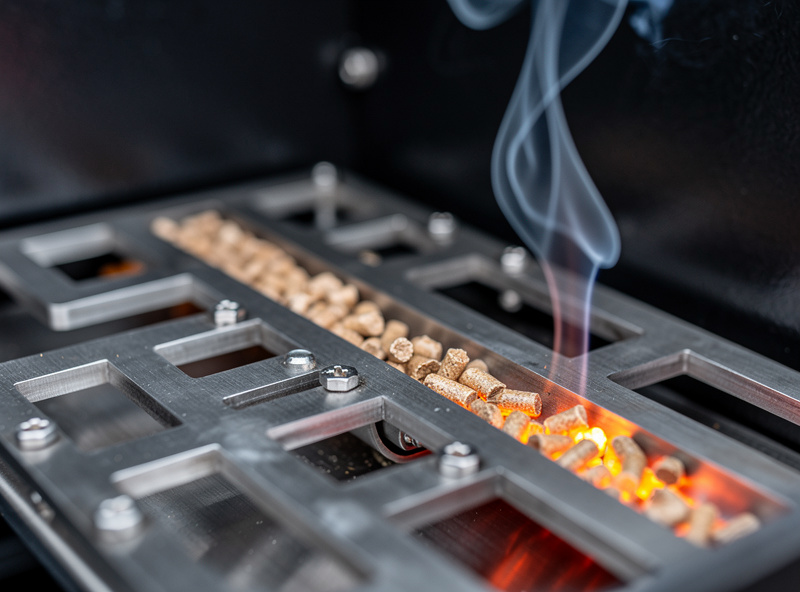
The generator is the device that produces smoke without producing significant heat. Five options dominate home setups. Pick based on your existing chamber, how long a session you want unattended, and your budget.
| Generator | Cost | Burn Time | Heat Output | Smoke Density | Best For |
|---|---|---|---|---|---|
| Pellet maze (A-MAZE-N or similar) | $25-$45 | 6-12 hours | Very low (10-15F rise) | Steady, medium | First-time builders; converted fridges |
| DIY pellet maze (DIY) | $5-$15 in materials | 4-10 hours | Very low | Steady when seasoned | Tinkerers; step-by-step build |
| Smoke daddy / external pump | $80-$130 | 2-4 hours per fill | Near zero (smoke piped in) | High, controllable | Long sessions in tight chambers |
| Sawdust pile burner | $10-$20 | 2-3 hours | Low to moderate | Heavy, smoldering | Outdoor smokehouses; old-school |
| Modified pellet smoker on lowest setting | $200+ (existing unit) | 2-6 hours | Risky — can creep above 90F | High | Owners of pellet rigs willing to retrofit |
For most home builds the pellet maze is the right answer. It runs on standard food-grade hardwood pellets, requires no electricity, and produces consistent smoke for 6-12 hours unattended. Drop one in the bottom of a converted fridge and run it across multiple sessions. The DIY version follows the same principle and is documented in the DIY cold smoke generator build.
As an Amazon Associate I earn from qualifying purchases.
Best Wood for Cold Smoking
Cold smoke woods break into three flavor families: mild fruit woods (apple, cherry), medium hardwoods (oak, maple, beech, pecan), and aggressive woods (hickory, mesquite). Match wood to food: fruit woods for cheese, fish, and poultry; medium hardwoods for bacon, ham, salmon, and salami; aggressive woods for sturdy beef and game meats only. Mesquite is generally too strong for any cold-smoke session over 2-3 hours and is better reserved for hot-smoke quick-flavor work.
Use food-grade pellets, sawdust, or chips depending on your generator. Pellet mazes specifically need pellets — sawdust will not flow correctly through the maze pattern. Avoid resinous woods (pine, cedar, fir) which produce harsh, bitter smoke. Avoid any wood that has been treated, painted, or used as construction lumber.
For salami where smoke flavor must integrate with the existing pH-dropped meat character, beech and apple are the standard. For lox, alder is traditional. For bacon, hickory and apple in equal parts produce the breakfast-bacon flavor most people associate with cured pork.
The Cold Smoking Schedule
Cold smoke sessions break into three phases: surface drying, active smoking, and rest. Surface drying happens before smoke ever hits the food. A wet surface absorbs smoke into water rather than fat and produces uneven, sour-smoky flavor. Pat the food dry, hang it in cool airflow for 1-3 hours until the surface feels tacky-dry, then start the generator.
Active smoking runs 4-12 hours per day for 1-3 days depending on the food. Bacon takes 2-3 days at 6 hours per day. Lox takes 8-24 total smoke hours over 1-2 days. Cheese takes 2-4 hours per day for 1-2 days, with a critical rest period after. Salami picks up smoke during week 1-2 of drying for 4-6 hours per session, 2-3 sessions over a week.
Rest is non-negotiable. Freshly smoked food tastes harsh, ashy, and one-dimensional. Wrap and refrigerate (or hold in the chamber) for 24-72 hours to let the smoke compounds penetrate and integrate. Cheese improves dramatically with a 48-hour rest. Lox should rest 24-36 hours before slicing. Bacon rests 48 hours minimum and improves through week one in the fridge.
Cold Smoking Cheese
Cheese cold smokes at 50-70°F for 2-4 hours per session, with a critical rest of 48-72 hours wrapped in parchment in the refrigerator. Cheese sweats oil if the chamber climbs above 80°F, and that oil pulls smoke into surface puddles that dry to bitter spots. The pellet maze in a converted fridge or wine fridge is the safest setup. Cheddar, gouda, mozzarella, and provolone all take cold smoke beautifully. Soft cheeses like brie are not good cold-smoke candidates; stick to firm and semi-firm wheels.
For aged-and-smoked cheese, run the smoke first then return the wheel to your aging chamber for 2-6 weeks. The aging completes the flavor integration. The full aging-after-smoking workflow follows the same patterns as home cheese aging and uses the same chamber tier described in how to build a curing chamber.
Cold Smoking Bacon and Ham
Cold-smoked bacon and ham start with a wet or dry cure — and the cure has to include the correct nitrite curing salt for the method, not just table salt and sugar. Bacon (7-10 days cure, cooked before eating) uses Cure #1 at the standard rate for the cut’s weight; the smoke that follows is a surface flavor step layered on a cure that is already doing the actual safety work, exactly like it does on salami. My full ratios and the reasoning behind the number are in pink salt and nitrates in charcuterie: cure #1 vs cure #2 — do not skip that step to hold a slab of raw pork belly at 45-65°F for days of smoke sessions. After cure, rinse, pat dry, hang for surface drying 4-12 hours, then cold smoke for 2-3 days at 6-8 hours per day. Use a hardwood pellet (hickory + apple is the breakfast-bacon classic) and rest 48 hours wrapped before slicing or further cooking.
Cold-smoked bacon must still be cooked before eating; the cold smoke flavors the surface but does not pasteurize the interior — see the full side-by-side in cold smoke vs hot smoke for bacon. Country ham and traditional Smithfield-style ham are a different risk category: the weeks-long dry-cure and hang mean these are cooked-optional, whole-muscle, uncooked-eligible products, which puts them under the same rule as any long hung cure — Cure #2 (nitrite plus nitrate), not Cure #1, because the nitrate reservoir has to keep working across weeks to months of hang, not just the first few days. I walk the full timeline, cure math, and hang schedule in curing a whole ham at home before anyone starts a smoke session on one.
Cold Smoking Salmon (Lox)
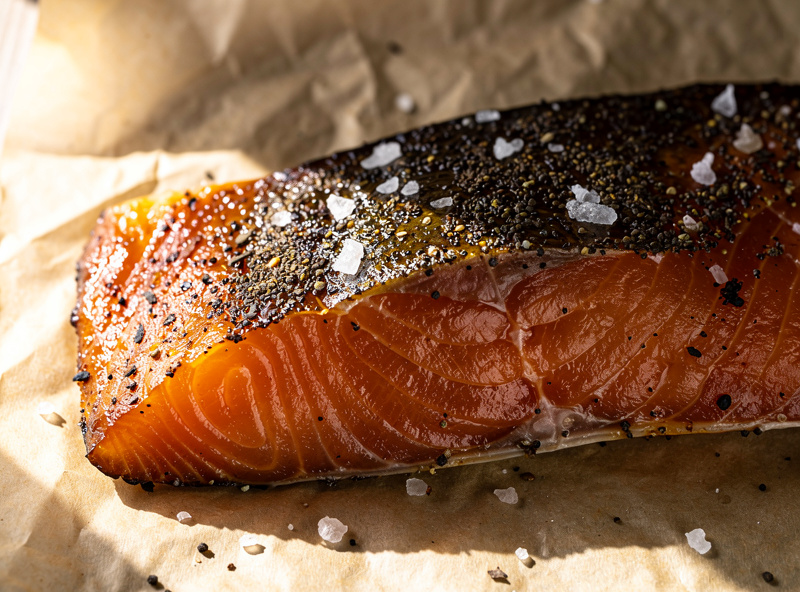
Cold-smoked salmon (lox or gravlax-then-smoked) starts with a dry cure of salt, sugar, and aromatics for 36-72 hours depending on thickness — the cure needs to be heavy-handed enough to drive the fish’s water-phase salt content up, which is the actual mechanism controlling Clostridium botulinum type E (a cold-tolerant strain that fresh and lightly-cured fish do not otherwise stop) and keeping listeria growth in check through the fridge-life of the finished product. I break down the salt math, the difference between gravlax and true lox, and when a cure needs added cure salt versus salt-and-sugar alone in gravlax vs lox vs smoked salmon. Rinse, pat dry, form a pellicle by air-drying in cool airflow for 4-8 hours until the surface is tacky and slightly translucent, then cold smoke at 65-80°F for 8-24 total hours over 1-2 days using alder or apple wood — comfortably under the 90°F ceiling FDA sets for cold-smoking fish.
Hold finished lox refrigerated for 24-36 hours before slicing, and keep it refrigerated at every stage except the smoke session itself — cold-smoked fish is one of the few home-charcuterie products where a warm gap in the chain matters within hours, not days. Vacuum-seal portions for storage; properly cold-smoked lox holds 7-14 days refrigerated, longer frozen. Watch chamber temperature carefully — salmon held above 80°F crosses into food-safety territory faster than meat does.
Cold Smoking Salami
Salami picks up cold smoke during its drying phase, after the initial fermentation has dropped pH below 5.0. Smoke session run at 55-65°F (the same temperature the chamber already holds for drying), 4-6 hours per session, 2-3 sessions over a week. Smoke too early in the process and the surface dries unevenly; smoke too late and the casing has set too firm to absorb flavor. The detailed timing-and-temperature schedule for cold-smoked salami is in cold smoking salami: when to add smoke and at what temperature.
Smoke-then-dry salami like German Jagdwurst or Polish kielbasa takes a different schedule — heavier smoke earlier, less drying after. The home version of these styles follows the same equipment but a different timing, and a starter culture choice optimized for smoke compatibility (T-SPX rather than F-RM-52). The starter culture details cross over with Penicillium cultures for salami and the salt math from how to calculate salt percentage for equilibrium curing.
Storage and Aging After Cold Smoke
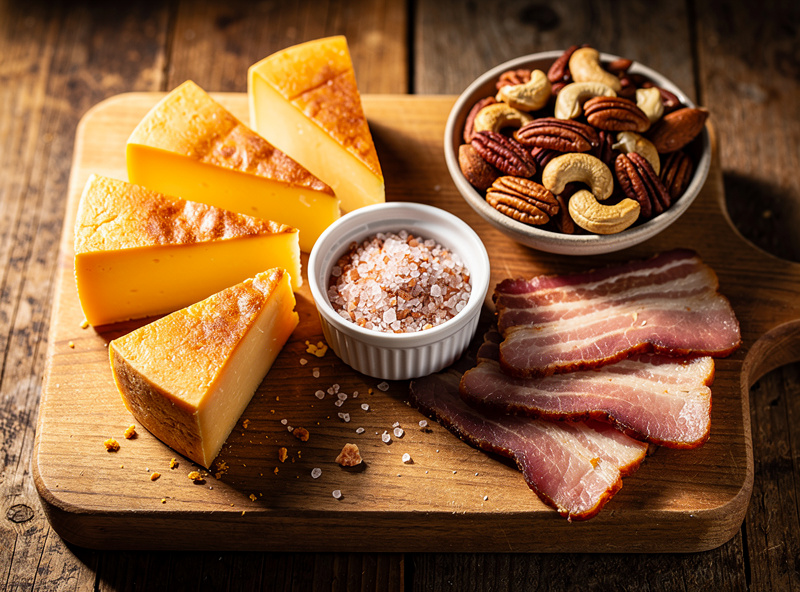
Cold-smoked food rarely peaks the day it comes off the smoke. Most products improve through a structured rest and storage cycle. Cheese vacuum-sealed and held at refrigerator temperature for 2-6 weeks rounds out from sharp and acrid into deep and complex. Bacon vacuum-sealed and refrigerated 7 days before slicing is noticeably better than bacon sliced same-day.
For lox, slice and vacuum-seal in 4-ounce portions and freeze any portions you will not eat within 7 days. Salami picks up smoke at one stage of a multi-week drying cycle and the smoke compound profile shifts continuously through aging — a salami sliced at week 4 of drying tastes different from the same salami at week 8, and the smoke flavor specifically deepens with the longer hang. Use vacuum-sealing to pause a salami at the texture you prefer for storage in the refrigerator.
Cold Smoking in a Chamber You Already Use for Curing or Cheese
Most home setups do not build a dedicated smokehouse — the same converted fridge that dry-cures salami or ages cheese doubles as the smoke chamber for a few hours a session. That works, but the humidity and temperature targets pull in different directions from what the chamber normally holds, and the controllers need to be told about it rather than fought. My chamber runs on the same smart-plug schedule I use for the compressor and fan cycling the rest of the year; on a smoke day I pause the humidifier’s normal cycle rather than let it fight the drier air a pellet maze produces, and I back the compressor’s setpoint down a few degrees ahead of time so the smoke generator’s small heat contribution does not push the whole chamber past target. The climate-control fundamentals — probe placement, drift, and how the chamber recovers after a door-open event — are the same ones covered in curing chamber climate control; smoke sessions are just a scheduled disruption to that baseline, not a different system.
The other real risk of a shared chamber is cross-contamination between what is currently hanging and what just came off a smoke session — smoke residue and ash dust settle on everything in the box, not just the target food. I run smoke sessions with anything else in the chamber either removed or well clear of direct smoke path, and I wipe down shelves and racks afterward before the next non-smoked batch goes back in.
Other Foods That Take Cold Smoke Well
Beyond the headline meats and cheeses, several pantry staples improve dramatically with a few hours of cold smoke and minimal preparation. These are the projects to start with if you want fast feedback before tackling a 3-day bacon project.
- Salt: Coarse kosher or flaky sea salt in a shallow tray takes 4-6 hours of cold smoke and produces an instant pantry upgrade. Pellet maze with apple or cherry. Stir once mid-session.
- Butter: Cube cold butter on a sheet of parchment, smoke 2-3 hours at 60-65°F, refrigerate overnight, then knead by hand to even the flavor. Smoked compound butter on steak is transformative.
- Olive oil and avocado oil: Pour into wide shallow dish, smoke 2-4 hours, decant into clean bottles. Use within 2 weeks for best flavor.
- Nuts: Almonds, pecans, and walnuts smoke 2-3 hours at 60-70°F. Toast lightly afterward at 300°F for 8-10 minutes to develop crunch and integrate flavor.
- Hard-boiled eggs (peeled): 2-3 hours of cold smoke produces a stunning umami depth. Use within 5 days refrigerated.
- Garlic and shallots: Whole peeled cloves on a perforated tray, 4-6 hours, dried fully or vacuum-sealed for storage.
Use these short-cycle projects to learn your generator’s burn rate, your chamber’s temperature behavior on different days, and the right rest period before you start a 3-day bacon run.
Common Cold Smoking Mistakes
Mistake 1: Smoking wet food. Surface water absorbs smoke as wet, sour, soapy flavor instead of crisp, dry phenolic depth. Always dry the surface to tacky-dry before starting the generator. The sticky-feel pellicle on lox is the textbook reference for what you want.
Mistake 2: Temperature creep above 90°F. A pellet maze in a tight box on a hot day can climb past 90°F. A water tray (frozen 2-liter bottles) in the bottom of the chamber buys you 4-6 hours of cooler smoke. Cold-weather smoking is dramatically easier; reserve hot-day smoking for the Smoke Daddy external rig where the smoke source is outside the chamber.
Mistake 3: Skipping the rest period. Freshly smoked food tastes harsh and one-dimensional. The 24-72 hour rest period is when the smoke compounds penetrate and integrate. Cheese improves more from a 48-hour rest than from another 4 hours of smoke.
Mistake 4: Using resinous or treated wood. Pine, cedar, fir, and any pressure-treated lumber produce bitter, harsh, or toxic smoke. Buy hardwood food-grade pellets or known-source untreated chunks of apple, oak, beech, or hickory.
Mistake 5: Smoking too long. Cheese smoked for 8 hours straight tastes acrid and cannot be saved by resting. Lox smoked 30 hours becomes inedibly heavy. Trust the recipe times — a 4-hour first session is far easier to recover from than a 12-hour overshoot.
Frequently Asked Questions
What temperature is cold smoking?
Cold smoking holds chamber temperature below 80 degrees F (27 degrees C) so that food is flavored by smoke without being cooked. Most home cold-smoke setups target 50 to 70 degrees F. Above 90 degrees F you cross into the food-safety danger zone for any raw or partially-cured meat. Lox and bacon typically run 50 to 65 degrees F; cheese 60 to 70 degrees F.
What is the difference between cold smoking and hot smoking?
Cold smoking flavors food at temperatures below 80 degrees F without cooking it. Hot smoking cooks food at 180 to 275 degrees F while applying smoke. Cold smoke can run for hours or days; hot smoke finishes in 1 to 8 hours. Cold-smoked food usually requires additional cure or refrigeration for safety because the smoke alone does not pasteurize.
Can I cold smoke food in a regular smoker?
Most consumer smokers cannot hold under 80 degrees F because their burners run too hot. A pellet maze or smoke daddy attachment lets you cold smoke inside any insulated box including a kettle grill or converted fridge. Pellet smokers on the lowest setting often hover at 100 to 180 degrees F — too warm for true cold smoke unless you add extensive cooling.
How long does cold smoked food last?
Cold-smoked food shelf life depends on the cure underneath. Cold-smoked bacon (with full nitrate cure) lasts 14 to 30 days refrigerated. Cold-smoked salmon (lox) lasts 7 to 14 days refrigerated, longer vacuum-sealed and frozen. Cold-smoked cheese vacuum-sealed lasts 6 to 12 months. Cold-smoked salami follows the salami’s normal aging shelf-life, typically 6 to 12 months hung or refrigerated.
What wood should I use for cold smoking?
Mild fruit woods (apple, cherry, alder) for cheese, fish, and poultry. Medium hardwoods (oak, maple, beech, pecan) for bacon, salmon, ham, and salami. Reserve hickory and mesquite for short bacon and ham sessions only — they overpower most other foods. Never use resinous wood (pine, cedar, fir) or any treated lumber.
Do I need to refrigerate during cold smoking?
You need a chamber under 80 degrees F. In cold weather an outdoor smokehouse works without active cooling. In warm weather you need either a converted refrigerator with a low-heat smoke source, an external smoke generator (Smoke Daddy) feeding a refrigerated chamber, or frozen water bottles inside the chamber to hold temperature. Above 80 degrees F sustained, food safety risk rises sharply for any raw meat.
How long should you cold smoke cheese?
Cold smoke cheese for 2 to 4 hours per session, optionally split across two days, in a chamber held at 50 to 70 degrees F. Then wrap in parchment and rest in the refrigerator for 48 to 72 hours so the smoke compounds penetrate. Total smoke time over 6 hours produces harsh acrid flavor that cannot be rescued. Apple or cherry pellets are the standard wood for cheese.
Related Articles
- Cold Smoking Salami: When to Add Smoke and at What Temperature — the timing-and-temperature schedule specific to fermented salami.
- DIY Cold Smoke Generator: Build a Maze From Scratch — step-by-step home build with the cut list and burn-time tuning.
- How to Build a Curing Chamber: The Complete Guide
- Home Cheese Aging: The Complete Guide
- How to Convert a Fridge Into a Curing Chamber
- How to Make Genoa Salami Step by Step
- Penicillium Cultures for Salami