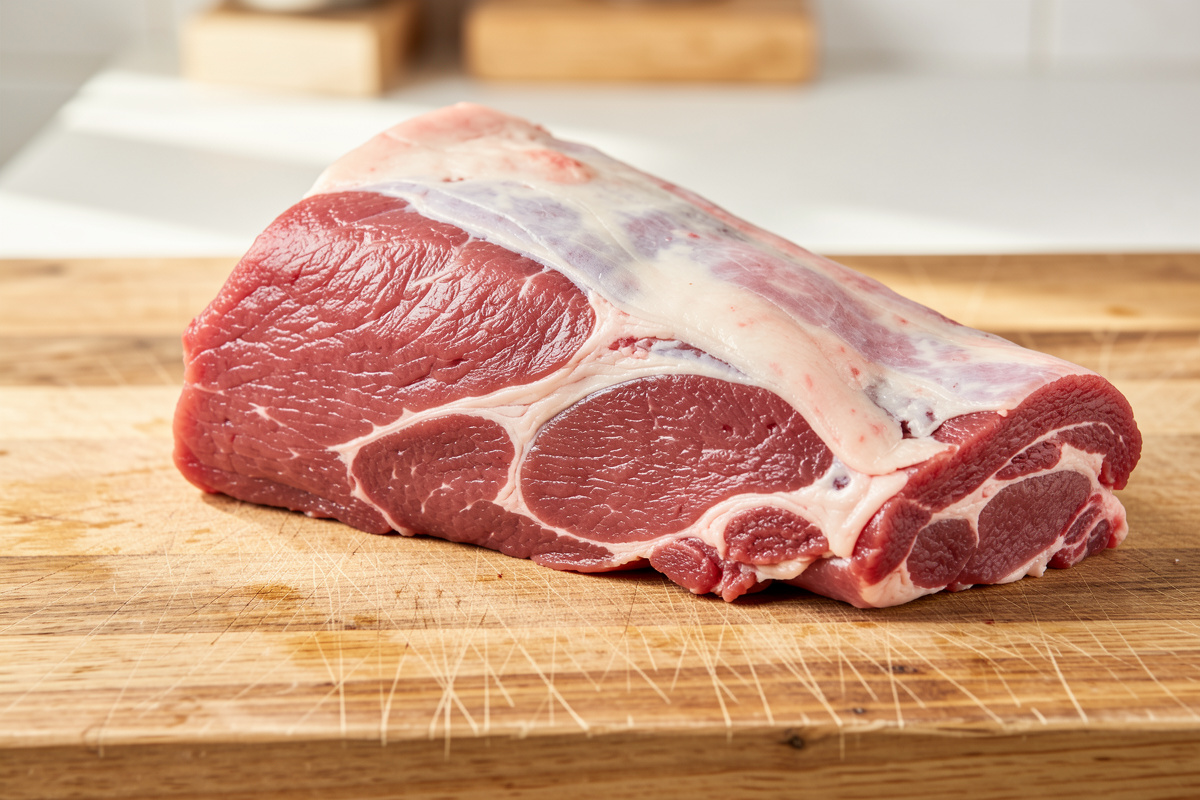

Curing a whole ham at home means dry-curing an intact bone-in pork leg with salt and cure #2, salting it cold at 1 to 4°C for roughly a day per kilogram, equalising, then drying it at 12 to 15°C and 70 to 80% humidity for 12 to 18 months until it has shed at least 30% of its weight. It is the most demanding project in home charcuterie, and the bone is what makes it hard.
A whole ham is a different animal from a boned, netted leg. The femur and aitch bone create a deep interior the salt has to reach before spoilage can take hold, and the sheer mass means the cure and the drying both take far longer. I run whole bone-in legs alongside boned ones in the chambers I keep, and I will be honest from the start: if you have not yet finished a boned leg or a few coppas, build that experience first. This guide assumes you want the traditional shape and are ready for the discipline it asks. For the gentler boned route, the step-by-step prosciutto method is the place to begin, and the complete prosciutto guide sets the wider context.
Selecting the Leg
Buy a fresh, never-frozen bone-in pork hind leg from a butcher who can tell you how the pig was finished. For a whole ham you want a leg with the skin and a good fat cap intact over the outer side, the trotter optionally left on for the classic look, and the aitch bone trimmed neatly so you can pack salt into the pelvic seam. A leg in the 8 to 12 kg range is typical; larger legs are more forgiving of small errors but ask for more salting time and more chamber space for longer.
Freshness is a safety variable on a whole ham more than anywhere else, because the salting phase is long and the deep muscle stays vulnerable until the cure arrives. Have the butcher remove the aitch bone if you are nervous — it opens access to the riskiest seam without fully boning the leg, a sensible halfway step between a true bone-in ham and a boned one.
The Salt and the Cure #2
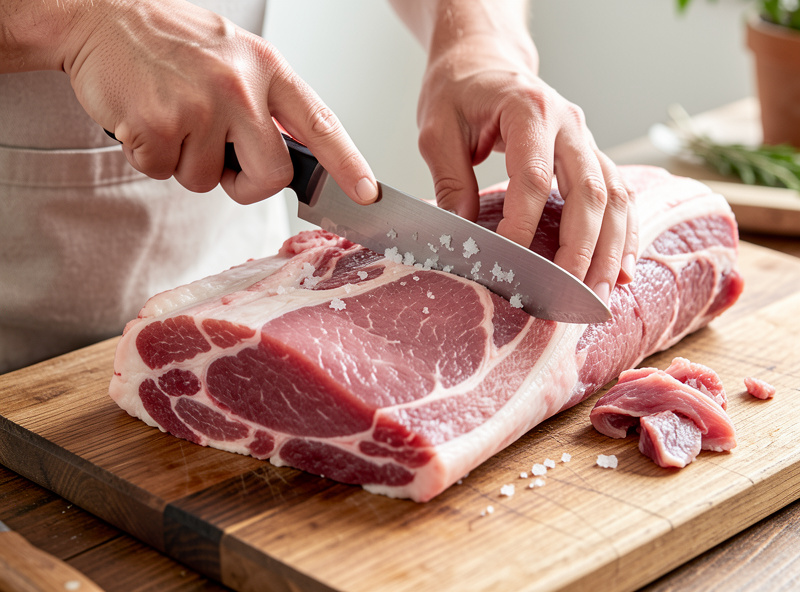
For a whole bone-in ham, salt by coverage rather than precise equilibrium, because you cannot reliably vacuum-seal a large bone-in leg, but you must still incorporate cure #2 at the safe rate. The dependable home approach is to mix cure #2 into your covering salt so the meat picks up nitrate as it takes salt: calculate cure #2 at 0.25% of the leg’s green weight, mix it thoroughly through the coarse salt you will bury the leg in, and rub a portion of that cure-laden salt directly into the exposed muscle and the bone seams first.
This is the part that protects the deep interior across a months-long cure, and it is why “natural, no-nitrate” whole hams are not a safe home project — the nitrate reservoir in cure #2 is doing real antibacterial work the whole way through. Use pure non-iodized coarse salt for the covering; iodized table salt taints the flavour and is the wrong tool. The exact technique for packing the bone pockets is in the salt coverage guide.
The Cold Salting Phase
Bury the leg in the cure-and-salt mix in a non-reactive container, lean side packed hardest, and refrigerate at 1 to 4°C. A workable rule is about one day in salt per kilogram of green weight, usually split into an initial salting and a re-salt with fresh mix halfway through, and many makers press the leg under a weighted board during salting to expel blood and moisture and speed even penetration. Drain off liquid and re-pack as needed.
Cold is the whole point of this phase. At 1 to 4°C bacteria sit nearly static while the salt and nitrite march inward toward the bone; let the temperature climb and you hand the deep muscle to spoilage before the cure can defend it. Keep this phase strict, and resist the urge to shorten it on a big leg.
| Leg green weight | Approx. total salting days | Equalisation rest |
|---|---|---|
| 6–8 kg | ~7–9 days | 1–2 weeks cold |
| 8–10 kg | ~9–11 days | 2 weeks cold |
| 10–12 kg | ~11–13 days | 2–3 weeks cold |
Equalisation
After salting, brush off the excess salt, then let the leg rest cold and loosely wrapped for one to three weeks so the salt that has entered the outer muscle migrates inward and the whole leg reaches an even concentration before drying. Skipping equalisation leaves you with a salty rind and an under-protected core — the gradient has to flatten out first. This resting step costs nothing but time and dramatically improves both safety and final texture.
The Long Dry
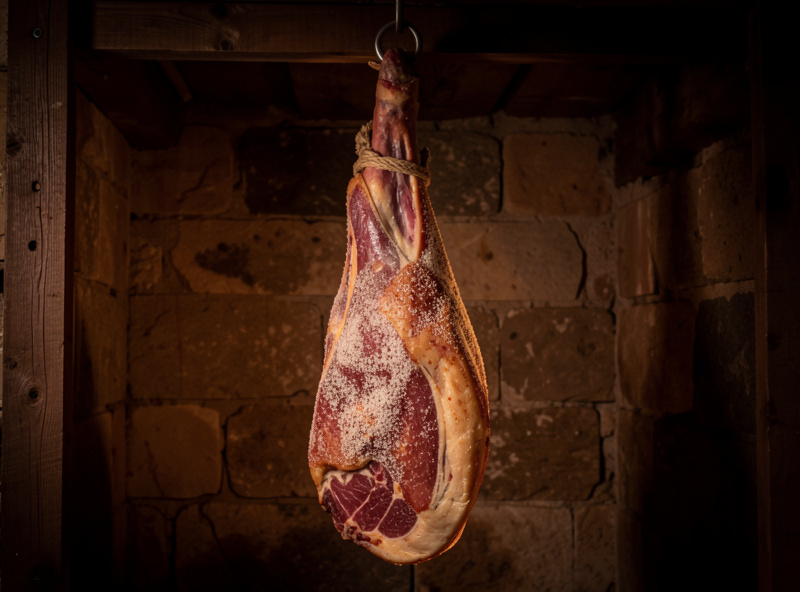
Hang the equalised leg in the chamber at 12 to 15°C and 70 to 80% relative humidity with gentle intermittent airflow, and settle in for the long haul: 12 to 18 months, sometimes more, to lose 30% of green weight evenly. Start at the higher humidity end and let it drift down slowly; a leg that dries too fast on the outside seals into a hard shell while the core stays wet, which is case hardening — the most common slow-motion failure on a whole ham. The chamber-side detail is in the drying room conditions guide and the foundations in curing chamber climate control.
A few weeks in, seal the large exposed muscle face with sugna — a paste of rendered pork fat, often with a little flour, salt, and pepper — to slow that face’s drying so it keeps pace with the rest of the leg. Weigh the ham periodically on the same scale and log it; the scale is your doneness signal, exactly as it is for every whole-muscle piece. A powdery white bloom is welcome; black or green fuzz or a putrid bone smell is not — and a bad bone smell on a whole ham usually means bone sour, covered in the troubleshooting guide.
Frequently Asked Questions
How long does it take to cure a whole ham at home?
A whole bone-in leg takes about one day per kilogram in salt, one to three weeks of cold equalisation, then 12 to 18 months or more of drying until it has lost at least 30% of its green weight. The bone and the mass make it far slower than a boned leg.
Do you need cure #2 to cure a whole ham?
Yes, at home use cure #2 at 0.25% of green weight, mixed into the covering salt so the meat takes up nitrate as it salts. The nitrate reservoir protects the deep muscle across the long cure. No-nitrate whole hams are not a safe home project.
What temperature do you cure a whole ham at?
Salt the leg cold at 1 to 4°C so bacteria stay static while salt penetrates toward the bone, then dry at 12 to 15°C and 70 to 80% humidity. Keeping the salting phase strictly cold is what prevents bone sour in the deep muscle.
Can I cure a whole ham bone-in safely at home?
Yes, but it is an advanced project. The deep muscle around the femur and aitch bone is the risk zone. Salt cold, pack cure-laden salt hard into the bone seams, allow full salting and equalisation time, and consider having the aitch bone removed to improve access.
How much weight should a whole ham lose?
At least 30% of its starting green weight, tracked on the same scale throughout. That loss corresponds to a water activity below 0.91, the threshold that makes the ham safe. Many makers take a whole ham to 33 to 35% for firmer texture.
Further Reading
- Prosciutto at Home: The Complete Guide
- Boneless vs Bone-In Prosciutto
- Prosciutto Salt Coverage Guide
- Case Hardening: Causes and Fixes
- Whole Muscle Charcuterie: The Complete Guide