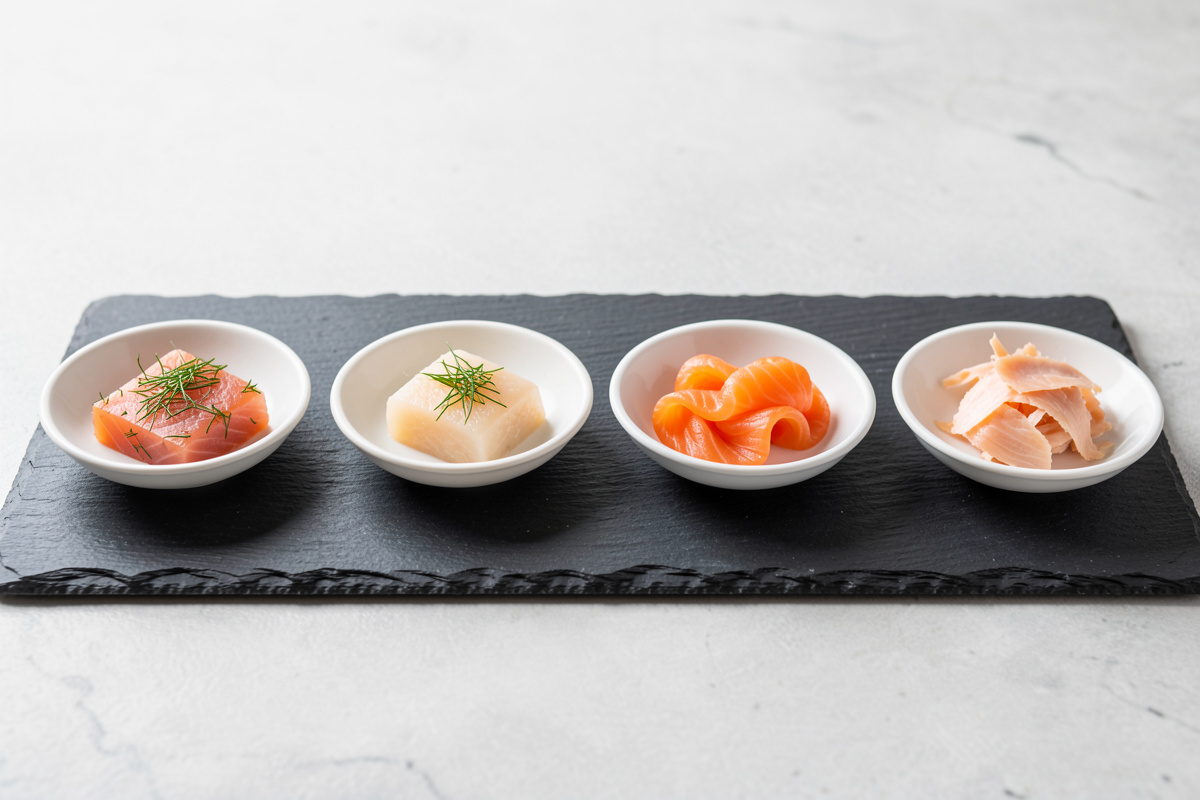

Gravlax, lox, and smoked salmon are three different things people constantly muddle. Gravlax is salmon cured with salt, sugar, and dill — never smoked. True lox is salmon cured in a salt brine, also unsmoked. Smoked salmon is cured and then exposed to smoke, cold (silky and raw-textured) or hot (flaky and cooked). The dividing lines are the cure medium and whether smoke ever touches the fish.
I get asked to settle this argument more than any other on the site, usually because someone bought “lox” at a deli that was actually cold-smoked salmon. The confusion is understandable — the labels have drifted over a century of delis and supermarkets — but the underlying craft distinctions are clean once you separate the cure from the smoke. Here’s the honest breakdown from someone who makes the unsmoked versions and cold-smokes the others.
The Quick Answer: Cure vs Smoke
Every one of these starts with a salt cure. What separates them is what happens next. Gravlax gets a dry salt-and-sugar cure with dill and stops there. Lox gets a wet salt-brine cure and also stops there — no smoke. Cold-smoked salmon is cured and then cold-smoked below about 30 °C, so it stays raw in texture but gains smoke flavour. Hot-smoked salmon is cooked by heat and smoke together, coming out flaky and opaque. Smoke, in other words, is a flavour and finishing step — it is never the thing that cured the fish.
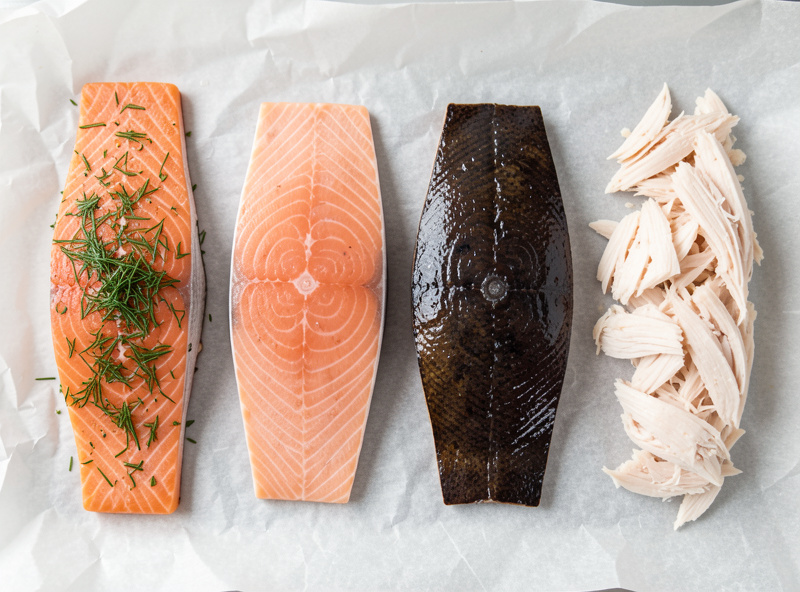
That distinction is the heart of my whole approach to curing fish: the salt does the preserving, and smoke is optional character on top. Once you hold that in your head, the table below stops being a memory test and starts making sense.
| Type | Cure | Smoke? | Texture | Cooked? |
|---|---|---|---|---|
| Gravlax | Dry salt + sugar + dill | No | Firm, silky, translucent | No (raw) |
| Lox (traditional) | Salt brine | No | Soft, very salty | No (raw) |
| Cold-smoked salmon (nova) | Salt cure, then cold smoke | Yes, cold (<30 °C) | Silky, raw-like | No (raw) |
| Hot-smoked salmon | Salt cure, then hot smoke | Yes, hot | Flaky, firm | Yes (cooked) |
Gravlax: The Dill-Cured Nordic Original
Gravlax is the one I make most. It’s salmon buried in a dry cure of salt and sugar — I run about 3% salt and 2.5% sugar by weight — heavily blanketed in fresh dill, weighted, and left in the fridge for two to three days. The result is firm but silky, clean-tasting, herbaceous, and unmistakably fresh because no smoke muddies it. It’s also the easiest to make well at home; the full method is in how to make gravlax. Like all raw cures, the salmon must be frozen first to handle parasites.
Lox: The Brine-Cured Deli Classic
Traditional lox is salmon belly cured in a strong salt brine, and crucially it is not smoked. The name comes from the Yiddish and German word for salmon. Classic lox is notably saltier and softer than gravlax, with no dill and no smoke — just salt-cured fish. Here’s where the confusion enters: American delis increasingly use “lox” loosely, and much of what’s sold as lox today is actually nova, a milder cold-smoked salmon. So if a menu says lox and the fish tastes smoky, you’ve got nova, not the traditional brine cure.
Cold-Smoked Salmon: Cured, Then Kissed With Cold Smoke
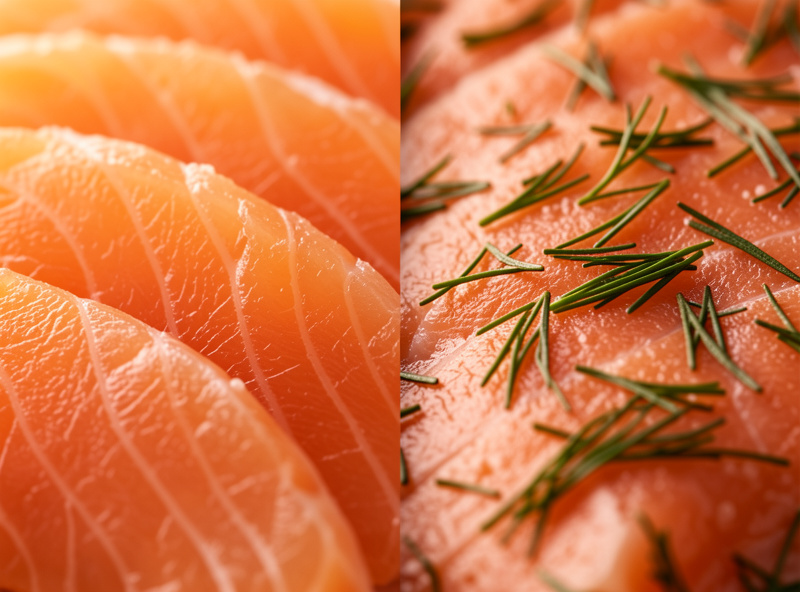
Cold-smoked salmon — nova being the popular milder style — is cured first, then exposed to smoke kept below about 30 °C so the fish never cooks. The texture stays silky and raw-like, close to gravlax, but with a layer of woodsmoke. Because the fish stays raw, the same parasite freeze rule applies, and because it’s often vacuum-packed and stored, nitrite enters the safety picture in a way it doesn’t for fresh gravlax — the FDA treats C. botulinum in reduced-oxygen smoked fish as a controlled hazard. If you want to make this yourself, that’s a different skill set — I cover it in cold smoking fish at home, where the smoke is generated off-box and drifted in cold so the meat never sees heat.
Hot-Smoked Salmon: The Cooked One
Hot-smoked salmon is the outlier because it’s actually cooked. The fish is cured, then smoked at a temperature high enough to bring it to a safe internal temperature, so it comes out flaky, opaque, and firm rather than silky and translucent. It’s the only one of the four that isn’t raw, which also makes it the most forgiving on the parasite question. It’s delicious but it’s a genuinely different product — think flaked over a salad rather than draped on a bagel.
Which Should You Make at Home?
If you’re starting out, make gravlax. It needs no equipment beyond a fridge, a scale, and time, and it’s the most forgiving cure there is. Lox is nearly as simple — a brine instead of a dry cure — if you prefer that saltier, dill-free profile. The smoked versions require a cold-smoke setup and more attention to safety, so I’d treat them as the next step once you’ve got the cure itself dialled in. Whichever you choose, the salt cure is the foundation, the freeze rule protects the raw ones, and storage timing matters — see how long gravlax lasts and the full safety breakdown before you commit a whole side of salmon.
Serving and Storing Each One
Because they’re built differently, they keep differently too. Gravlax and traditional lox are fresh, refrigerated cures — wrap them well, keep them below 4 °C, and eat within about a week, or freeze for a couple of months. Cold-smoked salmon behaves the same as gravlax on the plate but its vacuum-packed shelf life is where the nitrite and botulism questions live, so treat commercial sealed packs by their date and home versions with caution. Hot-smoked salmon, being cooked, is the most robust and reheats or crumbles into dishes happily.
On serving: gravlax wants something bright to cut its richness — a mustard-dill sauce is the classic Nordic partner. Lox belongs on a bagel with cream cheese, its saltiness doing the seasoning. Cold-smoked salmon is at its best draped plain so the smoke reads. And hot-smoked flakes beautifully into salads, pasta, and eggs. Whichever you land on, the salt cure underneath is the common thread — everything else is a choice about smoke, texture, and how you like to eat it.
Frequently Asked Questions
Is gravlax the same as smoked salmon?
No. Gravlax is cured only with salt, sugar, and dill and never touches smoke, staying fresh and herbaceous. Smoked salmon is cured and then exposed to smoke. They start with a similar cure but gravlax stops there, which is why it tastes clean rather than smoky.
What is the difference between lox and gravlax?
Lox is salmon cured in a salt brine, traditionally without smoke, and is quite salty. Gravlax is dry-cured with salt, sugar, and dill. Both are unsmoked and raw, but the cure medium and flavour differ: lox is salty and plain, gravlax is balanced and herbal.
Is lox smoked or not?
Traditional lox is not smoked; it is brine-cured salmon. However, many delis now sell cold-smoked salmon, called nova, under the name lox, which has caused the confusion. If your lox tastes smoky, it is actually nova, not the original brine-cured product.
Is cold-smoked salmon raw?
Yes, in texture and safety terms. Cold-smoked salmon is smoked below about 30 C so it never cooks, staying silky and raw-like. That means it needs the same pre-cure freeze for parasites as gravlax, and vacuum-packed storage raises botulism considerations that fresh gravlax avoids.
Which is healthier, gravlax or smoked salmon?
Both are salt-cured salmon and nutritionally similar. Gravlax simply skips the smoke, while smoked salmon adds smoke compounds. This site does not make health claims either way; the meaningful differences are flavour, texture, and how each is preserved and stored, not a health ranking.
Related Guides
- Curing Fish at Home: The Complete Salt-Cure Guide
- How to Make Gravlax: The Salt-Sugar-Dill Cure Step by Step
- Cold Smoking Fish at Home: Safety and Method
- Is Home-Cured Fish Safe? Salt, Freezing, and the Parasite Rule
- How Long Does Gravlax Last and How to Store It Properly