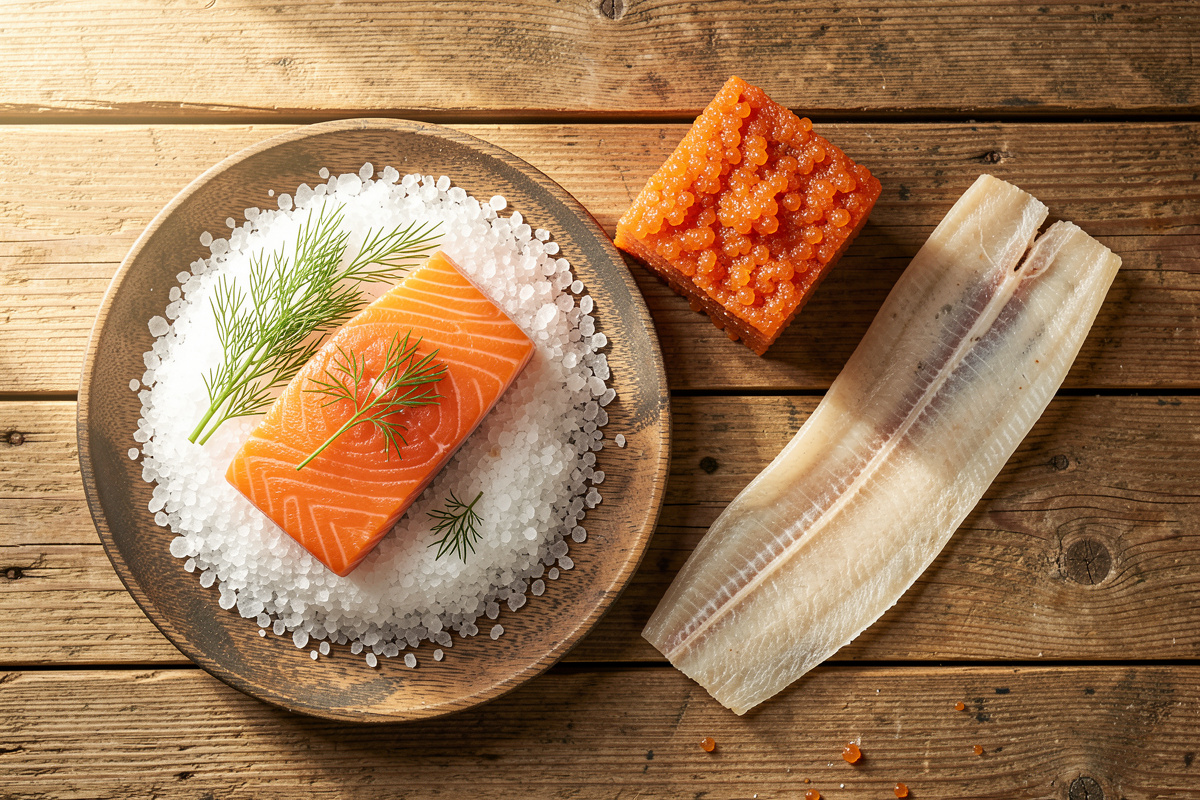

Curing fish at home means driving out water with salt until the flesh is firm, translucent, and safe to eat without any heat or smoke. A gravlax fillet loses roughly 8–12% of its weight in two or three days under a salt-and-sugar cure; a salt cod loses more than half its weight over weeks. The salt does the work smoke gets the credit for — and understanding that distinction is the whole game.
I came to fish the same way I came to everything else on this site: through the chamber. After years of dry-curing coppa and bresaola and logging the weight loss on every single piece, salting a side of salmon felt less like a new hobby and more like the same chemistry on a softer substrate. The variables are identical — salt concentration, water activity, temperature, time — but fish moves faster and forgives less. This guide is the map I wish I’d had: what the unsmoked salt cure actually is, the two ways to apply it, which fish suit which method, and the one safety rule that separates confident home curing from a hospital visit.
What “Curing Fish” Actually Means (and What It Isn’t)
Curing is preservation by salt. When you pack fish in salt, osmosis pulls water out of the flesh and pushes salt in, lowering the water activity to a point where spoilage bacteria struggle to grow. That is the entire mechanism, and it is exactly the same principle that finishes a bresaola in my chamber — I just track it obsessively there with a scale. The confusion most people carry is that they lump salt-curing in with smoking, when smoke is a flavour and surface step layered on top of a cure, never the thing keeping you safe.
It helps to split unsmoked cured fish into two honest categories. The first is the fresh cure: gravlax, and the lightly salted preparations that stay soft, stay in the fridge, and get eaten within a week or two. These are not shelf-stable. The salt makes them delicious and buys time, but they live and die in the cold. The second is the hard cure: salt cod (bacalao) and bottarga, where salting is followed by weeks of drying until the water activity drops low enough for genuine room-temperature stability. Knowing which category you’re in tells you how long your fish will last and, more importantly, how careful you need to be. The unsmoked cure is the whole census here — if you want smoke on top, my guide to cold smoking fish at home picks up where this one ends.
The Two Curing Methods: Salt-Box vs Equilibrium
There are exactly two ways to get salt into fish, and choosing correctly is the single biggest lever a beginner has. The salt-box (or cover) cure buries the fish in far more salt than it can absorb; you rely on time to control saltiness and rinse the excess off afterward. The equilibrium cure weighs out a precise percentage of salt relative to the fish and lets it all absorb, so the fillet can never get saltier than the number you chose. I run both, and I choose based on what I’m making.
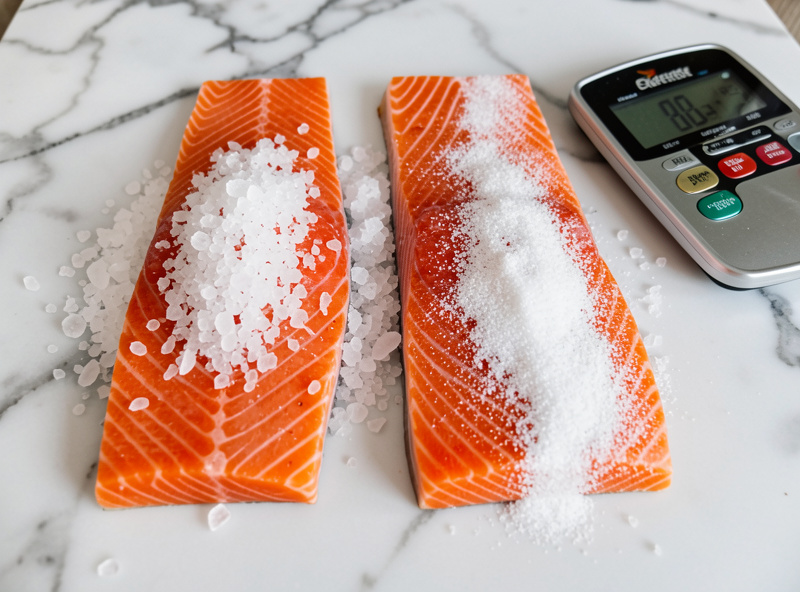
For gravlax I almost always use equilibrium. I weigh the trimmed fillet, calculate the salt and sugar as a percentage of that weight, and I know the result before it happens — the same discipline I bring to calculating salt percentage for equilibrium curing on whole-muscle meat. For salt cod, the salt-box is traditional and correct: bacalao is meant to be aggressively salted and then rinsed and soaked before cooking, so precision at the cure stage would be wasted effort. The table below is how I decide.
| Factor | Salt-Box / Cover Cure | Equilibrium Cure |
|---|---|---|
| Salt used | Far more than absorbed (buried) | Precise % of fish weight (all absorbs) |
| Saltiness control | By time; needs rinsing/soaking | By the number you set; self-limiting |
| Best for | Salt cod, heavy preservation | Gravlax, delicate fresh cures |
| Typical salt figure | 1–3× the weight of the fish | 2.5–3.5% of fish weight |
| Forgiveness | Low — over-salts if left too long | High — hard to over-salt |
| Scale required | No | Yes (digital, to the gram) |
If you own a digital scale and you’re new to this, start with equilibrium curing and a fresh cure. It is the most forgiving combination in the whole discipline — the fillet stops absorbing salt when it reaches balance, so a few extra hours won’t ruin it. The step-by-step gravlax method walks through exactly this.
The Parasite Rule: The One Thing You Cannot Skip
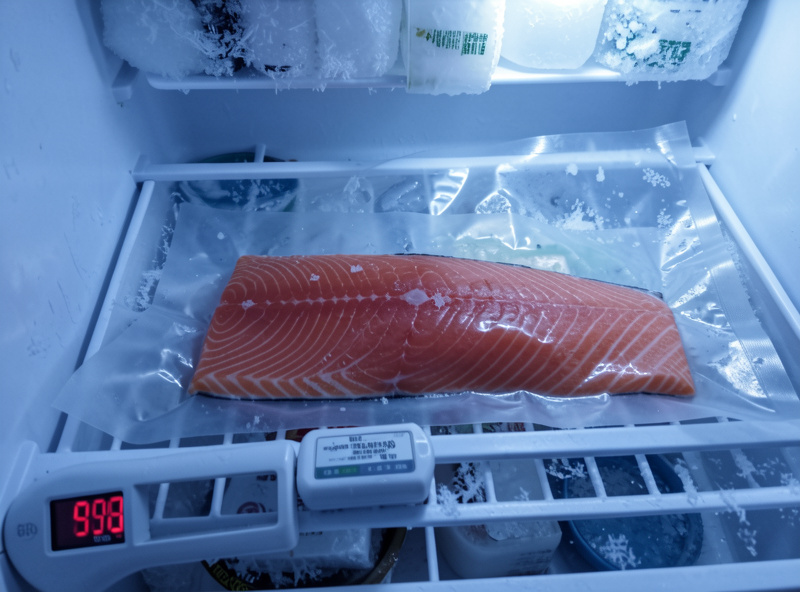
Here is the load-bearing safety fact of this entire subject, and I will not soften it: salt does not reliably kill parasites, so raw fish you intend to cure and eat cold must be frozen first. Wild-caught fish, salmon especially, can carry Anisakis and other parasitic worms. The salt cure firms the flesh and controls bacteria, but it does not guarantee those parasites are dead. Freezing does.
The U.S. FDA guidance for fish served raw or cured is to freeze it at −20 °C (−4 °F) or below for 7 days, or at −35 °C (−31 °F) for about 15 hours, measured as the time to hold the fish fully frozen. A standard home chest or upright freezer usually runs around −18 °C, which is borderline — if that’s all you have, freeze longer and colder if you can, or buy fish that has already been frozen to spec (much sushi-grade and previously-frozen salmon has). This rule is non-negotiable for gravlax and any cold cure. It matters far less for a hard-dried, cooked-before-eating salt cod, but for anything you’ll eat without cooking, freeze first, every time. I go deeper on the whole risk picture — parasites, bacteria, and salt — in is home-cured fish safe?
Salt Selection: It Matters More Than You Think
Not all salt cures equally. The first hard rule is never use iodized table salt — the iodine can throw metallic off-flavours and muddy the colour of cured fish. The second is to avoid any salt with anti-caking agents, which cloud brines and leave chalky residue. Beyond that, the grain size you pick should match your method: coarse salt for the salt-box (it draws moisture steadily and is hard to over-apply), fine salt for equilibrium curing (it dissolves fast and weighs out precisely). This is the same logic I use when salting a prosciutto — grain size is a tool, not a detail. The dedicated breakdown lives in best salt for curing fish: coarse vs fine and why it matters.
My shelf keeps three salts for fish: a fine non-iodized sea salt for gravlax equilibrium cures, a coarse kosher or flake salt for the salt-box, and plain pickling salt for brines. I don’t buy exotic finishing salts for the cure itself — they dissolve into the flesh and their character is lost. Save the fancy stuff for the plate.
Water Activity and Weight Loss: The Honest Doneness Signals
Every cured product I make gets weighed, and fish is no exception. Weight loss is the most honest signal you have for how far a cure has progressed, because it directly tracks water leaving the flesh. For a fresh gravlax cure, I look for roughly 8–12% weight loss after two to three days — enough to firm the fillet and concentrate flavour without turning it to jerky. For a hard cure like bottarga, I’m chasing 50% or more, the same territory as a finished salami, at which point the water activity is low enough for shelf life measured in months.
Water activity (aw) is the deeper metric behind weight loss — it’s the measure of unbound water available to microbes. Fresh fish sits near 0.99; a properly dried salt cod drops well below 0.85, the threshold where most pathogenic bacteria stall. You don’t need a lab meter at home; the scale is a reliable proxy once you know the target percentages. I explain the relationship in full in water activity and food safety in charcuterie, and it’s the same framework I use to decide when whole-muscle charcuterie is done. The lesson the chamber taught me applies perfectly to fish: humidity is destiny, and the scale never lies.
Do You Need Curing Salt (Nitrite) for Fish?
This is where honesty matters, because the answer is “it depends,” and getting it wrong cuts both ways. For a fresh, refrigerated cure eaten within a week or two — classic gravlax — you do not need nitrite. It’s a cold, short-lived product, kept below 4 °C and turned over quickly, and traditional gravlax has never used cure #1 or #2. The salt, the cold, and the parasite freeze are your safety stack.
Where nitrite enters the conversation is cold-smoked, vacuum-packed fish stored for longer, because the anaerobic environment of a sealed pack held near-cold is exactly the niche Clostridium botulinum type E likes. Commercial cold-smoked salmon producers use nitrite for precisely that reason. If you’re making refrigerated gravlax to eat this week, skip it. If you’re moving into long-stored vacuum-packed cold-smoked product, read up properly first — I cover the nitrite question for meat in pink salt and nitrates explained, and the same chemistry applies. What you must never do is assume “natural, no additives” is automatically safer; with anaerobic storage it can be the opposite.
A Tour of the Three Classic Unsmoked Cures
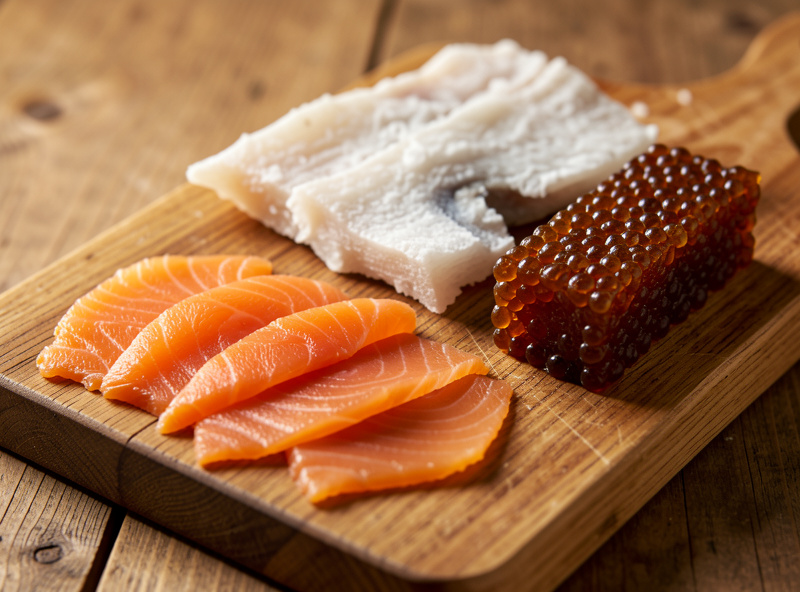
Three preparations cover almost everything worth making without smoke, and each one teaches a different part of the craft.
Gravlax is the gateway. Salmon (or trout), a salt-and-sugar cure, plenty of dill, two to three days under light weight in the fridge, then sliced thin. It’s a fresh cure, so it’s fast, forgiving, and the best first project. The full method is in how to make gravlax, and because people constantly confuse it with its cousins, I wrote gravlax vs lox vs smoked salmon to lay out exactly what separates the three.
Salt cod (bacalao) is the hard-preservation classic — white fish, heavily salted, then dried until stiff and pale. Done right it keeps for months at cool room temperature and reconstitutes into some of the best cooking in the Atlantic world. It’s slower and needs patience with the salting and drying stages, which I lay out in how to make salt cod at home.
Bottarga is cured fish roe — the pressed, salted, air-dried sac from grey mullet or tuna, grated over pasta like an oceanic parmesan. It’s the closest fish gets to my dry-cured whole muscle: weeks of controlled drying, 50%-plus weight loss, and a finished product measured in intensity per gram. The process is in curing fish roe: making bottarga.
Temperature, Storage, and Shelf Life
Cured fish is only as safe as the cold chain around it. A fresh cure like gravlax must stay refrigerated at or below 4 °C for the entire cure and its whole life afterward — unlike a salami hanging in my chamber at 12–15 °C, fresh cured fish is never a room-temperature product. It typically holds well-wrapped in the fridge for about 5 to 7 days once cured, and freezing extends that to a couple of months with only minor texture loss. The full breakdown of timing and wrapping is in how long gravlax lasts and how to store it.
Hard cures play by different rules. A fully dried salt cod, kept cool, dry, and wrapped, is stable for months precisely because its water activity is so low — the same principle that lets a bresaola live outside refrigeration once it’s lost enough weight. Bottarga, waxed or vacuum-sealed and chilled, keeps for many months and only improves as it firms. The dividing line is always water activity: fresh cures live in the cold, hard cures earn their shelf life by losing water. If you already run a humidity-controlled curing chamber, it doubles beautifully as a drying space for bottarga and salt cod.
Common Mistakes and How to Avoid Them
The failures I see repeat. Skipping the freeze is the dangerous one — never cure wild fish for raw eating without freezing it first. Case-hardening is the quality killer, the same enemy from my meat chamber: drying a hard cure too fast seals the outside while the middle stays wet, so it spoils from within. Slow the drying, raise the humidity, and let moisture migrate evenly. Over-salting a salt-box cure comes from leaving fish buried too long; the fix is to switch to equilibrium curing where over-salting is nearly impossible. And trusting your nose over your process — if a piece is slimy, smells sharply of ammonia, or grows fuzzy coloured mold, throw it out. When in doubt, bin it; the cost of a fillet is nothing against the cost of being wrong. Much of this overlaps with general charcuterie food safety, which is worth reading alongside this.
Choosing Your Fish: Fat, Freshness, and Source
The cure can only be as good as the fish going into it, and a few choices at the counter decide most of the outcome. For fresh cures, fat is your friend: the richness of a good salmon or sea trout side is what makes gravlax silky rather than dry, because fat doesn’t leave with the water the salt pulls out. I look for a thick, evenly coloured fillet from the loin end, skin on, with no gaping between the muscle flakes — gaping means the fish has been handled roughly or is past its best.
Freshness matters more than for cooked fish, because you’re eating it essentially raw. Buy the freshest fillet you can, from a source you trust, and get it into the freeze-then-cure cycle quickly. If you can buy fish that was frozen at sea and thawed at the shop, you’ve often solved the parasite question before you’ve paid — ask, because “previously frozen” is a feature here, not a downgrade. For hard cures the calculus shifts: salt cod is traditionally made from lean white fish like cod, ling, or pollock precisely because low fat dries cleanly without turning rancid over months of storage, and bottarga depends entirely on getting intact, unbroken roe sacs. Match the fish to the method and half the work is done before the salt ever touches it. The same instinct that tells me which pork belly will make good pancetta — firm, well-structured, the right fat ratio — carries straight over to reading a fish counter.
Frequently Asked Questions
Is curing fish at home safe?
Yes, when you follow two rules: freeze raw fish first to kill parasites, and keep fresh cures like gravlax refrigerated below 4 C and eaten within about a week. Hard cures like salt cod become shelf-stable only after losing enough water. Skipping the freeze step is the main real risk.
Do I need pink curing salt to cure fish?
Not for fresh, refrigerated gravlax eaten within a week or two; plain salt, cold, and a proper freeze are enough. Nitrite matters mainly for cold-smoked, vacuum-packed fish stored longer, where the anaerobic environment raises botulism risk. For a quick fresh cure, skip it.
How long does it take to cure fish?
A fresh gravlax cure takes two to three days in the fridge, losing roughly 8 to 12% of its weight. A hard cure like salt cod or bottarga takes weeks of salting and drying, targeting 50% or more weight loss before it is shelf-stable. Weight loss is the honest signal of doneness.
What kind of salt is best for curing fish?
Never iodized table salt, which causes metallic off-flavours. Use fine non-iodized sea salt for precise equilibrium cures like gravlax, and coarse kosher or flake salt for salt-box cures like bacalao. Avoid salts with anti-caking agents, which cloud brines and leave residue.
What is the difference between gravlax and smoked salmon?
Gravlax is cured only with salt, sugar, and dill and never touches smoke, staying soft and fresh-tasting. Smoked salmon is cured then exposed to smoke, either cold (silky) or hot (flaky and cooked). Lox is salt-brine-cured, unsmoked salmon belly. Smoke is a flavour step, not the cure.
Can I cure fish without a curing chamber?
Yes. Fresh cures like gravlax happen entirely in your refrigerator under light weight. Only hard cures like bottarga and salt cod benefit from a humidity-controlled drying space, and even those can be done in a cool, airy spot. A chamber makes the hard cures more reliable but is not required.
Related Guides
- How to Make Gravlax: The Salt-Sugar-Dill Cure Step by Step
- Gravlax vs Lox vs Smoked Salmon: What Actually Separates Them
- How to Make Salt Cod (Bacalao) at Home: Salting and Drying
- Curing Fish Roe: Making Bottarga From Mullet or Tuna
- Best Salt for Curing Fish: Coarse vs Fine and Why It Matters
- Is Home-Cured Fish Safe? Salt, Freezing, and the Parasite Rule
- How Long Does Gravlax Last and How to Store It Properly