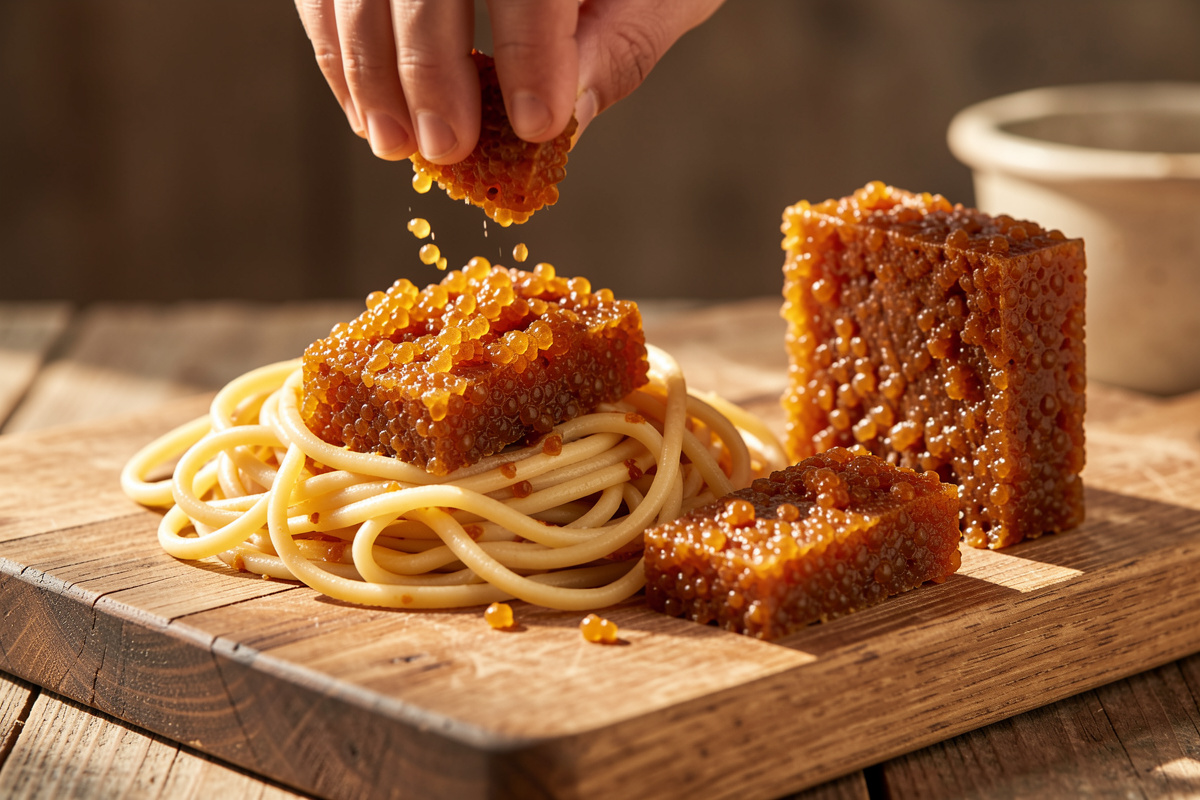

To make bottarga, you salt-cure whole intact fish roe sacs — grey mullet or tuna — for several days, press them gently under weight, then air-dry them in a cool, humid space for one to three weeks until firm and amber. The sac loses around half its weight and becomes dense enough to grate over pasta like an oceanic parmesan. It’s the most concentrated thing you can make from the salt cure, and the closest fish gets to dry-cured whole muscle.
Bottarga is my favourite of the hard fish cures because it behaves almost exactly like the coppa and bresaola I hang in my chamber: salt, press, and weeks of patient drying, with the scale marking progress the whole way. The result is intense — a few grams grated over hot pasta with oil and lemon does more than a whole fillet of most things. Here’s how to make it, from handling the delicate roe to knowing when it’s done.
Sourcing the Roe: Mullet vs Tuna
Bottarga is made from the intact ovary sacs of two fish traditionally. Grey mullet gives bottarga di muggine — smaller, amber, delicate, and the most prized. Tuna gives bottarga di tonno — larger, darker, and considerably stronger in flavour. What matters more than the species is that the sacs are intact and unbroken: a punctured sac leaks during salting and won’t cure into the firm, sliceable block you’re after. Handle them like eggs, because in a sense they are. Ask your fishmonger for whole roe in season; this is a seasonal, sometimes special-order item, not a supermarket staple.
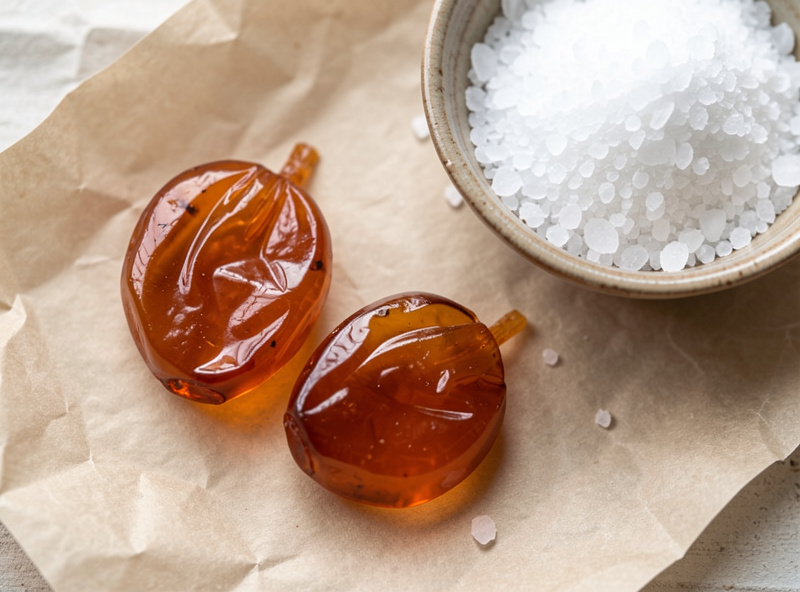
Because bottarga is eaten raw — grated or shaved, never cooked — I take a conservative line on safety. Roe generally carries lower parasite risk than muscle flesh, but since it’s eaten without heat, freezing the sacs first is a sound precaution — the FDA’s Fish and Fishery Products Hazards and Controls guidance recommends freezing at −20 °C for 7 days to kill parasites, the same freeze-first logic I apply across the fish safety guide. The heavy salt and thorough drying are the main preservation; the freeze is cheap insurance.
Phase One: Salting and Pressing
Rinse the sacs gently in cold water and pat dry. Then salt-cure them in a bed of salt, buried completely, in a non-reactive dish — a salt-box cure, the same method behind salt cod. Use pure, non-iodized salt; the grain-size reasoning is in best salt for curing fish. The salt draws water out of the roe and begins firming it.
Here’s the step that shapes bottarga: gentle pressing. After the first day or so, set a light, flat weight on the salt-covered sacs to compress them evenly and drive out moisture, which gives the finished block its characteristic dense, flat form. Too much weight cracks the sac; too little leaves it lumpy. Cure and press for roughly 3 to 6 days depending on size, changing the salt if it turns wet, until the sacs are noticeably firmer and have given up much of their moisture.
Phase Two: Drying to a Firm Block
Rinse the salt off, pat dry, and move to drying. Hang the sacs or lay them on a rack in a cool, airy, humid space — my curing chamber at around 12–15 °C and 75–80% RH is ideal, the same envelope I hold for whole muscle. A cool cellar or a wine fridge works too. Dry for one to three weeks, turning occasionally for even moisture loss.
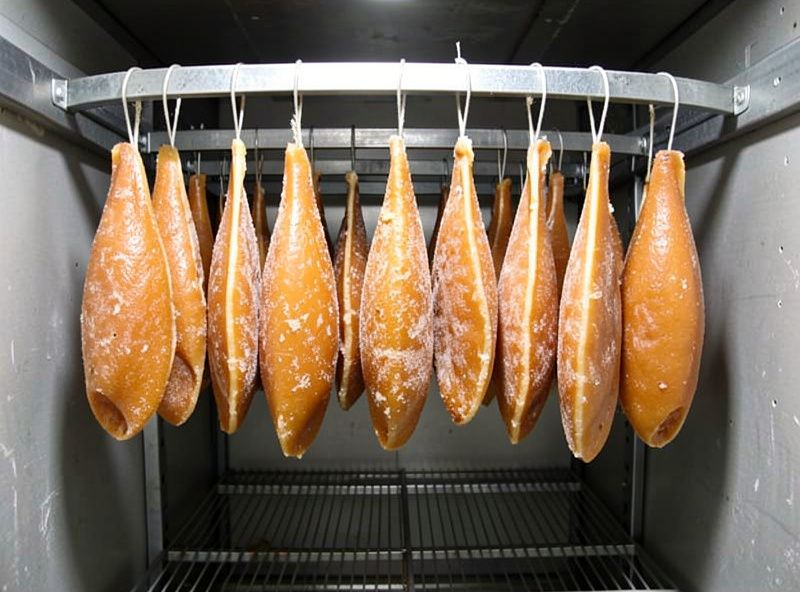
The failure mode is identical to meat: case-hardening. If the air is too dry or too warm, the outside hardens into a shell while the centre stays soft, and the block never firms properly. Keep the humidity up and the temperature down, and let the moisture leave slowly and evenly. This is where a controlled chamber genuinely earns its place — the same humidity control that finishes a salami finishes bottarga beautifully.
Doneness: The Scale Tells You
As with every cure I make, weight loss is the honest signal. Finished bottarga has lost around 50% or more of its starting weight and feels firm and dense throughout — solid enough to grate cleanly, with a slight give rather than rock-hard. That water loss drops the water activity into shelf-stable territory, the same threshold that governs a finished bresaola, which is why the weight-loss-as-doneness approach from judging whole-muscle charcuterie transfers directly. A sac that still feels soft and heavy in the middle needs more time; the water-activity science behind all of this is in water activity and food safety.
Storing and Using Bottarga
Finished bottarga keeps for many months. Wrap it well — wax or a tight vacuum seal is traditional and effective — and store it chilled; it firms further and its flavour deepens over time. To use it, grate or shave it thinly over hot pasta dressed simply with good olive oil, garlic, and lemon, or over buttered toast, or into a salad. A little goes a very long way, which is exactly the point of a cure this concentrated. A roll of cheesecloth is handy for wrapping the sacs during drying and the finished block for storage — a length of unbleached cheesecloth is inexpensive and endlessly useful in curing. As an Amazon Associate I earn from qualifying purchases. Bottarga is the reward at the patient end of the unsmoked fish cures — slow to make, unforgettable to eat.
Frequently Asked Questions
What fish is bottarga made from?
Traditionally two: grey mullet, which makes the prized amber bottarga di muggine, and tuna, which makes the larger, darker, stronger bottarga di tonno. What matters most is intact, unbroken roe sacs, since a punctured sac leaks during salting and will not cure into a firm block.
How long does it take to make bottarga?
About 3 to 6 days of salting and gentle pressing, then one to three weeks of cool, humid drying until the sac has lost roughly half its weight and feels firm throughout. Larger tuna roe takes longer than small mullet sacs. Weight loss, not the calendar, marks doneness.
Do I need to freeze the roe before making bottarga?
Bottarga is eaten raw, so freezing the sacs first is a sound conservative precaution even though roe carries lower parasite risk than muscle. The heavy salt cure and thorough drying are the main preservation. Freezing first is cheap insurance for anything eaten without cooking.
How do you know when bottarga is done?
When it has lost around 50% or more of its starting weight and feels firm and dense throughout, solid enough to grate cleanly with a slight give rather than rock-hard. A sac that is still soft and heavy in the centre needs more drying time.
How long does bottarga keep?
Many months when wrapped well, waxed or vacuum-sealed, and kept chilled. Its low water activity from thorough drying is what makes it shelf-stable, and the flavour deepens as it firms further. Discard it only if it develops off smells or fuzzy mold.
How do you eat bottarga?
Grate or shave it thinly over hot pasta with olive oil, garlic, and lemon, over buttered toast, or into salads. It is intensely concentrated and salty, so a small amount does a lot. It is a finishing ingredient, never cooked in bulk like a fillet.
Related Guides
- Curing Fish at Home: The Complete Salt-Cure Guide
- How to Make Salt Cod (Bacalao) at Home: Salting and Drying
- Best Salt for Curing Fish: Coarse vs Fine and Why It Matters
- Is Home-Cured Fish Safe? Salt, Freezing, and the Parasite Rule
- Water Activity and Food Safety in Charcuterie