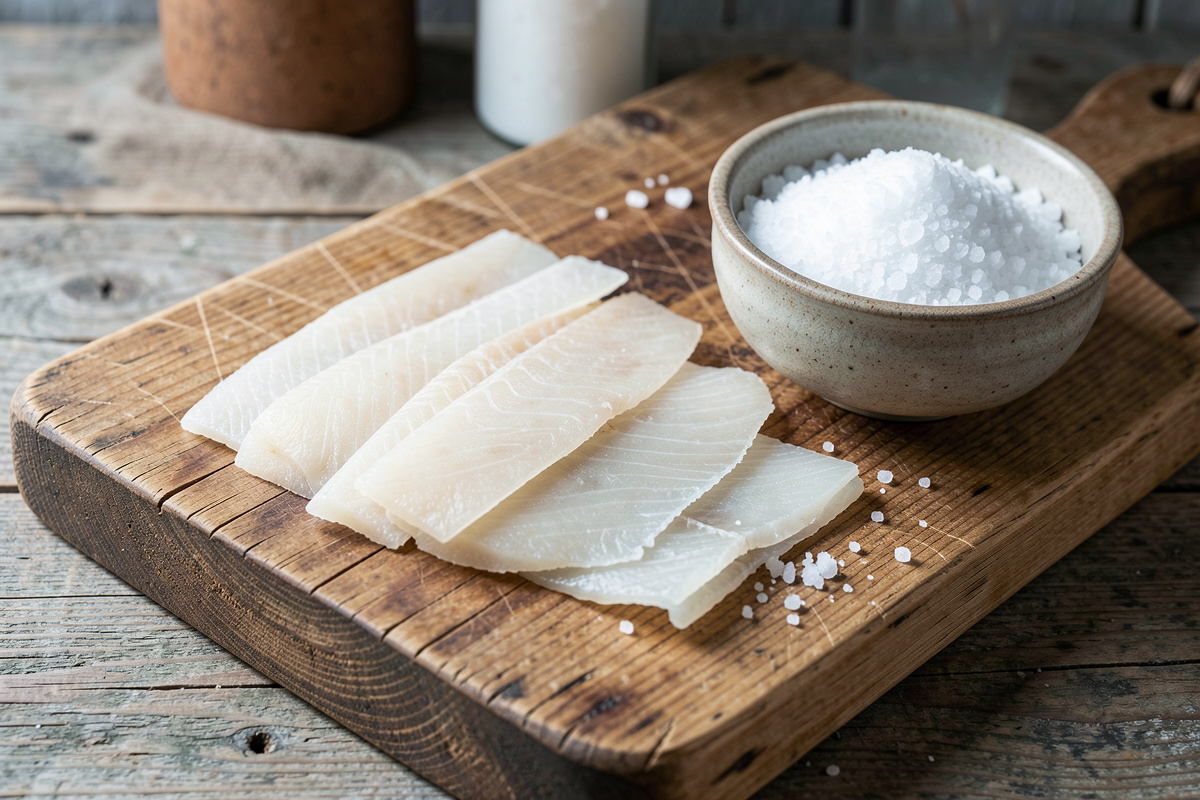

To make salt cod at home, you heavily salt lean white fish in a salt-box cure for several days to draw out water, then dry it in a cool, airy place until it’s stiff and pale — a total weight loss of 50% or more. The salt and the drying together drop the water activity low enough that properly made bacalao keeps for months at cool room temperature. It’s the hard-cure end of fish curing, and pure patience.
Salt cod is where fish curing meets the same discipline I bring to a bresaola: heavy salt, controlled drying, and the scale as the honest judge of doneness. Unlike gravlax, this isn’t a fresh cure you eat in a week — it’s genuine preservation, the technique that provisioned ships and inland kitchens for centuries. Here’s how I make it, from choosing the fish to hanging it dry.
Choose the Right Fish: Lean and White
Salt cod wants lean white fish, and the reason is preservation, not tradition. Cod is the classic, but ling, pollock, haddock, and hake all work. What they share is low fat, and low fat is essential because fat goes rancid over the months of storage that are the whole point of salt cod. An oily fish like salmon or mackerel would turn before it finished drying. Buy the freshest thick fillets you can, skin on or off, and pull every pin bone — the same counter-reading instinct I use for meat applies, as covered in the main curing fish guide.
Because salt cod is always cooked before eating, the raw-fish parasite freeze rule is far less critical here than it is for gravlax — cooking handles that. That said, starting with impeccably fresh fish still matters for the quality of the finished cure. The safety picture for both fresh and hard cures is laid out in is home-cured fish safe?
Phase One: The Heavy Salt Cure
This is a salt-box cure, deliberately aggressive. In a non-reactive container, lay down a bed of coarse salt, set the fish on it, and bury it completely — salt on every surface, packed into the flesh. Traditional ratios run heavy, anywhere from equal weights of salt and fish up to two or three times the salt. You are not trying to season here; you are trying to draw water out fast and completely, which is exactly what coarse salt does well. Use pure, non-iodized salt — the reasoning is in best salt for curing fish.
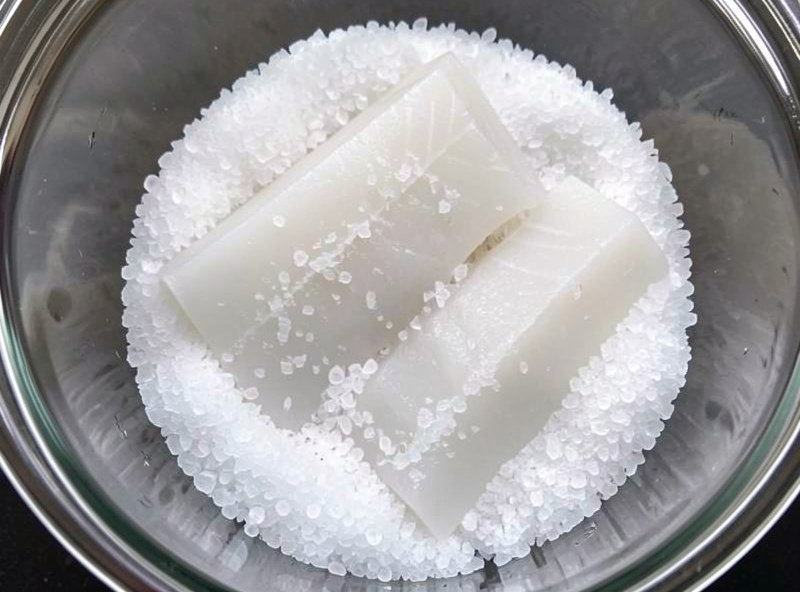
Weight the buried fish with a plate and something heavy, and refrigerate or keep it in a cold spot. Within a day the salt draws a brine out of the fish — this liquid is the water leaving the flesh, and it’s a good sign. Pour it off, and re-bury the fish in fresh salt if it’s become slushy. Depending on thickness, this wet-salting phase runs anywhere from 2 to 7 days; the fish should feel notably firmer and have given up a lot of moisture before you move on.
Phase Two: The Drying
Once the fish is firm and heavily salted, rinse off the surface salt, pat it dry, and move to drying. This is where a controlled environment earns its keep: a cool, airy, dim spot at around 10–15 °C with good air movement, or a proper humidity-controlled curing chamber, which is exactly what I use. Hang the pieces or lay them on racks with airflow all around, and let them dry for one to several weeks until stiff and pale.
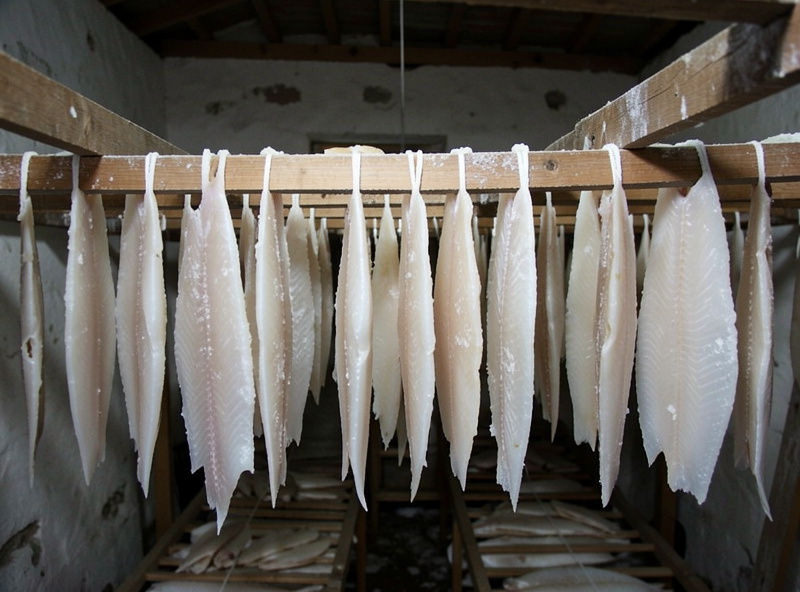
The enemy in this phase is the same one that kills whole-muscle meat: case-hardening. Dry too fast and hot and the surface seals hard while the inside stays wet, trapping moisture that can spoil from within. Keep it cool, keep the air moving gently rather than blasting, and let moisture migrate outward evenly. This is the identical principle behind reliable meat curing — humidity is destiny, whether it’s a coppa or a cod.
Doneness: Weigh It, Don’t Guess
As with everything I cure, the scale decides. A finished salt cod has lost 50% or more of its starting weight and feels hard, dry, and board-stiff — you should be able to rap it on the counter. That level of water loss is what pushes the water activity below the roughly 0.85 threshold the FDA identifies for pathogen control, which is what earns bacalao its months-long shelf life. If it still flexes easily or feels damp inside, it’s not done. This weight-loss-as-doneness logic is the same one I explain for meat in when whole-muscle charcuterie is done, and it rests on the water-activity science in water activity and food safety.
Storing and Cooking Salt Cod
Fully dried salt cod, wrapped in paper or cloth and kept somewhere cool and dry, keeps for months — the low water activity does the work, the same reason a well-dried bresaola lives outside the fridge. To cook it, you reverse the cure: soak the fish in cold water for 24 to 48 hours, changing the water several times, to rehydrate it and pull the salt back down to an edible level. From there it becomes brandade, bacalao à la Vizcaína, fritters, or a hundred other dishes across the Atlantic world. The transformation from board-stiff plank back to silky cooked fish is one of the small miracles of preservation, and a satisfying payoff for weeks of patience. If you enjoy this end of the craft, bottarga is the natural next hard cure to try.
Frequently Asked Questions
What fish can I use to make salt cod?
Lean white fish are essential because low fat resists rancidity over months of storage. Cod is traditional, but ling, pollock, haddock, and hake all work well. Avoid oily fish like salmon or mackerel, which would turn rancid before the cure finishes drying.
How long does it take to make salt cod?
Plan on several days of heavy salting to draw out water, then one to several weeks of cool drying until the fish is board-stiff and has lost 50% or more of its weight. Thicker pieces take longer. The scale, not the calendar, tells you when it is done.
Do I need curing salt (nitrite) for salt cod?
No. Salt cod is preserved by heavy salting and thorough drying, which drop the water activity low enough for shelf stability, and it is always cooked before eating. Traditional bacalao uses only plain salt. Use pure, non-iodized coarse salt rather than a nitrite cure.
How do you cook salt cod?
Rehydrate it first by soaking in cold water for 24 to 48 hours, changing the water several times to remove excess salt. Once softened and desalinated, it cooks into dishes like brandade, fritters, and stews. Skipping the soak leaves it inedibly salty.
How long does homemade salt cod keep?
Fully dried salt cod, wrapped in paper or cloth and stored somewhere cool and dry, keeps for months thanks to its very low water activity. If it feels damp, smells off, or grows fuzzy mold, discard it. Proper dryness is what makes the long shelf life safe.
Why is my salt cod spoiling instead of drying?
Usually case-hardening: drying too fast seals the surface while the inside stays wet and spoils. Keep the environment cool, around 10 to 15 C, with gentle steady airflow rather than high heat, so moisture migrates out evenly. A humidity-controlled chamber makes this reliable.
Related Guides
- Curing Fish at Home: The Complete Salt-Cure Guide
- Curing Fish Roe: Making Bottarga From Mullet or Tuna
- Best Salt for Curing Fish: Coarse vs Fine and Why It Matters
- Is Home-Cured Fish Safe? Salt, Freezing, and the Parasite Rule
- Water Activity and Food Safety in Charcuterie