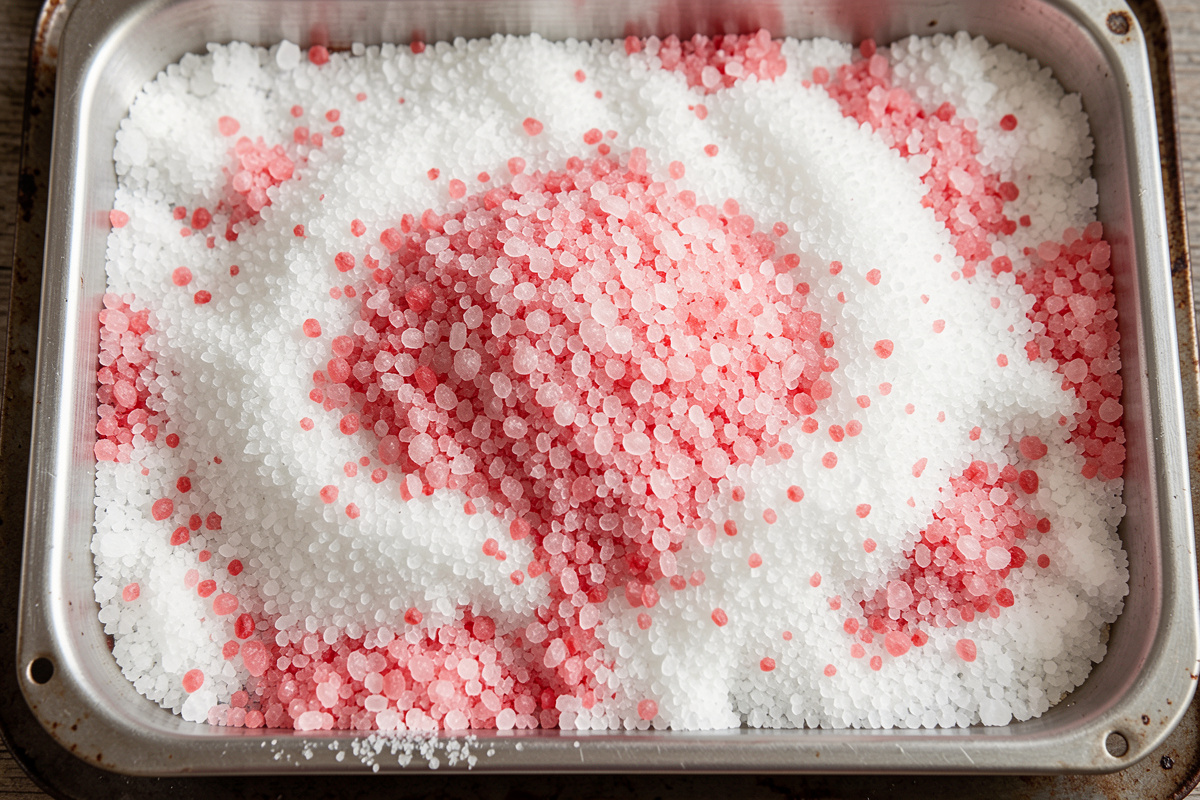

Salt coverage is the traditional way to cure a prosciutto: bury the leg in coarse salt mixed with cure #2, packing it hardest into the exposed muscle and the bone seams, and let the meat draw in what it needs over roughly one day per kilogram at 1 to 4°C. Coverage gives a firm, classic result on a bone-in leg, but unlike an equilibrium cure it relies on cold and technique rather than precise weighing — which is exactly why the technique matters.
I use both methods across the chambers I run — equilibrium for boned legs and coppa, coverage for bone-in whole legs — and the difference comes down to one thing: with coverage, the salt is not a fixed dose, it is a reservoir the meat pulls from. Get the coverage even and the cold strict, and the leg salts itself correctly. Get it patchy, or let it warm, and you create the exact conditions for an under-salted core. This guide is the technique, step by step. For the wider process around it, start with the complete prosciutto guide.
How Salt Coverage Works
In a coverage (salt-box) cure, you surround the leg with far more salt than it will absorb. The salt draws water out of the meat by osmosis, and as the surface dehydrates, salt and nitrite migrate inward down the concentration gradient toward the centre. The meat takes up roughly what it needs and stops — but only if the salt is in firm, even contact everywhere and the temperature stays cold enough to keep spoilage bacteria static while that slow inward march happens.
This is the key mental model: coverage is self-limiting on salt uptake but utterly dependent on contact and cold. Air gaps, ragged flaps, and unpacked bone seams are where the gradient breaks down and the interior under-salts. Coverage is more forgiving than equilibrium on the final salt level but far less forgiving on technique.
The Salt to Use
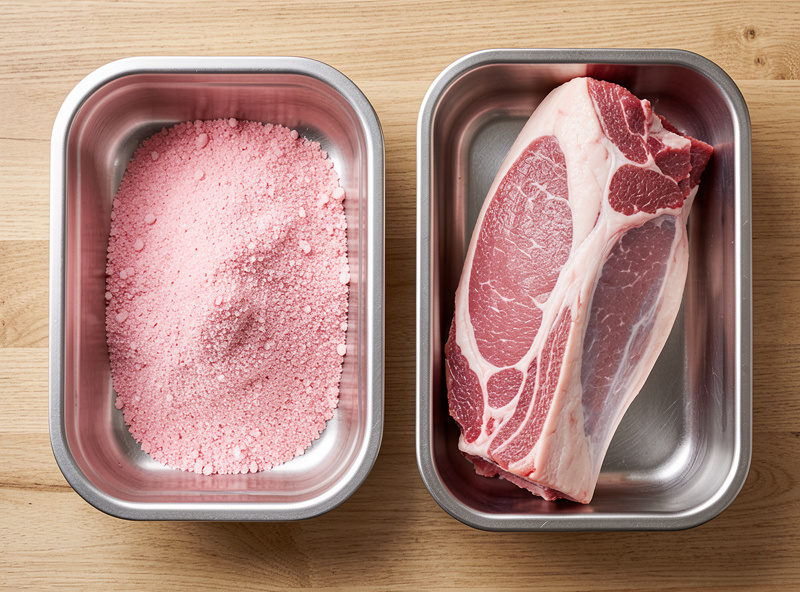
Use coarse, pure non-iodized salt — sea salt or a dedicated curing salt without anti-caking agents or iodine, both of which can taint flavour and interfere with the cure. Coarse grains are deliberate: they draw moisture more gradually than fine salt and form a contact crust without flash-dehydrating the surface into a hard shell. Mix your cure #2 thoroughly through the coverage salt so the meat takes up nitrate as it salts.
Cure #2 goes in at 0.25% of the leg’s green weight — calculated on the meat, not on the salt — and blended evenly so no pocket of concentrated cure sits against the meat. On a bone-in leg you cannot vacuum-seal, so this blended-salt approach is how you guarantee the nitrate reaches the deep muscle across a long cure. This nitrate reservoir is the non-negotiable safety element; a salt-only coverage cure is not a safe home project on a whole leg.
Where to Pack the Salt and Why
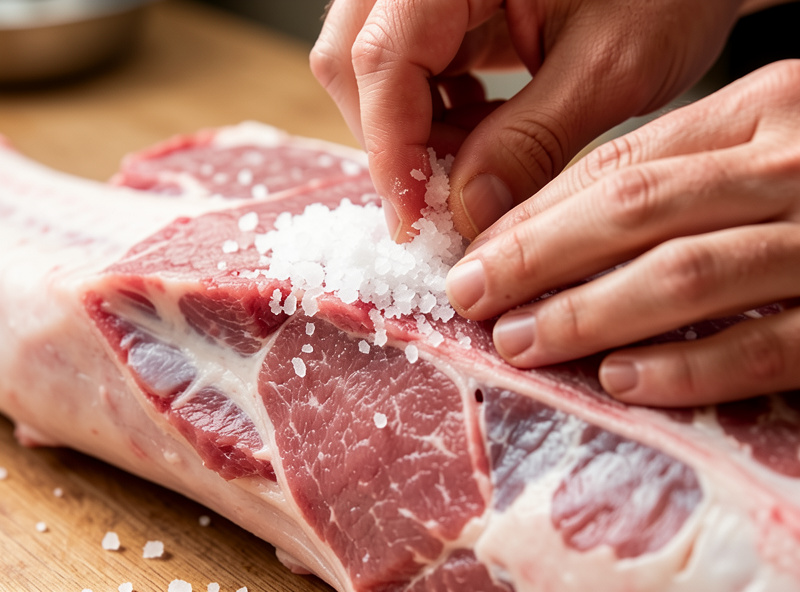
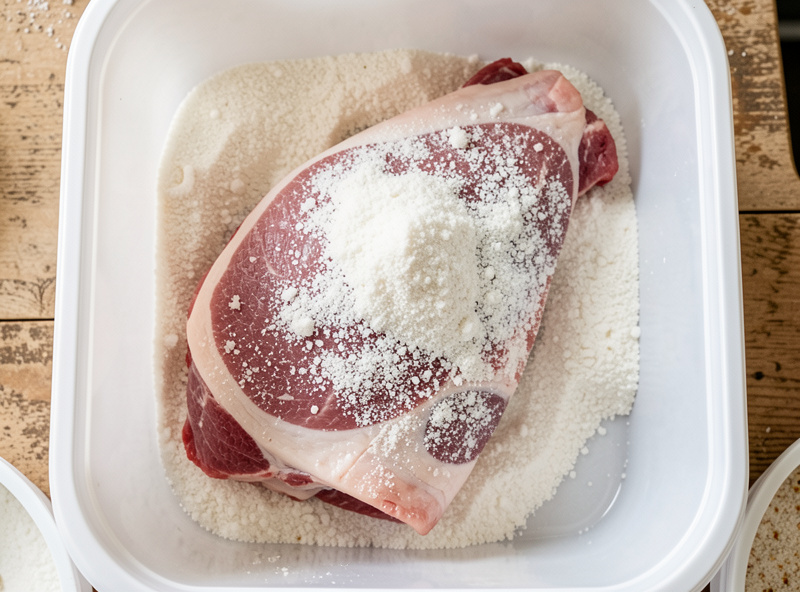
Salt does not enter a leg evenly on its own — you direct it. Rub a portion of the cure-laden salt firmly into the exposed lean muscle face first, then pack it hard into the aitch-bone pocket and along the femur seam on a bone-in leg, because those deep interior zones are the slowest to reach and the first to spoil if they under-salt. Work salt into every fold and crevice, then bury the whole leg, lean side down and most heavily covered, in the remaining mix.
On the skin and fat-cap side, salt penetrates poorly through fat, so the heavy coverage belongs on the cut and lean surfaces. Some makers score or apply a thin wet-salt layer to the skin side to help, but the lean face and bone seams are where your attention pays off. A board and a weight pressed on top during salting expels blood and moisture and improves contact across the whole leg.
Timing and Re-Salting
A workable rule is about one day in salt per kilogram of green weight, kept at 1 to 4°C the entire time. On a larger leg, split that into an initial salting and a re-salt: after the first half, drain the liquid that has pooled, brush off the spent salt, and re-bury the leg in fresh cure-and-salt mix for the remainder. Re-salting refreshes the gradient and keeps the leg sitting in dry salt rather than its own brine.
Resist the temptation to over-salt by leaving it in too long — while coverage is self-limiting, an excessively long salt at the wrong temperature still risks a rind that is unpleasantly salty and a texture that is too firm at the surface. After the salting days are up, the leg moves to equalisation: a cold rest of one to three weeks so the salt that has entered the outer muscle distributes inward and the whole leg reaches an even concentration before any drying begins.
Coverage vs Equilibrium: Which to Choose
Both methods make excellent prosciutto; they suit different cuts and temperaments. Coverage is traditional, handles a bone-in leg you cannot vacuum-seal, and forgives small errors in salt quantity — but it demands cold discipline and good packing technique. Equilibrium weighs an exact salt and cure #2 percentage, applies all of it in a sealed bag, and cannot over-salt, which makes it the safer, more repeatable choice for boned legs and for anyone learning. The maths behind it is in my equilibrium salt calculation guide.
| Aspect | Salt Coverage | Equilibrium |
|---|---|---|
| Best for | Bone-in whole legs | Boned legs, coppa, lonzino |
| Salt precision | Self-limiting, approximate | Exact, weighed |
| Over-salt risk | Possible if mistimed | Essentially none |
| Technique demand | High (packing, cold) | Moderate |
| Cure #2 method | Blended into covering salt | Weighed into the mix |
| Beginner friendly | No | Yes |
Common Coverage Mistakes
The failures I see most are all about contact and cold: unpacked bone seams that leave the core under-salted (and invite bone sour), salting at too-warm a fridge temperature, skimping on salt so the leg sits in brine instead of dry salt, and skipping the equalisation rest so a salty rind never evens out. Each of these is preventable with attention, and most show up later as problems covered in the troubleshooting guide. If a leg comes out genuinely under-salted, the options for salvage are limited — see salvaging under-salted charcuterie — which is exactly why getting the coverage right the first time matters so much. Once salted and equalised, the leg moves on to the drying phase.
Frequently Asked Questions
How much salt do you use to cover a prosciutto?
In a coverage cure you bury the leg in far more coarse salt than it absorbs, so the amount is not metered precisely. What is metered is the cure #2: 0.25% of the leg’s green weight, blended thoroughly through the covering salt so the meat takes up nitrate as it salts.
How long do you keep a prosciutto in salt?
Roughly one day in salt per kilogram of green weight, held at 1 to 4°C, often split into an initial salting and a re-salt with fresh mix halfway through. After the salting days, the leg rests cold for one to three weeks to equalise before drying.
What kind of salt is best for curing prosciutto?
Coarse, pure non-iodized salt such as sea salt or a dedicated curing salt with no anti-caking agents. Coarse grains draw moisture gradually and form even contact. Never use iodized table salt, which taints flavour and interferes with the cure.
Is salt coverage or equilibrium curing better for prosciutto?
Coverage is traditional and handles bone-in legs you cannot vacuum-seal, but demands cold discipline and good packing. Equilibrium is exact, cannot over-salt, and is the safer, more repeatable choice for boned legs and beginners.
Why pack salt into the bone of a prosciutto leg?
The deep muscle around the aitch bone and femur is the slowest zone for salt to reach and the first to spoil. Packing cure-laden salt hard into those seams ensures the interior salts before bacteria can grow, preventing bone sour.
Related Guides
- Prosciutto at Home: The Complete Guide
- Curing a Whole Ham at Home
- How to Make Prosciutto at Home: Step by Step
- How to Calculate Equilibrium Salt Percentage
- Prosciutto Drying Room Conditions