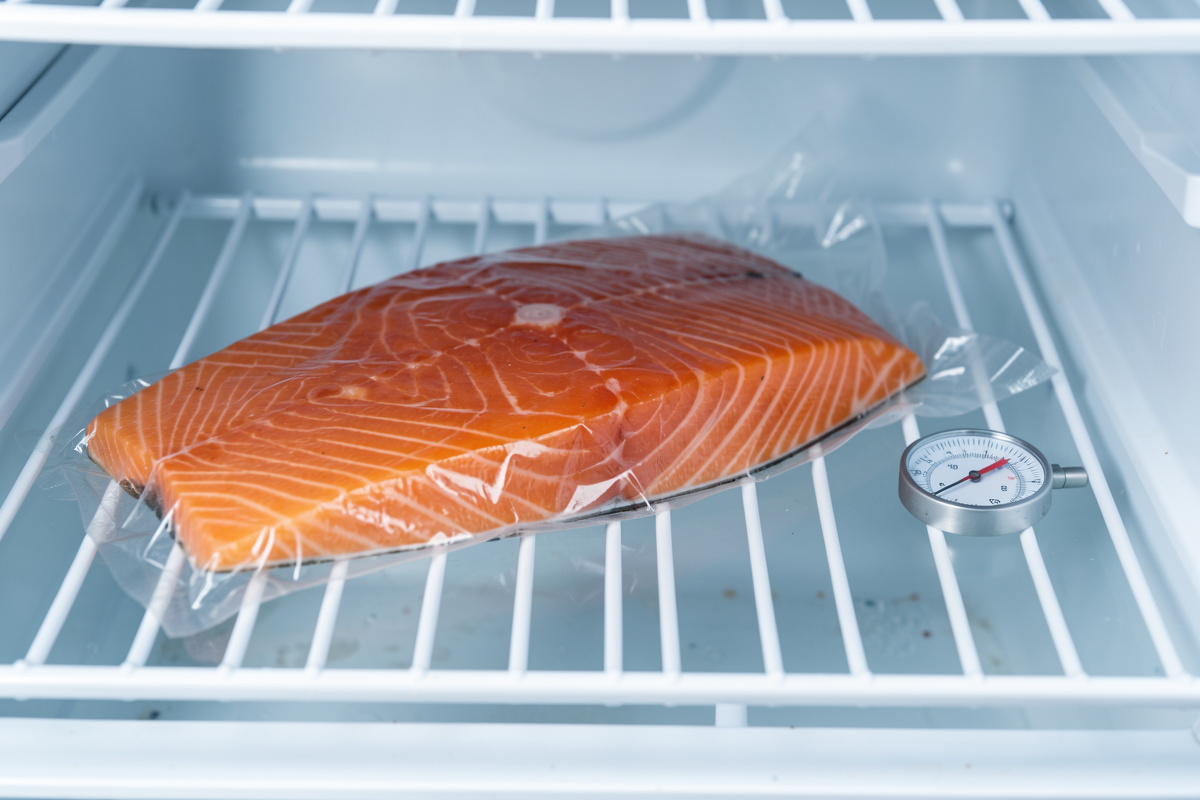

Home-made gravlax keeps for about 5 to 7 days in the fridge once cured, stored below 4 °C, tightly wrapped, and scraped free of its dill and cure. Freeze it and you’ll get one to two months with only minor texture softening. Gravlax is a fresh cure, not a shelf-stable one — it never lives at room temperature and it doesn’t keep like a salami. Plan your batch size around that window.
The question I get after every gravlax lesson is “how long can I keep it?” — usually from someone who cured a whole side of salmon and now has more than they can eat in a sitting. The honest answer depends on how you store it, whether it’s sliced, and how fresh the fish was to begin with. Here’s the full picture, with the numbers I actually work to.
The Short Answer, by Storage Method
Cured gravlax is a refrigerated product with a real, finite life. Kept properly cold and wrapped, a whole cured piece holds its quality for about 5 to 7 days. Slicing shortens that slightly because you expose more surface. Freezing extends it to 1 to 2 months, and vacuum-sealing before freezing pushes toward the longer end. The table lays out what to expect.
| State | Fridge (below 4 °C) | Freezer |
|---|---|---|
| Whole cured piece, wrapped | 5–7 days | 1–2 months |
| Sliced gravlax | 3–4 days | 1 month |
| Still curing (in the cure) | 2–3 days (the cure itself) | Not applicable |
| Store-bought, vacuum-packed, unopened | By the printed date | 1–2 months |
These are quality-and-safety windows for a properly made cure kept genuinely cold. They’re the practical expression of the water-activity principle behind all curing — gravlax barely lowers the fish’s water activity, so it stays perishable and depends on the cold chain, exactly as I explain in water activity and food safety.
How to Store Gravlax Properly
Storage starts the moment the cure is done. Once your fillet has lost its 8–12% weight and firmed up, scrape off the dill and residual salt-sugar cure, pat it thoroughly dry, and wrap it tightly — cling film pressed to the surface, then a second layer or a sealed container to block air and fridge odours. Keep it in the coldest part of the fridge, typically the back of the bottom shelf, not the door. The FDA’s refrigerator-temperature guidance puts the safe ceiling at 4 °C (40 °F), and a fresh cure like this lives or dies by staying under it.
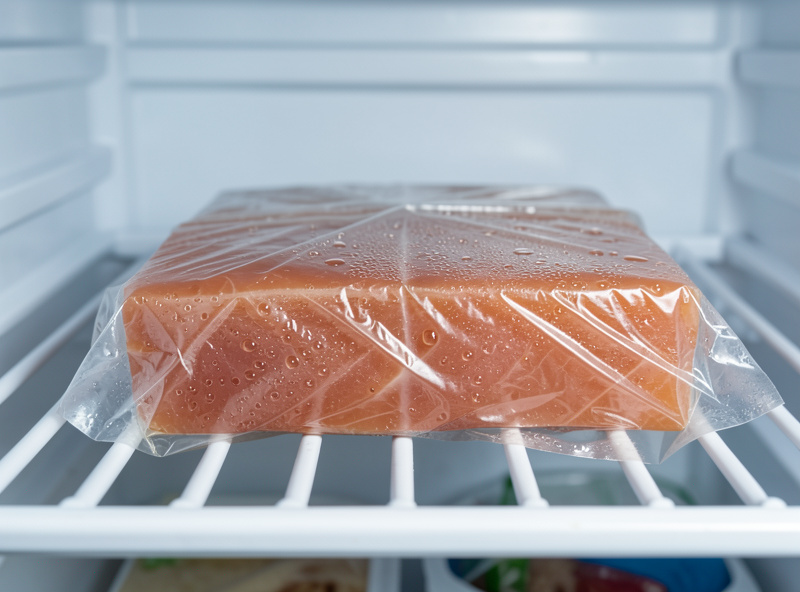
Store the piece whole and slice to order whenever you can. Every cut face is a new surface for drying and for bacteria, so a whole wrapped piece keeps meaningfully longer than a pre-sliced one. If you’ve already sliced it, layer the slices between parchment in an airtight container and eat them within a few days. Keeping it cold and covered is the same discipline that governs every fresh cure in the unsmoked-fish repertoire.
Freezing Gravlax: What to Expect
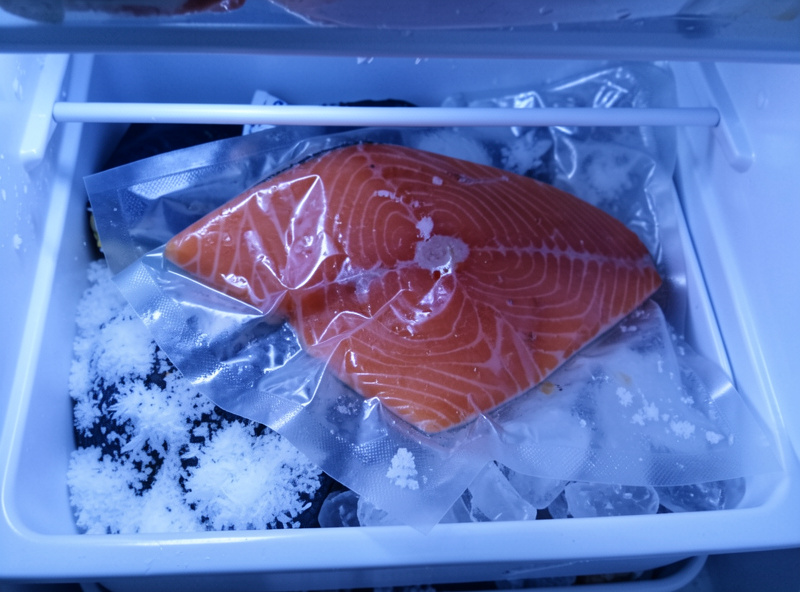
Gravlax freezes well, which is genuinely useful given its short fridge life. Wrap the piece tightly — ideally vacuum-seal it — and freeze it whole. It’ll keep good quality for one to two months. On thawing, do it slowly in the fridge overnight; the texture softens a little and may weep slightly, but a good gravlax comes through freezing far better than most people expect.
There’s a bonus here: if you froze your salmon before curing to handle parasites (as you should for any raw cure), and you freeze the finished gravlax too, you’ve bracketed the whole process in cold. Just don’t refreeze a piece that was thawed to be eaten — one freeze-thaw cycle for storage is fine, repeated cycles wreck the texture. The freeze-first rule and the rest of the safety logic sit in is home-cured fish safe?
How to Tell If Gravlax Has Gone Off
Trust your senses, because they’re reliable here. Fresh gravlax smells clean and faintly of the sea and dill. Signs it’s past it: a sharp, sour, or ammonia-like smell, a slimy or sticky film beyond the normal firm tackiness of a cure, a dull grey cast to the flesh, or any fuzzy mold. Unlike a salami, gravlax should never grow mold — if it does, the whole piece goes in the bin. When you’re unsure, don’t taste to decide; a fillet is cheap and being wrong is not. That “when in doubt, throw it out” reflex is the single most important storage habit.
Why Store-Bought Lasts Longer
Commercial cured and cold-smoked salmon often carries a much longer date than your homemade gravlax, and it’s worth understanding why so you don’t over-trust your own. Producers work in controlled, sanitised environments, frequently vacuum-pack to exclude oxygen, and many use nitrite in longer-stored smoked products to suppress botulism in that anaerobic pack. Your home gravlax has none of those extra hurdles — which is completely fine for a fresh cure eaten within a week, but it’s exactly why you shouldn’t assume homemade keeps as long as the shop version. If you’re curious about the nitrite side of that equation, it’s covered in the salt guide and the safety article. Make what you’ll eat in a week, freeze the rest, and gravlax will always be at its best. The single biggest lever on shelf life is simply how cold and how tightly you keep it wrapped, so treat the coldest shelf and a good seal as non-negotiable rather than optional.
Frequently Asked Questions
How long does homemade gravlax last in the fridge?
About 5 to 7 days for a whole cured piece kept below 4 C, tightly wrapped, and scraped free of its cure. Sliced gravlax lasts a shorter 3 to 4 days because more surface is exposed. Gravlax is a fresh cure, so keep it cold and eat it within the week.
Can you freeze gravlax?
Yes, and it freezes well. Wrap or vacuum-seal the piece and freeze it whole for one to two months of good quality. Thaw slowly in the fridge overnight; the texture softens slightly but holds up. Do not refreeze a piece that was thawed for eating.
How can you tell if gravlax has gone bad?
A sharp, sour, or ammonia smell, a slimy film, a dull grey colour, or any fuzzy mold means throw it out. Fresh gravlax smells clean and of the sea. Unlike salami, gravlax should never grow mold, so any mold is a clear signal to discard the whole piece.
Should I store gravlax sliced or whole?
Whole, and slice to order. Each cut face exposes new surface to air and bacteria, so a whole wrapped piece keeps noticeably longer than pre-sliced. If already sliced, layer between parchment in an airtight container and eat within three to four days.
Why does store-bought cured salmon last longer than mine?
Commercial producers use sanitised facilities, vacuum-packing to exclude oxygen, and often nitrite in long-stored smoked products. Home gravlax has none of these extra hurdles, which is fine for a fresh cure eaten within a week but means you should not expect it to match a shop date.
Related Guides
- Curing Fish at Home: The Complete Salt-Cure Guide
- How to Make Gravlax: The Salt-Sugar-Dill Cure Step by Step
- Is Home-Cured Fish Safe? Salt, Freezing, and the Parasite Rule
- Best Salt for Curing Fish: Coarse vs Fine and Why It Matters
- Gravlax vs Lox vs Smoked Salmon: What Actually Separates Them