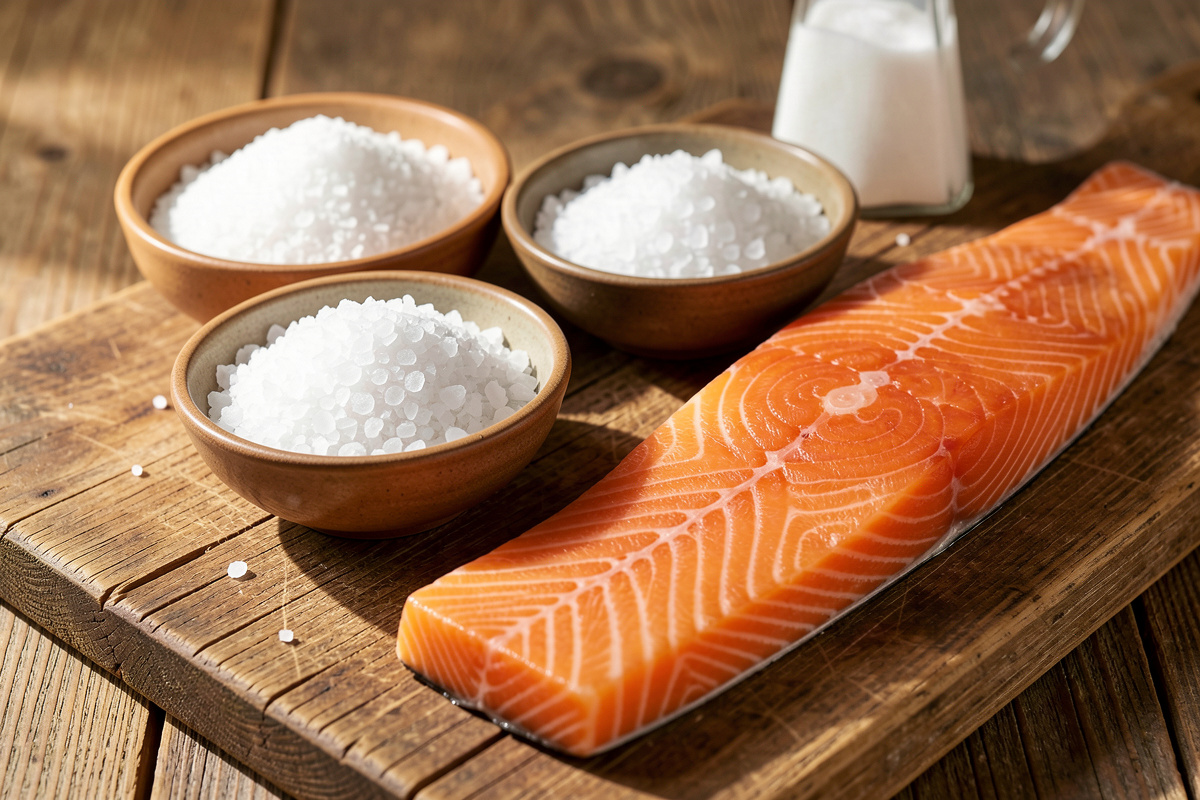

The best salt for curing fish is a pure, non-iodized salt with no anti-caking agents — and the grain size should match your method: fine salt for precise equilibrium cures like gravlax, coarse salt for salt-box cures like bacalao. Iodized table salt is the one to avoid outright; its iodine throws a metallic off-flavour and dulls the colour of cured fish. Everything else is a matter of matching grain to job.
Salt is the single ingredient that actually cures fish, so it’s worth more than the afterthought most recipes give it. Across the pieces I’ve cured — fish and, for years before that, whole-muscle meat — the salt I reach for changes with the method, and the wrong choice can either over-salt a delicate fillet or fail to draw water fast enough on a hard cure. Here’s how I choose, salt by salt.
Why Grain Size Actually Matters
Grain size changes two things: how fast salt dissolves and how easy it is to control the dose. Fine salt dissolves quickly and packs densely, so it penetrates evenly and, critically, weighs out precisely to the gram — exactly what an equilibrium cure needs, where you calculate salt as a percentage of the fish’s weight. Coarse salt dissolves slowly and draws moisture steadily, which suits a salt-box cure where you bury the fish and let time control saltiness. The same grain-size logic drives how I approach salt coverage on a prosciutto — it’s a tool you pick deliberately, not a detail.
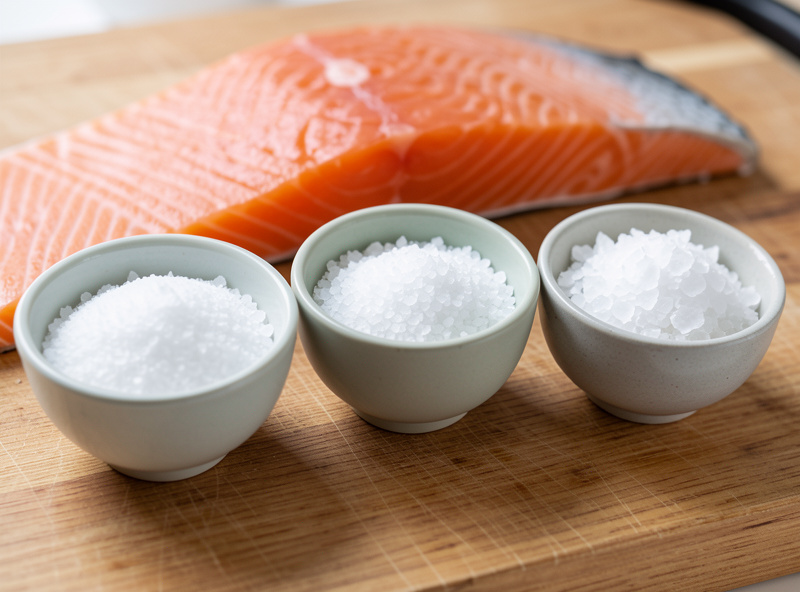
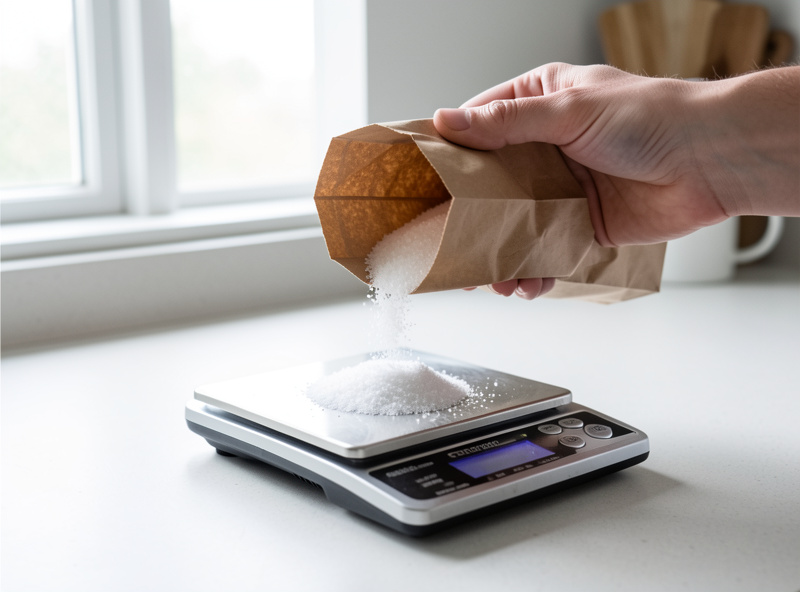
There’s also a measurement trap worth knowing: a cup of coarse salt weighs far less than a cup of fine salt because of the air between the crystals. This is why I cure by weight, never by volume — a “tablespoon of salt” means something completely different depending on the crystal. If you take one habit from this article, let it be weighing your salt on a gram scale, the way I lay out in calculating salt percentage for equilibrium curing.
The Salt Lineup: What to Use and What to Skip
Here’s how the common salts stack up for curing fish, based on what actually ends up on my shelf.
| Salt | Best use for fish | Verdict |
|---|---|---|
| Iodized table salt | None | Avoid — metallic taste, dull colour, anti-caking agents |
| Fine sea salt (non-iodized) | Equilibrium gravlax cures | Excellent — dissolves evenly, weighs precisely |
| Kosher salt (coarse) | Salt-box cures, general curing | Very good — clean, easy to handle |
| Pickling / canning salt | Brines and lox | Excellent — pure, fine, dissolves fast |
| Coarse rock / bay salt | Salt cod, heavy salting | Good — draws water steadily under a cover cure |
| Flake salt (Maldon-style) | Finishing, not the cure | Wasted in the cure — save for the plate |
The Two “Pink Salts” People Confuse
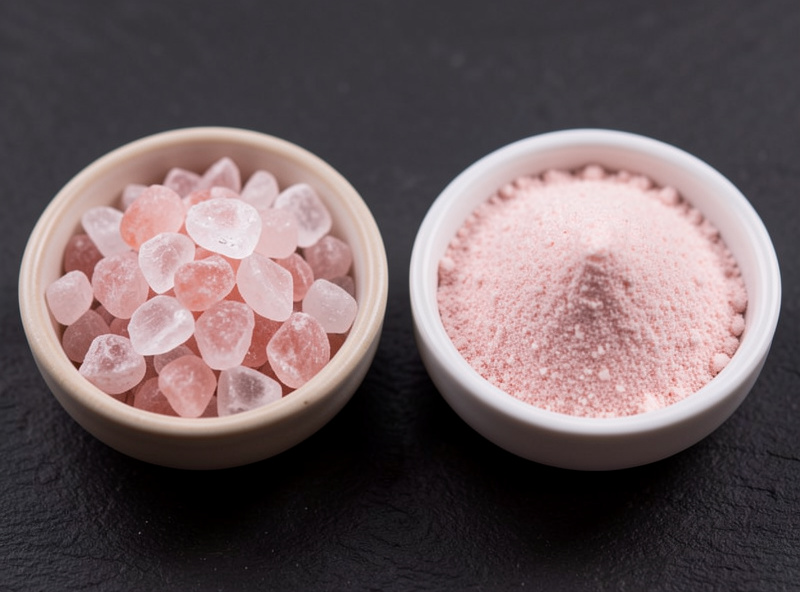
This trips up more beginners than anything else, so let’s be precise. Pink Himalayan salt is just sodium chloride with trace minerals that tint it — it cures no differently from ordinary salt and carries no special benefit for fish. Pink curing salt (cure #1 or cure #2, also called Prague powder) is something else entirely: it’s salt dyed pink specifically so you can’t mistake it, and it contains sodium nitrite (and nitrate, in cure #2). The pink dye is a safety warning, not a flavour note.
For fresh, refrigerated gravlax you don’t need pink curing salt at all — plain non-iodized salt is correct. Pink curing salt matters for long-stored, vacuum-packed cold-smoked fish where botulism risk rises — the FDA flags Clostridium botulinum as the key hazard in reduced-oxygen-packaged smoked fish. Never grab pink Himalayan thinking it’s a curing salt, and never treat pink curing salt as a table seasoning. The full chemistry is in pink salt and nitrates explained, and the when-do-you-need-it question is covered in the fish safety guide.
Purity: Read the Ingredients
Beyond grain size, the cleanest salt wins. Two things to screen out: iodine, which causes off-flavours and colour problems in cured fish, and anti-caking agents (often sodium ferrocyanide or silicates), which cloud brines and can leave a chalky residue on the fish. A good curing salt’s ingredient list should read simply “salt” — nothing else. This is the same standard I hold for every cure in my chamber, because additives you didn’t choose are variables you can’t control.
My Practical Shelf
I keep three salts for fish and nothing more. A fine non-iodized sea salt is my default for gravlax equilibrium cures, because it weighs and dissolves precisely. A coarse kosher salt covers salt-box work and general curing — clean, cheap, easy to grab by the handful. And pickling salt handles brines and lox, dissolving instantly into clear solution. For a hard cure like salt cod I’ll use a coarser bay or rock salt because it draws water steadily under weeks of covering. That’s the whole kit; the fancy finishing salts stay by the stove where their texture actually shows.
If you’re buying one salt to start, a plain fine sea salt or pickling salt covers the most ground. A bag of fine non-iodized curing salt will handle gravlax, brines, and most fresh cures without complaint. As an Amazon Associate I earn from qualifying purchases. Whatever you pick, weigh it, keep it pure, and match the grain to the method — that’s the entire art of choosing salt for fish, and it feeds straight back into the wider curing fish at home guide.
How Much Salt Do You Actually Need?
Choosing the right salt only pays off if you use the right amount, and the amount depends entirely on the method. For an equilibrium cure — my default for gravlax — I work at about 3% salt by weight of the fish, plus roughly 2.5% sugar. On a one-kilogram fillet that’s 30 grams of salt, weighed on a gram scale and packed onto the fish, all of it destined to be absorbed. The beauty of this approach is that it self-limits: the fillet reaches equilibrium and simply cannot get saltier than the number you chose, which is why fine, precisely-weighable salt matters so much for it.
A salt-box cure plays by different rules. You bury the fish in far more salt than it could ever absorb — often one to three times the weight of the fish — and let time, not measurement, control the result. Here coarse salt earns its keep, drawing water steadily without dissolving into a slurry. You then rinse and, for something like salt cod, soak the fish before cooking to pull the excess back out. The two methods want opposite salts precisely because they solve the saltiness problem in opposite ways: one by arithmetic, one by time.
Brines sit in a third category. Dissolve your salt into water — pickling salt is ideal because it vanishes into clear solution — and the concentration of the brine, measured as a percentage or with a salometer, controls how salty the fish becomes. A brine wraps a fillet in even contact, which is how traditional lox gets its uniform, penetrating cure.
Common Salt Mistakes That Ruin a Cure
The failures I see almost always trace back to the salt. Measuring by volume instead of weight is the biggest one: a cup of flaky salt and a cup of fine salt can differ by nearly half in actual salt content, so a recipe written for one grain will over- or under-salt badly with another. Weigh everything and the problem disappears. Reaching for iodized table salt because it’s what’s in the cupboard is the second — the iodine really does leave a metallic edge, and the anti-caking agents cloud brines. Assuming pink Himalayan salt is a curing salt is the third, and a potentially serious one for anyone moving into long-stored smoked fish, because it contains no nitrite at all.
The last mistake is subtler: using expensive finishing salt in the cure. Maldon flakes and fleur de sel are wonderful, but their whole point is texture and a burst of crunch on the finished plate — qualities that dissolve away and are utterly wasted inside a cure. Save them for the moment before serving. Get these four things right, and salt stops being the variable that ruins fish and becomes the tool that makes it, exactly the shift that happens in every reliable batch I run.
To sum it up in a sentence: buy pure, non-iodized salt, weigh it rather than scoop it, use fine grain for equilibrium cures and coarse grain for salt-box work, and never confuse pink mineral salt with pink curing salt. Nail those and the salt will never be the reason a cure fails.
Further Reading
- Curing Fish at Home: The Complete Salt-Cure Guide
- How to Make Gravlax: The Salt-Sugar-Dill Cure Step by Step
- How to Make Salt Cod (Bacalao) at Home: Salting and Drying
- Is Home-Cured Fish Safe? Salt, Freezing, and the Parasite Rule