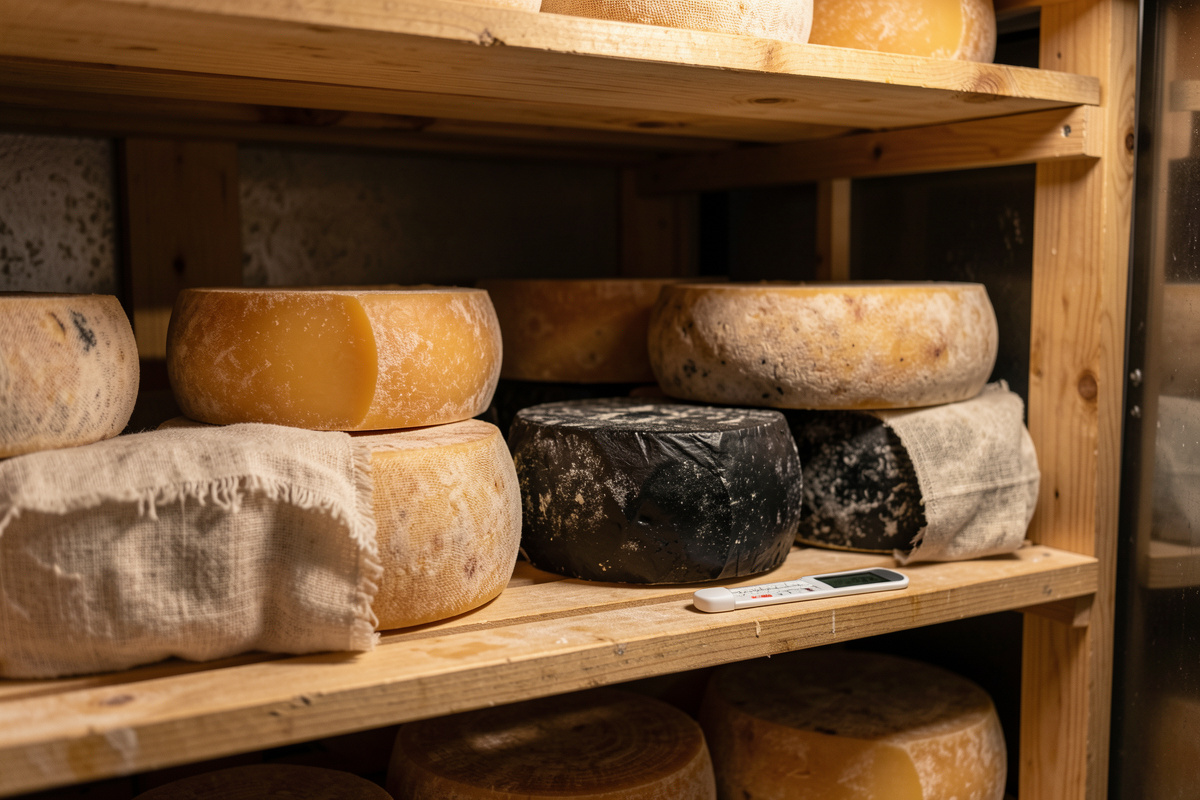

Aging cheddar and hard cheese at home comes down to holding the wheel at roughly 10–13 °C (50–55 °F) and 80–85% relative humidity for two to twelve months, then reading the weight log to know when it is done. Across the wheels I have aged in my converted-fridge chamber, a bandaged cheddar that drops 10–13% of its weight is where the flavour turns from milky to genuinely sharp.
I came to cheese from charcuterie, and the crossover is exact: a curing chamber that holds a coppa at the right humidity will hold a cheddar too, as long as you understand that cheese wants a wetter, slightly cooler envelope than meat. The chamber I run on an Inkbird ITC-308 and IHC-200 doesn’t care whether the shelf holds a salami or a five-pound cheddar — it cares that the air stays stable. This guide is about the aging half: you have already pressed and salted a wheel, and now you need to take it from bland fresh curd to a hard cheese with depth.
What “aging” actually does to a hard cheese
Aging is controlled, slow enzymatic and microbial breakdown. The cultures and enzymes already inside the wheel keep working at cellar temperature, converting proteins and fats into the compounds we read as “sharp,” “nutty,” and “crystalline.” Hold the wheel too warm and it works too fast and goes bitter or slips; hold it too cold and it stalls.
For hard cheeses — cheddar, gouda, gruyere-style, and the parmesan-style grana wheels — the target window is tight. I run cheese cooler and wetter than my meat cures: where a coppa sits at 14 °C and 78% RH, a cheddar wants closer to 11 °C and 82% RH. That single difference is why I never age cheese and meat in the same chamber at the same time — the humidity setpoints fight each other, and the white mould off a salami has no business landing on a clean cheddar rind. I run cheese in the second converted bar fridge, or I dedicate the primary chamber to a cheese cycle and keep meat out of it.
The temperature and humidity envelope, and why it is non-negotiable
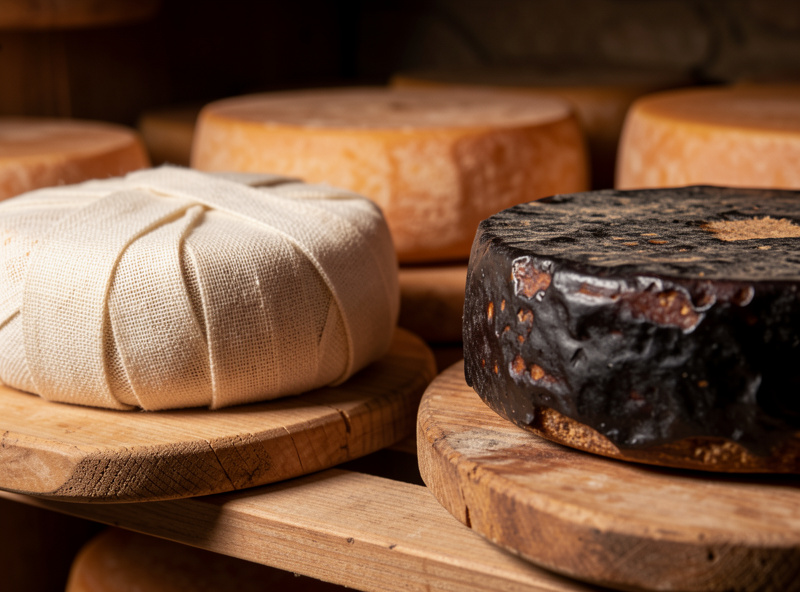
The honest answer most recipe blogs skip: hard cheese fails on humidity far more often than on temperature. At my benchmark of 11 °C and 82% RH, a natural or bandaged rind dries evenly and the paste stays supple. Let the chamber drift below 70% RH and the rind case-hardens — the same defect that kills charcuterie — sealing a dry shell over a still-moist interior and cracking it. Cracks are where the wrong moulds and mites get in.
I cross-check two loggers on every cheese cycle: a SensorPush HT.W at wheel height as the trusted reference and an Inkbird IBS-TH3 lower in the box, both salt-test calibrated, both surfaced through Home Assistant so I get an alert before the RH ever falls out of band. If you are converting a fridge for this, my cheese cave mini-fridge conversion walk-through covers the controller wiring, and the broader cheese aging temperature and humidity chart by type gives the per-style setpoints. Cheddar and the hard wheels sit at the cooler, drier end of that chart; soft and bloomy cheeses want it warmer and wetter.
Three ways to dress a hard cheese for aging
Before a wheel goes on the shelf you decide how it breathes. The three home methods — waxed, bandaged (clothbound), and natural rind — are not interchangeable; each changes the humidity you need to hold and how much weight the wheel will lose. Vacuum-sealing is a fourth, lower-effort route I treat separately.
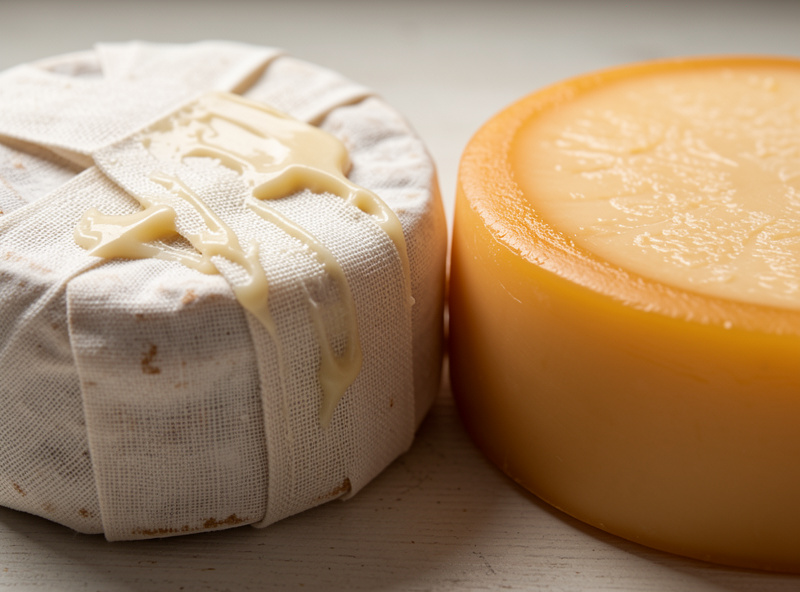
Waxed seals the wheel so it loses almost no moisture and develops no rind flavour — easiest to hold, most forgiving of an imperfect chamber. Bandaged (the traditional clothbound cheddar method) lets the wheel breathe through lard-set muslin, builds a real rind, and concentrates flavour through deliberate weight loss. Natural rind is the most demanding: bare paste exposed to chamber air, needing the steadiest humidity and regular rind tending.
| Method | RH to hold | Weight loss over 3 months | Rind flavour | Effort | Best for |
|---|---|---|---|---|---|
| Waxed | 80–85% | Under 2% | None | Low | Gouda, mild cheddar, first wheels |
| Bandaged (clothbound) | 80–85% | 8–13% | Earthy, complex | Medium | Traditional sharp cheddar |
| Natural rind | 83–88% | 6–10% | Strong, rustic | High | Alpine and grana styles |
| Vacuum-sealed | Not critical | Negligible | None | Lowest | Cheddar with no chamber |
If you have no chamber yet, vacuum-sealing buys you time — I covered the limits in vacuum sealing cheese for aging, and the trade-offs between all of these in natural rind vs waxed vs vacuum. For the wheel that will actually taste like aged cheddar, bandaging is the method worth learning — the clothbound process is involved enough that I give it a full walk-through of its own.
The weight log: the only honest doneness signal
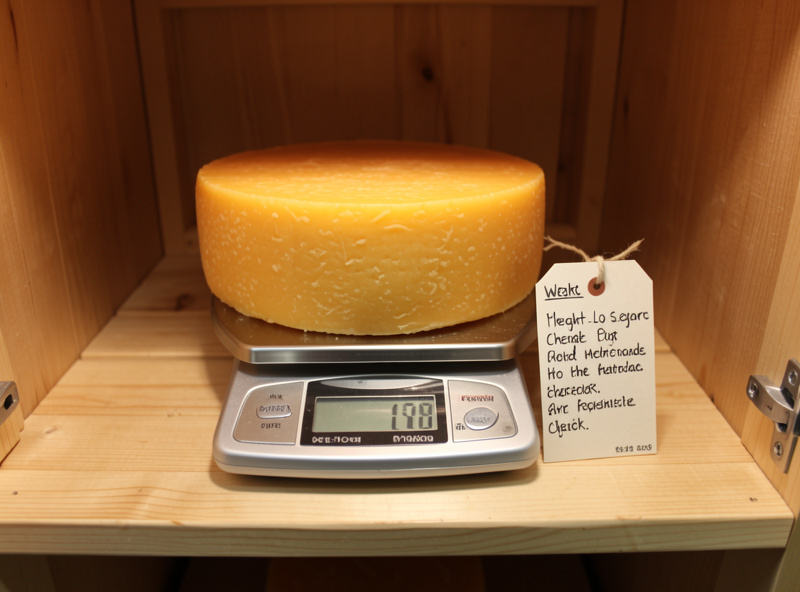
This is the habit that carried straight over from charcuterie, and it is what separates a hobbyist who guesses from one who knows. I weigh every wheel the day it goes in on a digital scale, write the date and gram weight on a tag, and weigh it again every two weeks. A bandaged cheddar that has lost about 10–13% of its green weight is concentrated enough to read as properly sharp; push a hard grana style toward 20–25% loss and you get the dry, crystalline snap.
Waxed and vacuum-sealed wheels barely move on the scale — for those, doneness is purely a function of time and a taste-test plug pulled with a cheese trier. I work through how to read all the signals together in when is aged cheese ready. The point of the log is that “it’s been three months” tells you nothing about a wheel that sat in a chamber drifting dry; the gram count does.
Rind tending while the wheel ages
A bandaged or natural-rind wheel is not “set and forget.” Every week or two I turn each wheel so it ages evenly and no face stays damp against the mat, and I check the rind. A light dusting of grey-blue or white mould on a natural rind is normal and can be wiped back with a cloth dipped in a saturated salt brine or a little white vinegar; fuzzy black or bright-coloured fungal growth with a musty, ammoniated smell is a wheel going wrong. When a rind defect is clearly surface-only on a hard cheese, you can pare and brush it; when the paste underneath smells of ammonia or the wheel feels slimy, I cut my losses.
Mites are the other recurring nuisance on a clothbound rind — fine brown dust at the base of the wheel is the giveaway. I keep that battle in its own piece on cheese mites on aged cheese, because the fix (cold knock-back, brushing, airflow) is specific. A 120mm fan on a 5-minutes-on, 25-off cycle keeps my chamber air moving just enough to discourage them without drying the wheels out.
A realistic timeline for the common hard cheeses
Patience is the actual ingredient. A young waxed gouda is pleasant at six to eight weeks. A bandaged cheddar is worth eating at three months, good at six, and genuinely sharp past nine. Alpine and grana styles ask for a year or more before the texture turns crystalline. None of this is hands-on time — it is chamber-stable time, which is exactly why a controller-run chamber beats a wine fridge you keep opening. If you want a faster first win, I rounded up the wheels that reward you soonest in best cheeses to age in three months or less, and the low-risk starters in best cheese to age at home for beginners.
The full picture — making decisions, chamber setup, every rind method, and troubleshooting — lives in the complete home cheese aging guide, which this article sits under.
The gear I actually reach for
You can age a wheel with a fridge, a tray, and a scale. Past that, three things earn their shelf space: a stainless cheese trier for pulling a plug without wrecking the wheel, food-grade cheese wax for the waxed route, and breathable muslin plus food-grade lard for bandaging. I buy these as generic food-grade supplies rather than chasing a brand. As an Amazon Associate I earn from qualifying purchases. A stainless cheese trier and a roll of food-grade cheese wax cover the two routes most first-timers take.
Frequently Asked Questions
What temperature and humidity does cheddar need to age?
Hold cheddar and hard cheeses at roughly 10 to 13 degrees Celsius (50 to 55 Fahrenheit) and 80 to 85 percent relative humidity. That cooler, slightly drier envelope lets enzymes work slowly without case-hardening the rind or slumping the paste.
How long should I age a homemade cheddar?
A bandaged cheddar is worth eating at three months, good at six, and genuinely sharp past nine. Doneness depends on weight loss, not the calendar: a wheel that has lost about 10 to 13 percent of its green weight reads as properly sharp.
Should I wax or bandage a cheddar?
Wax for the easiest, most forgiving age with no rind flavour and almost no weight loss. Bandage when you want a traditional sharp cheddar with a real rind and concentrated flavour. Bandaging needs steadier humidity and more rind tending.
Why is my aging cheddar cracking?
Cracking is almost always case-hardening from low humidity. If the chamber drifts below about 70 percent RH the rind dries and seals over a still-moist interior, which then splits. Raise and stabilise humidity to 80 to 85 percent and turn the wheel regularly.
Do I need a dedicated chamber, or can I use my kitchen fridge?
A kitchen fridge runs too cold and far too dry for hard cheese, usually under 40 percent RH. You can vacuum-seal a cheddar to age slowly in a fridge, but a controller-run converted fridge holding 11 degrees Celsius and 82 percent RH gives proper rind development.
Can I age cheese and charcuterie in the same chamber?
Not at the same time. Cheese wants cooler, wetter air than most meat cures, and moulds cross between them. Run cheese in a dedicated chamber or a separate cycle, and keep meat out while a clean cheese rind is forming.
Related Articles
- Home Cheese Aging: The Complete Guide
- Best Cheese to Age at Home for Beginners
- How to Wax Cheese for Aging
- Cheese Aging Temperature and Humidity Chart by Type
- When Is Aged Cheese Ready? How to Tell