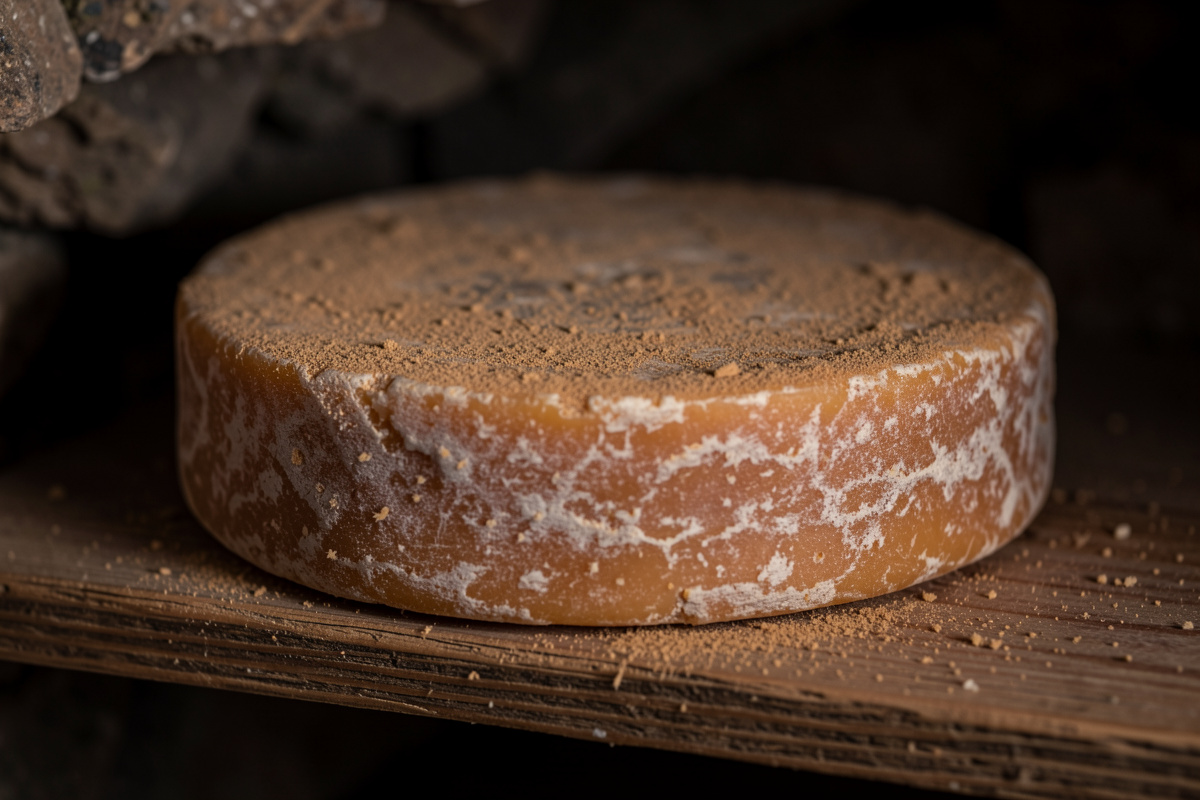

Cheese mites are tiny dust-mite relatives that live on cheese rinds and leave a fine, tan-brown powder that looks like cinnamon dust. They are common in any aging space, mostly harmless to the cheese itself, and controlled by brushing, wiping, cold, and good chamber hygiene rather than panic. I’ve dealt with them across the chambers I run, and the honest truth is they are a nuisance to manage, not a disaster — a few traditional cheeses are even aged with them on purpose.
That said, left completely unchecked they will spread from wheel to wheel, pit a rind, and turn your cave dusty and grey. The goal isn’t sterile eradication — that’s nearly impossible in a home cave — it’s keeping the population low enough that it never damages a wheel or invades the rest of your aging cheese. Here is how to spot them, knock them back, and stop them taking over.
How to Identify Cheese Mites
Look for a fine tan or grey-brown powder on the rind that resembles flour or cinnamon dust, sometimes with shallow pitting underneath. If you wipe a patch and it comes back, or if the “dust” seems to move or reappear, those are mites and their cast skins, not mold or normal rind bloom.
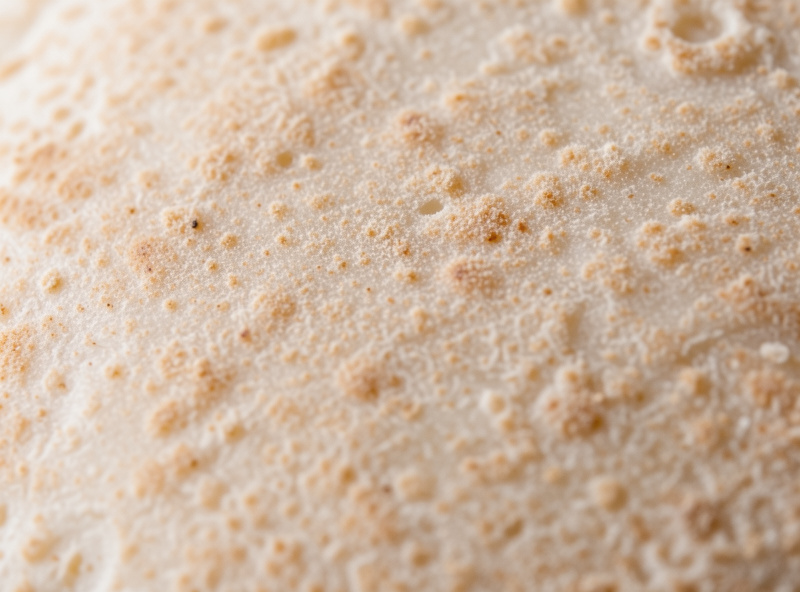
Mites themselves are almost too small to see individually — under a fortnight’s growth they’re a barely-visible crawling haze; mostly you see the powder they leave behind. Run a finger across a dusty patch and a clean rind underneath that re-dusts within days is the tell. A magnifying glass or phone macro lens will show the pale, slow-moving specks if you want certainty. Don’t confuse them with normal mold: mold is fuzzy, patchy, and coloured (white, grey-blue, green), while mite damage is powdery, even, and tan, often with a faintly pitted surface where they’ve grazed the rind.
Are Cheese Mites Harmful?
Cheese mites are generally harmless to eat in the small numbers found on a home rind — the rind is usually trimmed or brushed before eating anyway — but a heavy infestation degrades the cheese and can trigger allergies in sensitive people. They are a quality and hygiene problem more than a safety one.
The mites graze the rind surface, and a small population does little harm; some traditional cheeses, like certain mimolette and aged tomme styles, are deliberately aged with mites because their grazing develops the rind’s texture and flavor. But an unchecked bloom pits and damages the rind, sheds allergenic dust into the air, and spreads to every wheel in the chamber. People who handle heavily-infested cheese regularly can develop a respiratory or skin allergy to mite proteins, so while a dusting on one wheel is no cause for alarm, a cave-wide infestation is worth taking seriously and clearing down.
How to Control and Remove Cheese Mites
Control comes from physically removing mites and denying them the warm, undisturbed rind they love. Brush or vacuum the rind, wipe with a cloth, and lower the temperature — mites slow dramatically below about 8 °C and a spell in a cold fridge knocks a population right back.
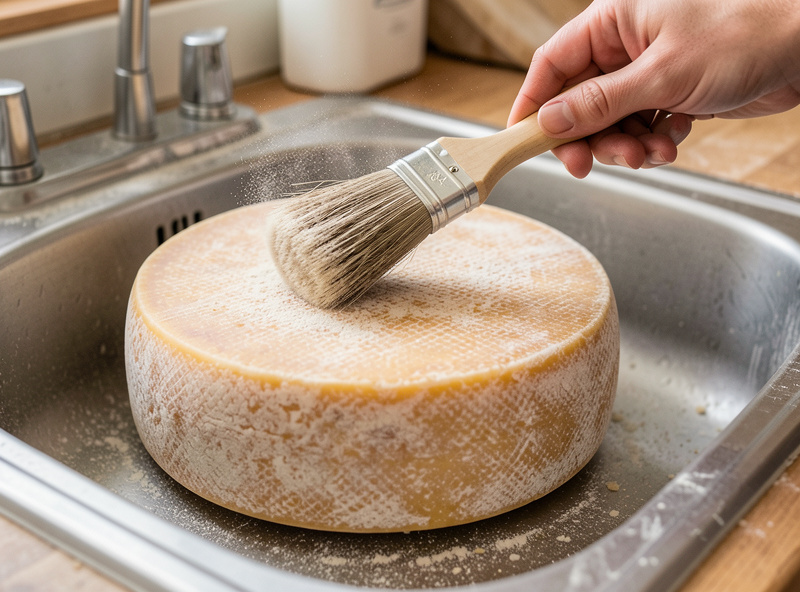
Brush affected wheels firmly with a dedicated cheese brush, working over a sink or outdoors so you’re not just relocating mites onto other wheels — I keep a soft brush only for this. A vacuum with a brush head lifts the powder and many of the mites cleanly. Wiping the rind with a cloth dampened in a strong salt brine, or for waxable cheeses a wipe of vinegar, sets them back further. Moving infested wheels into a cold (2–4 °C) fridge for a week or two stalls reproduction because mites are sluggish in the cold. For a badly overrun cave, the reset is to remove every wheel, brush each one, then empty and thoroughly clean the chamber — wash the shelves, wipe down the walls, and let it dry — before everything goes back. Waxing or vacuum-sealing a cleaned wheel then seals it off from re-infestation entirely.
Mites vs Other Rind Problems
Because a dusty rind can look alarming, it helps to know what mites are not. The three things people confuse with mites are normal rind mold, rind drying, and actual spoilage — and each calls for a different response, so reading the rind correctly saves you from over-reacting to a healthy wheel or under-reacting to a failing one.
Normal natural-rind mold is fuzzy and patchy in white, grey-blue, or pale green, and it wipes back with a brine cloth — that’s the wheel working as intended, not an infestation. A rind that’s gone hard, cracked, and pale is drying out and case-hardening, a humidity problem rather than a pest one; the fix there is more chamber humidity, not brushing. Genuine spoilage looks and smells wrong: fuzzy black or bright pink growth, slime, or an ammoniated or rotten smell, and that means the wheel may need to go in the bin rather than the brush. Mites sit apart from all three — even, tan, powdery, reappearing dust over a faintly pitted but otherwise sound rind, on a cheese that still smells normal. If the wheel smells clean and the rind underneath the dust is intact, you’re dealing with mites and the calm brush-and-cool routine is all you need.
Preventing Mites in the First Place
Prevention is mostly hygiene and disruption: turn and inspect wheels often, keep the chamber clean, and don’t let dusty rinds sit untouched for weeks. Mites thrive on neglect — a regularly tended cave rarely sees more than the odd dusty patch.
Wipe shelves and chamber walls down periodically, and don’t bring in shop-bought aged cheese with visible rind dust and set it next to your wheels — that’s a classic way mites arrive. Keeping the chamber on the cooler side of a cheese’s range slows them. Sealing vulnerable cheeses with wax or vacuum removes the exposed rind they need, so if a particular cheese keeps attracting them, switching it to a sealed method solves the problem permanently. And the same gentle air exchange and turning routine that keeps rinds healthy also disturbs mites enough to keep populations from establishing. Mites are opportunists; a clean, tended, slightly-cool chamber gives them little to work with.
Frequently Asked Questions
What do cheese mites look like?
Cheese mites leave a fine tan or grey-brown powder on the rind that looks like flour or cinnamon dust, often with shallow pitting underneath. The mites themselves are almost too small to see; mostly you notice the dust and cast skins they leave, which reappear after wiping.
Are cheese mites harmful to eat?
In the small numbers found on a home rind they are generally harmless, and the rind is usually brushed or trimmed before eating. A heavy infestation degrades the cheese and can trigger allergies in people who handle infested cheese often, so clear large blooms promptly.
How do I get rid of cheese mites?
Brush or vacuum the rind over a sink, wipe with strong salt brine, and move infested wheels to a cold fridge at 2 to 4 degrees Celsius for a week or two. Mites slow dramatically below 8 degrees. For a bad cave, brush every wheel and clean the whole chamber.
What temperature kills or slows cheese mites?
Cheese mites become sluggish and stop reproducing below about 8 degrees Celsius, and a cold fridge spell at 2 to 4 degrees knocks a population right back. Freezing a wheel kills them outright but changes the cheese texture, so cold-holding is usually the better control.
Can mites spread between cheese wheels?
Yes. Mites readily spread from an infested wheel to every other wheel in the chamber, which is why you brush affected cheese over a sink rather than near other wheels and clean the whole cave for a heavy infestation. Sealing clean wheels in wax or vacuum stops re-infestation.
How do I prevent cheese mites?
Keep the chamber clean, turn and inspect wheels often, wipe down shelves and walls periodically, and never set dusty shop-bought aged cheese beside your wheels. Keeping the chamber slightly cool slows mites, and waxing or vacuum-sealing removes the rind they need.
Related Guides
- Home Cheese Aging: The Complete Guide
- Build a Cheese Cave From a Mini Fridge
- How to Wax Cheese for Aging
- Natural Rind vs Waxed vs Vacuum Aging
- When Is Aged Cheese Ready?