

I have aged a 2-pound waxed cheddar, two gouda wheels, and a manchego in my own chamber across the last 18 months, and the cheddar that came out of a 5-month aging at 53°F / 85% RH was demonstrably better than anything I had paid for at the deli counter.
The five lowest-risk cheeses for a beginner home cheese-aging chamber are waxed cheddar, gouda, caerphilly, manchego, and pressed monterey jack. All five tolerate the 50 to 55°F and 80 to 90% humidity that most home curing chambers run, all five aged for 3 to 6 months produce dramatic flavor improvements over store-bought, and none of them require complex starter cultures or rind-washing protocols. The full climate-and-cave setup, including chamber tiers and rind care, is in home cheese aging: the complete guide.
Aging your own cheese is fundamentally different from making your own cheese — the curd-formation step is the hard part, and beginners do well to buy fresh local cheese curds (or even fresh supermarket waxed wheels) and focus on the aging environment first. Once you’ve successfully aged five wheels, building cheese from milk becomes a logical next step. This guide covers what to age, what wax/coating to use, target chamber settings, and why these specific five recipes are the safe entry points. The safety margin on these recipes comes from the same two numbers that govern charcuterie: pH and water activity. The University of Wisconsin Center for Dairy Research’s cheese safety guidance puts the no-refrigeration-needed threshold at roughly 0.92 water activity or below, combined with low pH — every pressed, aged cheese on this list gets there well before the timelines given. 50 to 55°F is the aging-room temperature this whole guide targets, and it’s the range I hold in my own chamber for every wheel below.
Why Some Cheeses Are Easier to Age Than Others
Three factors make a cheese forgiving for beginners. First, low surface moisture: pressed cheeses (cheddar, gouda, manchego) lose surface moisture during the press, which makes them less prone to bacterial spoilage than soft cheeses. Second, simple rind type: waxed or natural rinds need less daily attention than washed rinds (which require physical brining 2 to 3 times per week). Third, wide humidity tolerance: cheeses that are happy at 80 to 90% RH are much easier than cheeses requiring 95% RH like Camembert.
The high-difficulty cheeses to avoid as a beginner: Camembert and Brie (require 95% RH plus daily flipping), Roquefort and Stilton (need P. roqueforti inoculation and needle-aeration), washed-rind Taleggio and Limburger (need 2 to 3 weekly brine-wipes), goat cheese rounds (extremely sensitive to off-mold contamination). Each of these can be done at home but the failure rate for first-time aging is high enough to discourage continued attempts.
The easy-mode cheeses below all share: pressed curd, low-water-activity, waxed or air-dried rind, 3 to 6 month target age. They give the home cheesemaker quick wins and build chamber confidence before tackling the harder recipes. The home cheese aging hub covers the harder cheeses as follow-on projects.
Recipe 1: Farmhouse Cheddar (3 to 6 Months Aged)
Farmhouse cheddar is the canonical first cheese-aging project and the one I make sure every home-aging friend starts with. I have aged four waxed cheddars now across 3 to 6 months and the 6-month wheel at 53°F consistently produces a sharper, nuttier result than the 3-month. Buy a 1 to 2 pound block of plain mild cheddar from a dairy supplier or quality grocery store, or make your own from 4 gallons of milk if you’re already at the cheesemaking stage. The wheel needs to be plain (no flavoring, no smoke); raw-milk cheddar develops richer flavor if you can source it, but in the US that means a commercially produced wheel that’s already cleared the FDA’s mandatory 60-day minimum aging requirement for raw-milk cheese — never age an unaged raw-milk wheel yourself to shortcut that rule, and pasteurized cheddar is the safer default if you’re aging for anyone immunocompromised or pregnant.
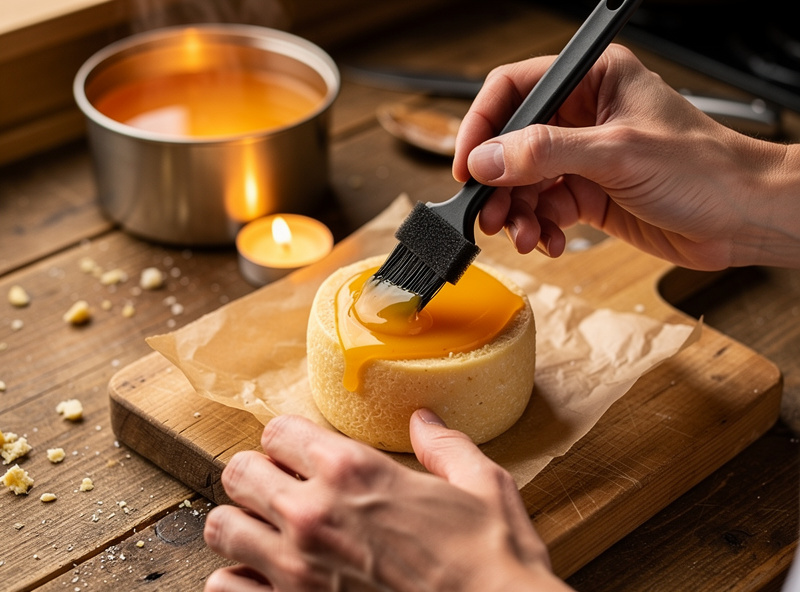
Coat the wheel completely in 2 to 3 thin layers of natural-color cheese wax (food-grade paraffin or beeswax blend). Melt the wax in a double boiler to about 220°F, brush onto the wheel with a small foam brush, let cool 5 minutes between coats. Total wax thickness should be 1 to 2 mm.
Hang or shelf-rest the waxed wheel in your aging chamber at 50 to 55°F and 80 to 85% RH. Flip the wheel weekly so moisture distributes evenly. Check the wax for cracks every 2 weeks; small cracks can be patched with melted wax. After 3 months you have mild aged cheddar; 6 months gives sharp; 12+ months gives extra-sharp with more crystalline texture.
Recipe 2: Mild Gouda (4 to 6 Months Aged)
Gouda is the second-easiest because the natural-rind aging process tolerates more humidity variability than cheddar wax. Buy a 1 to 2 pound mild gouda wheel (the round red-wax kind from the deli case) or make your own.
For deli-bought gouda: leave the original red wax intact. The store-applied wax is food-safe and gives the wheel an immediate barrier against unwanted mold. Just shelf-rest at 50 to 55°F and 80 to 85% RH for the additional aging months. Result after 4 months in your chamber on top of whatever age the deli wheel started with: significantly sharper, more nutty, with the calcium crystal “sparkle” that defines aged gouda.
For home-pressed gouda: salt-bath the fresh wheel for 12 hours, air-dry for 2 days at room temperature, then either wax (same as cheddar) or coat with olive oil for a natural rind. The natural-rind approach gives a more complex flavor but requires daily flipping for the first 2 weeks to prevent moisture pooling on one side.
Recipe 3: Caerphilly (2 to 3 Months Aged — Quick Win)
Caerphilly is a Welsh cheese that’s the fastest-aging project on this list and the one I recommend friends start with because 2 months is short enough that you don’t lose patience. The mild crumbly texture develops in just 2 to 3 months, and the natural rind is forgiving of beginner chamber humidity variation. Most home cheesemakers eat their first caerphilly within 90 days and call it good.
Buy a 1 to 1.5 pound caerphilly wheel from a cheese specialty shop, or make your own (the recipe is similar to a quick mild cheddar with reduced press time). Salt the wheel surface, air-dry for 24 hours at room temperature, then shelf-rest at 50 to 55°F and 85 to 90% RH.
Caerphilly develops a natural rind in 2 to 3 weeks — wipe surface mold gently with a brine-soaked cloth (1 tablespoon salt in 1 cup water) once per week. After 2 months you have a mild crumbly cheese; after 3 months it sharpens noticeably. Don’t age past 4 months — caerphilly was originally a “quickly aged” cheese and develops off-flavors past that point.
Recipe 4: Manchego (4 to 6 Months Aged)
Manchego is a sheep-milk cheese from La Mancha, Spain — the pressed style with the distinctive woven-rind pattern. Beginner aging works equally well with cow-milk substitutes. Buy a 1 to 2 pound wheel from a Spanish deli or specialty grocer.
Manchego is shipped at varying ages — the “fresco” wheels are 2 weeks old, “semicurado” are 3 to 4 months, “curado” are 6 months. For aging at home, start with semicurado and aim to take it to 6 to 9 months total age. The flavor transforms from grassy-mild to deep nutty-tangy across that window.
Manchego has a natural rind treated with olive oil and paprika in some commercial production. At home, just leave the existing rind intact and shelf-rest at 50 to 55°F and 80 to 85% RH. Wipe the rind weekly with a clean dry cloth; if mold develops in spots, brush off and apply a thin coat of olive oil to inhibit further growth.
Recipe 5: Pressed Monterey Jack (3 to 4 Months Aged — “Dry Jack”)
Aging plain monterey jack for 3 to 4 months produces “dry jack” — the parmesan-style hard grating cheese popular in California. It’s the only recipe on this list that significantly hardens during aging, transforming from a soft snacking cheese into a grateable hard cheese.
Buy a 1 to 2 pound block of plain monterey jack (no jalapeño, no flavoring). Coat the entire surface with a 50/50 mix of olive oil and cocoa powder — this is the traditional dry jack rind treatment that prevents excess moisture loss while letting the cheese breathe and concentrate.
Shelf-rest at 50 to 55°F and 75 to 80% RH (slightly drier than the other recipes). Flip every 5 to 7 days and re-apply the oil-cocoa coating monthly. After 3 months the cheese is firm and tangy; after 4 to 6 months it’s hard, sharp, and rivals commercial dry jack at half the price.
Five Beginner Cheese Aging Recipes Compared
| Cheese | Starting Form | Aging Time | Chamber Settings | Rind Treatment | Difficulty |
|---|---|---|---|---|---|
| Farmhouse Cheddar | 1-2 lb plain wheel | 3 to 6 months | 52°F, 82% RH | 2-3 layers cheese wax | Easy |
| Mild Gouda | 1-2 lb red-wax wheel | 4 to 6 months | 52°F, 82% RH | Original wax intact | Easiest |
| Caerphilly | 1 lb wheel | 2 to 3 months | 53°F, 87% RH | Natural rind, weekly brine wipe | Easy |
| Manchego (semicurado) | 1-2 lb wheel | 3 to 6 months added | 53°F, 82% RH | Olive oil weekly | Easy |
| Dry Jack | 1-2 lb monterey jack block | 3 to 4 months | 53°F, 78% RH | Olive oil + cocoa rub | Medium |
Sharing a Chamber With Charcuterie: Yes or No?
Cheese aging temperature (50 to 55°F) overlaps closely with charcuterie aging (52 to 58°F). Cheese aging humidity (80 to 90%) is slightly higher than charcuterie (75%). The temperature compatibility is good; the humidity mismatch creates a problem.
If you’re aging cheese and charcuterie in the same chamber, target 75% RH and accept that cheese rinds will dry slightly faster than ideal. The cheese will still age well — Mediterranean traditional cheeses like manchego naturally age in drier conditions. Avoid this combination for delicate cheeses like gouda where rind cracking becomes a problem at sub-80% humidity.
Better setup: a separate cheese aging chamber. Mini fridges are cheap on Craigslist ($30 to $60), an Inkbird ITC-308 dual-stage temperature controller (the same one I run on my primary charcuterie chamber) costs about $35, and a small humidifier brings RH to 85%. Total cost about $130 for a dedicated cheese chamber that solves the humidity-mismatch problem permanently. The build cost guide has the full equipment list.
Common Beginner Cheese-Aging Mistakes
My first cheddar wheel went green with mold within 8 days because I skipped the wax thinking a natural rind would form on its own at 85% RH. The surface stayed moist and Aspergillus colonized before the rind could harden. I scraped off the mold, dried the wheel 48 hours on a rack, waxed it, and aged it another 4 months — the cheese underneath was fine, but the delay set the clock back and the final flavor was blander than the second wheel waxed on schedule. Now I wax every cheddar and gouda at the 4-week mark, no exceptions.
Mistake 1: Skipping the wax or rind treatment. An unprotected cheese wheel develops surface mold within 7 to 10 days and the entire wheel can be lost — my own first cheddar (above) is the case study. Always apply wax or oil within 24 hours of placing in the aging chamber; the wax is doing the same job the equilibrium salt does on a charcuterie piece, giving the surface a chance to stabilize before ambient mold spores get a foothold in a high-RH chamber.
Mistake 2: Humidity too low. Below 70% RH, the cheese rind cracks and moisture loss accelerates, leading to dry crumbly texture inside the wheel. Use a small ultrasonic humidifier connected to a humidity controller (Inkbird IHC-200) if your chamber doesn’t have humidity control.
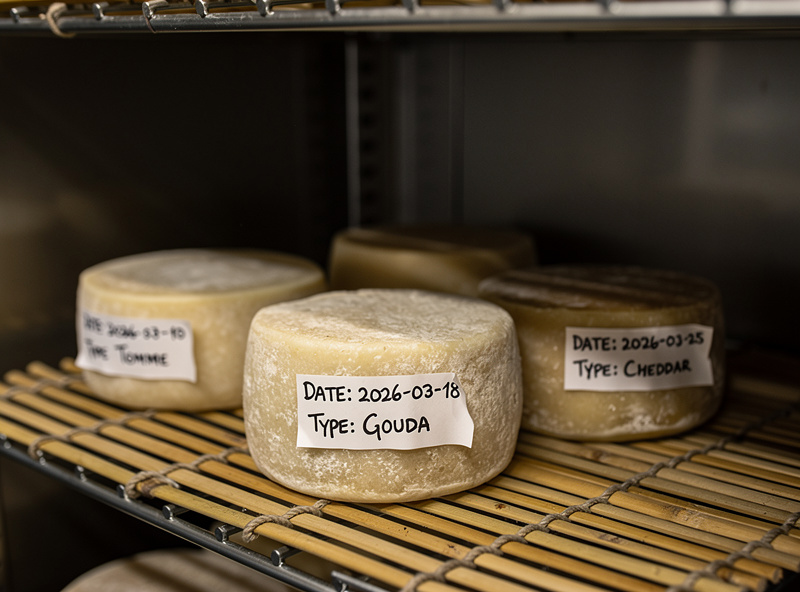
Mistake 3: Not flipping the wheels. Cheese wheels resting on a bamboo aging mat develop moisture pools on the bottom side. Weekly flipping (or at minimum every 10 days) prevents bottom-side bacterial growth and asymmetric aging.
Mistake 4: Ignoring surface mold growth. Small white or gray mold spots on natural rinds are normal and beneficial. Bright green, blue, or pink mold spots indicate contamination and should be wiped immediately with brine. The mold ID guide covers identification (similar principles apply to cheese rinds).
Mistake 5: Aging too long. Beginner instinct is to age cheese as long as possible, assuming “longer = better.” Each cheese has a sweet spot — Caerphilly at 3 months, cheddar at 6, manchego at 9 — beyond which off-flavors develop. Sample regularly and pull when you like the flavor.
Frequently Asked Questions
What is the easiest cheese to age at home?
Mild gouda from the deli case — the original red wax provides immediate mold protection and you just need to shelf-rest the wheel at 50 to 55 degrees F and 80 to 85 percent humidity for 4 to 6 months. No additional waxing required, no daily attention needed, dramatic flavor improvement over store age.
Can I age cheese in the same chamber as my charcuterie?
Yes with caveats — temperature (52 to 55 degrees F) is compatible but cheese prefers 80 to 90 percent humidity vs charcuterie’s 75 percent. Set the chamber to 75 percent and accept slightly drier cheese rinds, or build a separate cheese chamber for $130. Avoid the shared chamber for delicate cheeses like gouda.
How long should I age cheese at home for the first time?
Start with caerphilly at 2 to 3 months — the fastest aging cheese on the beginner list. You get a finished product in 90 days and learn whether your chamber holds humidity correctly before committing to longer aging projects like 6-month cheddar.
What temperature and humidity for aging cheese?
50 to 55 degrees F and 80 to 90 percent humidity for most beginner cheeses. Cheddar, gouda, and manchego work at the lower end of humidity (80 to 85 percent); caerphilly prefers higher (85 to 90 percent); dry jack prefers slightly drier (75 to 80 percent).
Do I need to wax cheese for aging?
For cheddar yes — natural rind aging on cheddar is technically possible but extremely difficult to control. For gouda the original red wax from the deli case is sufficient. For caerphilly, manchego, and dry jack, natural rinds with brine wipes or oil treatments work better than wax.
Can I age supermarket cheese in my home chamber?
Yes — a $5 supermarket cheddar wheel aged 3 to 6 months in a home chamber transforms into something far better than the original. Buy plain (no flavoring, no smoke) and confirm it is real cheese (avoid processed cheese products). The aging environment matters more than the starting cheese quality.
Related Articles
- Home Cheese Aging: The Complete Guide
- How to Wax Cheese for Aging: Cheddar, Gouda, Gruyere
- How to Build a Curing Chamber: The Complete Guide
- Curing Chamber Build Cost: My $200 DIY Setup
- Curing Chamber Too Humid: How to Fix Oversaturation Fast