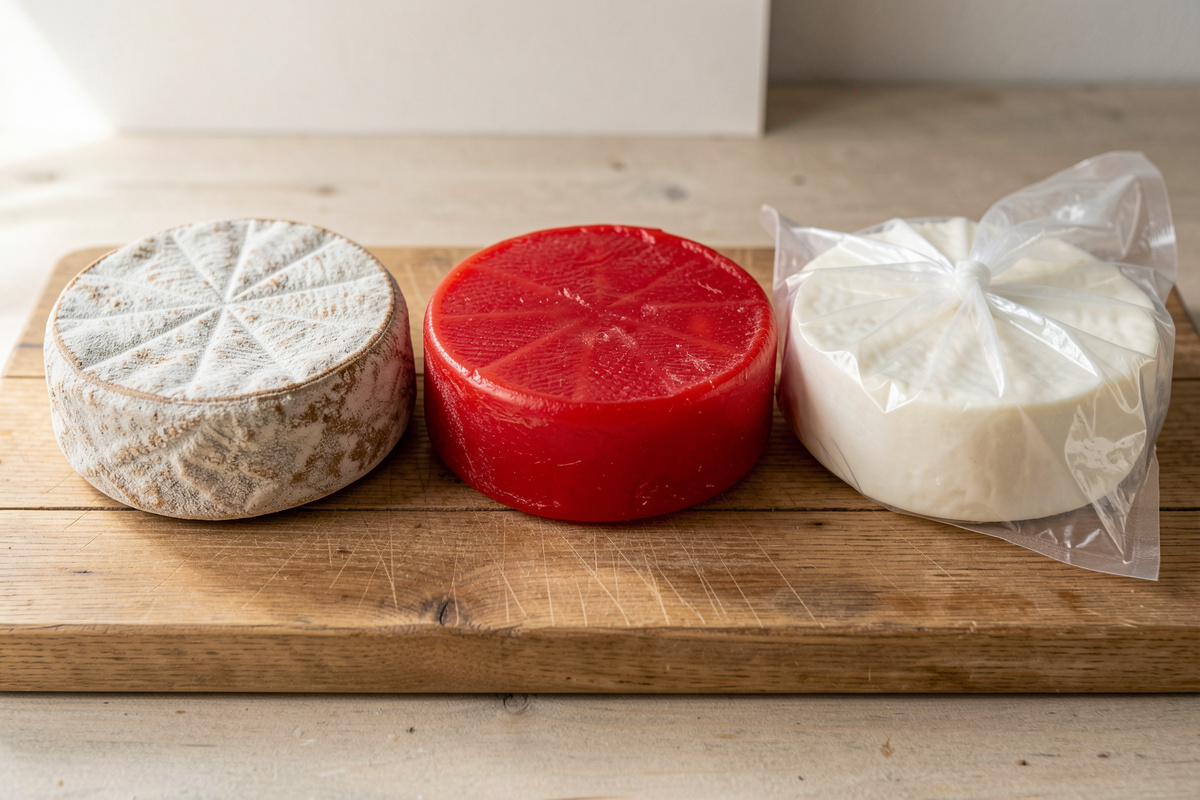

The three ways to protect an aging cheese — a natural mold rind, a wax coating, or a vacuum bag — trade flavor against effort. A natural rind gives the most complex cheese but demands a humidity-controlled cave; waxing is the middle path that locks in moisture with a little work; vacuum sealing is the most foolproof and the least interesting. I’ve aged the same cheddar all three ways side by side, and the verdict is mostly about how much fuss you want to sign up for.
There is no single best method — there is the best method for your gear and the cheese in front of you. If you have a cave and want character, go natural. If you want a clean firm wheel with minimal kit, wax or vacuum. The mistake is treating these as interchangeable: each creates a genuinely different cheese, and choosing wrong is why a lot of first wheels disappoint.
Natural Rind: Most Flavor, Most Work
A natural rind forms when a wheel ages exposed to 80–90% humidity air and develops a living surface of molds and bacteria that breathe, dry, and flavor the cheese from the outside in. It produces the deepest, most complex result — and needs the most control.
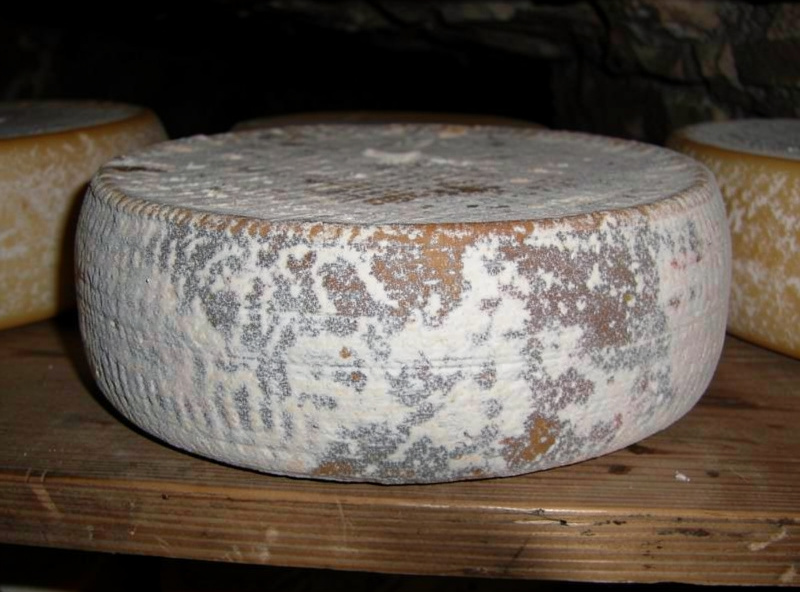
This is the classic cave-aged path: the wheel loses moisture steadily (often 15–20% of its weight over a long age), grows a dusty grey-white or brown rind, and builds the earthy, nutty character a bag can never give. The cost is real infrastructure — a humidity-controlled chamber, daily attention, mold management, and the patience to turn and tend wheels for months. It is also the least forgiving: too dry and the rind case-hardens, too damp and you fight slime and unwanted mold. Natural rind is where home cheese aging becomes a genuine craft rather than a storage method.
Waxed: The Moisture Lock Middle Ground
Waxing seals a young cheese in a coat of cheese wax after a short surface-drying period, locking moisture inside so the wheel ripens without forming a rind and without needing high chamber humidity. It is the practical middle ground between cave and bag.
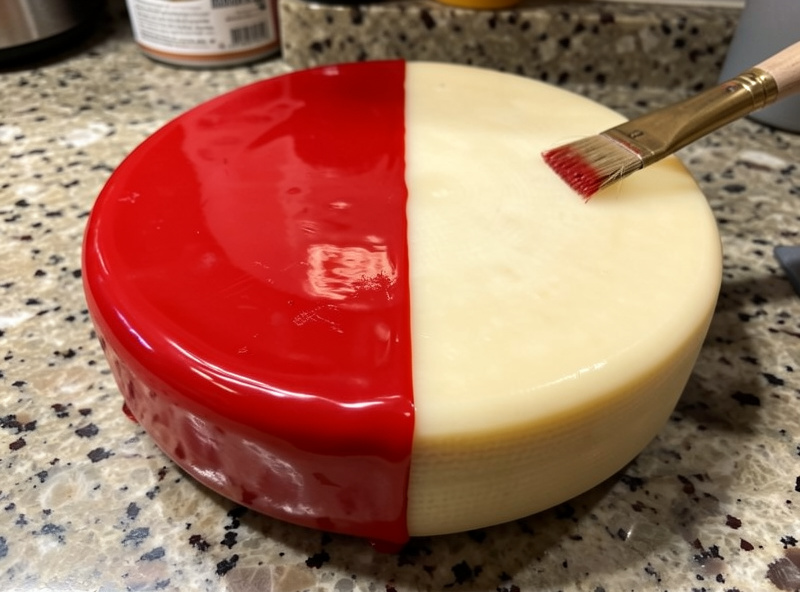
Because the wax holds the cheese’s own moisture against the paste, a waxed wheel can age in a cooler, drier fridge than a natural-rind wheel needs — you don’t have to chase 85% RH. It ripens smoother and milder than a natural rind but keeps more firmness and character than a vacuum bag, and it looks the part. The work is in the waxing itself: drying the surface, melting and applying two or three even coats, and trusting that no air pocket or crack lets mold creep underneath. My full guide to waxing cheese walks through the coats and the common failures step by step.
Vacuum Sealed: Foolproof and Plain
Vacuum sealing pulls the air out around the cheese in a barrier bag, letting it ripen internally in an ordinary fridge with no rind, no humidity control, and almost no moisture loss. It is the most reliable method and the least characterful.
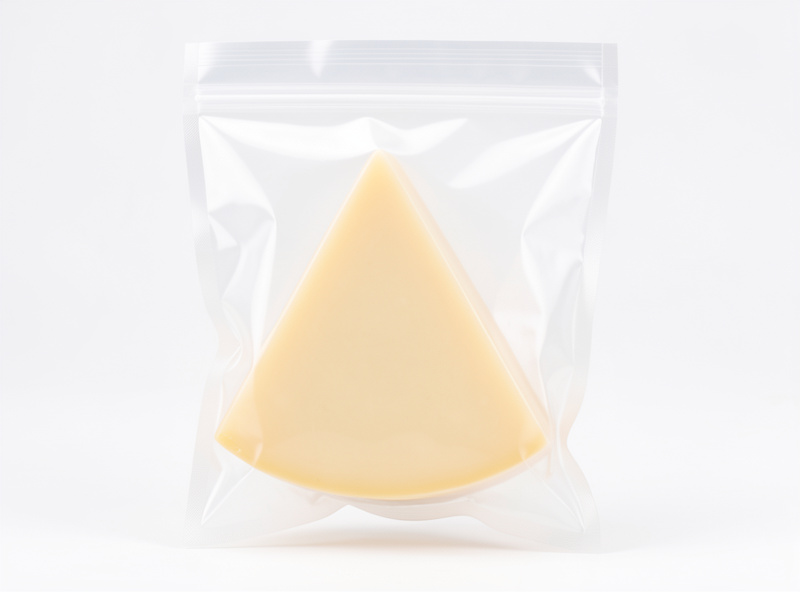
A vacuum-aged wheel stays moist, mild, and rindless because all the change happens inside the paste under the cheese’s own enzymes — there is no surface ecology, no concentration from drying. For a beginner with only a kitchen fridge it is genuinely hard to mess up, which is its whole appeal. The catch is flavor: it never develops the depth of a natural rind or quite matches a clean waxed wheel. I cover the bags, timing, and the liquid-in-the-bag question in the vacuum sealing cheese guide.
Side-by-Side Comparison
Here is how the three methods stack up on the things that actually decide which to use — the flavor you get, the gear you need, and how much can go wrong.
| Factor | Natural Rind | Waxed | Vacuum Sealed |
|---|---|---|---|
| Flavor depth | Highest — earthy, complex | Medium — clean, balanced | Lowest — mild, uniform |
| Texture | Firm, concentrated | Firm, moist | Moist, soft |
| Humidity needed | 80–90% RH (cave) | Low — normal fridge OK | None — normal fridge |
| Gear required | Humidity-controlled chamber | Cheese wax, brush, double boiler | Vacuum sealer, barrier bags |
| Moisture loss | High (15–20%) | Low | Almost none |
| Difficulty | Hard — mold and rind care | Medium — even coats | Easy — just seal it |
| Best for | Long-aged character cheese | Cheddar, Gouda in a plain fridge | Beginners, reliable results |
How Each Holds Over a Long Age
The methods also diverge on how they behave past the first few months, which matters if you are aging for the long haul rather than a quick three-month sharpen. A natural rind keeps improving for a year or more as it dries and concentrates, but it needs constant tending the whole time — the rind has to be managed, the chamber humidity held, and the wheel turned. The reward is a cheese that genuinely deepens.
A waxed wheel is stable and low-maintenance once the coat is on; it will happily sit for six months to a year with no attention beyond a glance for cracks. Because the wax stops moisture loss, the wheel doesn’t concentrate the way an open-air cheese does, so the flavor curve flattens out earlier — you get a clean, fully ripened cheddar rather than an ever-sharpening one. A vacuum bag is the most stable of all and the most static: it will hold a cheese safely for a very long time, but the flavor stops developing meaningfully after about nine months because nothing is driving change except slow internal enzyme action. In short, natural rind rewards a long age the most, waxing plateaus comfortably, and vacuum is best thought of as reliable maturing-and-holding rather than true long-term character building.
Which Should You Choose?
Match the method to your setup, not to romance. If you have built or bought a humidity-controlled cave and you want the cheese to taste like something you’d pay a premium for, age it natural. If you only have a normal fridge but you’ll put in the effort, wax it — you’ll get a firmer, more interesting wheel than a bag gives. If you want results with the least possible risk and equipment, vacuum seal it.
Cheese type matters too. Bloomy and blue cheeses must have an exposed rind to ripen at all, so they are natural-rind only — never wax or vacuum a Brie or a blue. Firm cheeses like cheddar, Gouda, and alpine styles are happy any of the three ways, which is exactly why they are the cheeses to learn on. My own habit: natural rind for the wheels I’m proud of, wax for the everyday cheddar, and the vacuum bag for whatever I haven’t got cave space for this month.
Frequently Asked Questions
Is natural rind better than waxed cheese?
A natural rind develops the deepest, most complex flavor, but it needs a humidity-controlled cave at 80 to 90 percent RH and careful mold management. Waxing gives a cleaner, milder wheel with far less equipment. Better depends entirely on your gear and the cheese.
Can you wax any cheese for aging?
You can wax firm cheeses like cheddar, Gouda, and Colby, which ripen well sealed. Never wax bloomy cheeses like Brie or blue cheeses, because they need an exposed, air-breathing rind to ripen. Sealing them traps ammonia and ruins the cheese.
Does vacuum-sealed cheese taste different from cave-aged?
Yes. Vacuum-aged cheese stays moist, mild, and rindless because it ripens internally with no surface ecology and almost no moisture loss. Cave-aged natural-rind cheese develops earthy complexity and concentrates as it loses 15 to 20 percent of its weight to drying.
Which aging method loses the least moisture?
Vacuum sealing loses almost no moisture because the bag traps it against the cheese. Waxing loses a little. A natural rind loses the most, often 15 to 20 percent of the wheel’s weight over a long age, which is what concentrates its flavor.
Do I need a cheese cave to age cheese at all?
No. A natural rind needs a humidity-controlled cave, but waxing and vacuum sealing both let firm cheese age in an ordinary fridge. Those two methods exist precisely to let people age cheese without building or buying a high-humidity chamber.
Can mold grow under wax or inside a vacuum bag?
It can if air gets in. Mold under wax usually means a crack, air pocket, or a surface that was not dry before coating. In a vacuum bag it means a failed seal. A good seal or unbroken wax coat keeps unwanted mold out entirely.
Related Guides
- Home Cheese Aging: The Complete Guide
- How to Wax Cheese for Aging
- Vacuum Sealing Cheese for Aging
- Build a Cheese Cave From a Mini Fridge
- Best Cheese to Age at Home for Beginners