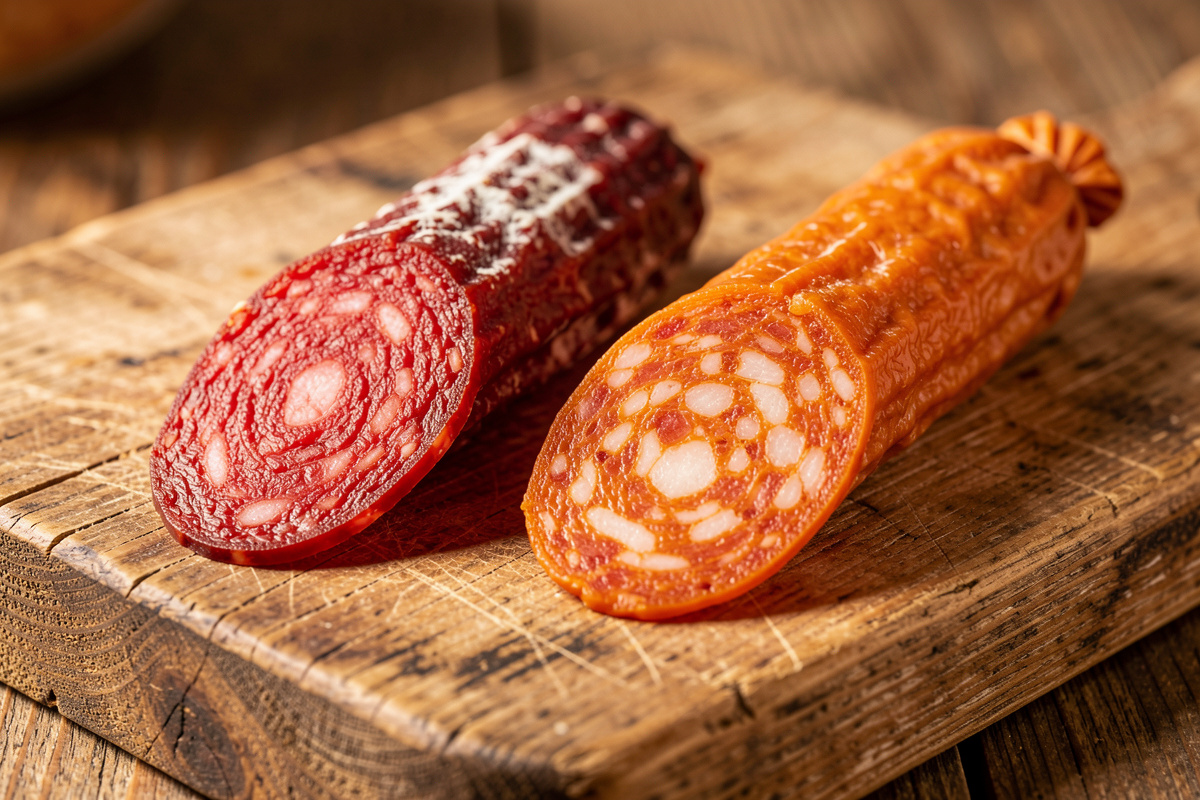

‘Nduja and sobrasada are both soft, spreadable, fermented pork sausages — but ‘nduja is a fiery Calabrian build using fresh and roasted chili at 20–30% of the meat, while sobrasada is a milder Mallorcan sausage coloured and flavoured by dried sweet pimentón paprika. Same spreadable category, two very different spice systems and two very different heat levels.
I run both in my chambers because they teach the same lesson from opposite directions: how a high-fat fermented paste behaves when the spice is wet versus dry. If you have only ever made firm sliceable salami, these two are the gateway into the soft-stuffed world — and knowing how they differ saves you from building one when you wanted the other. Here is how they actually compare, from origin to the spoon.
The Short Answer: Heat and Spice Form
The two headline differences are heat and how the spice arrives. ‘Nduja gets its colour and burn from fresh and roasted Calabrian chili — a wet paste folded into the meat at a high percentage, carrying real heat. Sobrasada gets its deep orange-red and its gentle, smoky-sweet flavour from dried pimentón (Spanish paprika), a powder. One is a chili sausage; the other is a paprika sausage. Everything else — the fat, the ferment, the cure — follows from that single choice.
Both are members of the spreadable family I cover in my guide to making ‘nduja at home, and both rely on the same fermentation-and-cure safety logic rather than on drying to a hard slice.
Origin: Calabria vs Mallorca
‘Nduja comes from Calabria, the toe of southern Italy, where hot chili is a regional signature. Sobrasada comes from Mallorca in Spain’s Balearic Islands, where pimentón is the defining spice and the sausage has its own protected regional identity. I stay out of the heritage-romance arguments — origin stories get politicised fast — but the practical point is that each sausage reflects the spice its home region grows in quantity. Calabria has chili; Mallorca has paprika peppers. The sausages are what those crops became.
Heat and Flavour: Fire vs Smoky Sweetness
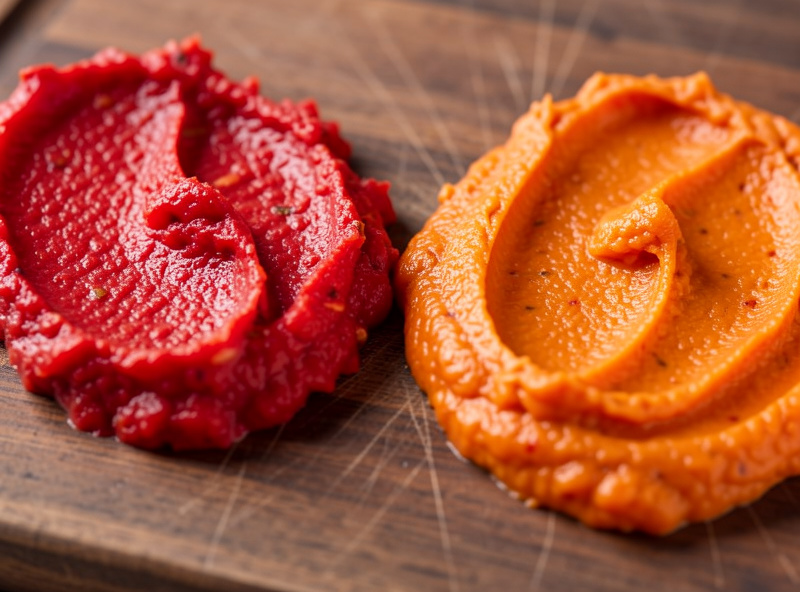
This is where most people choose. ‘Nduja is genuinely hot — the Calabrian peperoncino brings a building, lingering burn, balanced only by the sweet roasted pepper that shares the chili load. Sobrasada, in its standard form, is mild and paprika-forward: warm, slightly smoky, faintly sweet, with the gentle savour of dried pepper rather than heat. There is a spicy version of sobrasada (often called coent) that adds hot pimentón, but even that rarely reaches ‘nduja’s intensity.
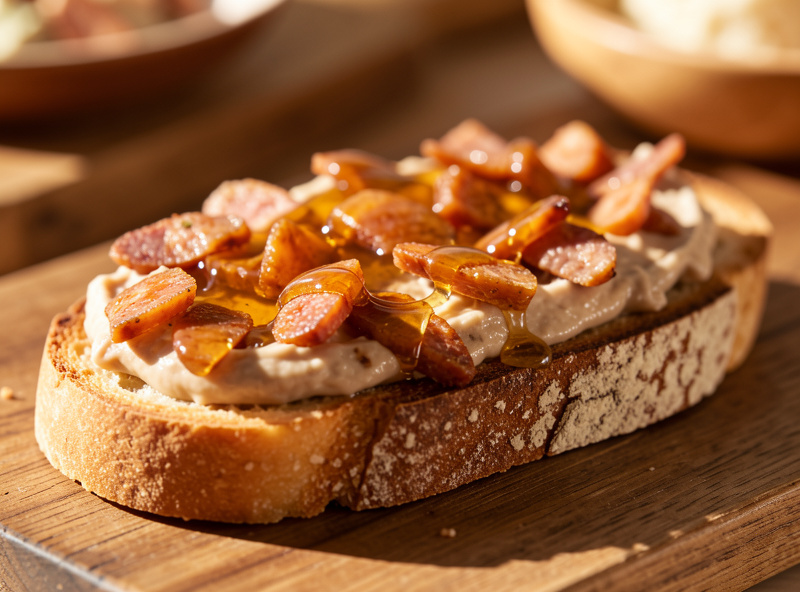
If you want a spread that wakes up a pizza or a tomato sauce, ‘nduja is the answer. If you want something you can eat by the slice on bread, sometimes drizzled with honey the way Mallorca serves it, sobrasada is the gentler choice. The amount of chili in each is the single biggest lever, and I break the ‘nduja side of it down in detail in my ‘nduja chili ratio guide.
Fat, Texture, and Colour
Both are high-fat sausages — that is what makes them spreadable rather than sliceable. ‘Nduja typically runs the fattier and softer of the two, often well over half fat, ground to a fine smooth paste. Sobrasada is also high in fat but is sometimes built a touch leaner and denser, giving a slightly firmer spread depending on the maker and the format. The colour tells you the spice: ‘nduja is a fiery, saturated red from fresh chili and roasted pepper; sobrasada is a warmer orange-red from paprika.
The shared challenge is keeping all that fat emulsified instead of greasy. Both will smear if worked warm, and a broken paste is a broken paste regardless of nationality — the fix is the same cold discipline I describe in my greasy ‘nduja fix.
Cure and Method: Where They Agree
Here the two converge. Both are fermented and dry-cured, both need Cure #2 because they are dried over weeks, both use a starter culture to drop the pH below 5.3 for safety, and both are dried only partway so they stay spreadable. The method I use for either is essentially the same sequence: weigh the cure, mix cold, stuff, ferment warm and humid, then dry at roughly 12–15 °C and 75–80% relative humidity to a soft-spread endpoint. The safety rules are identical too, which I lay out in is spreadable salami safe.
The one method difference flows from the spice form. ‘Nduja’s fresh chili paste adds water to the mix, nudging the water activity up, so the salt and ferment have slightly less margin. Sobrasada’s dried pimentón adds flavour and colour without the extra moisture. It is a small thing, but it is why I am especially careful to hit the pH target on a ‘nduja batch.
Format and Casing: Different Shapes for Different Spreads
The two sausages are traditionally stuffed differently, and it changes how you handle them. ‘Nduja goes into wide formats — a large pork blind gut or a wide beef bung — producing the fat torpedo most people recognise. The wide diameter suits its very soft paste, which would slump in anything narrow. Sobrasada is more flexible: it is made in a range of sizes, from longer thinner links (sometimes called llonganissa-format) to fat round bufeta formats, so you see it both as a slicing-and-spreading log and as a smaller spreadable link.
For the home maker, that means a ‘nduja batch commits you to a wide casing and a longer dry, while sobrasada lets you choose a smaller format that dries faster if you want quicker results. I cover the trade-offs of going wide in my best casing for ‘nduja guide, and the broader options in the salami casing types guide. The wider the casing, the longer the moisture has to travel to escape — which is exactly why a wide ‘nduja is more prone to a hard outer ring if you rush it.
The Fermenter’s View: Two Roads to the Same Acid Drop
What I find genuinely interesting about running both is that they reach safety the same way despite the different spices. In each, lactic acid bacteria eat the added sugar and drop the pH, and that acid — the same chemistry that sours a jar of sauerkraut — is the main hurdle that lets you eat a soft, uncooked sausage. The chili or the paprika is flavour and colour; neither preserves anything. That is the mental model that keeps you safe: judge the sausage by its ferment and its cure, not by how impressive the spice looks. If you ever doubt a batch dropped properly, the sensory and timing cues are in my notes on fermenting salami without a pH meter, though I measure both of these with a meter every time.
‘Nduja vs Sobrasada at a Glance
| Attribute | ‘Nduja | Sobrasada |
|---|---|---|
| Origin | Calabria, Italy | Mallorca, Spain |
| Spice | Fresh + roasted Calabrian chili | Dried sweet pimentón (paprika) |
| Spice form | Wet paste | Dry powder |
| Heat | Hot | Mild (spicy “coent” version exists) |
| Colour | Fiery saturated red | Warm orange-red |
| Fat / texture | Very high fat, soft smooth paste | High fat, sometimes slightly firmer |
| Cure | Cure #2, fermented + dried | Cure #2, fermented + dried |
| Classic use | Pasta, pizza, on toast | On bread, often with honey |
Which One Should You Make First?
If you like heat and want the more dramatic result, make ‘nduja — but respect that the extra moisture from fresh chili means you cannot be casual about the ferment. If you want a more forgiving introduction to spreadable sausage with a gentler flavour your whole household will eat, start with sobrasada; the dry-powder spice keeps the water activity lower and the method a shade simpler. Either way, both share a cure shelf and a chamber with my sliceable projects like soppressata, so once you can make one fermented sausage safely, you can make all three.
For the broader Spanish cured-pork context, sobrasada sits alongside firmer whole-muscle pieces like lomo embuchado — a useful reminder that “Spanish cured pork” spans everything from a soft paprika spread to a hard sliceable loin.
Storing and Serving Both
Once each hits its soft-spread endpoint, both keep well in the fridge wrapped in butcher paper — the low pH, salt, and cure that made them safe also slow spoilage. The cut face will firm and darken slightly with air on both, which is normal, not a fault. I keep a working piece of each on the go and spoon from it as needed; whole sausages hold for months refrigerated and freeze well thanks to their high fat.
On the plate they pull in different directions. ‘Nduja wants heat and melt: stir a spoonful into a tomato sauce, smear it under cheese on a pizza, or fold it through soft scrambled eggs and let the fat carry the chili through the dish. Sobrasada is happier raw and gentle: spread thick on toasted bread, classically with a drizzle of honey, or warmed just enough to loosen onto roasted vegetables. Because both are already stable cured products, any heat you apply is for flavour, not safety — you are warming them, not cooking them to a safe temperature.
Frequently Asked Questions
Is ‘nduja hotter than sobrasada?
Yes, considerably. ‘Nduja is built on fresh and roasted Calabrian chili at 20 to 30% of the meat weight and carries real, building heat. Standard sobrasada is mild and paprika-forward; even the spicy coent version rarely reaches ‘nduja’s intensity.
What is the main difference between ‘nduja and sobrasada?
The spice. ‘Nduja uses fresh and roasted chili as a wet paste, giving fire and a saturated red. Sobrasada uses dried sweet pimentón paprika powder, giving a mild, smoky-sweet flavour and a warm orange-red. Both are spreadable fermented pork sausages otherwise.
Do both ‘nduja and sobrasada need Cure #2?
Yes. Both are fermented and dried over several weeks, which is exactly the long-cure situation Cure #2 is designed for. The nitrate reservoir converts to nitrite across the dry, protecting against botulism in a soft, uncooked product.
Which is easier to make at home?
Sobrasada is slightly more forgiving because its dried-powder spice adds no extra water, keeping the water activity lower and the ferment easier to manage. ‘Nduja’s fresh chili paste adds moisture, so its safety margin is a little tighter.
Are ‘nduja and sobrasada eaten the same way?
Both are spread, but the uses differ with the flavour. ‘Nduja is often melted into pasta sauce, onto pizza, or spread on toast, where its heat carries. Sobrasada is classically eaten on bread, sometimes drizzled with honey in the Mallorcan style.
Related Guides
- How to Make ‘Nduja at Home: Calabrian Spreadable Salami
- How to Make Sobrasada: Spanish Paprika Spreadable Sausage
- How Much Chili Goes in ‘Nduja
- Is Spreadable Salami Safe?
- Homemade Soppressata: Coarse Dry Salami