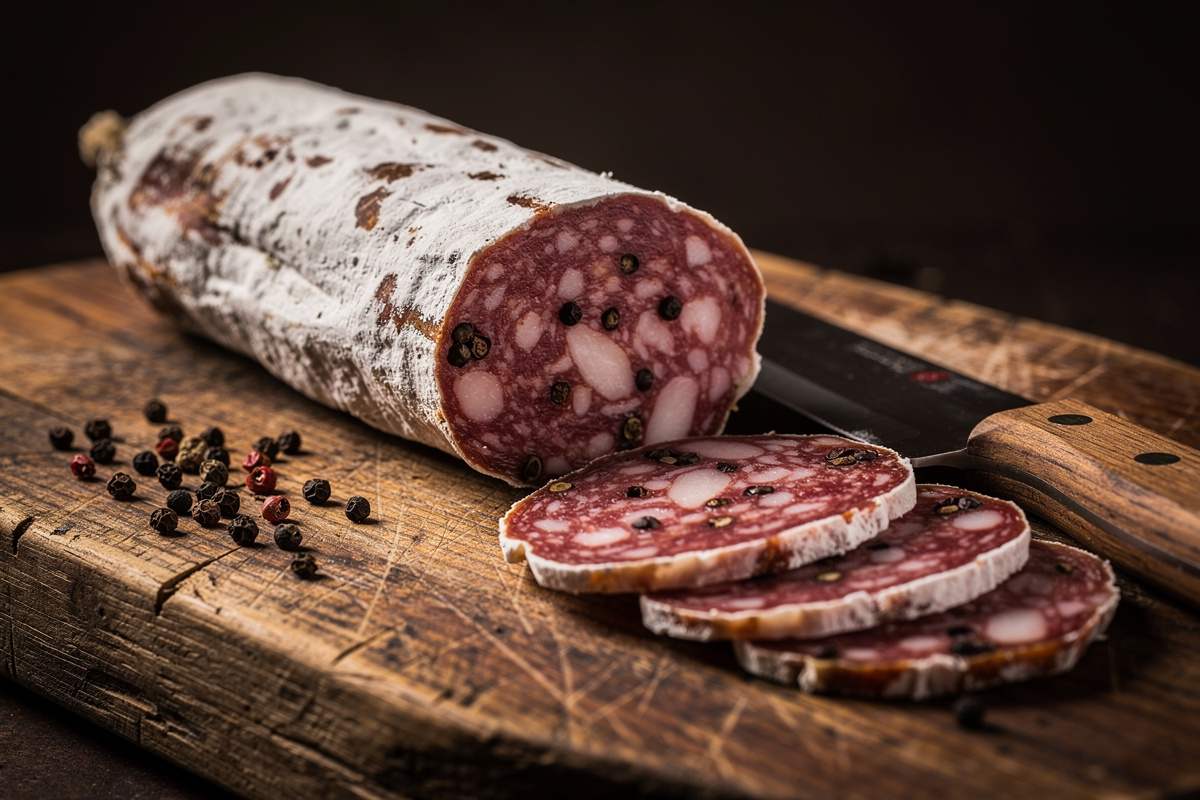
Homemade Soppressata Recipe: Coarse Dry Salami, Hot or Sweet
June 11, 2026

Soppressata is a coarse-ground southern Italian dry salami, made hot or sweet, fermented for 48 hours and then dried for four to eight weeks to a 30-35% weight loss. The build is straightforward — coarse pork, firm back fat, salt, Cure #2, dextrose, a starter culture, and a generous hand with black and red pepper — but the safety numbers are non-negotiable.
What sets soppressata apart from a smooth salami is the rustic, chunky cross-section and the pepper-forward seasoning. Traditionally some styles are lightly pressed during drying, which is where the name comes from, but in a home chamber the press is optional and the cure is identical either way. This is one of the most rewarding first dry salami to make because the coarse grind is forgiving and the flavour is bold enough to carry small imperfections.
Below is the recipe I run, with the ratios that keep it safe and the chamber conditions that keep it from case-hardening. The component skills each have their own deep dive: the grinding guide for the coarse grind, the casing guide for stuffing, the starter culture guide for the ferment, and the home salami making hub for the full method. This spoke ties them together into one specific salami.
What Soppressata Is
Soppressata is a dry-cured, fermented pork salami characterised by a coarse grind and assertive seasoning, eaten in both spicy (“hot”) and mild (“sweet”) versions. Regional recipes across southern Italy vary widely in spicing and shape, and I stay out of the which-region-is-authentic argument entirely — the method that matters for a home charcutier is the same in every case: ferment to acid, then dry to weight loss.
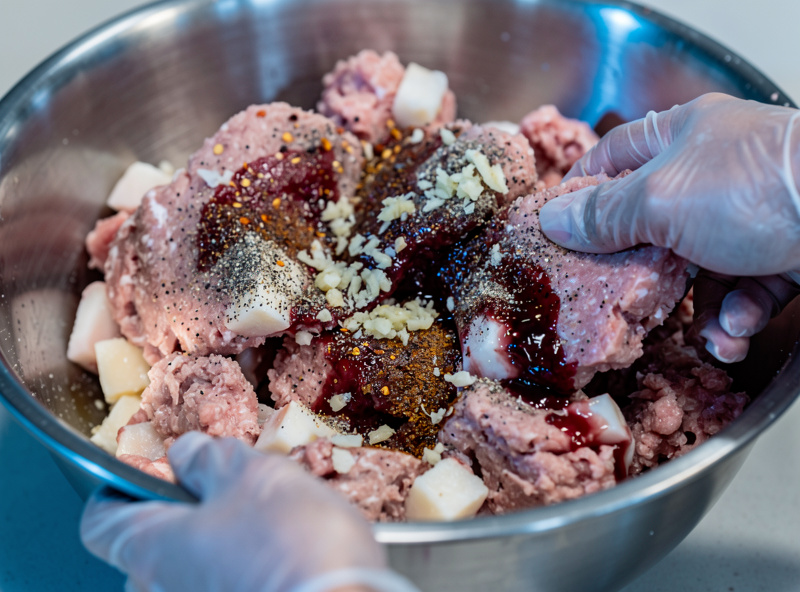
The hot version leans on dried chilli and crushed red pepper; the sweet version is all about black pepper, sometimes fennel, and the clean pork flavour. Both use a coarse grind that shows distinct fat and lean on the cut face. The “pressed” texture some traditions give it — flattening the salami between boards or weights during the early drying — is a textural choice, not a safety step. I sometimes press a few and leave the rest round in the same batch to compare; the round ones dry a touch slower because of the larger cross-section.
Ingredients and Ratios
Soppressata is built on percentages of meat weight, not volume, because the salt and cure must be exact for safety. The base is roughly 70-75% lean pork shoulder to 25-30% firm back fat, salted at 2.8%, with Cure #2 at the standard 0.25% and dextrose at 0.5-0.7% to feed the ferment. Weigh everything on a gram scale; eyeballing the cure is the one mistake you cannot make.
| Ingredient | Amount (per 1 kg meat+fat) | Percentage | Role |
|---|---|---|---|
| Pork shoulder (lean) | 700-750 g | 70-75% | Structure and flavour |
| Firm pork back fat | 250-300 g | 25-30% | Texture, richness, fat flecks |
| Salt | 28 g | 2.8% | Cure, bind, safety |
| Cure #2 (Prague Powder #2) | 2.5 g | 0.25% | Nitrite/nitrate — botulism & color |
| Dextrose | 5-7 g | 0.5-0.7% | Fuel for the ferment |
| Cracked black pepper | 3-4 g | ~0.35% | Signature seasoning |
| Crushed red pepper (hot version) | 3-6 g | 0.3-0.6% | Heat (omit for sweet) |
| Starter culture | per packet dose | — | Controlled pH drop |
The Cure #2 line is the load-bearing one. At 0.25% it delivers roughly 156 ppm in-going nitrite, the established maximum for fermented sausage, which protects against Clostridium botulinum during the warm ferment and across the long dry. Soppressata hangs far longer than three weeks, so this is exactly the case where Cure #1 is not enough and “natural, no-nitrate” is not a safe option — you need the nitrate reservoir of Cure #2. Optional additions I like: a splash of dry red wine (about 20 ml/kg), a little minced garlic, and for some sweet batches a pinch of fennel. Keep additions modest so they do not throw off the moisture or salt balance.
Grind, Mix, and Stuff
Grind the pork and back fat coarse — an 8-10mm plate — with everything near-frozen so the fat stays in distinct flecks. Soppressata is defined by that coarse, chunky face, so this is not the salami to grind fine. Keep the meat below 4°C, mix in the salt, cure, dextrose, spices, and rehydrated culture until the mass turns tacky and binds, then stuff firmly.
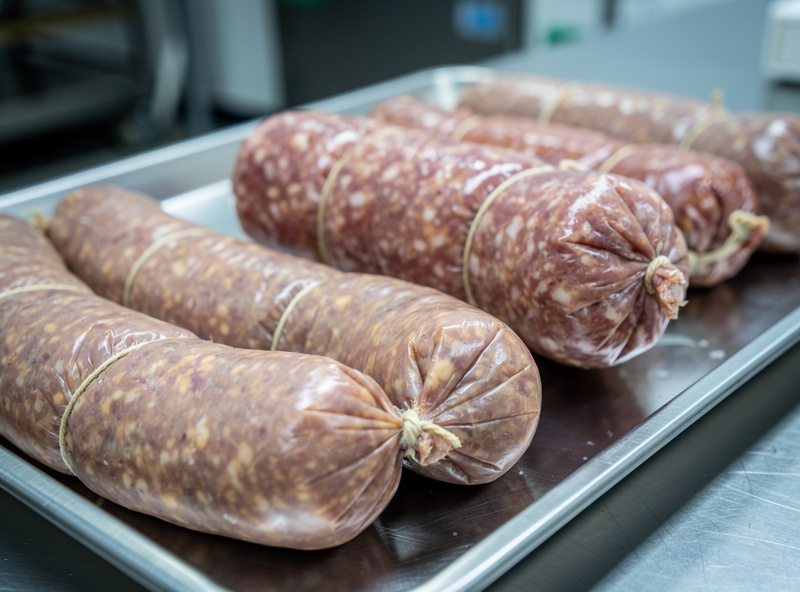
Traditional soppressata goes into beef middles (45-60mm) for the wide sliceable format, though hog casings make a perfectly good slimmer, faster-drying version. Stuff firm but not bursting, prick out any air pockets, and tie the ends. If you want the pressed texture, lay the stuffed salami between two boards with a light weight for the first few days of drying — gently, you are flattening not crushing. The full stuffing detail and casing prep is on the casing guide.
Ferment, Then Dry
Ferment the stuffed soppressata at 24-26°C and high humidity for 48 hours to drop the pH to 5.0 or below — this is the critical safety window. The starter culture eats the dextrose and acidifies the meat, setting the protein and shutting out pathogens. If you have a pH meter, confirm 5.0 or under at hour 48; if you do not, control the inputs precisely so the drop is reliable, as covered on the fermentation pH guide.
After fermentation, move the salami to the curing window: 12-15°C and 75-80% RH, with gentle, intermittent airflow. Dry until the soppressata has lost 30-35% of its green (stuffed) weight, which for a beef-middle salami is typically 5-8 weeks and for a slimmer hog-casing version 3-5 weeks. Weigh each piece at stuffing, write the target weight on a tag, and weigh weekly — weight loss, not the calendar, tells you when it is done. A white Penicillium bloom on the casing is welcome and protective; fuzzy black or green growth is not, and the good-mold-vs-bad-mold guide shows the difference.
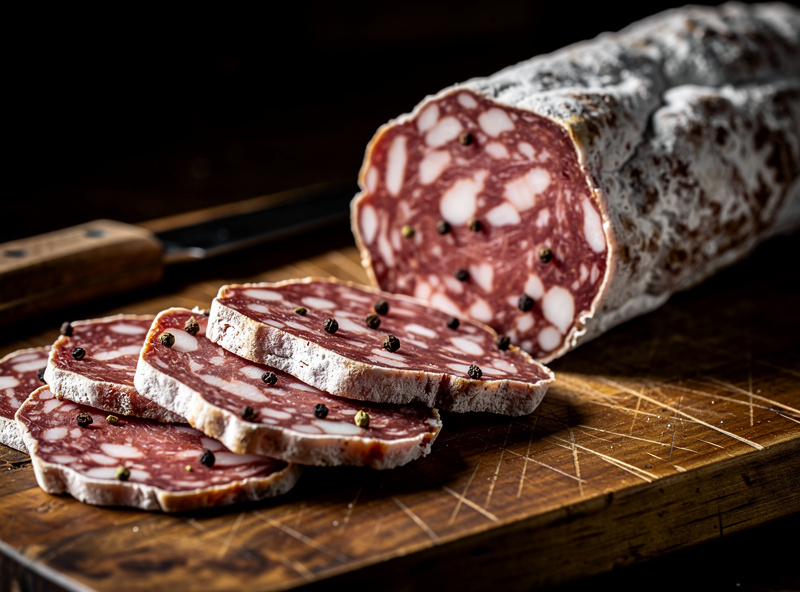
The early days matter most for case-hardening: if the chamber is too dry too soon, the surface seals and the centre stays wet, leaving a hard rind around a soft core. Hold the humidity at the top of the band for the first week, keep airflow gentle, and let the wide soppressata dry slowly and evenly. Patience here is the whole game.
When Soppressata Is Done and How to Store It
Soppressata is finished when it reaches 30-35% weight loss and feels firm all the way through with no soft spots. At that point the combination of acid (pH below about 5.0), salt, and reduced water activity (below aw 0.92) makes it shelf-stable, the same preservation hurdles that made dry salami a pantry food long before refrigeration. A finished soppressata keeps for months; once cut, I vacuum-seal the remainder or wrap it and keep it in the fridge.
If a piece feels soft in the middle after hitting its target weight, it is not done — keep drying and re-weigh. Soft spots, a sour ammonia smell, or slimy texture mean something went wrong in the ferment or the dry, and when in doubt you throw it out rather than risk it. Done right, the reward is a coarse, pepper-flecked, deeply savoury salami that is genuinely better than most you can buy.
Disclosure: CuringChamber is reader-supported. As an Amazon Associate I earn from qualifying purchases made through links in this article, at no extra cost to you. I only point to gear I actually use or would buy for my own chamber.
For a soppressata batch the gear that earns its place is a vertical sausage stuffer for clean filling, beef middle casings for the wide traditional format, and a starter culture and Cure #2 kit so the ferment and the safety chemistry are both covered.
Frequently Asked Questions
What is the difference between soppressata and salami?
Soppressata is a type of dry salami, distinguished by its coarse grind and pepper-forward seasoning, made in hot and sweet versions. Some traditions lightly press it during drying. The curing method, ferment then dry, is the same as other dry salami.
Do I need Cure #2 to make soppressata?
Yes. Soppressata hangs far longer than three weeks, so it needs Cure #2 (Prague Powder #2) at 0.25 percent of meat weight, about 156 ppm nitrite. This protects against Clostridium botulinum across the long dry. Cure #1 and no-nitrate methods are not safe for this.
What grind size is best for soppressata?
A coarse 8-10mm plate. Soppressata is defined by a chunky cross-section with distinct fat and lean, so grind it coarse with the meat near-frozen to keep the fat in clean flecks rather than smearing it into paste.
How long does soppressata take to dry?
To a finished 30-35 percent weight loss, a wide beef-middle soppressata takes about 5-8 weeks, while a slimmer hog-casing version takes 3-5 weeks. Weigh each piece weekly; weight loss, not the calendar, tells you when it is done.
What temperature and humidity does soppressata need?
Ferment at 24-26 degrees Celsius and high humidity for 48 hours to drop pH below 5.0, then dry at 12-15 degrees Celsius and 75-80 percent relative humidity with gentle airflow until it loses 30-35 percent of its weight.
Why is my soppressata hard outside but soft inside?
That is case-hardening: the surface dried and sealed before the center caught up, usually from humidity that was too low too early. Hold humidity at the top of the 75-80 percent band for the first week and keep airflow gentle so wide salami dry evenly.
Can I make soppressata without pressing it?
Yes. Pressing is a textural tradition, not a safety step. A round, unpressed soppressata cures identically; it simply dries a little slower because of the larger cross-section. You can press some and leave others round in the same batch.