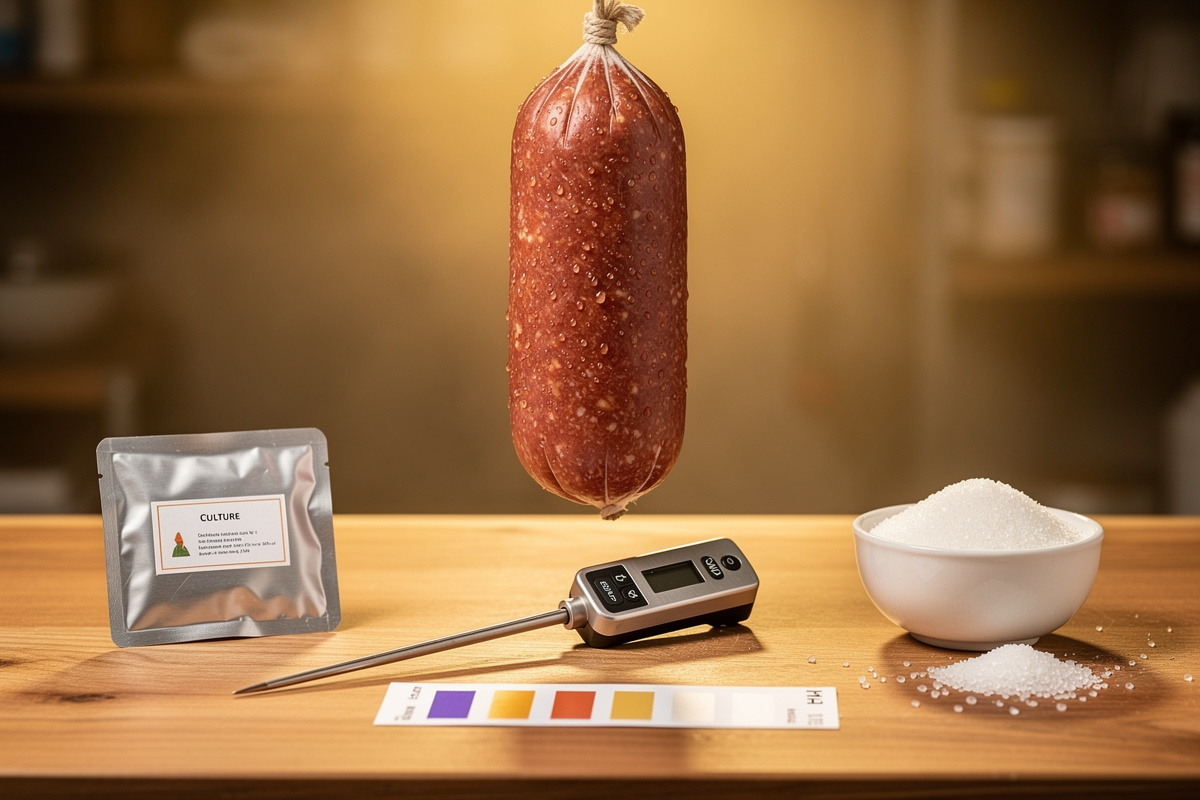

You can ferment salami safely without a pH meter, but only by controlling the inputs so tightly that the acid drop is effectively guaranteed: a reliable starter culture, the right dextrose dose, correct salt, and a held 24-26°C for 48 hours. A meter measures the result; without one, you make the result a certainty by nailing every variable and reading the sensory signs.
This is the honest version of the question. A pH meter is the gold standard because it confirms, with a number, that the meat crossed below pH 5.0 in the safety window. Skipping it does not make that target less important — it shifts your job from measuring the pH drop to engineering it. Done with discipline, the input-control method has produced safe fermented sausage for generations who never owned a meter. Done sloppily, it is a gamble with raw meat. This guide is how to do it the disciplined way, and exactly where its limits are.
For the underlying chemistry — why pH 5.0 matters, how lactic acid bacteria drop it, and the two-gate nitrite logic — read the salami fermentation pH guide. This spoke is the practical no-meter method that sits on top of that science: control the inputs, watch the signs, and know when you cannot skip the measurement.
Control the Inputs So the pH Drop Is Guaranteed
Without a meter, your safety comes entirely from controlling the four inputs that drive the ferment: the culture, the sugar, the salt, and the temperature-time. Get all four right and a healthy culture will reliably pull the pH below 5.0 within 48 hours. The method is only as safe as your weakest variable, so each one is non-negotiable.
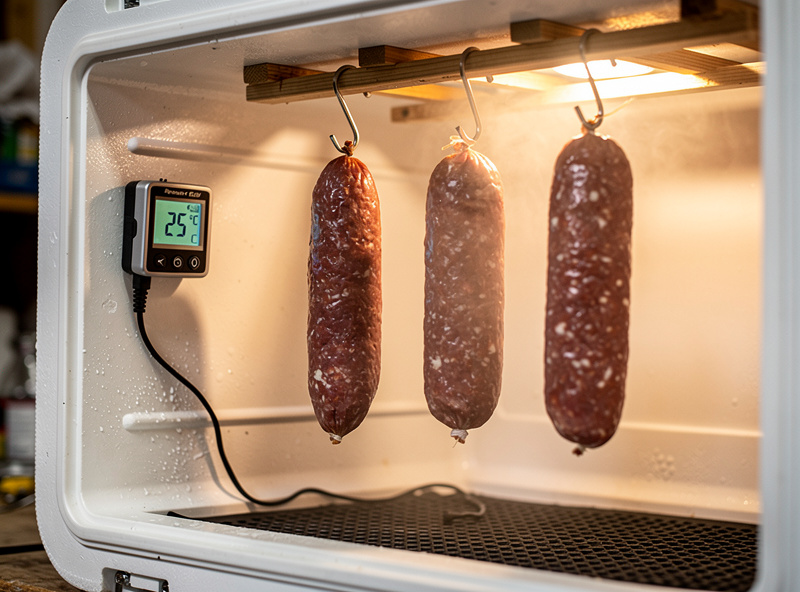
Use a fresh, reliable commercial starter culture — I lean on a faster, well-documented culture like F-LC for no-meter batches because its quick, dependable acid drop leaves the least room for a stall, and its bioprotective component adds a Listeria safety margin while the pH is still falling. Feed it correctly: dextrose at 0.5-1.0% of meat weight, enough sugar to drive the pH well below 5.0 rather than stalling high. Keep salt in the normal 2.5-2.8% band, because too much salt slows the bacteria. Then hold the temperature: 24-26°C and high humidity for the full 48 hours, measured with a thermometer you trust. The thermometer is the one instrument you genuinely cannot skip — temperature is the master control on fermentation speed, and a cold spot stalls the whole thing. The culture-selection detail is on the starter culture guide.
Reading the Sensory Signs of a Successful Ferment
A salami that fermented correctly tells you so: it develops a clean, pleasant lactic tang — the sour-yogurt smell of healthy lactic acid bacteria — and the surface firms and sets as the protein denatures. After 48 warm hours a good batch smells appetisingly sour and feels noticeably firmer and tackier than the soft raw mix you stuffed. That set is the visible, tangible signature of the acid drop.
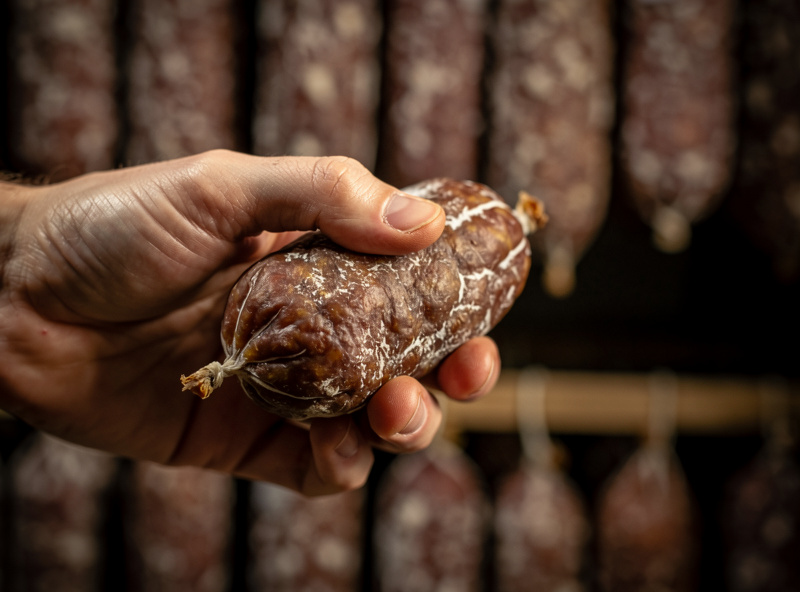
Just as important is what a failed ferment smells like. A putrid, rotten, or sharply unpleasant odour — not a clean sour, but something that turns your stomach — means spoilage organisms got ahead of the culture, and that batch goes in the bin, no exceptions. A soft, slimy, still-floppy salami after 48 warm hours is a stall: the pH did not drop, and it is not safe to carry on drying. The sensory check is real information, but it is a coarser instrument than a meter, which is exactly why the input control has to be flawless. Smell and firmness can confirm an obvious success or an obvious failure; they cannot certify a borderline batch the way a number can.
pH Strips: The Cheap Middle Ground
If you want an actual reading without buying a meter, pH test strips are the inexpensive compromise — a strip pressed to the cut meat gives a colour you match against a chart. They are far less precise than a calibrated meter and the colour can be hard to read against meat, but they will clearly distinguish a salami that dropped to roughly pH 5 from one stuck up at 5.5+. For a beginner who balks at the cost of a meter, strips are a meaningful safety upgrade over pure guesswork.
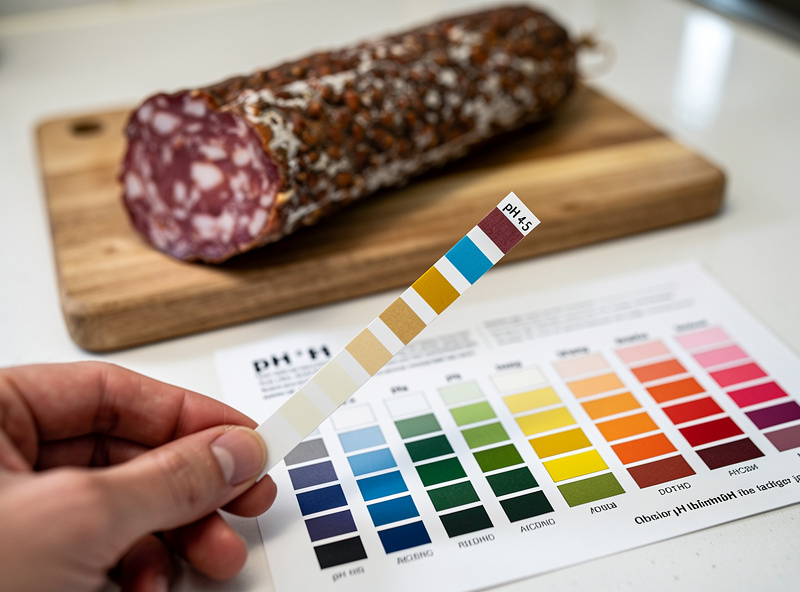
Use strips in the meat, not on the surface, and read them in good light. They will not give you the 4.8-versus-5.0 resolution that matters for fine-tuning, but they answer the one question that counts at hour 48: did it cross into the safe zone or not? Think of strips as a confirmation tool that backstops your input control, not a replacement for it.
| Method | Precision | Cost | What it tells you | Best for |
|---|---|---|---|---|
| Calibrated pH meter | High (0.01-0.1) | Higher | Exact pH at any moment | Long shelf-stable salami, selling, experimenting |
| pH test strips | Low-moderate | Low | Rough pH band (e.g. ~5 vs 5.5) | Budget confirmation of the drop |
| Input control + thermometer | Indirect | Low (thermometer) | Engineers the drop, no reading | Disciplined home batches with a proven recipe |
| Smell & firmness only | Coarse | Free | Obvious success or failure | A final cross-check, never the sole safeguard |
When You Should Not Skip the Meter
There are batches where guessing is not good enough and you should own and use a meter. Any shelf-stable salami you intend to store at room temperature for months, any new or experimental recipe where you have not proven the input combination, a slow traditional culture run cool, large-diameter salami, or anything you plan to give away in quantity — these all justify the precision of a real reading. The longer and warmer the road to safety, the less you want to travel it blind.
Two hard rules apply no matter your tools. First, never ferment salami warm without a culture — holding raw meat in the 24-26°C window without a culture driving the acid down is the classic botulism setup, and “letting it happen naturally” with meat is the one shortcut that can genuinely hurt someone. Second, always use Cure #2 for any salami hanging past three weeks; the nitrite is a separate safety gate from the pH drop and does not depend on whether you measured the acid. The no-meter method is about skipping the measurement, never about skipping the culture or the cure. If any of that gives you pause, a meter is cheap insurance against a whole batch of raw meat — and once you trust your recipe, you may find you reach for it only to spot-check.
Disclosure: CuringChamber is reader-supported. As an Amazon Associate I earn from qualifying purchases made through links in this article, at no extra cost to you. I only point to gear I actually use or would buy for my own chamber.
The tools that make no-meter fermenting genuinely safer are a fresh, reliable fast sausage starter culture (the dependable acid drop), an accurate instant-read thermometer to nail the fermentation temperature, and a pack of pH test strips as a cheap confirmation backstop. Those three turn “hoping it worked” into “engineering it to work.”
Frequently Asked Questions
Can you ferment salami without a pH meter?
Yes, by controlling the inputs so the acid drop is guaranteed: a fresh reliable culture, 0.5-1.0 percent dextrose, normal salt, and a held 24-26 degrees Celsius for 48 hours. A meter is still the gold standard; without one you engineer the result and read the sensory signs.
How do I know my salami fermented without measuring pH?
A successful ferment develops a clean lactic-sour smell and the salami firms and sets, feeling tackier and stiffer than the raw mix. A putrid, rotten odour or a soft, slimy texture after 48 warm hours means it failed and must be discarded.
Are pH strips good enough for salami?
They are a useful cheap middle ground. Strips are less precise than a calibrated meter and can be hard to read against meat, but they will clearly show whether a salami dropped to roughly pH 5 or stalled at 5.5+. Use them in the meat, not on the surface.
What is the most important tool if I skip the pH meter?
An accurate thermometer. Temperature is the master control on fermentation speed, so holding 24-26 degrees Celsius for 48 hours is what makes the culture reliably drop the pH. A cold spot stalls the ferment, which is the failure you are trying to avoid.
Is it safe to ferment salami naturally without a culture?
No. Holding raw meat warm without a starter culture driving the pH down is a classic botulism risk. Raw meat carries no useful native starter. Always pitch a commercial culture; the no-meter method skips the measurement, never the culture or the Cure #2.
When should I definitely use a pH meter?
For any shelf-stable salami stored at room temperature for months, any new or unproven recipe, a slow culture run cool, large-diameter salami, or anything you give away in quantity. The longer and warmer the path to safety, the more a precise reading is worth.
Does skipping the pH meter mean I can skip Cure #2?
No. The nitrite in Cure #2 is a separate safety gate from the pH drop and is required for any salami hanging past three weeks, regardless of how you track acidity. Use Cure #2 at 0.25 percent of meat weight on every long-dried salami.