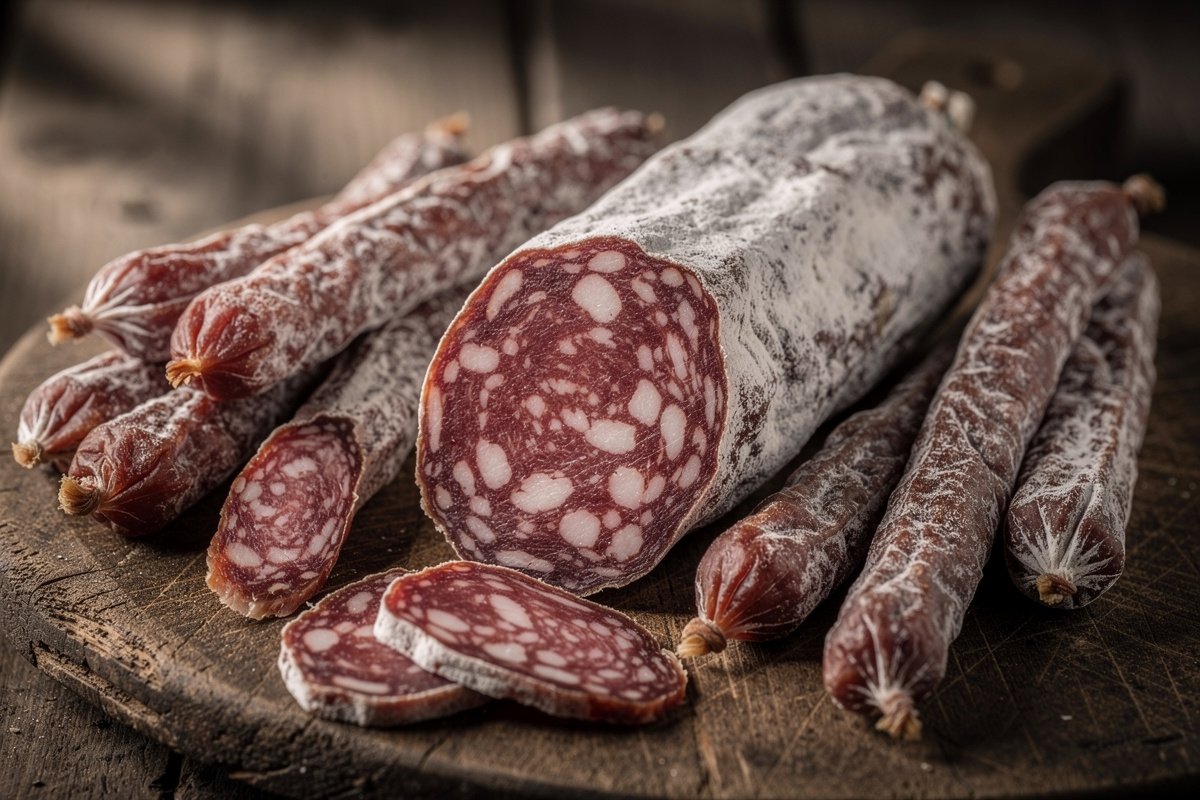

The three casings worth knowing for home salami are natural hog casings (32-42mm), beef middles (45-60mm), and collagen casings. Hog casings give classic snappy salami sticks, beef middles make the wide sliceable styles, and collagen casings are the consistent, no-soak shortcut. All three breathe enough to grow white mold and dry evenly — which is the whole point.
Casing choice is not cosmetic. The casing sets the diameter, the diameter sets the drying time, and the drying time decides whether your salami reaches a safe water activity before the surface dries into a moisture-trapping shell. A 60mm salami in a beef middle takes roughly twice as long to dry as a 38mm stick in hog casing, and it is far more prone to case-hardening if your humidity is even slightly low. Picking the right casing for your chamber and your patience is half the battle.
This guide covers the three casing families I actually stuff into, how diameter changes the cure, how each casing handles white mold, and the prep that stops a casing from blowing out on the stuffer. The fermentation chemistry behind the cure is on the salami fermentation pH guide, and the full method from grind to hang is on the home salami making hub; this is the casing layer specifically.
Natural, Collagen, and Fibrous: The Three Families
Natural casings (hog, beef) are the cleaned intestinal layers of the animal — fully edible, highly permeable, and the traditional choice for dry salami. Collagen casings are manufactured from reconstituted cattle-hide collagen — uniform in diameter, edible in the smaller sizes, and far more convenient. Fibrous casings are a cellulose-reinforced wrapper for big salami; they are not edible and you peel them before slicing.
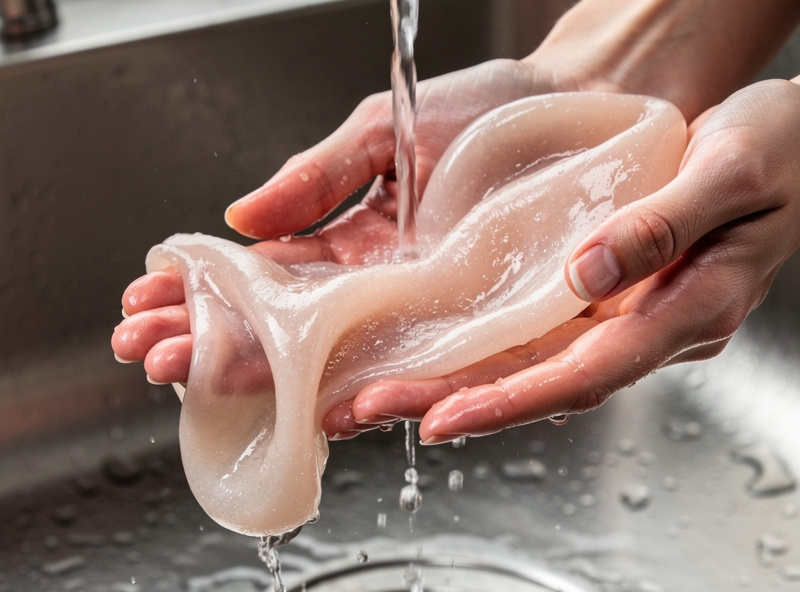
For dry-cured salami the casing must be permeable. Moisture has to migrate from the meat core out through the casing and evaporate, and the white mold (Penicillium nalgiovense) needs a surface it can colonise. Natural and collagen casings both breathe well and take mold readily. Fibrous casings breathe less and are slower to dry, which is why they are reserved for large-format salami where you accept a longer cure. Never use an impermeable plastic casing for dry curing — the meat cannot lose water and you create a sealed warm-wet pocket, which is exactly the environment you are trying to avoid.
Hog Casings: The Classic Salami Stick
Hog casings run 32-42mm and produce the snappy, slim salami most people picture — pepperoni, cacciatore, the hang-and-snack styles. The narrow diameter dries fast and forgivingly, typically reaching a finished 30-35% weight loss in 3-5 weeks depending on chamber conditions. For a first salami, hog casing is where I send everyone: the fast, even dry is the least likely to case-harden.
Natural hog casings arrive salt-packed and need rinsing and a soak before use. The snap they give comes from the natural protein structure, and they take white mold beautifully. The downside is variability — natural casings have the occasional weak spot or hole, and they need careful flushing. But for slim dry salami nothing beats the texture, and the fast dry means you are eating salami in a month rather than a season.
Beef Middles: The Wide Sliceable Salami
Beef middles run 45-60mm and make the wide, mosaic-faced salami you slice for a board — Genoa, soppressata, finocchiona. The larger diameter holds more meat, shows off the fat-and-lean cross-section, and gives the slow, deep flavour development a long cure brings. The trade-off is time and risk: a beef middle can take 6-10 weeks to reach a safe weight loss, and at that diameter case-hardening is a constant threat if humidity dips.
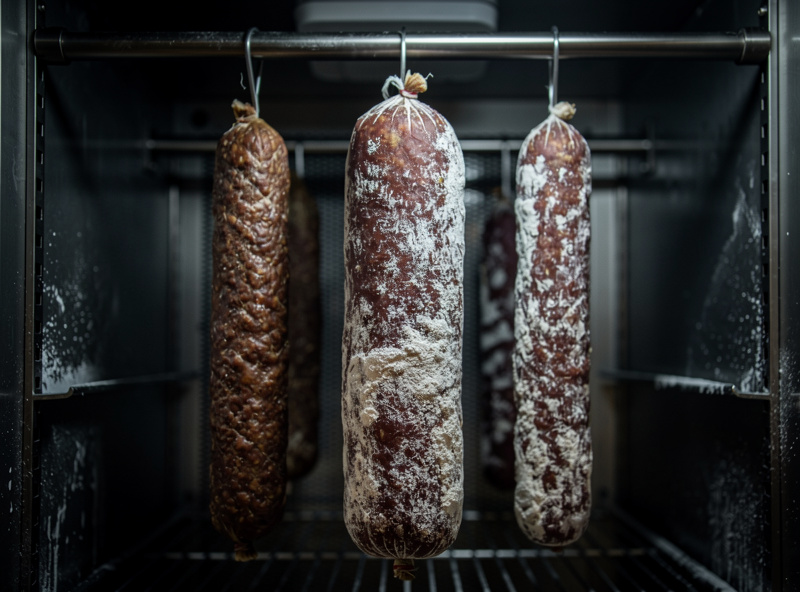
I run beef middles only once I trust a chamber’s humidity to hold the 75-80% RH band steadily, because the wide pieces punish drift. The wider the salami, the bigger the moisture gradient between the wet core and the drying surface, and the more the surface wants to seal before the centre catches up. Hold the humidity high enough early, keep airflow gentle, and a beef-middle salami rewards you with the best slice in the chamber. Get the humidity wrong and you get a hard rind around a soft, untrustworthy core — the case-hardening failure covered on the case-hardening guide.
Collagen Casings: The Consistent Shortcut
Collagen casings are the convenience option: uniform diameter, no salt-soak fuss, consistent permeability, and no weak spots or holes. They come in dry-sausage grades specifically made to breathe and take mold like a natural casing. For repeatable batches — where every stick dries at the same rate because every stick is the same diameter — collagen is genuinely excellent, and it is what I reach for when I want predictability over tradition.
The knock against collagen is texture and snap: edible collagen casings are slightly less snappy than natural hog, and some purists can taste the difference on a thin stick. On a dry salami that distinction mostly disappears under the mold rind and the cure. Collagen also stuffs fast and clean, which matters when you are running a 5 kg batch and do not want to spend an hour untangling natural casings. Make sure you buy a dry/fermented-sausage collagen grade, not a fresh-sausage grade — fresh-sausage collagen is built to be cooked, not dried.
| Casing | Diameter | Edible | Permeable / takes mold | Typical dry time to 35% loss | Best for |
|---|---|---|---|---|---|
| Hog casing (natural) | 32-42mm | Yes | High | 3-5 weeks | Slim snappy sticks, beginners |
| Beef middle (natural) | 45-60mm | Yes | High | 6-10 weeks | Wide sliceable salami |
| Collagen (dry grade) | ~38-55mm | Yes (smaller) | Good | 4-8 weeks | Consistent repeatable batches |
| Fibrous | 50-100mm+ | No (peel) | Moderate | 8-14 weeks | Large-format salami |
The single most useful number in that table is diameter, because it predicts everything downstream: drying time, case-hardening risk, and how steady your humidity needs to be. Start narrow, build confidence, then go wide once your chamber holds spec without a glance.
Casing Prep: Soaking, Flushing, and Avoiding Blowouts
Natural casings arrive salt-packed and must be rinsed, soaked in cool water for 30-60 minutes, and flushed through with running water before use. The soak rehydrates the casing so it is supple and won’t tear, and flushing water through the lumen checks for holes and clears residual salt. I run a slow stream of water through each hank and watch for leaks — a pinhole found now is a blowout avoided on the stuffer.
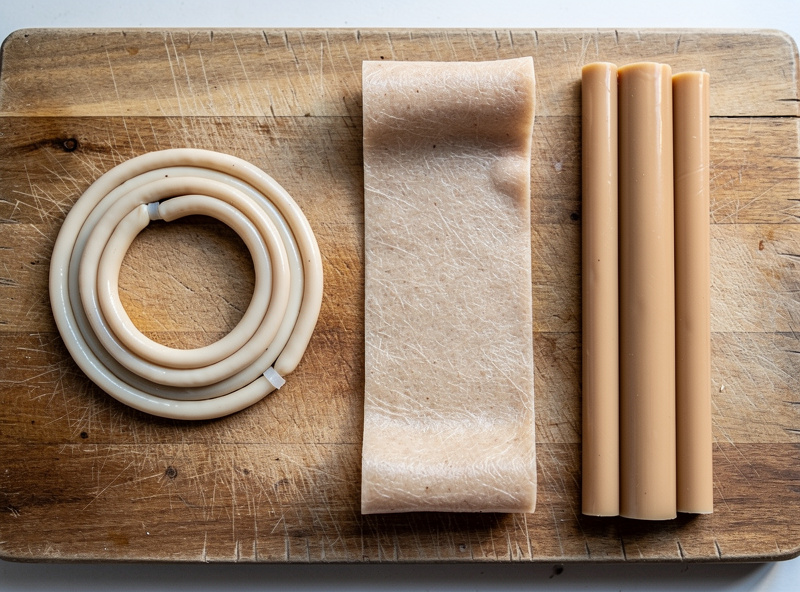
Collagen casings need little or no soaking — a brief few-minute dip at most, per the packet, and some grades go on dry. The biggest stuffing mistake either way is overfilling: a casing packed drum-tight has no give and splits, and an air pocket left under the casing becomes a mold cavity inside the salami. Stuff firm but not bursting, prick any visible air pockets with a sterilised needle, and tie or clip the ends snugly. Keep the meat cold throughout so the fat does not smear into a greasy paste that blocks moisture migration — cold meat, supple casing, firm-not-tight fill.
One more consistency point: the casing you choose has to match the chamber you have. If your humidity control is still a damp sponge and a hope, stay with hog casings and short cures. Wide beef middles and long fibrous salami are a reward for a chamber that holds the climate-control envelope reliably, not a starting point.
Disclosure: CuringChamber is reader-supported. As an Amazon Associate I earn from qualifying purchases made through links in this article, at no extra cost to you. I only point to gear I actually use or would buy for my own chamber.
To stock the casing drawer, the genuinely useful buys are salt-packed natural hog casings for slim sticks, beef middle casings for wide sliceable salami, and dry-grade collagen casings for repeatable batches. Whatever casing you pick, a proper vertical sausage stuffer fills them far more cleanly than a grinder attachment.
Frequently Asked Questions
What is the best casing for dry-cured salami?
Natural hog casings (32-42mm) are the best all-round choice for slim dry salami because they breathe well, take white mold, and dry fast and evenly with low case-hardening risk. Use beef middles for wide sliceable styles and collagen for consistent batches.
Can you use collagen casings for fermented salami?
Yes, but only a dry or fermented-sausage grade of collagen, not a fresh-sausage grade. Dry-grade collagen casings are made to be permeable so moisture escapes and white mold can colonise. Fresh-sausage collagen is built to be cooked, not air-dried.
How does casing diameter affect salami drying time?
Wider casings dry much slower. A 38mm hog-casing stick reaches a finished 30-35 percent weight loss in 3-5 weeks, while a 60mm beef middle can take 6-10 weeks and is far more prone to case-hardening if humidity drops.
Do I need to soak natural casings before stuffing?
Yes. Salt-packed natural casings need rinsing, a 30-60 minute soak in cool water, and a flush of running water through the lumen to rehydrate them, check for holes, and clear salt. Collagen casings need little or no soaking.
Why did my salami casing blow out on the stuffer?
Almost always overfilling or a weak spot in a natural casing. Pack the casing firm but not drum-tight so it has give, flush natural casings first to find pinholes, and keep the meat cold so the fat stays firm and pushes smoothly.
What is a fibrous casing and is it edible?
A fibrous casing is a cellulose-reinforced wrapper for large-format salami, usually 50-100mm or wider. It is moderately permeable and dries slowly. It is not edible, so you peel it off before slicing the finished salami.
Will white mold grow on a collagen casing?
Yes, on a dry-grade collagen casing. These are made permeable enough that Penicillium nalgiovense colonises the surface much like it does on natural casings, giving the same protective white bloom that controls unwanted mold and aids even drying.