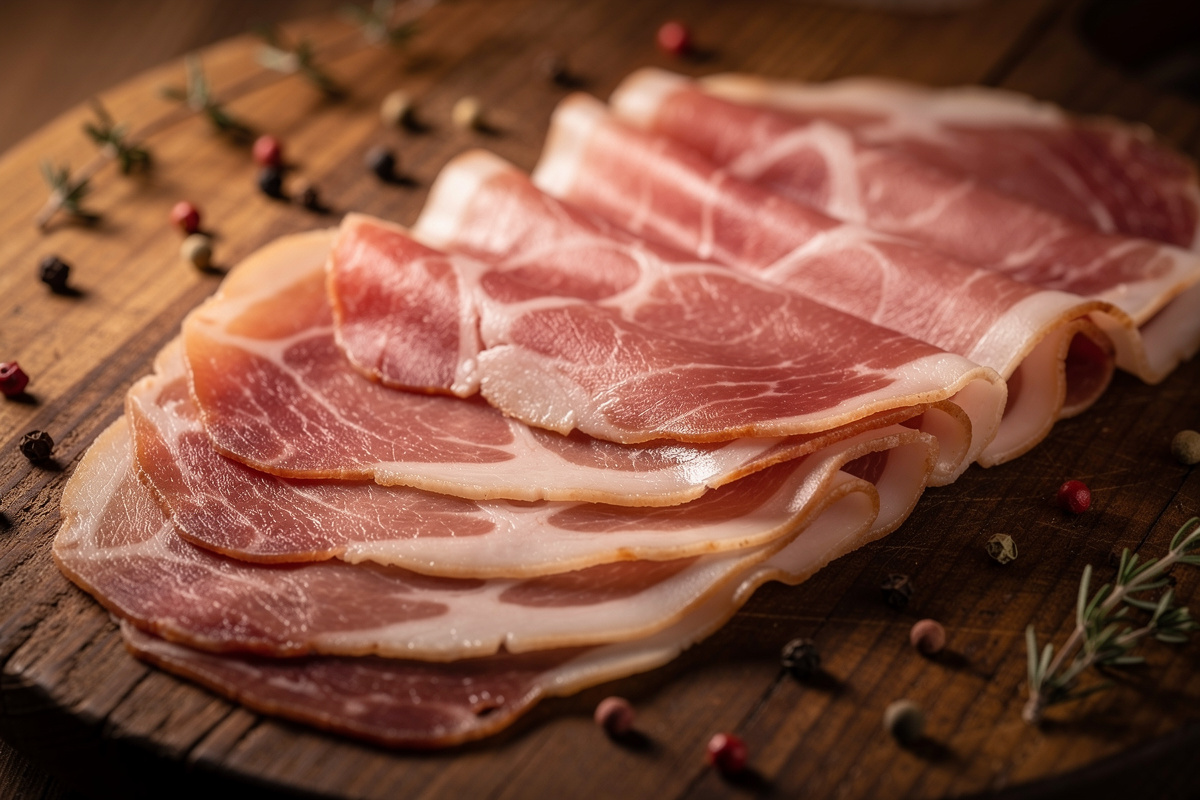

Coppa, called capocollo or capicola depending on where you stand, is cured pork collar, and it might be the most rewarding whole-muscle cure there is. The collar, the muscle running from the neck into the shoulder, is threaded with seams of fat in a way no other cut is, so a finished coppa slices into a marbled mosaic of deep pink lean and soft white fat. That marbling is not just looks; the internal fat keeps the muscle supple as it dries, which makes coppa more forgiving than a lean cut like bresaola while still delivering a properly aged whole muscle. Across the chambers I run, coppa is the piece guests always ask about.
It earns its own build because the collar is a specific, slightly awkward cut to source and shape, and because the fat seams change how it dries and when it is done. Coppa, capocollo, and capicola are the same thing under regional names, so do not let the vocabulary confuse the method. The whole muscle charcuterie hub sets it among its cousins; this is the collar-specific method I run.
Sourcing and Shaping the Collar
Coppa is the pork collar or coppa muscle, the continuation of the loin into the neck and shoulder. A butcher will know it as collar, neck end, or coppa; it is the cut a good pulled-pork cook also prizes for its fat marbling. I look for a whole collar muscle, boned out, roughly a kilo to two kilos, with the natural fat seams intact and a thin fat cap left on for protection. Over-trimmed coppa loses the marbling that makes it special.
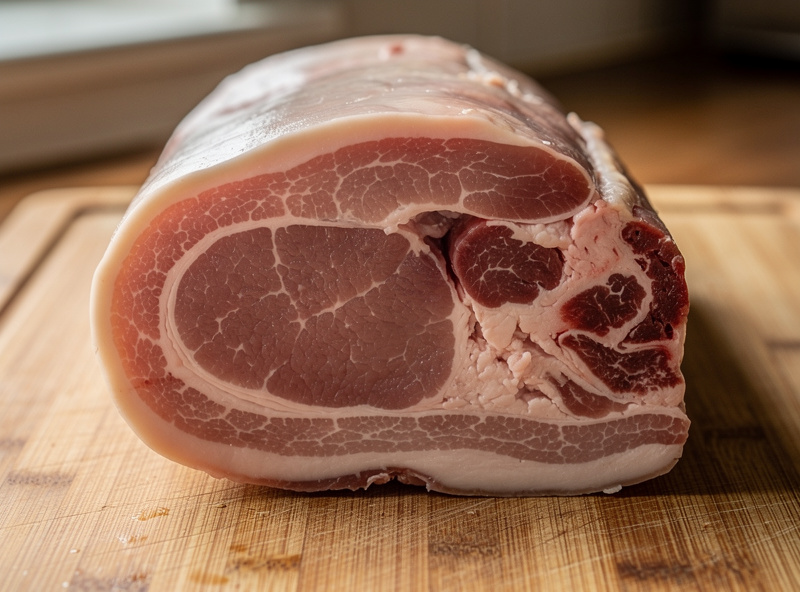
I tidy the collar into an even, cylindrical shape, removing any ragged flaps that would dry to leather, but I leave the internal fat seams alone. Then I weigh it and tag the green weight. The natural cylinder of a collar is close to ideal for even drying, which is part of why coppa works so reliably; you are not fighting the geometry the way you do with a flat belly or a thin tenderloin.
The Cure
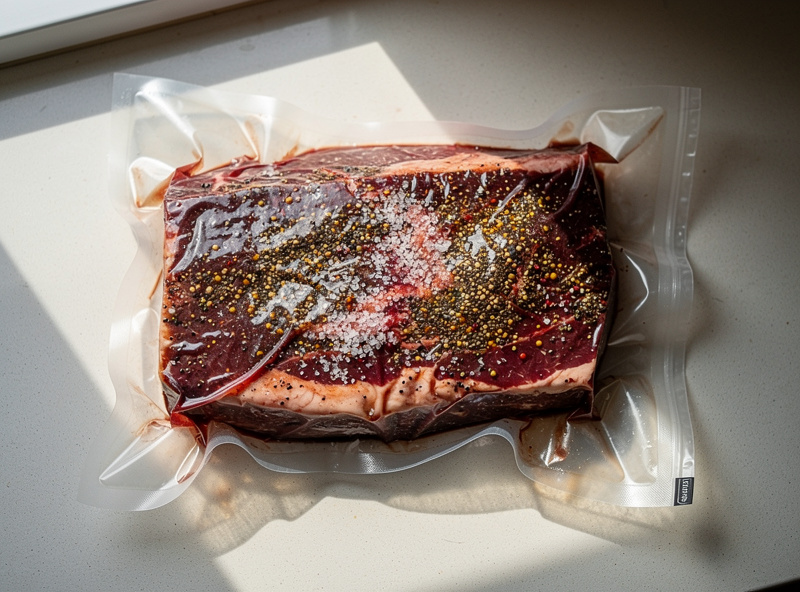
Coppa is an equilibrium cure: salt weighed to the meat at 2.5% to 3% fine non-iodised salt by green weight, plus Cure #2 at 0.25% of meat weight. Coppa hangs for weeks, so Cure #2 with its nitrate reservoir is the right choice, not Cure #1. The seasoning is where coppa gets its character: traditional builds split between a sweet, wine-and-spice coppa dolce and a fiery coppa piccante rolled in chilli. My default is a wine-rubbed dolce with black pepper, juniper, garlic, bay, and a splash of red wine, but the chilli version is just as classic.
I rub the salt, cure salt, and spice over the whole collar, bag it, and equilibrium-cure in the fridge for about ten days to two weeks, flipping daily and massaging the bag. A thick collar needs the longer end of that window for the cure to reach the centre fully. The salt-weight arithmetic is the standard equilibrium logic on the salt percentage calculator; for a dense collar I sit toward the 3% end for a slightly larger security margin.
| Stage | Coppa spec | Note |
|---|---|---|
| Salt | 2.5–3% by weight | 3% end for thick collars |
| Cure salt | Cure #2, 0.25% | Hangs weeks; nitrate reservoir needed |
| Bag cure | ~10–14 days | Cure must reach the dense centre |
| Casing | Beef bung or netting | Tight stuff, no air pockets |
| Target loss | ~35% | Fat seams keep it supple |
Casing: Tight Is Everything
After the bag cure I rinse the collar, pat it dry, and stuff it into a beef bung casing or pull it into a netting. Casing coppa matters more than casing most cuts, because the collar’s irregular surface and internal fat make air pockets easy to trap, and a void inside a coppa is where it can spoil. I work the muscle into the casing tight, squeezing every air pocket out, and prick any visible bubbles. A well-stuffed coppa is firm and uniform with no soft hollows when you squeeze it.
The casing also slows surface drying just enough to protect against case hardening, and it is the surface on which good white Penicillium mould develops. White mould on a coppa is a feature; it regulates moisture and adds a faint earthy note. Fuzzy black or green growth is not, and the difference is one every charcutier has to know cold, covered on the good white mould vs dangerous mould guide.
Drying
Coppa dries in the standard envelope, 12 to 15°C and 75 to 80% RH with gentle, cycled air exchange. In my primary chamber the temperature runs off the dual-stage controller and humidity off the humidity controller, with the low-speed fan on its five-on, twenty-five-off cycle. Because the fat seams buffer moisture loss, coppa is less twitchy about humidity than bresaola, but it still case-hardens if pushed, and a too-dry start will seal the casing into a shell over a wet core.
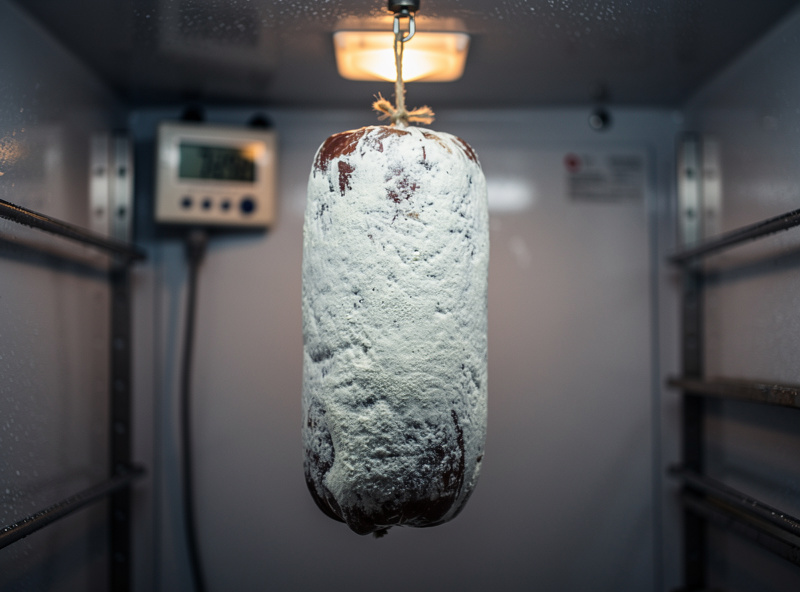
If the casing stiffens unevenly or the piece feels hard-shelled with a soft centre, I nudge humidity up a few points and ease the fan, the standard case-hardening correction on the case hardening guide. A steady envelope is everything here, which is what building a chamber that holds its target is about, covered on the climate control guide. Coppa rewards patience: a slow, even dry produces the supple, marbled texture that is the whole point.
When Is Coppa Done?
Coppa is done at around 35% weight loss. The fat seams mean it stays more supple than a lean cut at the same loss, so I rely firmly on the scale rather than feel, because a coppa can feel softer than it is thanks to the internal fat. I weigh from the tagged green weight and pull at roughly 35%, when the lean is firm through and the piece has no soft, hollow centre. A coppa pulled too early is wet and pale inside; pushed too far it dries the lean out while the fat stays soft, an unbalanced bite.
Coppa is eaten raw, sliced thin, so the Cure #2 and the full weight loss are what keep it safe, with no cooking step to fall back on. A finished coppa keeps for weeks wrapped in paper in the fridge once you have cut into it; I vacuum-seal anything I am not slicing within a couple of weeks. The marbled cross-section is the reward for the wait, and it slices best chilled firm.
As an Amazon Associate I earn from qualifying purchases.
Coppa is a casing cut, so the two things that matter most are a casing that stuffs tight and a precision scale for the Cure #2. I use beef bung casings for the proper coppa shape, or curing netting when I want to watch the surface, and I weigh the cure salt on a 0.1g precision scale because 0.25% of a kilo and a half of collar is under four grams and nitrite is never eyeballed.
Frequently Asked Questions
Is coppa the same as capicola or capocollo?
Yes, coppa, capocollo and capicola are regional names for the same product: cured pork collar, the marbled muscle running from the neck into the shoulder. The vocabulary changes by region but the cut and the method are the same. It splits into a sweeter coppa dolce and a chilli-rolled coppa piccante by seasoning, not by cut.
What cut of pork is coppa?
Coppa is the pork collar or coppa muscle, the continuation of the loin into the neck and shoulder. A butcher may call it collar, neck end or coppa. Look for a boned-out whole collar of roughly one to two kilograms with the natural fat seams intact and a thin fat cap, since the internal marbling is what makes a finished coppa special.
Do I need Cure 2 for coppa?
Yes. Coppa hangs for several weeks, well past the short Cure 1 window, so Cure 2 at 0.25 percent of meat weight is the correct choice because its nitrate reservoir protects across the long dry. Coppa is eaten raw with no cooking step, so the curing salt and a full weight loss are what keep the finished piece safe.
Why does coppa need to be stuffed tightly in a casing?
The collar has an irregular surface and internal fat seams that make air pockets easy to trap, and a void inside a coppa is where it can spoil. Stuffing the muscle tight into a beef bung casing or netting and pricking out any bubbles removes those pockets. The casing also slows surface drying to guard against case hardening and hosts the protective white mould.
When is coppa finished drying?
Coppa is done at about 35 percent weight loss from its tagged green weight. Because the fat seams keep it supple, it can feel softer than it actually is, so rely on the scale rather than feel. Pull it when the lean is firm through with no soft, hollow centre. Pulled too early it is wet and pale inside; pushed too far the lean dries out.
More From the Whole Muscle Chamber
- Whole Muscle Charcuterie: The Complete Guide
- How to Calculate Salt Percentage for Equilibrium Curing
- Good White Mould vs Dangerous Black or Green
- Case Hardening: Causes, Prevention, and Fixes
- Bresaola Recipe at Home: Air-Dried Beef