Fat Smear in Salami: What Causes It and How to Prevent It
June 16, 2026

Fat smear is the defect I see ruin more first salamis than any other, and it almost never comes from the recipe. It comes from temperature and friction during grinding and stuffing. In the chambers I run here in Sweden I dry-cure whole muscle and ferment ground salami, and I log weight loss on every piece, so I have watched plenty of batches come out either with crisp white fat flecks or with a dull grey smear. The difference is mechanical, and it is fixable.
What exactly is fat smear in salami?
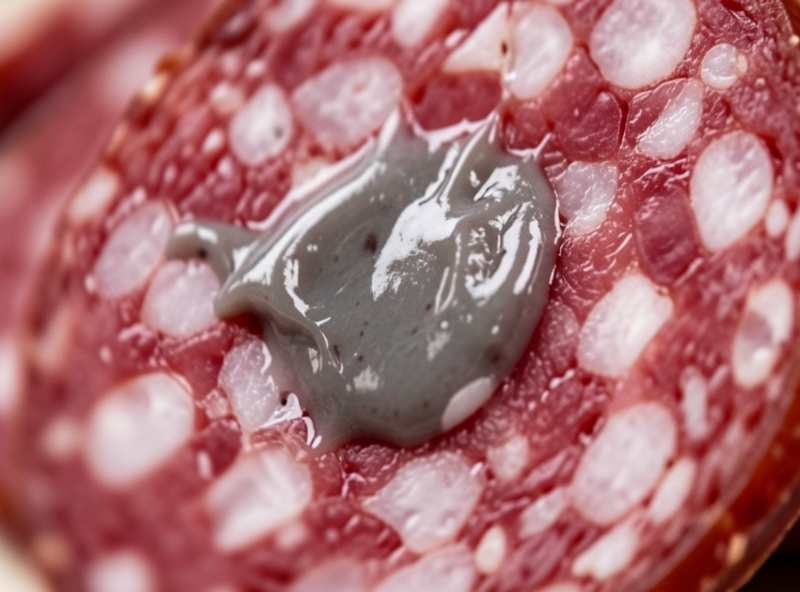
Fat smear happens when the fat in your salami warms past roughly 4-5°C during grinding or stuffing, softens, and coats the lean meat instead of staying in distinct particles. That greasy film blocks protein extraction and bind, traps moisture, and leaves a dull, greyish, slow-drying texture.
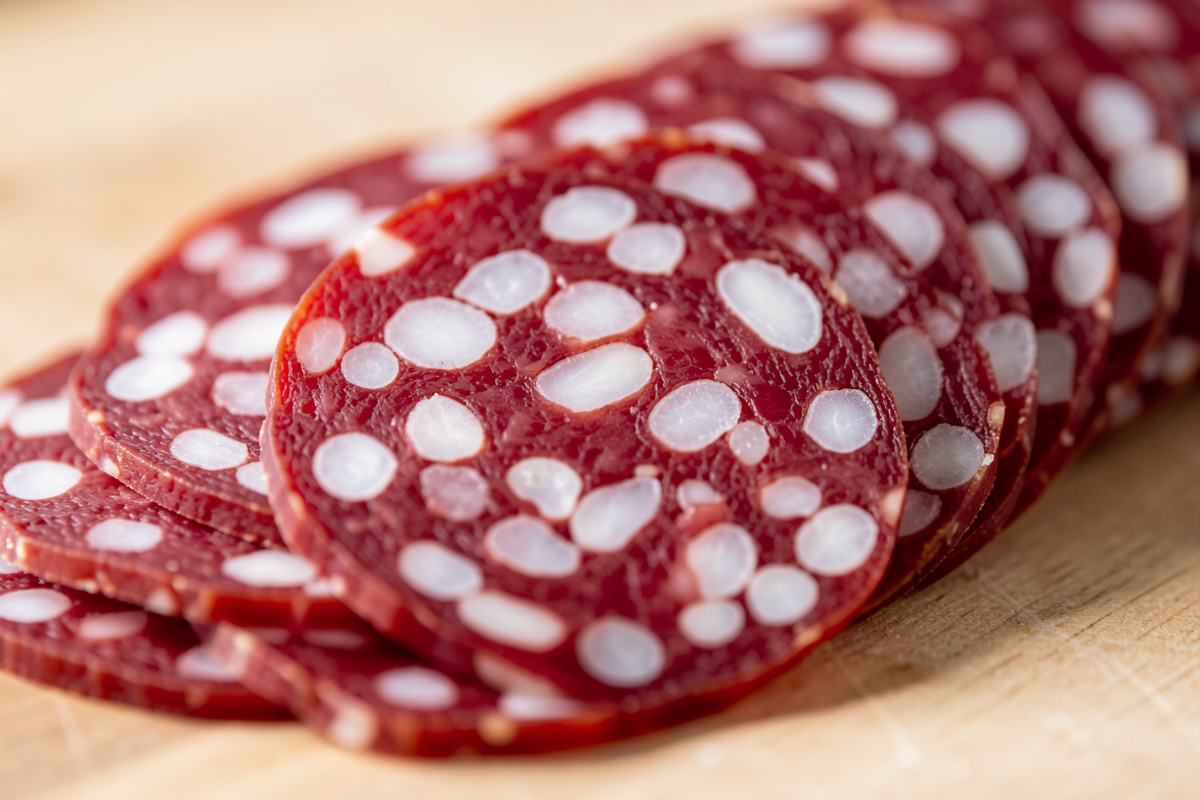
In a clean salami the cross-section shows discrete white fat particles suspended in red lean, like a mosaic. When fat smears, those edges blur. The fat melts at the surface, spreads, and wraps each piece of lean in a thin layer of grease. That layer is the whole problem, because curing a salami depends on the lean proteins binding to each other.
Why does smear actually wreck the salami?
Good salami relies on protein extraction: salt and cure pull tacky myosin out of the lean so the particles glue together into a single dense mass. That is the primary bind. A fat film physically gets between the lean particles and stops them touching, so the bind never forms properly.
Once bind fails, three things follow in the chamber I have watched over and over. The salami dries unevenly because the greasy coating slows surface moisture loss, so it case-hardens on the outside while the core stays wet. The colour turns grey rather than cured red. And the texture goes from firm slice to a crumbly, greasy chew. None of that comes back once the fat has smeared.
What actually causes fat smear?
Almost every cause traces back to one thing: the fat got warm enough to soften before it reached the casing. Heat comes from the meat itself, from friction in the grinder, and from your hands and the room. Here is what I check, roughly in order of how often it is the culprit.
Meat and fat not cold enough (the number one cause)
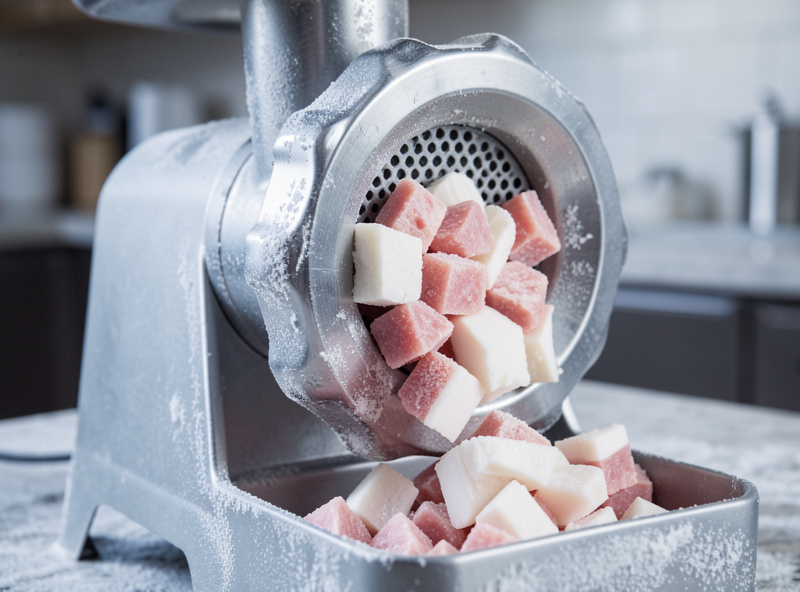
This is it, the vast majority of the time. If the meat and fat go into the grinder warmer than about 2°C, they shear and smear instead of cutting cleanly. I partial-freeze every dice down to firm-but-not-solid, around -1 to 2°C, where the cubes click against the bowl. Soft, fridge-temp fat at 6-8°C will smear no matter how good your grinder is.
Friction heat in the grinder
A grinder generates heat. A dull plate or blade, or a mismatched blade-to-plate fit, makes the auger crush and tear rather than slice, and that crushing is pure friction. Warm plates from a previous batch do the same. The fat hits a hot surface and starts melting on contact, which is why I chill the plates and blade in the freezer first.
Over-mixing the bind
Mixing the ground meat with salt and cure to develop bind is necessary, but warm hands and long over-working push the fat past its softening point. I mix only until the mass turns tacky and strings off my fingers, usually a minute or two, and I keep the bowl cold. Past that point you are just heating the fat and smearing it yourself.
The wrong fat
Fat is not all equal. Firm dorsal back fat holds its shape; soft jowl and softer belly fat smear far more readily because they melt at a lower temperature. When I grind a softer cut I freeze it harder and grind it last, on its own pass, so it spends the least time in the warm auger.
How do I prevent fat smear?
Prevention is entirely about keeping everything cold and cutting cleanly. None of this is exotic; it is discipline applied to temperature. This is the routine I run on every salami batch, and it is the single biggest quality lever I have.
Partial-freeze the meat and fat
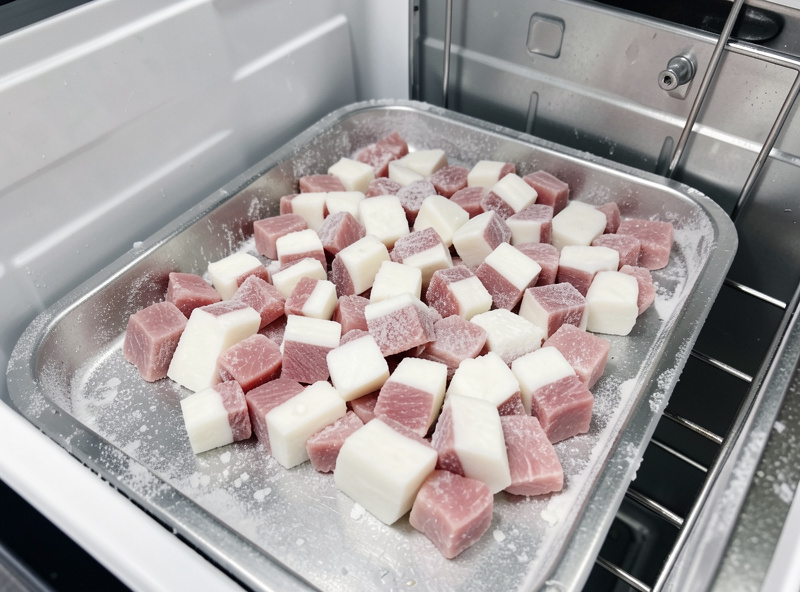
Dice the meat and fat, spread it on a tray, and freeze until firm but not rock solid, about -1 to 2°C. The cubes should feel stiff and crack slightly when squeezed, not bend. This is the most important step. Cold, firm fat cuts into clean particles instead of shearing into a paste.
Chill the grinder plates and blade
Put the plate, blade, and auger in the freezer for thirty to sixty minutes before you grind. Cold metal cannot melt the fat on contact, and it keeps the whole grind colder for longer. In my setup the plates live in the freezer right next to the meat tray.
Use a sharp plate and a matched blade
A sharp plate and a blade seated flush against it slice the fat cleanly with minimal friction. Replace plates when they dull and never run a blade backwards. If you are pushing hard to feed the grinder, your plate is too dull and you are generating smear-causing heat.
Grind fast, grind fat last, keep the room cold
Work quickly so nothing sits and warms up. Grind your fat separately or on the last pass, and if your kitchen is warm, drop the room temperature or work in front of an open window in winter, as I do here. Get good protein extraction by mixing the salt and cure #2 into cold lean before stuffing, then chill again if needed.
What temperatures should I actually hit?
These are the working numbers I keep taped inside the kitchen cupboard. They are not arbitrary; they sit below the point where pork fat begins to soften and smear, with a safety margin for the heat the grinder adds.
| Stage | Target temperature | Why |
|---|---|---|
| Meat and fat into grinder | -1 to 2°C (firm, not solid) | Fat cuts clean instead of shearing |
| Grinder plates and blade | Freezer-chilled, below 0°C | No melting on contact |
| Mixed bind before stuffing | Kept below 4°C | Stays below fat softening point |
| Kitchen / work room | As cold as practical | Limits warming during handling |
How does fat smear relate to case-hardening?
They are different defects that feed each other. Case-hardening is a drying fault, where the surface dries too fast and forms a sealed skin that traps a wet core, usually from low RH or too much air exchange in the chamber. Fat smear is a grinding fault that happens before the salami ever hangs.
The link is that a smeared salami dries badly: the greasy coating slows surface moisture loss unevenly, which makes case-hardening more likely. So a smeared batch hung in a chamber that is even slightly too dry will often case-harden on top of the smear, giving you two problems at once. Fix the grind first; for the drying side, see my guide on case-hardening.
Is a smeared batch safe to eat, and can I save it?
Here is the honest line. Fat smear is a texture and quality defect, not a safety defect. If you used the correct cure #2, hit your starter culture and pH drop in the fermentation phase, and dried to a proper weight-loss percentage, a smeared salami is generally still safe to eat. It just will not be good.
You cannot un-smear it. The bind is already compromised, so it will slice greasy, eat a bit crumbly, and look dull. I eat smeared batches myself rather than waste them, sliced thin, but I do not gift them or serve them to guests. The fix is never the current batch; it is colder meat and a sharper, chilled grinder on the next one.
One caveat that overrides everything above: if the salami also shows fuzzy black or green mold, a slimy surface, or an off, putrid smell, that is a separate problem and you throw it out regardless of how it was ground. Smear alone is a quality issue; spoilage is not.
Related Reading
- Curing chamber troubleshooting hub — every common fault and how to read it
- Meat grinding for salami — the full cold-grind method that prevents smear
- Home salami making — the whole process from grind to dried slice
- Case-hardening in the curing chamber — the drying fault that smear makes worse
- Salami casing types guide — choosing casings for a clean stuff
- Finocchiona salami recipe — a fennel salami where clean fat flecks matter
What temperature causes fat to smear in salami?
Pork fat begins to soften and smear once it warms past roughly 4 to 5 degrees Celsius during grinding or stuffing. I grind with meat and fat partial-frozen to between -1 and 2 degrees Celsius so the fat cuts into clean particles instead of shearing.
Is salami with fat smear safe to eat?
Yes, if it was made correctly. Fat smear is a texture and quality fault, not a safety fault. Provided you used cure #2, hit your pH drop and starter culture, and dried to the right weight-loss percentage, a smeared salami is generally still safe but greasy and dull.
Can I fix a salami that has already smeared?
No. Once the fat has coated the lean the protein bind is compromised and you cannot reverse it. The smeared batch will slice greasy and crumbly. The only real fix is colder meat and a sharper, freezer-chilled grinder on your next batch.
Why does my salami look grey instead of red?
Greyness usually means fat smear blocked the protein bind, so the lean particles never glued together and cured cleanly. A thin grease film over the lean dulls the colour. Colder grinding, a sharp chilled plate, and proper cure #2 give you the firm red cure.
Does the type of fat affect smearing?
Yes. Firm dorsal back fat holds its shape and resists smearing, while soft jowl and belly fat melt at lower temperatures and smear far more easily. When I use softer fat I freeze it harder and grind it last so it spends the least time in the warm auger.