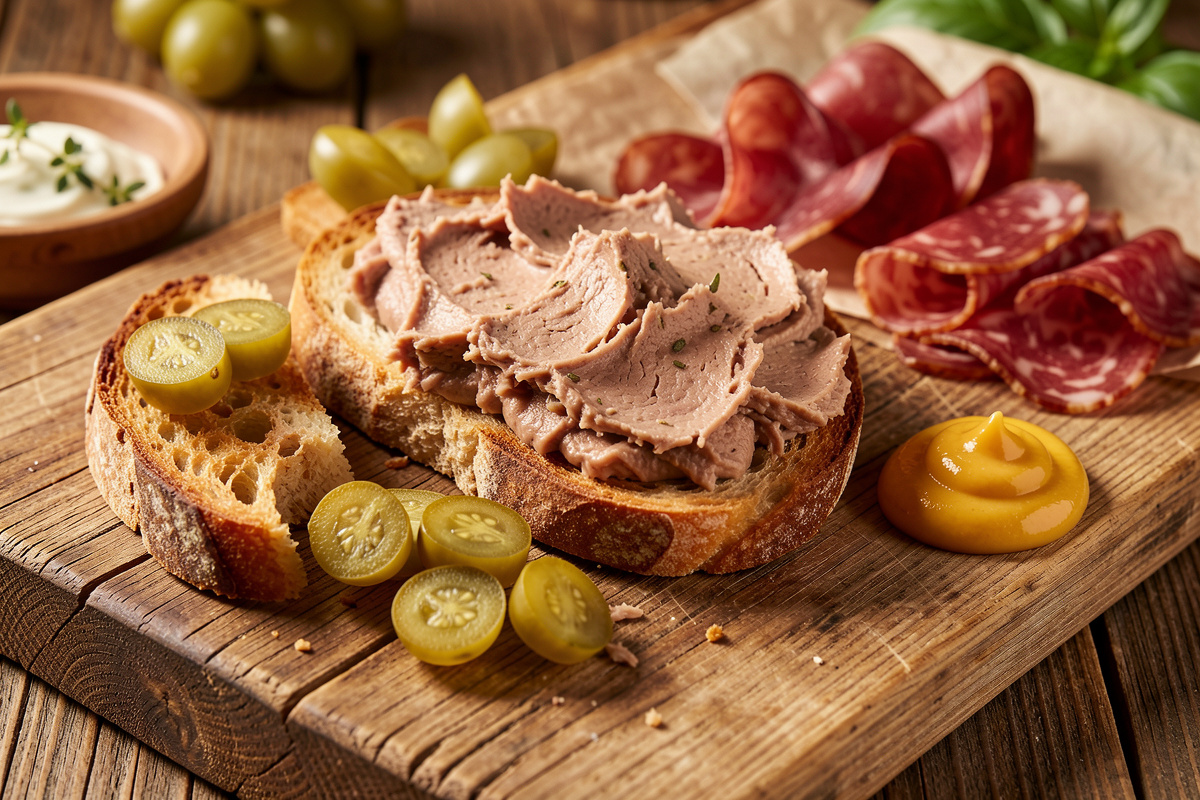

Pork rillettes are pork shoulder and belly cooked low and slow in fat for three to four hours until the meat falls apart, then shredded into soft strands, seasoned, bound with the cooking fat, and packed into jars under a sealing layer of fat. Under an intact fat cap in the fridge they keep two to three weeks. It is the most forgiving thing in home charcuterie and the recipe I hand to anyone who thinks the craft is intimidating.
If duck confit is the gateway, rillettes are the thing that makes people fall in love. There is no chamber, no humidity controller, no waiting for a 35% weight loss — just a pot, some patience, and the best thing you will ever spread on toast. It belongs to the cooked, potted-in-fat family covered in the confit, rillettes and terrines guide, and it teaches the cook-low-and-shred rhythm that every other recipe there builds on.
Choosing your meat: shoulder plus belly
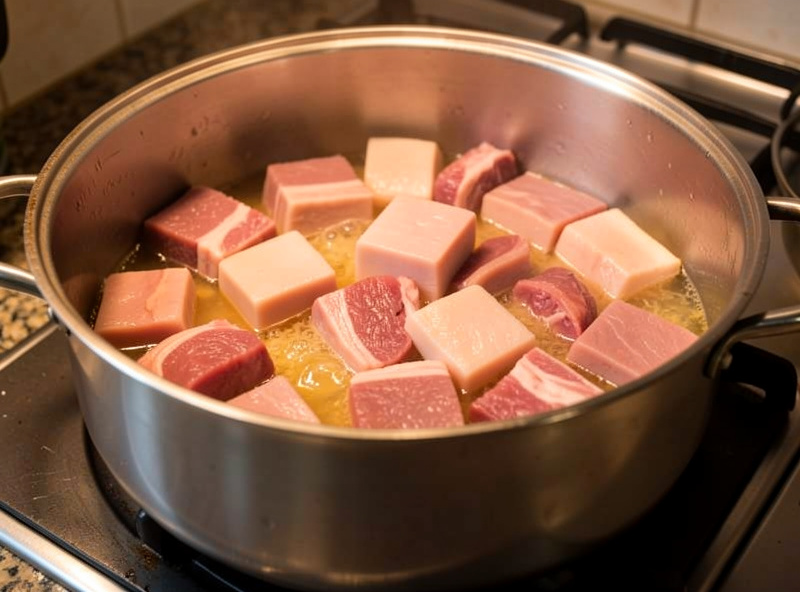
Rillettes live or die on fat content. Lean meat gives you dry, sad threads; you want roughly a 70:30 split of meat to fat going in, because the fat is both the cooking medium and the binder that gives rillettes their spoonable, melting texture. Pork shoulder (the classic choice) carries enough intramuscular fat to start, but I always cut in some belly — the same cut I use for pancetta — to push the richness where I want it.
Cut the meat into rough 4–5 cm chunks so it cooks evenly, and season it the day before if you can: salt at around 12–15 g per kilo, plus a little white pepper, a couple of cloves, a bay leaf and a sprig of thyme. An overnight rest in the fridge with the salt lets the seasoning penetrate, the same logic as the short cure on a confit. No curing salt is needed here — rillettes are eaten within weeks from the fridge under fat, so plain salt does the job.
The long, slow cook
Put the seasoned pork into a heavy pot with a couple of spoons of lard to start it off and a splash of water to stop it catching before its own fat renders. Cover and cook very gently — a low oven at around 140 °C (285 °F) or the lowest stovetop flame that keeps a bare murmur — for three to four hours. You are not browning or frying; you are coaxing. As the pork cooks, it renders its own fat and slowly poaches in it, and the water cooks off.
It is ready when a chunk collapses under light pressure from a spoon and the meat is meltingly soft. There is no shortcut: rush it with high heat and you get tough, stringy meat swimming in greasy liquid instead of tender strands suspended in clean fat. This is the same lesson the slow side of charcuterie teaches over and over — the one that taught an impatient brain to wait three months for a coppa — only here it is compressed into an afternoon.
Shred, do not blend
Here is the line that separates rillettes from pâté: you shred, you never blend. Lift the cooked meat out of the fat and pull it apart with two forks (or your fingers once it is cool enough) into fine, soft strands. The texture should be fibrous and spreadable, not a smooth purée. A food processor turns rillettes into baby food and throws away everything that makes them special, so keep it in the cupboard.
As you shred, taste and adjust the seasoning — cooking mutes salt, so it almost always needs a little more at this stage, plus a crack of pepper and sometimes a scrape of nutmeg. Then bind the strands with the strained warm cooking fat, a spoon at a time, until the mixture is moist, glossy and just holds together. Hold back the cloudy meat juices that settle at the bottom of the pot; they taste wonderful but shorten storage, so save them for a sauce and bind with the clear fat instead.
Potting and the fat cap
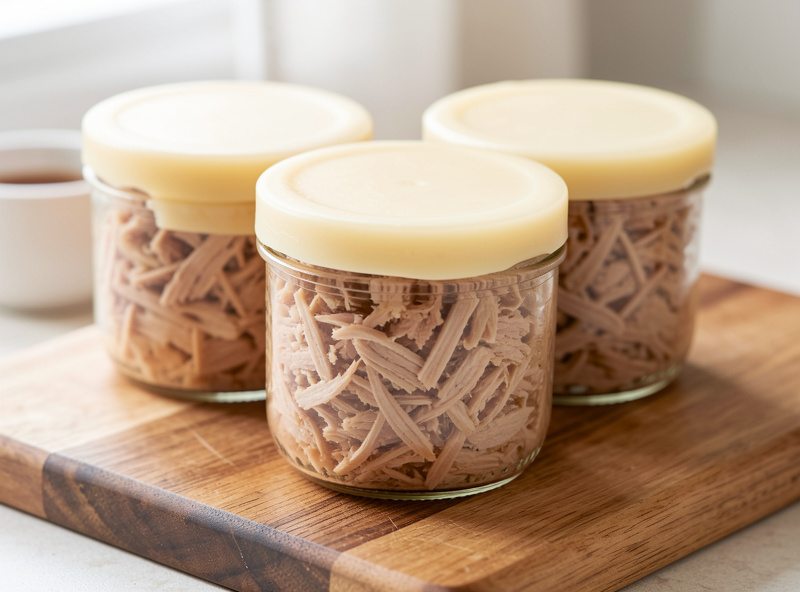
Pack the bound rillettes into clean jars or ramekins while everything is still warm and workable, pressing down firmly to drive out air pockets — trapped air is where spoilage starts. Smooth the top, then pour a clean layer of melted fat, a few millimetres deep, over the surface so it seals right to the edges of the jar. Let it set, lid it, and refrigerate.
That fat cap is doing the same job it does in confit: excluding oxygen so the surface keeps. And it comes with the same hard limit. Rillettes are refrigerated food. An intact fat seal in the fridge buys you two to three weeks; the moment you dig in and breach the cap, you have let air in, so eat that jar within about a week. They also freeze beautifully, which is how I stop a generous Christmas batch from defeating me in January. The full storage logic for everything potted under fat — fridge times, freezing, and how to tell when a batch has turned — is in preserving confit in fat, and the safety reasoning behind the cold-storage rule is in the charcuterie food safety guide, with the food-preservation fundamentals set out by the National Center for Home Food Preservation.
Serving and variations
Serve rillettes at cool room temperature, not fridge-cold, so the fat softens and the flavour opens up — pull a jar out twenty minutes before you want it. Spread thickly on toasted sourdough or a crusty baguette, with cornichons and a sharp mustard to cut the richness, and you have the centrepiece of any charcuterie board. Once you have the pork version down, the same method scales straight across to duck, rabbit and goose rillettes; duck rillettes in particular are a brilliant use for the legs and trim left over after a confit session. If you want to move from shredded rillettes to a bound, sliceable forcemeat, the natural next step is a country pâté.
You will need clean jars with lids for potting; a set of small glass jars sized to a single serving means you only ever breach the fat cap on one at a time, which is the smart way to make a batch last.
As an Amazon Associate I earn from qualifying purchases.
Frequently Asked Questions
What cut of pork is best for rillettes?
Pork shoulder is the classic choice because it has enough fat to stay moist, and I add some belly for extra richness. Aim for roughly a 70:30 ratio of meat to fat. Lean meat alone makes dry, stringy rillettes, since the fat is both the cooking medium and the binder.
How long do pork rillettes keep?
Under an intact fat cap in the fridge, pork rillettes keep two to three weeks. Once you breach the fat seal and let air in, eat them within about a week. They also freeze well for longer storage. Rillettes must be kept refrigerated, not at room temperature.
Should I blend rillettes in a food processor?
No. Rillettes are shredded into soft strands with two forks, never blended. A food processor turns them into a smooth paste and destroys the fibrous, spreadable texture that defines them. Pull the cooked meat apart by hand or with forks instead.
Do rillettes need curing salt (pink salt)?
No. Rillettes are cooked and eaten within a few weeks from the fridge under a fat seal, so plain salt is all you need. Curing salt is for long air-dried products and for pates you keep for several days, not for potted, refrigerated rillettes.
Why are my rillettes dry?
Either the meat was too lean or it was not bound with enough fat. Use a fattier cut like shoulder plus belly, and stir the strained warm cooking fat back into the shredded meat a spoon at a time until it is moist and glossy and just holds together.
Keep Reading
- Confit, Rillettes and Terrines: The Complete Guide
- Duck Confit at Home
- Preserving Confit in Fat
- Country Pâté at Home
- Chicken Confit at Home