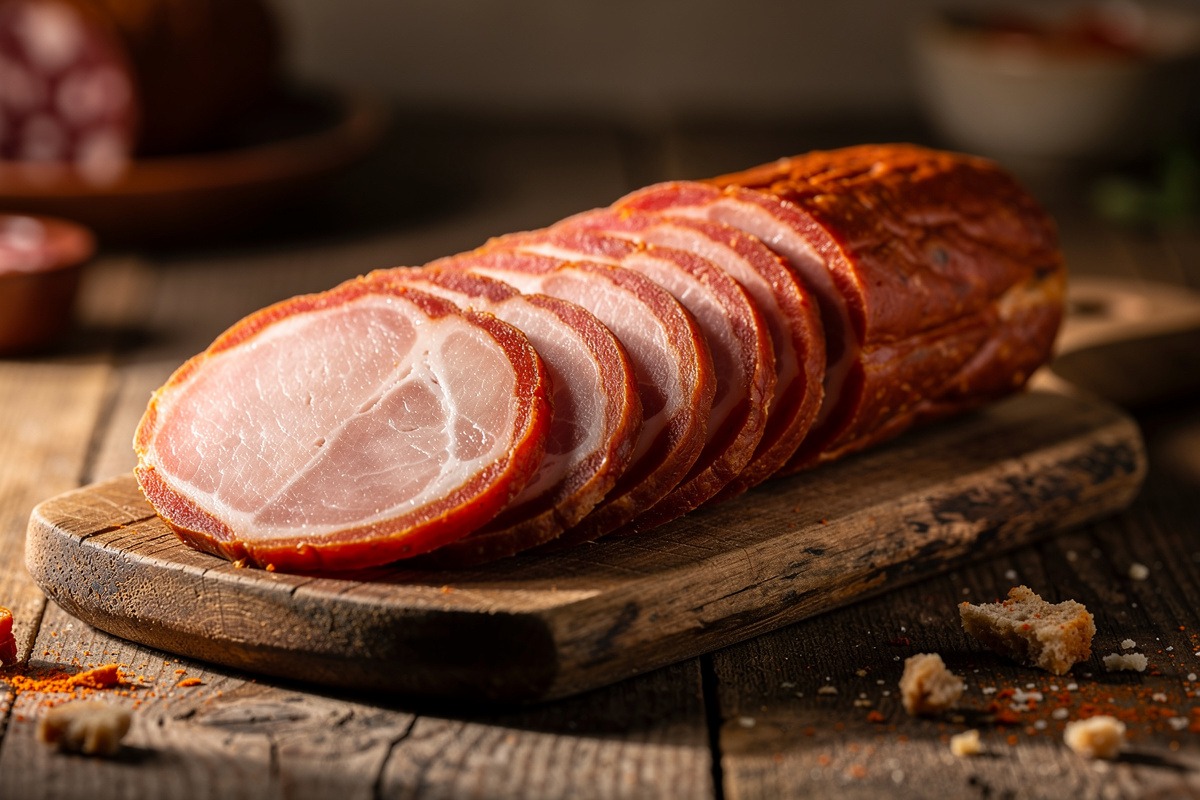

Lomo embuchado is cured pork loin, the Spanish whole-muscle cure, and it is the one I push beginners toward after they have done a pancetta. The loin is a single clean muscle, easy to source, evenly shaped, and the cure is simple: salt, the smoky-sweet pimentón rub that defines it, and a casing. It is leaner than coppa and a touch more demanding to dry, but nothing like as unforgiving as bresaola, which puts it in a sweet spot for a second or third project. The paprika perfume that comes off a finished lomo when you slice it is one of the small joys of this hobby.
It deserves its own build because the loin behaves differently from the fattier collar and belly: it is lean enough to need a little drying care, and the pimentón rub is not just flavour but a protective coat on the surface. Lomo embuchado and the Italian lonzino are essentially the same idea, cured loin, differing mainly in seasoning. The whole muscle charcuterie hub sets it among its cousins; this is the loin-specific method I run.
The Cut: Whole Pork Loin
Lomo is made from the boneless pork loin, the long lean eye of muscle that runs along the back. I want a whole loin with a little fat cap left on for protection, trimmed of silverskin but not stripped lean, ideally a kilo to a kilo and a half so it cures and dries through cleanly. The loin’s clean cylindrical shape is a gift: it dries evenly and slices into perfect coins, which is half of why lomo is such a satisfying piece to make.
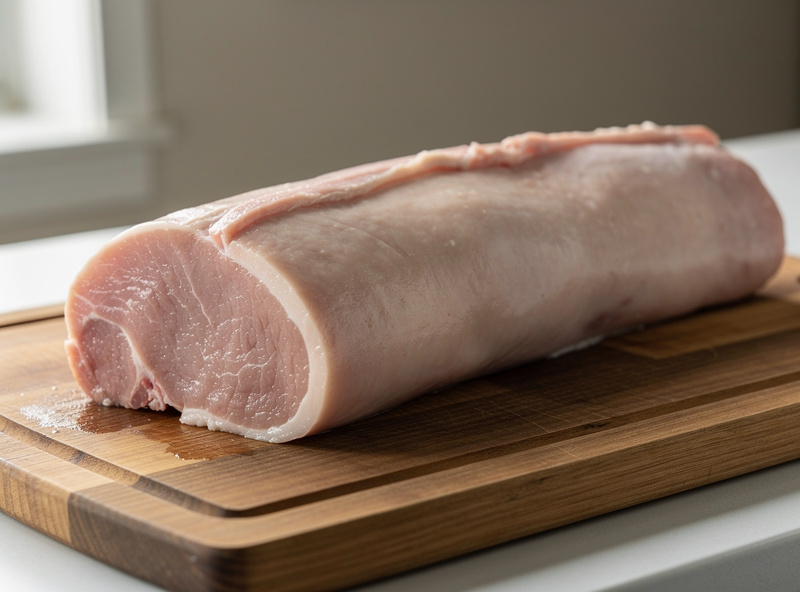
I square up the loin, take off any ragged thin ends, weigh it, and tag the green weight. Because the loin is lean, it is mildly prone to case hardening like bresaola, though its fat cap and the pimentón coat both help. The drying care is the difference between a supple lomo and a hard, leathery one.
The Cure and the Pimentón
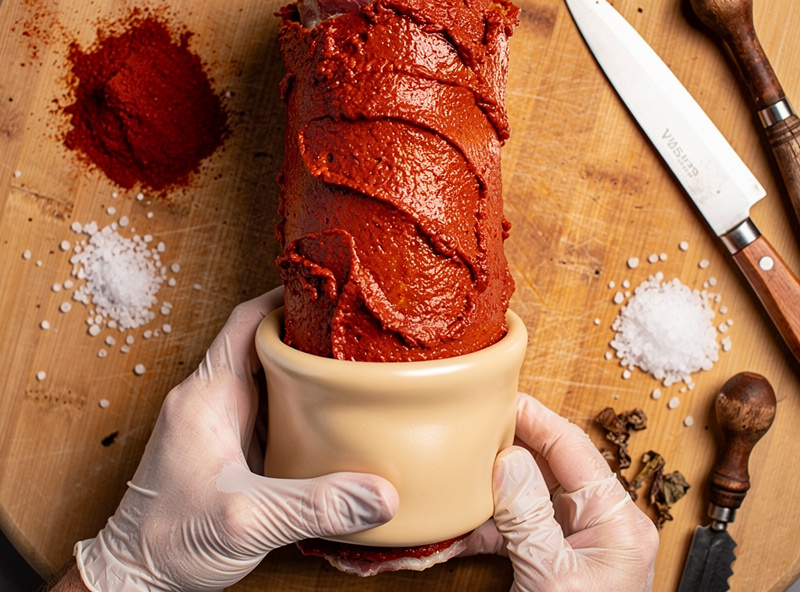
Lomo is an equilibrium cure: salt weighed to the meat at 2.5% to 3% fine non-iodised salt by green weight, plus Cure #2 at 0.25% of meat weight, because the loin hangs for weeks past the Cure #1 window. The signature is the pimentón rub: a generous coat of Spanish smoked paprika, both sweet (dulce) and a little hot (picante) to taste, plus garlic, oregano, and sometimes a splash of white wine. The paprika is the soul of lomo; do not be shy with it.
I salt-and-cure the loin first, bagged, equilibrium-curing in the fridge for about a week to ten days, flipping daily. Then I rinse lightly, pat dry, and apply the pimentón-garlic paste as a thick coat over the whole surface before casing. Applying the paprika after the salt cure, rather than mixing it in, keeps the colour vivid and the coat protective. The salt-weight arithmetic is the standard equilibrium logic on the salt percentage calculator.
| Stage | Lomo spec | Note |
|---|---|---|
| Salt | 2.5–3% by weight | Equilibrium, weighed to meat |
| Cure salt | Cure #2, 0.25% | Hangs weeks; nitrate reservoir |
| Signature | Pimentón paste coat | Applied after the salt cure |
| Casing | Beef middle | Holds the paprika coat, breathes |
| Target loss | ~35% | Lean loin, firm clean slice |
Casing and Drying
I case the paprika-coated loin in a breathable beef middle, which holds the pimentón against the surface and slows the drying just enough to protect the lean muscle. I prick out air pockets and hang it through the standard envelope: 12 to 15°C and 75 to 80% RH with gentle, cycled air exchange. Because the loin is lean, I keep humidity at the upper end and airflow on the gentle side, the same instinct as bresaola, so it does not seal a shell over a wet core.
Case hardening is the main risk, and the pimentón coat plus the casing are your first defences. If the surface stiffens unevenly or the loin feels hard-shelled with a soft centre, nudge humidity up and ease the fan, the standard correction on the case hardening guide. White Penicillium mould may bloom over the casing, which is fine; the breakdown of good versus dangerous mould is on the mould identification guide. Holding the chamber envelope steady is the whole game, covered on the climate control guide.
Two Problems That Catch Lomo Makers
The first is the paprika sliding or going patchy on the surface during the dry. This happens when the loin is still too wet when you apply the coat, so the pimentón slurries instead of sticking. The fix is to pat the loin genuinely dry after the bag cure and let it air-dry on a rack in the fridge for a few hours before applying the paste, so the surface is tacky rather than slick. A coat applied to a properly dried surface bonds and stays vivid; a coat applied to a wet one runs and looks blotchy under the casing.
The second is a sour or off smell developing early in the dry, which on a lean loin almost always traces back to the surface staying too wet for too long because humidity ran too high or air exchange too low. Lomo wants its surface to firm gently, not to sit damp. If the casing feels slimy or the smell turns sharp rather than the clean cured-meat aroma you want, drop humidity a few points and increase the fan duty until the surface settles. Catch it early and the piece recovers; let a slimy surface run and the loin is compromised. As with every cure on this domain, a smell that is genuinely off rather than just funky-cured means you discard the piece rather than gamble on it.
When Is Lomo Done?
Lomo is done at around 35% weight loss. Like bresaola it is lean, so it needs a good chunk of water gone to firm up and slice cleanly, but the fat cap and pimentón coat make it a touch more forgiving than a bare beef muscle. I weigh from the tagged green weight and pull at roughly 35%, when the loin is uniformly firm with no soft, squishy centre. Pulled too early it is wet and pale inside; pushed too far it dries into something hard and chewy.
Lomo is eaten raw, sliced thin, so the Cure #2 and the full weight loss are what keep it safe, with no cooking step. A finished lomo keeps for weeks wrapped in paper in the fridge; I vacuum-seal portions of anything I am not slicing within a couple of weeks. Sliced thin, the pimentón-edged coins with their faint smoke and the clean lean centre are the payoff, and they slice best chilled firm.
As an Amazon Associate I earn from qualifying purchases.
Lomo’s two essentials are a casing that holds the paprika coat and good smoked paprika itself, plus the precision scale for the Cure #2. I case in beef middle casings, build the rub around proper Spanish smoked paprika (pimentón), and weigh the cure salt on a 0.1g precision scale, because 0.25% of a 1.3-kilo loin is a touch over three grams and nitrite is never eyeballed.
Lomo vs Lonzino: The Same Cut, Different Coat
Lomo embuchado and Italian lonzino are the same cut, cured pork loin, separated mainly by seasoning. Lomo is defined by its pimentón rub and Spanish aromatics; lonzino leans on black pepper, fennel, juniper, and wine, with no paprika. If you have made one, you can make the other by swapping the spice. The method, the cure salt, the casing, and the weight-loss endpoint are identical, which makes the loin a versatile cut to keep coming back to.
Frequently Asked Questions
What cut is lomo embuchado made from?
Lomo embuchado is made from whole boneless pork loin, the long lean eye of muscle along the back. Use a loin with a thin fat cap left on for protection, trimmed of silverskin but not stripped lean, ideally one to one and a half kilograms. Its clean cylindrical shape dries evenly and slices into neat coins.
Do I need Cure 2 for lomo?
Yes. Lomo hangs for several weeks, past the short Cure 1 window, so Cure 2 at 0.25 percent of meat weight is the correct choice because its nitrate reservoir protects across the long dry. Lomo is eaten raw with no cooking step, so the curing salt and a full weight loss are what keep the finished piece safe.
When do I add the paprika to lomo?
Apply the pimenton-garlic paste after the salt-and-cure phase, not mixed into it. Salt and cure the loin in a bag first for about a week to ten days, then rinse, pat dry, and coat the surface thickly with smoked paprika paste before casing. Adding it after keeps the colour vivid and the coat protective on the surface.
When is lomo embuchado finished drying?
Lomo is done at about 35 percent weight loss from its tagged green weight. Because the loin is lean, it needs a good amount of water gone to firm up and slice cleanly. Pull it when it is uniformly firm with no soft, squishy centre. Pulled too early it is wet and pale inside; pushed too far it dries hard and chewy.
What is the difference between lomo and lonzino?
They are the same cut, cured pork loin, separated mainly by seasoning. Lomo embuchado is defined by its Spanish smoked-paprika rub and aromatics, while Italian lonzino uses black pepper, fennel, juniper and wine with no paprika. The cure salt, casing, drying envelope and weight-loss endpoint are identical, so swapping the spice swaps the style.
More From the Whole Muscle Chamber
- Whole Muscle Charcuterie: The Complete Guide
- Homemade Coppa (Capocollo): Cured Pork Collar
- How to Calculate Salt Percentage for Equilibrium Curing
- Case Hardening: Causes, Prevention, and Fixes
- Bresaola Recipe at Home: Air-Dried Beef