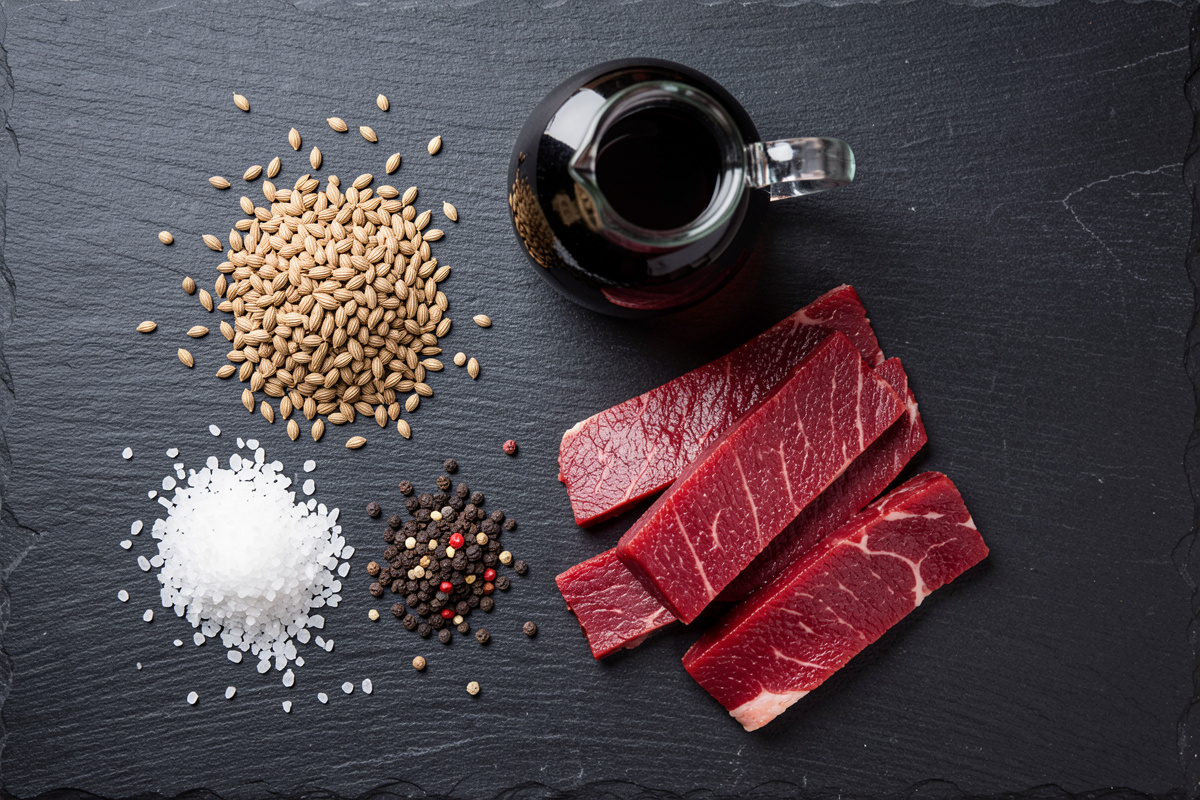

A reliable biltong cure is about 2% fine salt by meat weight, toasted coarse coriander as the dominant spice, cracked black pepper, and a vinegar wash — with optional cure #1 at 2.5 g per kilogram for extra safety margin. Coriander is the signature; everything else is supporting cast.
I weigh every cure I make, biltong included, because eyeballing salt is how you end up with a batch that is either inedibly salty or unsafely under-cured. The traditional salt-box method works, but a weighed equilibrium cure is more repeatable and far more forgiving for a home maker. This guide gives both, the spice ratios I have settled on, and the safety notes that actually matter. It is the recipe layer beneath the main biltong guide and the step-by-step method.
Salt: The Two Approaches
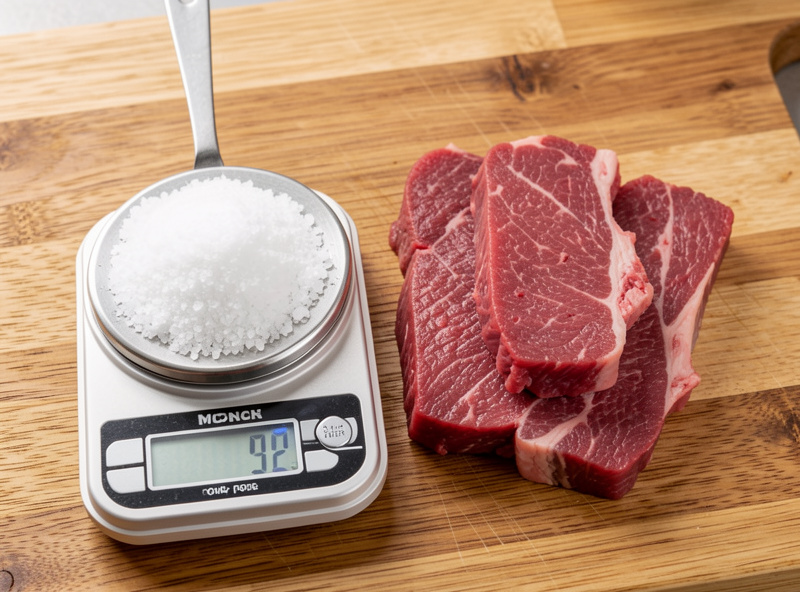
There are two honest ways to salt biltong. The salt-box method buries the strips in coarse salt for a few hours, then you brush off the excess — traditional, effective, but the final saltiness depends on timing and is hard to repeat exactly. The equilibrium method weighs a fixed percentage of salt against the meat and lets all of it absorb, so nothing is rinsed away and the result is identical every time. I use equilibrium for the same reason I use it on bresaola: the scale removes the guesswork.
For an equilibrium biltong cure, around 2% fine salt by the weight of the meat is a solid baseline — firm and savoury without being harsh. You can push toward 3% for a saltier, longer-keeping result. Never use iodized table salt; the iodine is harsh and unnecessary. Plain fine sea salt or a non-iodized curing salt is what you want.
The Spice: Coriander First
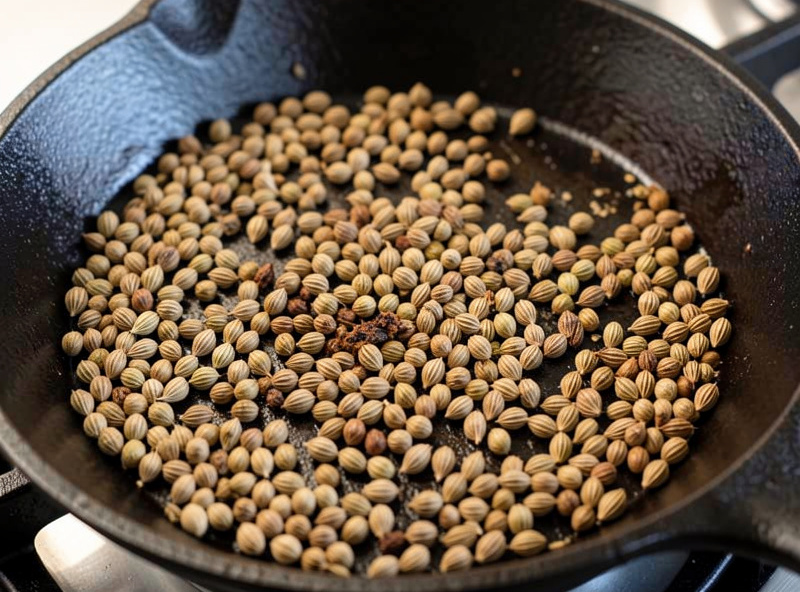
Coriander is what makes biltong taste like biltong. Buy whole seed, toast it in a dry pan until it smells nutty and warm, then crack it coarsely — in a mortar, a spice grinder pulsed once or twice, or under a rolling pin. Pre-ground coriander tastes flat and dusty and is the single biggest reason homemade biltong underwhelms. Black pepper, also cracked rather than finely ground, sits behind the coriander.
From there, the regional tweaks are yours: a little brown sugar to round the edge, granulated garlic, a splash of Worcestershire sauce in the vinegar, a pinch of bicarbonate for a particular texture some makers like. None of those are essential. If you keep only two spices, keep toasted coriander and cracked pepper. A pre-blended biltong spice mix is a fine starting point while you learn what you like before mixing your own.
As an Amazon Associate I earn from qualifying purchases.
The Vinegar Wash
Vinegar is not optional — it is one of the three safety pillars (acid, salt, fast drying) that let you eat air-dried beef raw. Brown malt vinegar is the South African classic, but cider vinegar and red wine vinegar both work well and bring their own character. Toss the strips in vinegar before or alongside the spice; you do not need to soak for hours, just coat thoroughly. The acetic acid lowers the surface pH, which inhibits the bacteria that matter most in those first damp hours — I keep a pH meter and pH strips on the bench and have spot-checked the surface enough times to trust that a proper malt-vinegar coat pulls it well under pH 5, so these days I coat by feel rather than measuring every batch. The water activity and safety explainer covers why acid, salt, and drying combine the way they do — the short version is that dropping water activity below about 0.85 is what finally stops the pathogens, and the cure just buys you a safe runway to get there.
Cure #1: When to Add Nitrite
Traditional biltong carries no nitrite, and for a fast, well-acidified, well-salted batch in good drying conditions that is genuinely correct. But if you are in a humid climate, drying slowly, or working with thicker strips, I add cure #1 at the standard 2.5 g per kilogram of meat for a margin against Listeria and Staphylococcus. That works out to roughly 156 ppm nitrite, the standard safe rate.
Two things to be clear about. First, it is cure #1 (sodium nitrite), not cure #2 — biltong is a short cure of days and never needs the slow-release nitrate of a months-long whole-muscle dry. Second, cure #1 is a margin, not a substitute: it does not replace the vinegar or the fast dry, and adding it does not make it safe to dry biltong cold and slow in a humid chamber.
A Weighed Cure to Start From
Here is a baseline equilibrium cure per kilogram of trimmed lean beef. Scale it to your batch weight and adjust the spice to taste once you know your preference.
| Ingredient | Per 1 kg meat | Role |
|---|---|---|
| Fine non-iodized salt | 20 g (2%) | Cure, savour, water removal |
| Toasted coriander, coarse | 15–20 g | Signature aromatic |
| Black pepper, cracked | 5–8 g | Background heat |
| Brown vinegar (wash) | Enough to coat | Acidify surface (safety) |
| Brown sugar (optional) | 5–10 g | Rounds the salt |
| Cure #1 (optional) | 2.5 g | Safety margin in damp/slow conditions |
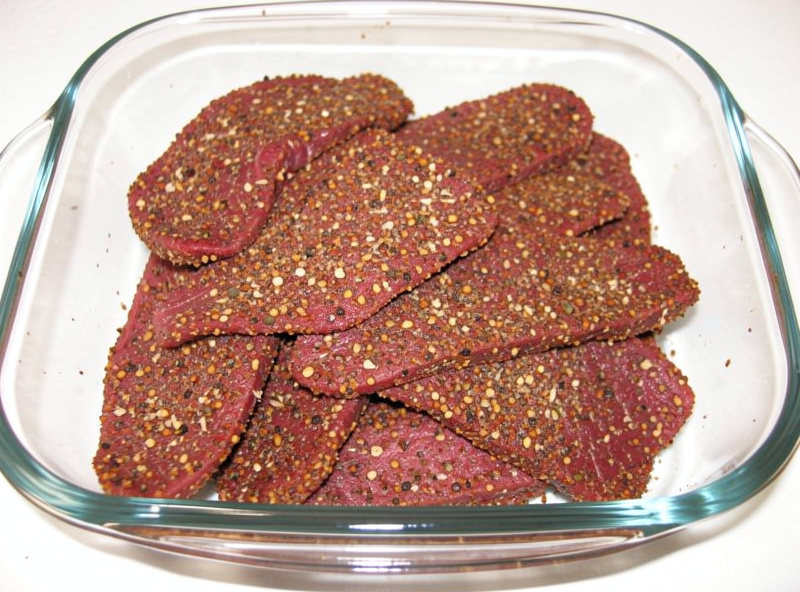
Combine the dry spices, vinegar-wash the strips, coat evenly, then cure refrigerated for a few hours to overnight before hanging. A gram-accurate scale is what makes this repeatable batch after batch.
Scaling the Spice for Droewors
The same coriander-forward profile carries straight over to droewors, the air-dried sausage cousin, though as a ground-and-cased product it gets cure #1 as a default rather than an option. The spice ratios above are a good starting point for both; the difference is in the meat format and the cure decision, not the flavour.
Adjusting the Cure to Your Taste
The baseline above is exactly that — a baseline. Once you have made a batch or two and weighed everything, you will know which dials to turn. If the result is too salty for you, drop toward the lower end of the range, but do not go below about 1.5% or you start losing the cure’s preservative help. If it reads flat, your coriander is probably under-toasted or pre-ground rather than freshly cracked; that single fix transforms more batches than any other change I make. For more punch, lean into the coriander before you reach for chilli or garlic, because the coriander is what people recognise as biltong.
Vinegar is the one ingredient I would not reduce for flavour reasons, because it is doing safety work as much as taste work. If the tang is too sharp for you, switch the type — cider or red wine vinegar is milder than malt — rather than cutting the amount. And keep notes: I log the salt percentage, the coriander weight, and the drying conditions for every batch, the same way I log weight loss, so each batch teaches the next one. That logging habit is the real difference between guessing and dialling in a cure you can repeat.
Frequently Asked Questions
How much salt do I use for biltong?
For a weighed equilibrium cure, use about 2 percent fine non-iodized salt by the meat weight, which is 20 g per kilogram, and let all of it absorb without rinsing. You can go up to 3 percent for a saltier, longer-keeping result. The salt-box method uses more salt but you brush off the excess.
What spices go in biltong?
Toasted, coarsely cracked coriander is the signature, with cracked black pepper behind it. Optional additions include brown sugar, granulated garlic, and a splash of Worcestershire in the vinegar. Toast and crack whole coriander yourself, because pre-ground coriander tastes flat.
Do I need pink curing salt for biltong?
Traditional biltong uses none. For a fast, well-acidified, well-salted batch in good drying conditions, that is fine. In humid climates, slow drying, or with thick strips, add cure #1 at 2.5 g per kilogram as a safety margin. It is cure #1, not cure #2, because biltong is a short cure.
What vinegar should I use for biltong cure?
Brown malt vinegar is the classic, but cider and red wine vinegar also work well. The vinegar lowers the surface pH for safety and adds flavour. Coat the strips thoroughly; a long soak is not necessary.
Can I use table salt for biltong?
Avoid iodized table salt, since the iodine tastes harsh and serves no purpose in curing. Use plain fine sea salt or a non-iodized curing salt. Weighing the salt rather than measuring by volume makes the cure repeatable.
Should I toast the coriander seeds?
Yes. Toasting whole coriander in a dry pan until fragrant, then cracking it coarsely, is the difference between vivid biltong flavour and a dull, dusty one. Do this just before mixing the cure for the best aroma.
Related Guides
- Biltong Guide: Air-Dried Beef in a Warm, Dry Box
- How to Make Biltong at Home
- Droewors Recipe Guide
- Pink Salt and Nitrates Explained
- Biltong Drying Time and Moisture Guide