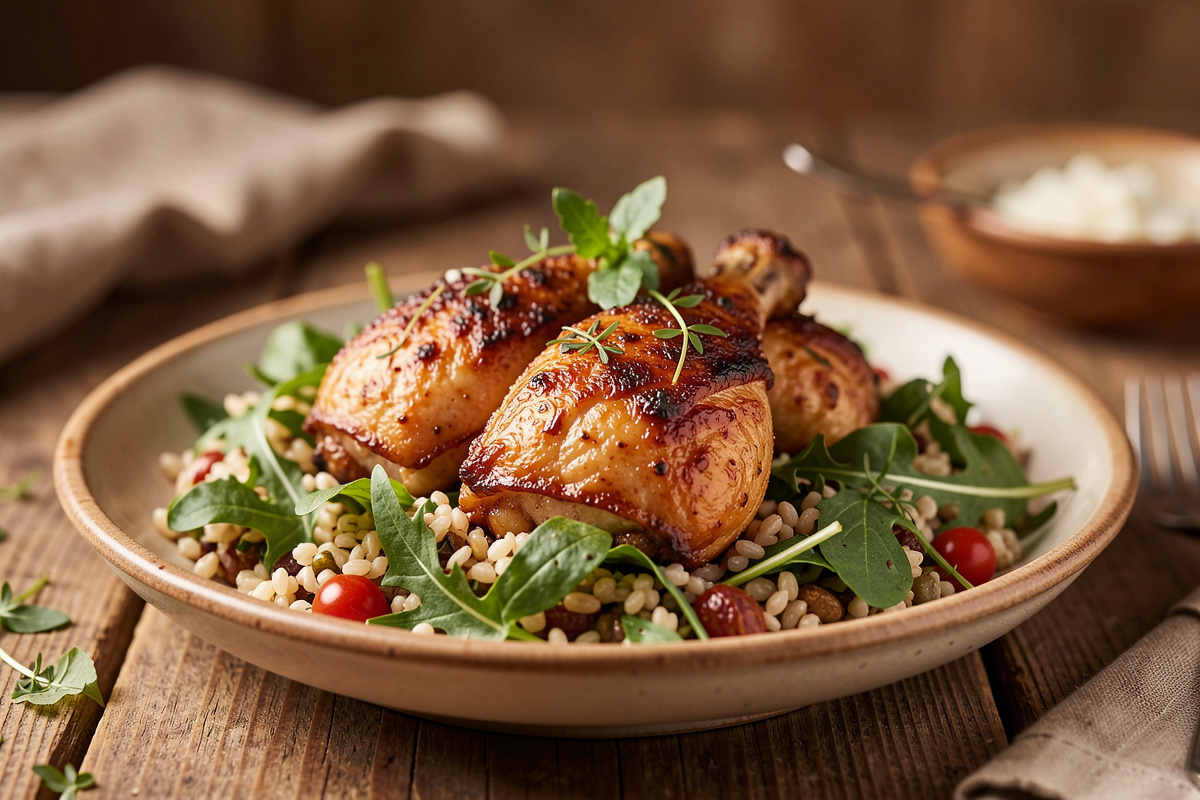

Chicken confit is chicken legs or thighs salt-cured overnight, then poached fully submerged in fat at around 85–90 °C (185–195 °F) for about 1.5 to 2 hours until tender, then cooled and stored under the fat. It is the economical, weeknight-friendly cousin of duck confit: the technique is identical, the bird is a quarter of the price, and the result still crisps up to something far better than a roast chicken leg.
I keep a jar of chicken confit in the fridge the way other people keep leftovers — it is the fast-food of the cooked charcuterie world. Because chicken carries far less of its own fat than duck, the one thing it asks of you is a good cooking fat to poach in. Everything else follows the same logic as the rest of the confit, rillettes and terrines family: cure briefly, cook low in fat, store under fat, keep it cold.
The cure: short and simple
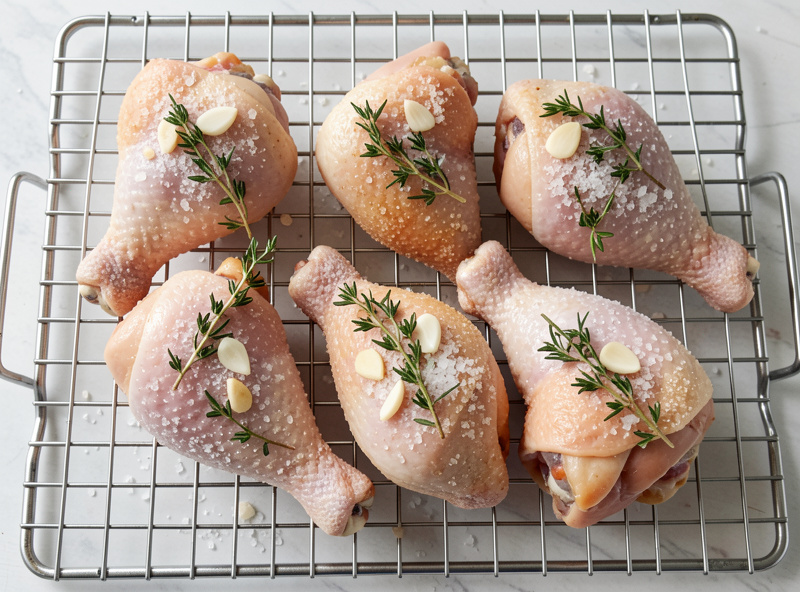
As with duck confit, the salt step is a seasoning-and-light-preservation cure, not a long dry-cure. Rub the chicken legs or thighs with roughly 15–20 g of salt per kilo, plus crushed garlic, thyme, bay and a little black pepper, and leave them uncovered on a rack in the fridge for 12 to 24 hours. The skin firms up and dries slightly, which helps it crisp later.
Rinse off the surface salt and aromatics and pat the pieces completely dry before they go anywhere near hot fat — any clinging water will make the fat spit and cause the chicken to fry rather than poach. No curing salt is required: chicken confit is refrigerated, fat-sealed food eaten within a couple of weeks, so plain salt does everything you need.
Which fat to use
This is the only place chicken confit differs meaningfully from duck. A duck leg renders enough of its own fat to nearly cook itself; a chicken leg does not, so you supply the fat. The best choice is rendered chicken fat (schmaltz), saved over time from roast birds, which keeps everything tasting cleanly of chicken. Lard works and is cheap. Duck fat is the luxurious option and gives a richer result — and if you already keep a jar from a duck confit batch, this is a perfect way to get a second use out of it before it gets too salty.
| Aspect | Chicken confit | Duck confit |
|---|---|---|
| Cost | Low — everyday bird | Higher — duck legs |
| Self-rendered fat | Little — you supply fat | Plenty — nearly self-cooking |
| Fat to use | Schmaltz, lard, or duck fat | Rendered duck fat |
| Cook time in fat | ~1.5–2 hours | 2–3 hours |
| Fridge life, submerged | About 2 weeks | Several weeks to ~2 months |
Cooking and storing
Settle the cured chicken into a snug dish in one layer and cover completely with melted fat — every piece under the surface, no knuckle poking out. Hold the fat at 85–90 °C (185–195 °F), a lazy shimmer, for about 1.5 to 2 hours, until the meat is tender and pulling from the bone. A low oven around 120 °C (250 °F), adjusted so the fat sits at the target, is the easy route; a thermometer in the fat takes out the guesswork. At this temperature and time the chicken is comfortably cooked through and safe — low and slow does not mean undercooked, it means gentle.
Cool the pieces in the fat until warm, then transfer to a clean jar and strain the fat over them so they are fully covered, leaving the cloudy juices behind. Lid it and refrigerate. Because chicken is a leaner, more delicate meat than duck, I treat its fridge life a little more conservatively: about two weeks fully submerged, and freeze anything you will not use in that window. And the cardinal rule stands exactly as it does for every recipe in this cluster — this is refrigerated food, never a room-temperature pantry preserve. The reasoning, and the full storage detail, is in preserving confit in fat and the charcuterie food safety guide; for the food-preservation fundamentals behind that cold-chain rule, the National Center for Home Food Preservation is the standing reference.
Serving — and using the scraps
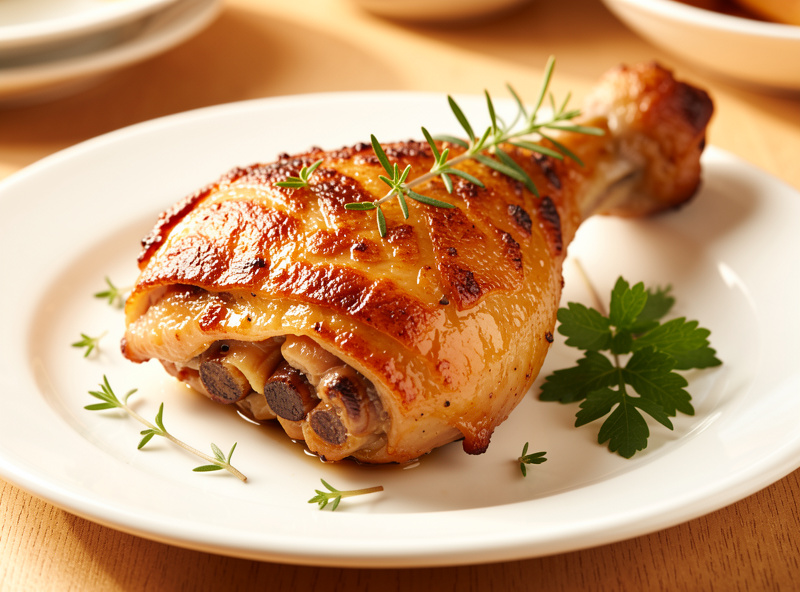
Lift a piece out, scrape the fat back into the jar, and crisp the skin in a hot dry pan or under a grill until it blisters golden; the inside is already tender, so you are only finishing the skin. Chicken confit is brilliant shredded into a salad, piled onto a grain bowl, or stripped off the bone and folded into rillettes — in fact the legs and trim left over after a confit session make excellent chicken rillettes using the exact method in the pork rillettes guide, just with chicken in place of pork. Nothing is wasted: the strained fat goes back in the jar for the next batch or onto roast vegetables.
If you want to confit a steady supply, a few wide-mouth storage jars make potting and portioning easy, and let you breach one fat cap at a time so a batch lasts.
As an Amazon Associate I earn from qualifying purchases.
Why chicken confit is the smartest meal-prep you can make
The reason I always have a jar going is that confit turns a cheap, awkward-to-store cut into something that keeps for two weeks and reheats in minutes. A tray of raw chicken legs has to be cooked within a day or two; the same legs confited and submerged in fat give you a fortnight of ready protein that only improves as the seasoning settles in. Cook a big batch on a Sunday and you have crisp-skinned chicken for salads, tacos, soups and grain bowls all week, with none of the weeknight scramble.
A few habits make it reliable. Portion into single-meal jars so you only ever breach one fat cap at a time — the unopened jars keep their full fridge life while you work through the open one. Keep the cooking fat and the cloudy meat juices separate: the clear strained fat is what seals and stores, while the juices are a flavour bomb for a quick pan sauce but will shorten storage if left under the cap. And label each jar with the date it was potted, because two weeks comes around faster than you think. Treated this way, chicken confit is the most useful thing in my fridge — the same logic that makes a batch of rillettes earn its place on the shelf.
Frequently Asked Questions
What fat do I use for chicken confit?
Because chicken renders little of its own fat, you supply it. Rendered chicken fat (schmaltz) keeps the cleanest chicken flavour, lard is the cheap option, and duck fat gives a richer result. Whichever you choose, the pieces must be fully submerged while they cook.
How long does chicken confit keep?
Fully submerged in fat in a clean sealed jar, chicken confit keeps about two weeks in the fridge. I treat it a little more conservatively than duck because chicken is leaner and more delicate. It must stay refrigerated, and you can freeze it in its fat for longer.
Is chicken confit safe cooked at such a low temperature?
Yes. Held at 85 to 90 C in the fat for one and a half to two hours, the chicken cooks through completely and safely. Low and slow means gentle, not undercooked. Use a thermometer in the fat to hold the temperature and give it the full time.
Can I reuse the fat from chicken confit?
Yes. Strain it through a fine sieve to remove meat particles and juices, and reuse it for another batch or for roasting. After a couple of uses it becomes too salty and meaty, at which point retire it. Never store the fat with the cloudy meat juices mixed in.
Related Guides
- Confit, Rillettes and Terrines: The Complete Guide
- Duck Confit at Home
- Pork Rillettes Recipe
- Preserving Confit in Fat
- Country Pâté at Home