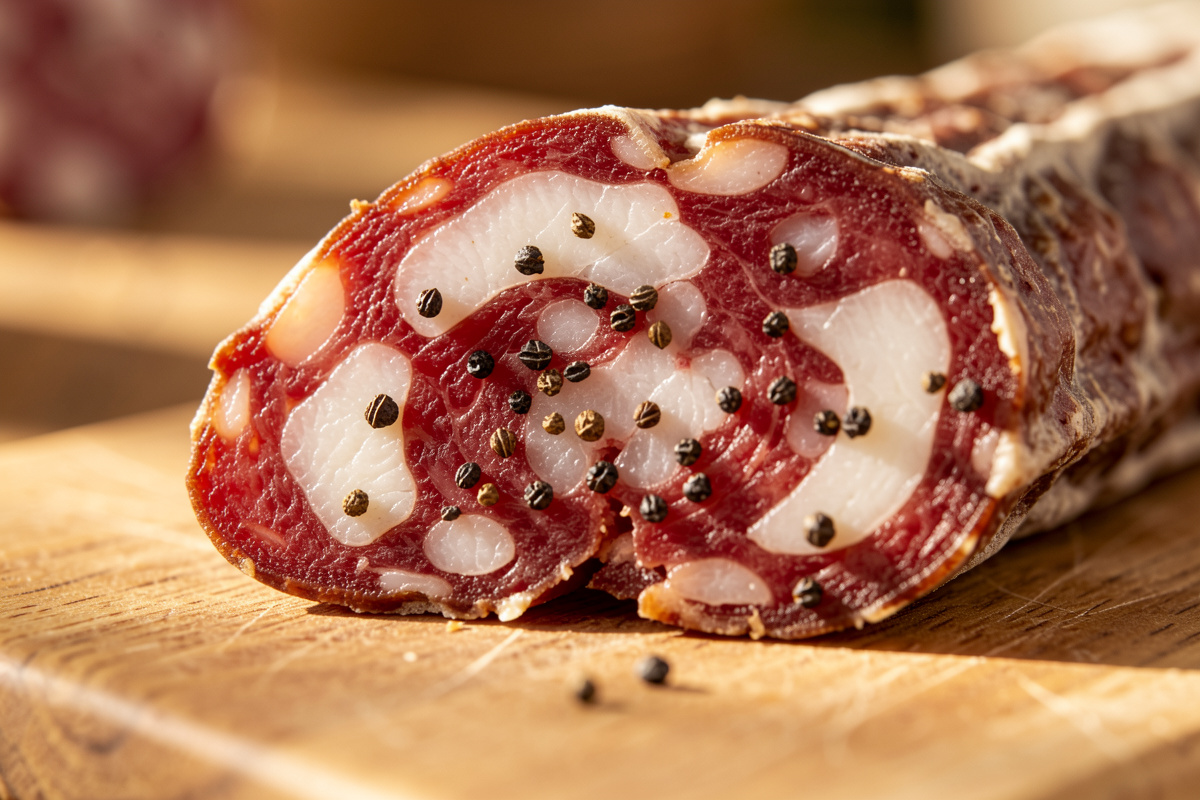

For a classic salami, use 2 to 4 grams of black pepper per kilogram of meat — about 3 g/kg is my everyday baseline — and cut it coarse. That is 0.2 to 0.4% of the green weight. Weigh it, do not scoop it, because pepper reads noticeably hotter after the pH drop and the long dry concentrate everything in the piece.
Here is what nobody tells you when you start: the amount of pepper is only half the decision. The cut — whole peppercorn, coarse crack, or fine grind — changes the eating experience as much as the dose does. Three salami with identical 3 g/kg pepper can taste like three different sausages depending on whether that pepper hits your tongue in bursts, in structured flecks, or as an even background heat. This is the lever I reach for most across the chambers I run, and it is the cheapest way to make a batch feel intentional instead of accidental.
How Much Black Pepper Should You Put in Salami?
The working range is 2 to 4 grams per kilogram of green meat, and 3 g/kg is the number I default to for a balanced, pepper-forward-but-not-fiery salame. Under 2 g/kg the pepper reads as a hint; over 4 g/kg it starts to dominate the fennel and garlic and fight the ferment tang for attention. Weigh it on the same scale you weigh the cure, because a “generous grind” from a mill is unrepeatable and this is a flavor you want to reproduce.
Style shifts the number. A pepper-heavy salame like some southern Italian styles can climb toward 4 g/kg and lean into a coarse crack that studs the slice with visible black. A delicate finocchiona, where fennel is the star, drops pepper to around 2 g/kg so it supports rather than competes. When I build a new blend I start at 3 g/kg, run a fry test, and only then decide whether the batch wants more spine or more restraint. The pepper number is one line in the wider charcuterie spice and seasoning system, and it should be set against the other spices, not in isolation.
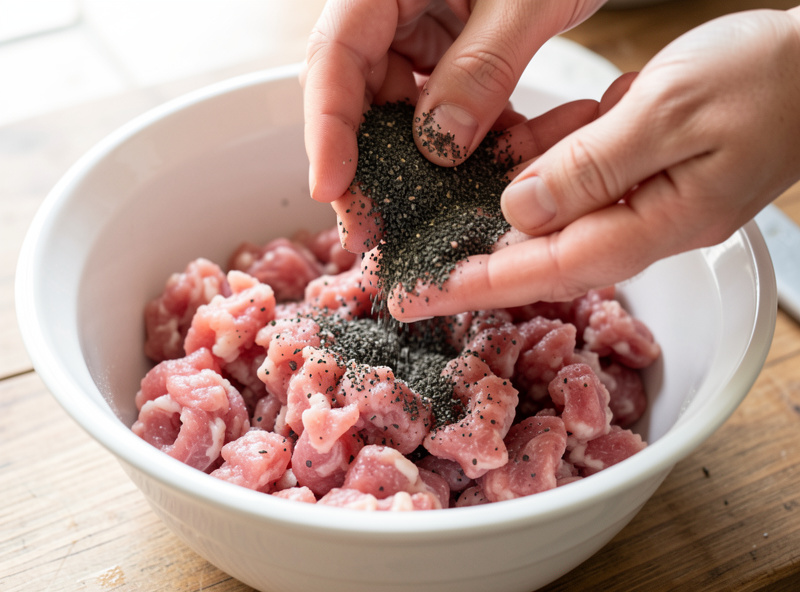
One correction I make constantly for beginners: do not season for the raw taste. The mince always tastes milder in the bowl than the finished salame does at 35% weight loss, because the water leaves and the flavor concentrates while the acid backdrop from fermentation sharpens the pepper’s bite. Season to roughly 80% of what tastes right raw and let the dry finish the job.
Whole vs Cracked vs Ground: Which Pepper Cut for Salami?
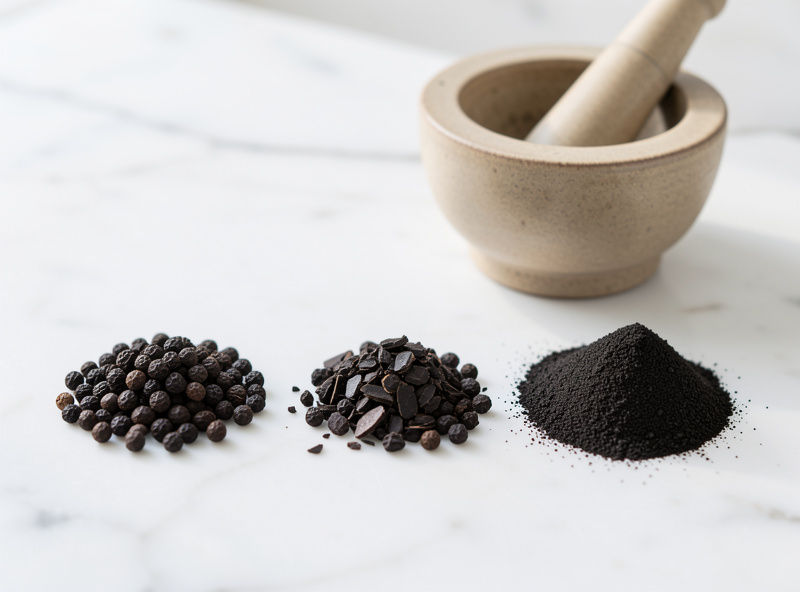
Whole peppercorns give intermittent bursts of sharp heat, coarse-cracked gives structured pops and a visible studded slice, and fine ground gives an even, all-over background warmth with no surprises. There is no single right answer — there is a right answer for the salame you are trying to make. Here is how the three cuts actually behave in a cured sausage:
| Cut | Eating experience | Look on the slice | Best for | Dose note |
|---|---|---|---|---|
| Whole peppercorn | Random hot bursts, some very sharp | Big round black studs | Rustic salame, pepe nero styles | Stay near 3 g/kg; bursts read hot |
| Coarse cracked | Structured pops, even distribution of heat | Handsome black flecks throughout | Most classic salami — my default | 3–4 g/kg works well |
| Fine ground | Smooth background heat, no bursts | Faint grey speckle, muddier color | Spreadable styles, cures needing even distribution | Keep near 2 g/kg; it reads stronger |
The one I steer people away from as a default is fine ground. It distributes its heat so evenly that the salame can taste flatly “peppery” without the texture and visual interest that make a good slice exciting, and finely ground pepper also loses its aroma fastest once milled. Ground has its place — a spreadable ‘nduja-style mince or a cure rub that needs the pepper woven evenly through — but for a sliceable salame, coarse crack is the sweet spot.
Why Does Coarse-Cracked Pepper Win in Most Salami?
Coarse-cracked pepper gives you the best of both worlds: enough surface area to release aroma and heat through the whole piece, but pieces large enough to survive the grind-and-mix without turning to dust and to show up as those handsome black flecks on the cut face. It is the cut I run in probably four out of five batches. When I crack a fresh batch on the board the smell is bright and almost citric — that top note is the volatile oil you lose entirely in a jar of pre-ground pepper that has sat open for a year.
Crack it yourself and crack it fresh. A quick pulse in a dedicated grinder, or a few passes in the mortar, gives you an uneven coarse crumb that is exactly what you want — some bigger shards, some medium. That variation is a feature: it spreads the heat across a couple of textures. The tool matters here, and I go deep on which machine gives a clean coarse crack versus a muddy powder in my guide to the best spice grinder for whole-muscle and sausage cures. A cheap blade grinder pulsed in short bursts is honestly all most home charcutiers need for pepper.
Does Toasting Black Pepper Before Grinding Help?
Lightly toasting whole peppercorns before you crack them deepens and rounds the aroma, trading a little of the sharp bite for a warmer, more complex pepper character. It is optional — unlike coriander or fennel, pepper is already aromatic raw — but a 30-second toss in a dry pan until they smell fragrant does soften the raw harshness in a way I like for richer, wine-heavy salami. Do not over-toast; pepper turns acrid faster than seeds do, and once it smells like burnt toast it is ruined.
If you do toast, always toast whole and cool completely before cracking, or the residual heat and moisture gum up the grinder and you scorch the powder. The full method — which spices reward toasting most, how long, and why you never toast pre-ground — is in my walkthrough on toasting and grinding spices for charcuterie. For pepper specifically, I toast maybe half my batches; for fennel and coriander I toast every time.
How Does Pepper Read After Fermentation and Drying?
Pepper gets hotter as the salame ferments and dries, for two reasons that compound. First, the piece loses 30 to 40% of its weight as water leaves, so the same grams of pepper now sit in far less mass — the concentration climbs. Second, the lactic acid from fermentation drops the pH and creates a sour backdrop that makes pepper’s piperine bite read sharper against it. A blend that tasted assertive-but-fine in the fry test can arrive genuinely hot at slicing.
This is exactly why I hold the pepper at 3 g/kg rather than chasing a bold raw taste. I learned it the hard way: an early soppressata I built at what felt like a modest 5 g/kg of cracked pepper came out of the chamber three months later with a burn that overwhelmed everything else on the board — the fennel had vanished behind it. Perfectly safe, perfectly edible, but it was a pepper bomb, not the balanced salame I had pictured. The honest doneness signal here, as always, is weight loss: I pull at about 35% loss and taste, and I trust that number over any calendar date. If you want to nail the ratio for your own batch sizes, the arithmetic is in how to scale a charcuterie spice recipe by meat weight.
Which Peppercorn Should You Buy: Tellicherry, Malabar or Green?
Tellicherry is the premium default for salami — larger, later-picked Malabar berries with a fuller, more aromatic, slightly fruity character that stands up to a long cure. Standard Malabar black pepper is perfectly good and cheaper, and it is what I use for everyday batches. Green peppercorns (the same berry, unripe and preserved) bring a fresher, milder, almost herbal note that is lovely in a lighter salame but too delicate to carry a bold one. The American Spice Trade Association publishes grading and cleanliness standards worth understanding at astaspice.org, and buying whole from a source with fast turnover matters more than the grade name on the label.
Buy whole peppercorns, always, and buy them somewhere they sell quickly so they are not stale. Whole pepper holds its volatile oils for a year or more; pre-ground is fading within weeks of milling. You can compare whole Tellicherry peppercorns on Amazon to get a feel for the price step up from standard black — for the small amounts a home batch uses, the upgrade is nearly free per salame.
As an Amazon Associate I earn from qualifying purchases.
Does Rolling Salami in Pepper Change the Cure?
Coating a finished salame in coarse-cracked pepper — the classic pepe nero look — is a surface flavor and appearance choice, not a preservation step, and it does not replace or block the white mold you actually want on the casing. The pepper crust adds an aromatic, slightly spicy bite to the outer bite of each slice and looks striking, but the piece underneath still has to be cured, fermented and dried correctly first. Pepper is not a meaningful antimicrobial at these levels; the salt, the cure, the pH drop and the water loss are what make the salame safe.
If you want that peppered exterior, I roll the cased salame in cracked pepper after the fermentation phase, before the long hang, so it adheres to the slightly tacky casing. In the chambers I run I still spray or let the natural Penicillium nalgiovense white mold develop over and around the pepper — the two coexist fine, and the mold does its usual job of regulating surface moisture and out-competing the fuzzy, undesirable molds. One thing to watch: a heavy pepper coat can trap surface moisture in a humid chamber, so if your RH runs high, go lighter on the crust or you invite the wrong mold. That is a humidity problem, not a pepper problem, but the pepper can make it worse.
How much black pepper per kg of salami?
Use 2 to 4 grams of black pepper per kilogram of green meat, with about 3 grams per kilogram as a balanced default. Weigh it rather than grinding to feel, since pepper reads hotter after the salami ferments and dries.
Should salami pepper be whole, cracked or ground?
Coarse-cracked is the best default for most salami. It gives structured heat and handsome black flecks on the slice, and survives mixing better than fine ground. Whole peppercorns give random hot bursts, and fine ground gives a smooth, even background heat with less aroma.
Does black pepper get hotter as salami dries?
Yes. The salami loses 30 to 40 percent of its weight as water leaves, concentrating the pepper, and the sour pH from fermentation makes the pepper bite read sharper. Season to about 80 percent of what tastes right raw so the finished salame is balanced.
Do you need to toast black pepper for salami?
It is optional. Pepper is already aromatic raw, but a light 30-second toast of whole peppercorns rounds the flavor and softens the raw bite. Always toast whole and cool fully before cracking, and stop before it smells burnt, since pepper turns acrid quickly.
What is the best pepper for salami?
Whole Tellicherry peppercorns are the premium choice for their full, fruity aroma, but standard whole Malabar black pepper works well for everyday batches. Buy whole rather than pre-ground and crack it fresh, since ground pepper loses its aromatic oils within weeks.
Further Reading
- The Charcuterie Spice, Seasoning & Binder Guide
- Toasting and Grinding Spices for Charcuterie
- Best Spice Grinder for Whole-Muscle and Sausage Cures
- How to Scale a Charcuterie Spice Recipe by Meat Weight