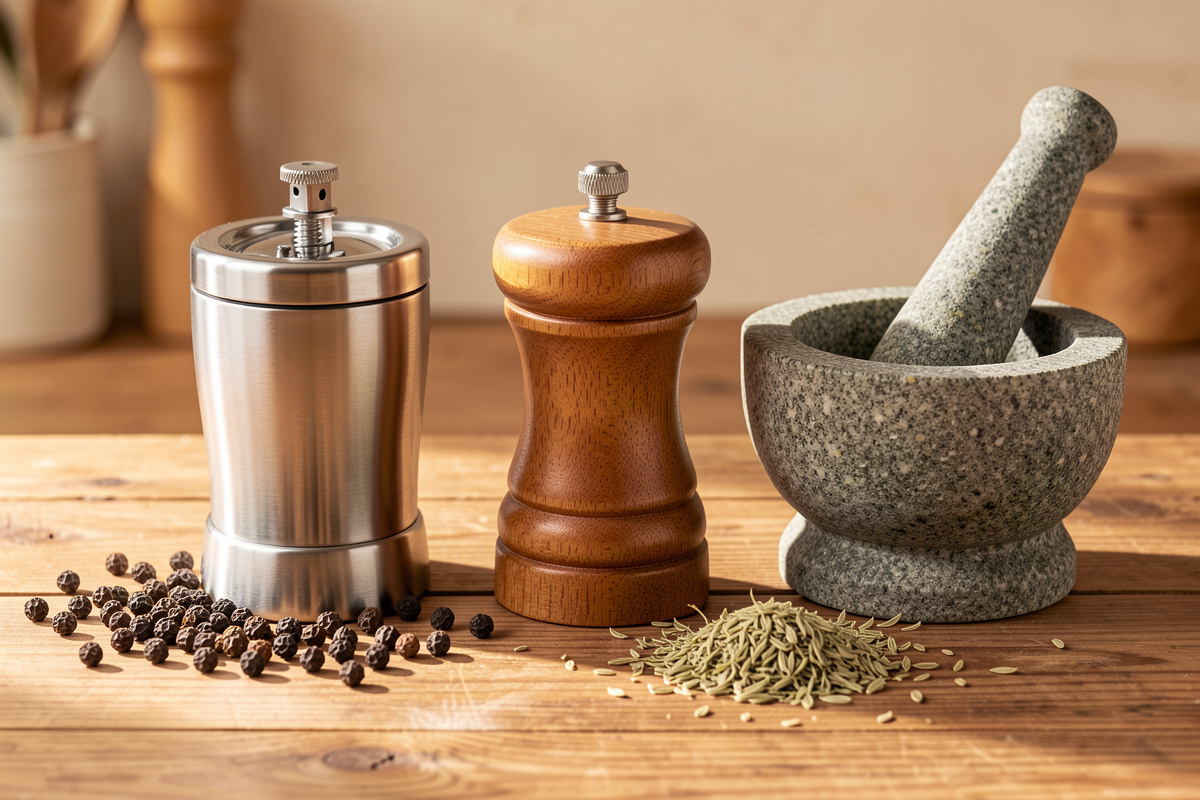

The best all-round spice grinder for charcuterie is a dedicated electric blade grinder: it costs about $15 to $30, cracks pepper coarse or grinds coriander fine depending on how long you pulse it, and it is the single highest-return tool upgrade in the hobby. For truly uniform powder step up to a burr mill, and for the most control over a coarse crack, keep a mortar and pestle on the bench. The one rule: never share it with your coffee.
Pre-ground spice is stale spice, so a grinder is not a luxury — it is what unlocks the toasted-and-ground-fresh flavor that makes a salame smell alive months into the dry. I ran my first year on supermarket pre-ground and could not work out why my salami tasted flat; a $20 blade grinder fixed it overnight. Across the chambers I run I now keep three grinding tools, each for a different job, and this guide is exactly how I choose between them for whole-muscle rubs versus sausage blends.
What Is the Best Spice Grinder for Charcuterie?
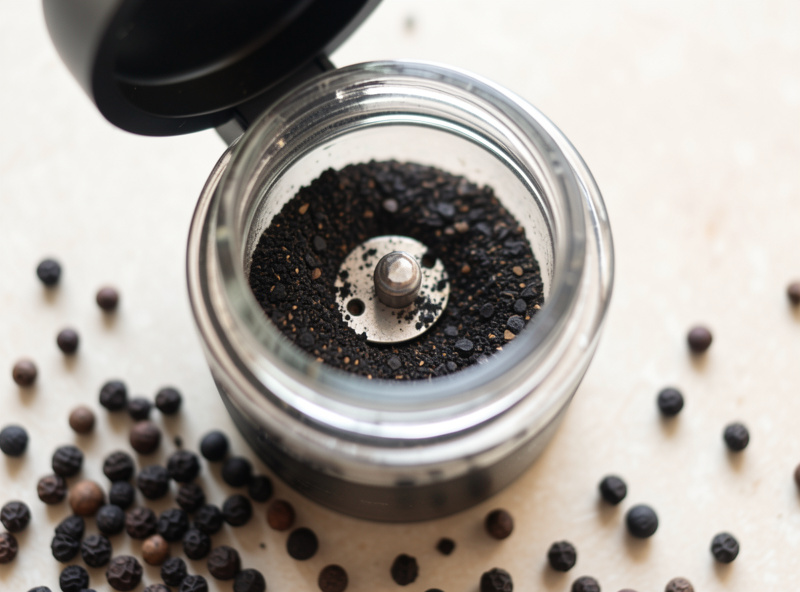
For most home charcutiers, a dedicated electric blade grinder is the best first buy because it is cheap, fast, and versatile: short pulses give a coarse crack for pepper, longer runs give a fine powder for a cure rub. It handles the small batches a home cure needs in seconds, cleans easily, and costs less than a single ruined piece of meat. The trade-off is that a blade grinder chops rather than mills, so the grind is slightly uneven — which, for charcuterie, is often exactly what you want.
That unevenness is a feature for a studded salame, where a mix of larger shards and finer bits spreads flavor across textures. When you need a truly uniform grind — a fine, even cure powder for a whole muscle, or a consistent blend where no single spice should dominate — a burr mill or a patient session with a mortar and pestle does better. I reach for the blade grinder four times out of five; it is the workhorse. The grinder sits at the practical center of the whole charcuterie seasoning system, because every flavor decision upstream depends on grinding fresh. You can compare current electric spice grinders on Amazon to see the price and capacity range.
As an Amazon Associate I earn from qualifying purchases.
Blade vs Burr vs Mortar and Pestle: Which for Spices?
Each tool grinds differently, and the right one depends on how uniform and how coarse you need the result. A blade grinder chops with a spinning blade (uneven, versatile, fast); a burr mill crushes between two abrasive surfaces (uniform, adjustable, slower); a mortar and pestle crushes by hand (total control, most effort). Here is how they stack up for charcuterie work:
| Tool | Grind consistency | Best grind | Effort | Best for |
|---|---|---|---|---|
| Electric blade grinder | Uneven, controllable by time | Coarse crack to medium | Very low | Everyday pepper, versatile default |
| Burr mill | Very uniform, adjustable | Fine even powder | Low | Cure rubs, uniform blends |
| Mortar and pestle | Fully controllable by feel | Coarse crack, bruising | High | Small amounts, coarse pepper, garlic paste |
| Dedicated pepper mill | Uniform, adjustable | Table-grind pepper | Low | Small pepper doses on the fly |
If I could own only one, it would be the blade grinder for its sheer versatility. But the mortar and pestle earns its place for two jobs a machine does poorly: a rough, uneven coarse crack of pepper where you want big visible shards, and turning fresh garlic into a paste. The burr mill is the specialist I pull out when a recipe truly needs an even powder. You do not need all three to start — begin with the blade grinder and add the others as specific jobs demand them. Whole spices from a good source matter as much as the tool; the American Spice Trade Association at astaspice.org sets the cleanliness and grading benchmarks reputable suppliers follow.
What Grind Do Whole-Muscle Rubs Need vs Sausage Blends?
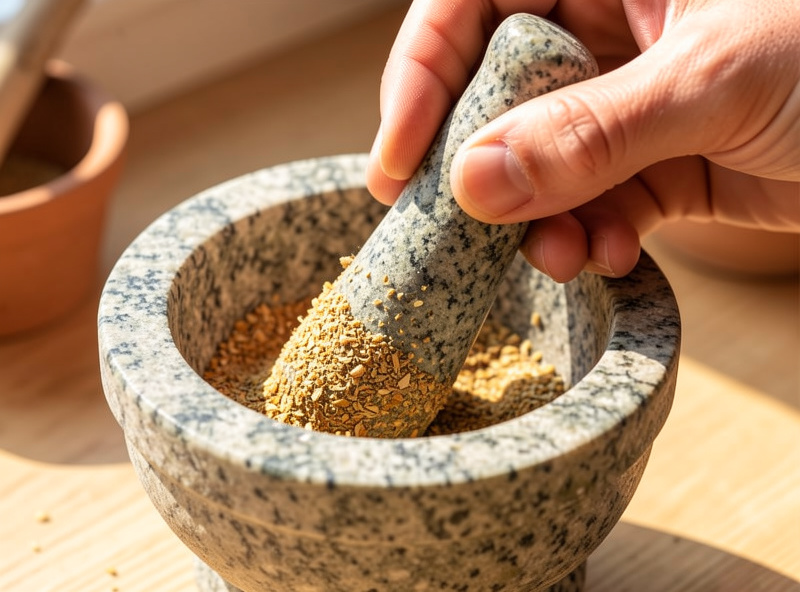
Whole-muscle rubs generally want a coarser grind because the spice sits on the surface and only the coarse, aromatic pieces carry flavor inward as the cure migrates; sausage blends often want a finer, more even grind because the spice is mixed evenly through the mince and you want no gritty surprises. This is a real distinction that changes which tool I reach for. On a coppa or lonzino I crack the pepper and juniper coarse, because a fine bloom on the outside mostly makes a pretty crust while the coarse aromatics are what actually diffuse into the meat over the two-week cure.
For a sausage blend the calculus flips. The mince gets seasoned throughout, so a finer, more uniform grind distributes evenly and avoids hard bits, though I still like a coarse crack of pepper in a studded salame for visual and textural interest. The particle size of what goes into ground meat genuinely affects the eating experience; meat scientists at the American Meat Science Association (meatscience.org) study exactly this. In practice: coarse crack for whole muscle and studded salami, finer grind for smooth blends and cure rubs that must distribute. How much of each spice to grind is covered in the black pepper guide and, for the whole blend, in the seasoning system.
Do You Need a Dedicated Spice Grinder?
Yes — keep a grinder used only for spices, separate from your coffee grinder, unless you enjoy cumin-flavored espresso and pepper-scented coffee cross-contaminating each other. Spice oils are tenacious; a grinder that has done fennel and coriander will flavor coffee for weeks, and coffee oils will do the same to your spices. A cheap second blade grinder dedicated to the charcuterie shelf solves it permanently and costs almost nothing.
I keep my spice blade grinder labeled and stored with the curing gear, nowhere near the kitchen coffee setup. If you must share a grinder in a pinch, a trick that helps is grinding a spoonful of plain rice through it — the rice absorbs residual oils and scrubs the blade — but this is a workaround, not a substitute for a dedicated unit. For the small money a second grinder costs, dedicate one and forget the problem. You can find inexpensive dedicated small blade grinders on Amazon that are perfect for a spice-only role.
How Do You Get a Coarse Crack vs a Fine Powder?
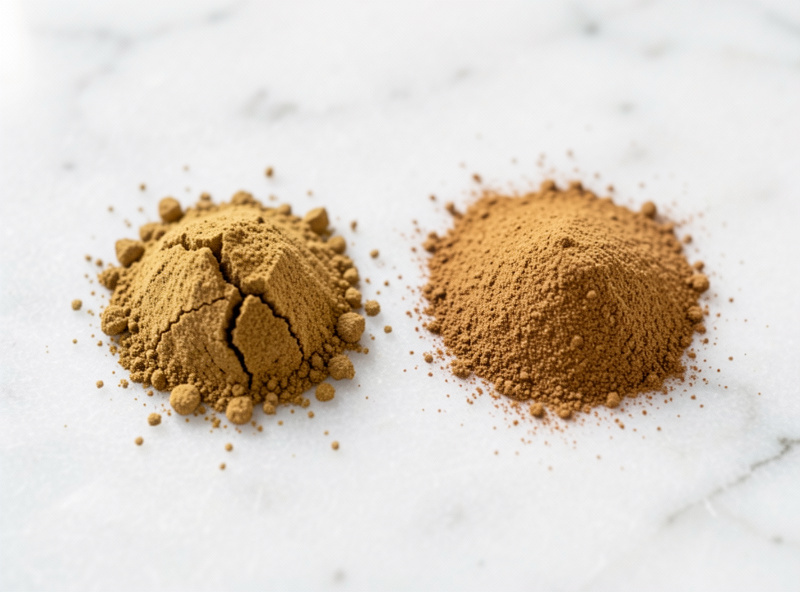
On a blade grinder, control the grind with time and technique: short one-second pulses with a shake between them give a coarse, even crack, while running it continuously for 20 to 30 seconds gives a fine powder. The mistake beginners make is holding the button down and hoping — that over-processes the bottom layer to dust while leaving the top whole. Pulse, shake, pulse, and check often; you can always grind finer, but you cannot un-grind.
For a truly coarse, rustic crack with big shards — the kind that studs a pepe nero salame — the mortar and pestle beats any machine, because you crush each peppercorn just once or twice rather than chopping it repeatedly. For a fine, uniform cure powder, a burr mill on a fine setting or a longer blade-grinder run gets you there. Always grind toasted spices only after they have cooled completely; grinding warm seeds gums the machine and steams away the aroma you just built by toasting them. And grind only what the batch needs — freshly ground spice fades within days.
How Do You Clean and Maintain a Spice Grinder?
Keep a spice grinder dry and clean it without water where possible: wipe the chamber with a dry cloth or paper towel after each use, and grind a spoonful of plain white rice through it periodically to absorb oils and knock loose residue. Moisture is the enemy of a blade grinder — it invites rust on the blade and clumping of the next spice — so avoid washing the motor unit, and if a removable cup is dishwasher-safe, dry it thoroughly before reassembly.
Spice oils build up over time and can turn rancid, throwing an off note into your next grind, so an occasional rice-scrub keeps the flavors clean. For a mortar and pestle, rinse with hot water and no soap (unglazed stone absorbs detergent), scrub with coarse salt for stubborn residue, and air-dry fully. A well-kept grinder lasts years; mine has cracked pepper for more batches than I can count, and a two-minute wipe-down after each session is all it has ever asked. Treat the tool well and it keeps paying you back in fresh, full-strength spice.
How Much Should You Spend on a Spice Grinder?
You do not need to spend much: a perfectly good dedicated blade grinder runs $15 to $30, and for charcuterie that is all most people ever need. The expensive machines buy you a more uniform grind, adjustable settings, and larger capacity — genuinely useful if you grind in bulk or want repeatable fine powders — but the flavor gain over a cheap blade grinder is small compared to the enormous gain of grinding fresh at all. Spend the money on whole spices from a good source before you spend it on a fancy grinder.
My honest advice: buy the cheap blade grinder first, use it for a few months, and only upgrade if you find yourself repeatedly wanting a more uniform or finer grind than it gives. A mortar and pestle is a modest add for coarse work and garlic paste. A burr mill is the one place a bit more money pays off if uniform powder matters to your style. But I have cracked pepper for years on grinders that cost less than a good bottle of wine, and the meat never knew the difference. The tool is not where the quality lives — freshness is.
Can You Grind Spices in a Blender or Meat Grinder?
A high-powered blender can grind spices in a pinch but does it poorly for small charcuterie quantities, and a meat grinder is the wrong tool entirely for hard, dry seeds. Blenders need a certain volume to circulate properly, so grinding the few grams of spice a home cure needs just throws them around the jug unevenly; some models have a small dry-grinding cup that works better. A meat grinder is built to shear soft, cold meat, not to crush hard peppercorns, and forcing dry seeds through it dulls the plates and gives a poor, uneven result.
For the small, precise quantities charcuterie uses, a dedicated blade grinder or a mortar and pestle beats improvising with a bigger machine every time. The exception is when you are grinding a large bulk batch of a single spice for a big run of salami — there a blender’s dry cup or a larger mill earns its keep. But for the everyday few grams per kilo, keep it simple: the small dedicated grinder is faster, cleaner, and gives you the grind control that improvising cannot. Match the grind to the job, as covered in the seasoning system, and the humble blade grinder handles almost everything.
What is the best spice grinder for charcuterie?
A dedicated electric blade grinder is the best all-round choice for most home charcutiers. It is cheap, fast and versatile, cracking pepper coarse with short pulses or grinding fine with a longer run. Add a burr mill for uniform powder and a mortar and pestle for a rustic coarse crack.
Blade or burr grinder for spices?
A blade grinder is more versatile and cheaper, giving everything from a coarse crack to a fine grind depending on how long you run it, though the result is slightly uneven. A burr mill gives a very uniform, adjustable grind, which is better for even cure powders and blends where no spice should dominate.
Can you use a coffee grinder for spices?
You can, but use a separate, dedicated one. Spice oils are tenacious and will flavor coffee for weeks, and coffee oils will taint your spices. A cheap second blade grinder kept only for spices solves it. In a pinch, grinding plain rice through a shared grinder helps clean out residual oils.
How do you get a coarse crack instead of powder?
On a blade grinder, use short one-second pulses with a shake between them rather than holding the button down, which over-grinds the bottom to dust. For a truly coarse, shard-like crack, a mortar and pestle beats any machine because you crush each peppercorn only once or twice.
How do you clean a spice grinder?
Keep it dry. Wipe the chamber with a dry cloth after each use and periodically grind a spoonful of plain white rice through it to absorb oils and lift residue. Avoid washing the motor unit, and dry any removable cup thoroughly, since moisture rusts the blade and clumps the next spice.
Keep Building
- The Charcuterie Spice, Seasoning & Binder Guide
- Toasting and Grinding Spices for Charcuterie
- How Much Black Pepper in Salami: Whole vs Cracked vs Ground
- How to Scale a Charcuterie Spice Recipe by Meat Weight