Case Hardening on Salami: Fixing the Hard Ring and Wet Core
June 15, 2026

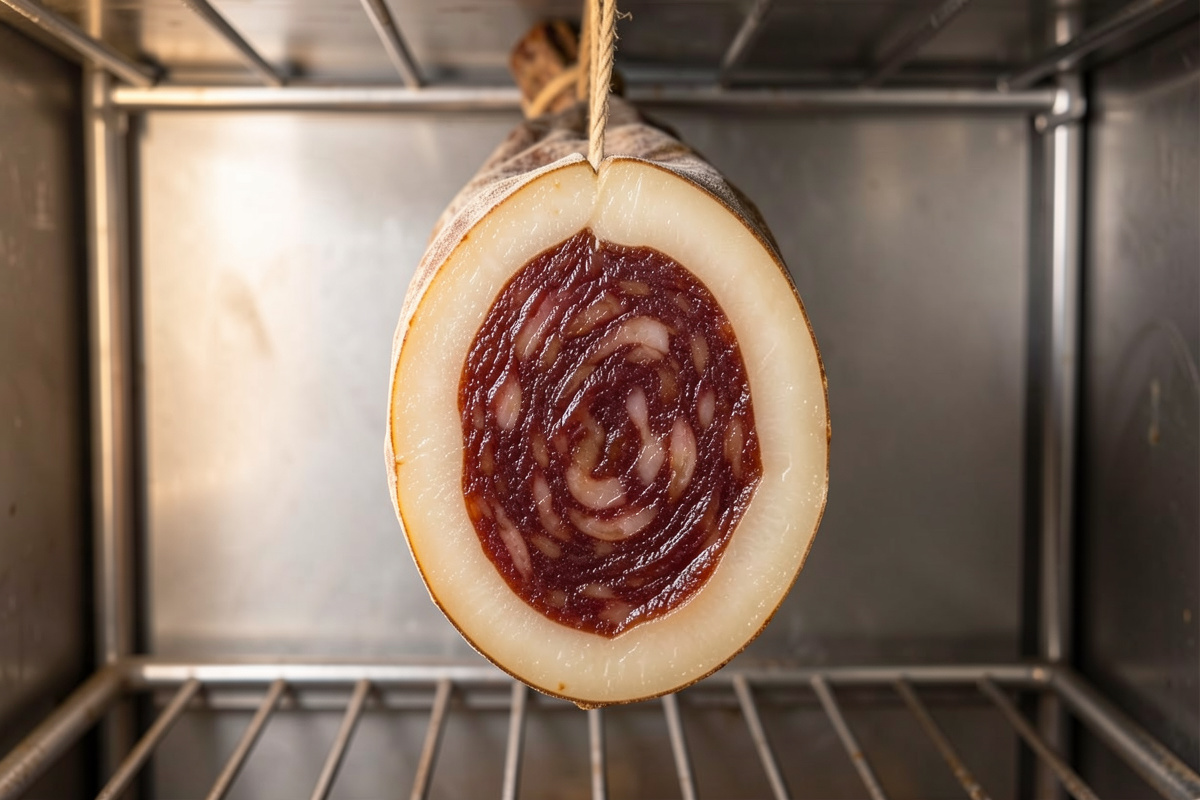
Every home charcuterie maker eventually slices into a salami that looks finished on the outside and isn’t. The casing is leathery, the outer ring is dense and pale, and the center is still soft, wet, and a shade too dark. That’s case hardening on a fermented sausage, and it behaves differently than it does on a whole-muscle cut. The chamber I run has thrown this at me on coppa and bresaola, but salami is the one where it bites hardest, because a chub traps its own moisture in a way a flat muscle never does.
Case hardening on salami happens when the casing and outer ring dry far faster than the core, sealing in moisture. The fix is to slow drying immediately: raise RH to roughly 80-85%, cut airflow across the chub, and if the ring is set hard, vacuum-rest the salami for several days to let moisture redistribute before resuming the dry.
Why salami case-hardens differently than whole muscle
A whole-muscle piece like a lonzino or bresaola is dense and uniform, so case hardening there is mostly a surface phenomenon you can usually massage and re-equalize. A salami is the opposite: it’s ground meat and fat packed loosely into a casing, riddled with tiny air gaps, and it has to lose 30-40% of its green weight before it’s finished. That’s a lot of water to push out through a single casing wall.
When the casing dries and shrinks faster than the interior can give up water, it stiffens into a moisture-tight shell. The core, still at high water activity, has nowhere to go. On the last batch I had hanging I caught it because the daily weight log flatlined three days running while the chub still felt soft in the middle when I pinched it. A salami that has stopped losing weight but is still soft inside is the textbook case-hardening signature, and it’s the single most reliable early warning the way I weigh mine.
The fermentation-to-drying transition is the danger zone
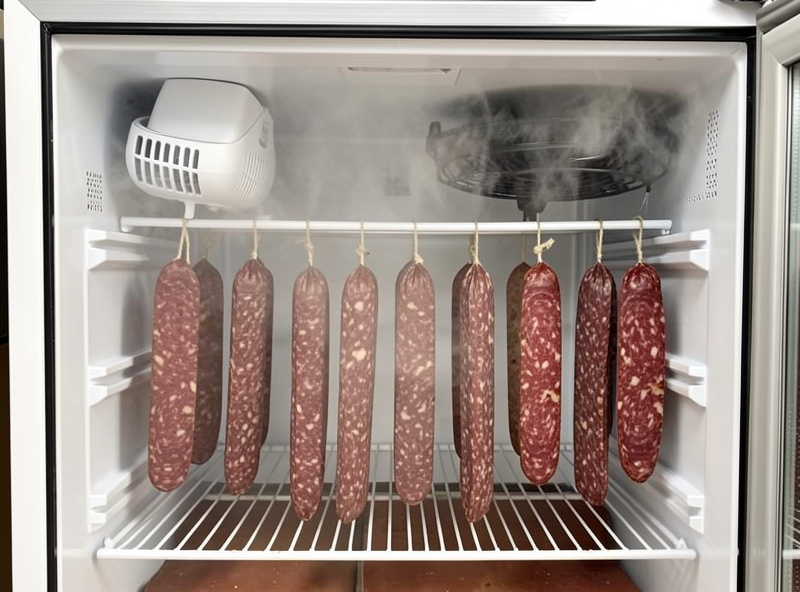
Fermented salami is most vulnerable right after the warm fermentation phase. During fermentation you hold warmer and humid so the starter culture (a Bactoferm-type LAB blend with dextrose to feed it) drops the pH and the casing stays supple. The moment you move into the drying phase at ~12-15°C and ~75-80% RH, the surface starts shedding water fast. If your RH is even a little low or your airflow a little brisk at that handoff, the casing sets before the interior has begun a slow, even dry. I treat the first 5-7 days of drying as the make-or-break window and watch the surface for any sign of a stiff, varnished skin.
Root causes specific to salami
Case hardening on a chub almost never has a single cause. It’s usually two or three of these stacking up. Here’s how they map, and what each one actually does to the sausage.
| Symptom you see | Root cause | The fix |
|---|---|---|
| Hard pale ring, dark wet core | RH too low during early drying | Raise RH to 80-85%, hold until core firms |
| Casing stiff and varnished within days | Airflow too strong / chub too close to fan | Move chub away from fan path, lengthen fan-off interval |
| Casing lifted off the meat, hollow gap | Core shrank under a set shell (detached casing) | Vacuum-rest to redistribute, then dry slow |
| Greasy, sealed-looking surface | Fat smear from warm grind / too much fat | Prevention only next batch; chill plates, 70/30 lean/fat |
| Weight loss stalled, still soft inside | Moisture-tight outer shell | Vacuum-rest, then resume at higher RH |
RH too low and drying too fast
This is the headline cause. If your chamber sits below ~75% RH during the first week of drying, the casing surface evaporates faster than capillary action can wick water out from the core. In my setup the ultrasonic cold-mist humidifier on the Inkbird IHC-200 holds the high end of the window during that early phase, and I let it drift down toward 75% only once the chubs have a few days of even shrinkage behind them. I cross-check the controller against a curing chamber humidifier that I trust and a salt-test-calibrated SensorPush at meat-shelf height, because controller probes drift and a 5-point RH error is enough to set a casing hard.
Airflow and hanging too close to the fan
Salami needs air exchange, not a breeze. I run a 120mm low-speed computer fan on a 5-minutes-on, 25-off interval timer, and the single most common case-hardening mistake I see is a chub hung directly in the fan’s path. The face of the sausage nearest the fan dries in a hard plaque while the back stays soft. Give every chub clear space, rotate them, and never let one sit in a direct jet. My deeper notes on this live in the curing chamber airflow fan guide, and the general, chamber-wide version of case hardening (covering whole muscle too) is in the case hardening in curing chambers writeup.
Casing choice, soaking, and fat ratio
The casing wall is the gate all that moisture has to pass through. Natural hog and beef-middle casings breathe and shrink with the meat; collagen casings are more prone to setting into a rigid sleeve. Either way, soak natural casings properly so they’re supple at stuffing, and don’t overstuff — a drum-tight chub has nowhere to shrink into and pulls the casing away from the meat as it dries. Fat ratio matters too: I run roughly 70/30 lean to fat, grind through chilled plates, and keep the mix cold so the fat doesn’t smear and glaze the surface. Picking the right casing is half the battle; the salami casing types guide walks through hog vs beef middle vs collagen for exactly this reason.
The hollow core and detached casing failure
A hollow core happens when a hard outer ring sets early, then the wet center keeps shrinking and pulls away from the rigid shell, leaving an air gap under a detached casing. It’s the advanced stage of case hardening and the gap can become a haven for spoilage or pathogen growth.
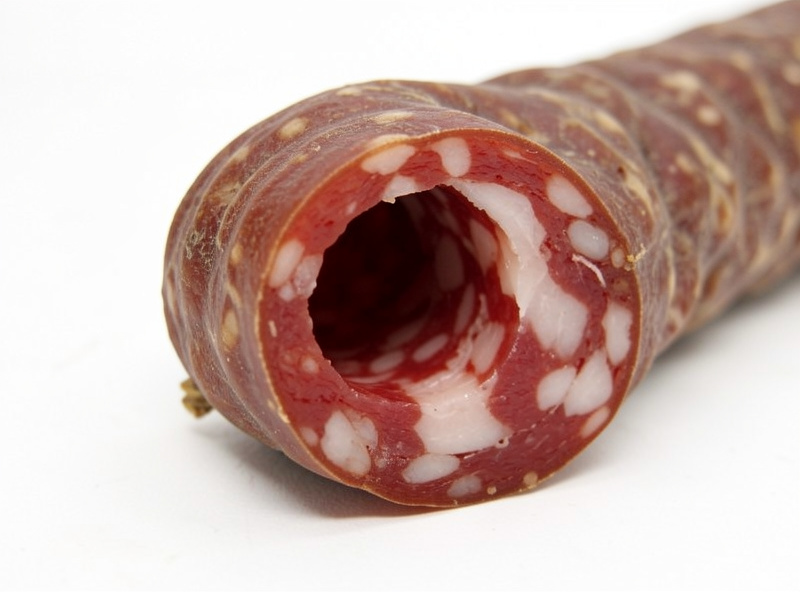
You’ll feel it before you see it: squeeze a finished-looking chub and the casing dimples in with a slight crackle, or you hear a faint give where it has lifted off the meat. When I slice into one, there’s a visible ring of dense dried meat, then a gap, then a softer dark core. That gap is the real problem. Case hardening by itself is a texture and yield defect. The trapped moist core, sitting at water activity high enough to support bacteria with reduced air exchange, is where the food-safety risk actually lives.
How to arrest case hardening mid-cure
If you catch it while the salami is still hanging, you can often save it. The whole move is to reverse the moisture gradient — stop pulling water off the surface and give the core a path to equalize.
- Bump the RH. Push the chamber to ~80-85% RH for several days. Higher humidity softens the casing and slows surface evaporation so the interior can catch up. If you tip too far and the chamber oversaturates, the curing chamber too humid fix walks back from that.
- Slow the airflow. Lengthen the fan-off interval or move the chub out of the active air path. You want gentle exchange to prevent surface mold issues, not active drying.
- Vacuum-rest to equalize. This is the strongest tool. Vacuum-seal the salami and refrigerate it for 4-10 days. With no evaporation, internal moisture redistributes from the wet core out toward the dried ring, softening the shell from the inside. Then unseal and resume drying slowly at the high end of the RH window. I’ve rescued a couple of chubs this way that I’d otherwise have written off.
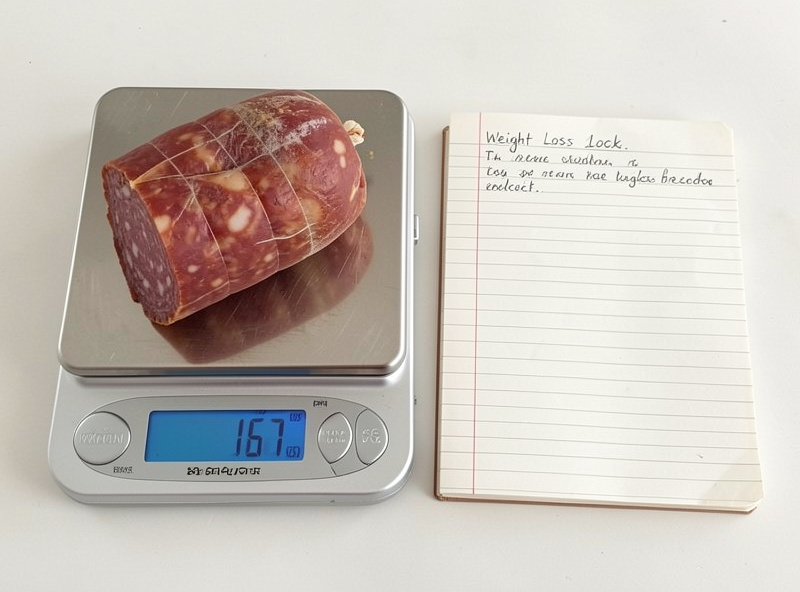
Throughout all of this, keep the weight log going. The point of vacuum-resting isn’t more drying — the chub won’t lose weight while sealed — it’s to even out where the remaining water sits so that when you do resume, the whole thing dries together. A finished salami should reach roughly 30-40% total weight loss with a firm, even feel from edge to center, no soft pocket.
Salvageable or toss? The honest call
Case hardening alone is a quality defect, not a safety hazard — a firm ring you can re-equalize is fine. But a detached casing with a soft, sour-smelling, or off-colored wet core that never reached safe weight loss should be thrown out. When the core is in doubt, throw it out.
Here’s how I actually judge it. If I vacuum-rest a case-hardened chub, resume drying, and it then loses weight steadily to 30-40% with a clean lactic smell and an even firm texture throughout, it’s good. If the core stays soft, smells putrid or yeasty-off, weeps liquid, or shows fuzzy black or green growth or a slimy sheen inside the gap, it goes in the bin — no tasting to “check.” A salami that fermented properly (good pH drop early, correct cure #2 with nitrite and nitrate for the long dry) has real safety hurdles working for it, but those hurdles assume the meat actually dried down. A wet core that never crossed the weight-loss endpoint hasn’t cleared them. The cure #2 question and the early pH drop are covered in my home salami making guide, and the broader diagnostic flow lives in the curing chamber troubleshooting guide.
I keep a calibrated hygrometer in the chamber at all times specifically so I’m never guessing at the RH that causes this in the first place. As an Amazon Associate I earn from qualifying purchases. A reliable digital hygrometer is the cheapest insurance against case hardening you can buy.
Frequently asked questions
Is case hardening on salami dangerous to eat?
Case hardening by itself is a texture and yield defect, not a hazard. The risk is a trapped wet core that never reached 30-40% weight loss, which can support pathogens. If the core is soft, off-smelling, or moldy inside, throw it out.
Can you fix a case-hardened salami that’s already hanging?
Often yes. Raise chamber RH to 80-85%, slow or redirect airflow away from the chub, and vacuum-rest the salami in the fridge for 4-10 days so internal moisture redistributes. Then resume drying slowly at the high end of the RH window.
What humidity prevents case hardening on fermented salami?
Hold roughly 80-85% RH during the first week of drying right after fermentation, then let it drift toward 75-80%. Below about 75% early on, the casing sets faster than the core can release water, which is what triggers case hardening.
Why did my salami casing lift off the meat?
That hollow core comes from a hard outer ring setting early while the wet center keeps shrinking and pulls away from the rigid shell. It is advanced case hardening, usually from low RH, too much airflow, or overstuffing the casing.
What weight loss means a salami is finished?
Aim for roughly 30-40% total loss from green stuffed weight, with a firm even feel from edge to center and no soft pocket. A chub that stalls below that while still soft inside is case-hardened, not finished.
For identifying what belongs on the casing and what does not, the salami casing mold guide covers every color with a decision flow.
Related Reading
- Curing chamber troubleshooting guide
- Case hardening in curing chambers (general)
- Curing chamber airflow and fan setup
- Curing chamber humidifier options
- Salami casing types guide
- Home salami making guide