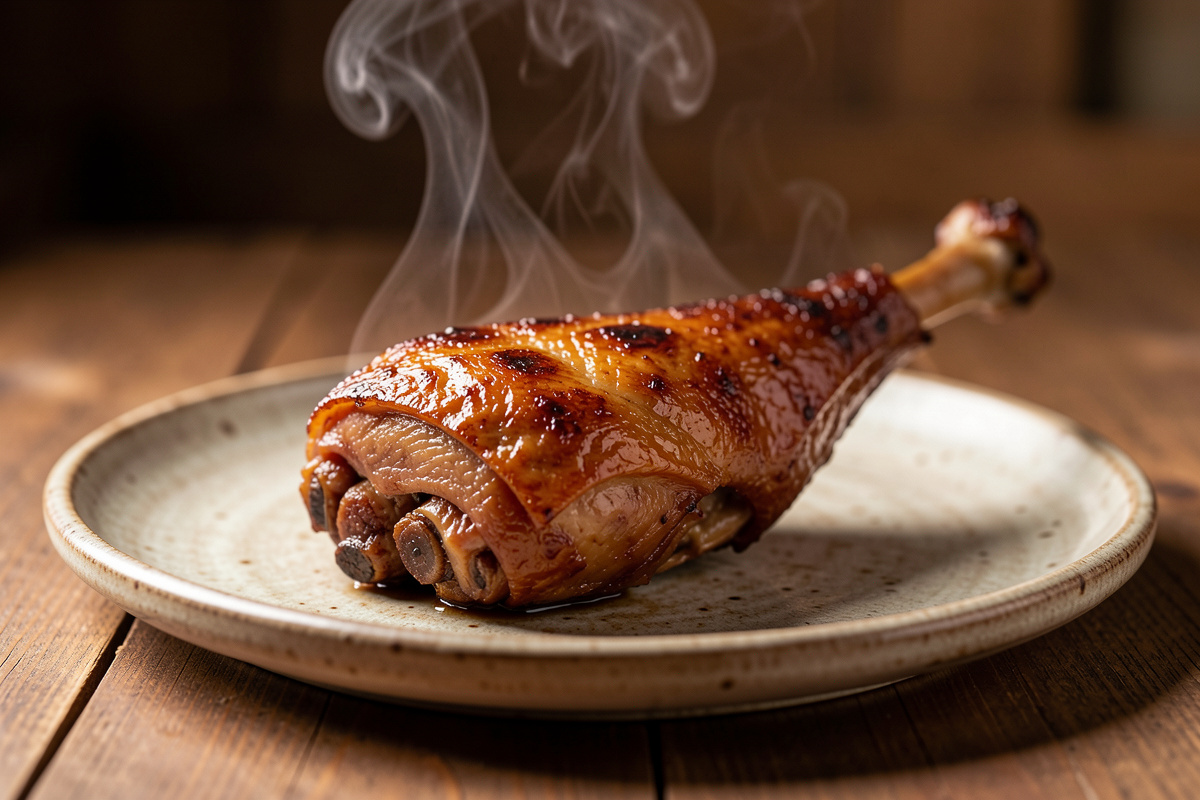

Duck confit is duck legs salt-cured overnight, then poached completely submerged in fat at around 85–90 °C (185–195 °F) for two to three hours until the meat is spoon-tender, then cooled and stored under that fat. Fully submerged in a sealed container, it keeps several weeks to about two months in the fridge. It is the single best entry point into charcuterie because heat does the work that weeks of drying do elsewhere.
I make duck confit more than almost anything else on this site, partly because it is forgiving and partly because the by-product — a jar of duck-flavoured fat — is the best thing that can happen to a roast potato. This is the cooked, fast side of the craft: no curing chamber, no humidity controller, no three-month wait. Just salt, fat, low heat and a thermometer. It sits inside the broader confit, rillettes and terrines guide, and once you have made it you will understand every other recipe in that cluster.
The short salt cure comes first
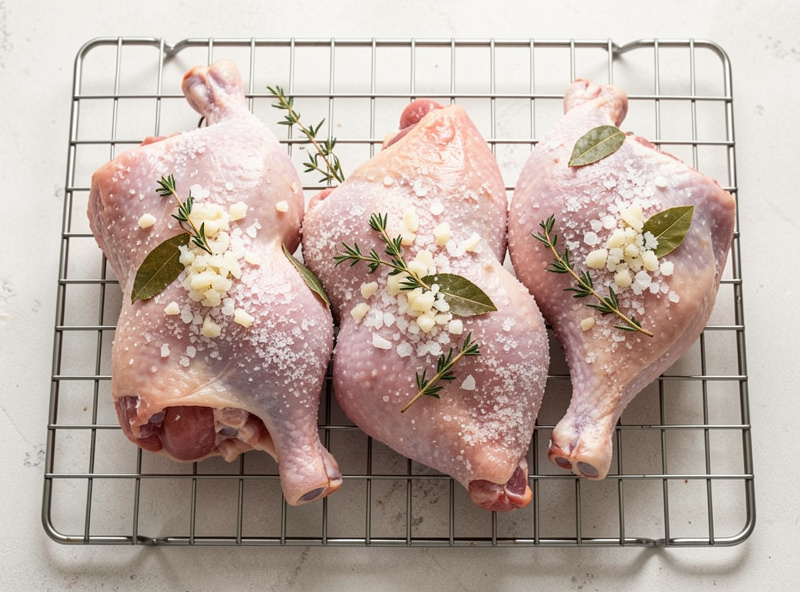
Confit is not a long cure — the salting step is there to season the meat through, draw out a little surface moisture, and give a touch of preservation, not to dry-preserve the way a duck prosciutto is cured for two weeks. Rub the duck legs with roughly 15–20 g of salt per kilo of meat, along with crushed garlic, thyme, bay and a few crushed peppercorns, and leave them skin-side up on a rack in the fridge, uncovered, for 12 to 24 hours.
The next morning the salt will have pulled a little liquid and the skin will feel drier and tackier — that is exactly right. Rinse the legs briefly to remove surface salt and the aromatics, then pat them completely dry. Water is the enemy of the next step: any moisture left on the meat will make the hot fat spit and can cause the legs to fry rather than poach. I weigh the legs before and after the cure out of habit — the small loss tells me the salt did its job.
Cooking submerged in fat, low and slow
Settle the cured legs into a deep oven dish in a single snug layer and pour over enough melted fat — rendered duck fat is classic, but lard works and is cheaper — to cover them completely. Every bit of meat must be under the surface; a knuckle poking out cooks unevenly and becomes a spoilage point in storage. Bring the fat up to temperature gently and hold it at 85–90 °C (185–195 °F). That is a bare, lazy shimmer, never a simmer or a boil. A clip-on thermometer takes the guesswork out; this is the same instant-read habit I use to call a whole muscle done by feel.
Hold it there for two to three hours. The legs are ready when the meat has pulled back from the bone end and a skewer slides in with no resistance — it should feel like the meat would fall off if you looked at it sternly. Resist the urge to crank the heat to speed things up; high fat temperature dries the meat and toughens it, the exact opposite of what you want. Low and slow is not a suggestion here, it is the entire technique.
Oven vs sous-vide
A low oven (set to around 120 °C/250 °F and adjusted so the fat holds the target temperature) is the traditional route and the one I use most. A sous-vide bath is the precision option: seal each leg with a spoon of fat and hold at 80 °C (176 °F) for 8 to 12 hours for a texture that is hard to beat, then transfer to fat for storage. Both work; the oven is faster, the bath is more exact. Neither is “better” — they are different tools, and I keep both running depending on how many legs I am doing.
| Step | Target | Time | Why it matters |
|---|---|---|---|
| Salt cure | 15–20 g salt/kg + aromatics | 12–24 hours, fridge | Seasons through, draws surface moisture |
| Oven confit | Fat at 85–90 °C (185–195 °F) | 2–3 hours | Tenderises without drying or frying |
| Sous-vide confit | 80 °C (176 °F) | 8–12 hours | Precise, silkiest texture |
| Storage | Fully submerged, fridge | Several weeks–2 months | Fat seal excludes air; cold keeps it safe |
Cooling and storing under the fat
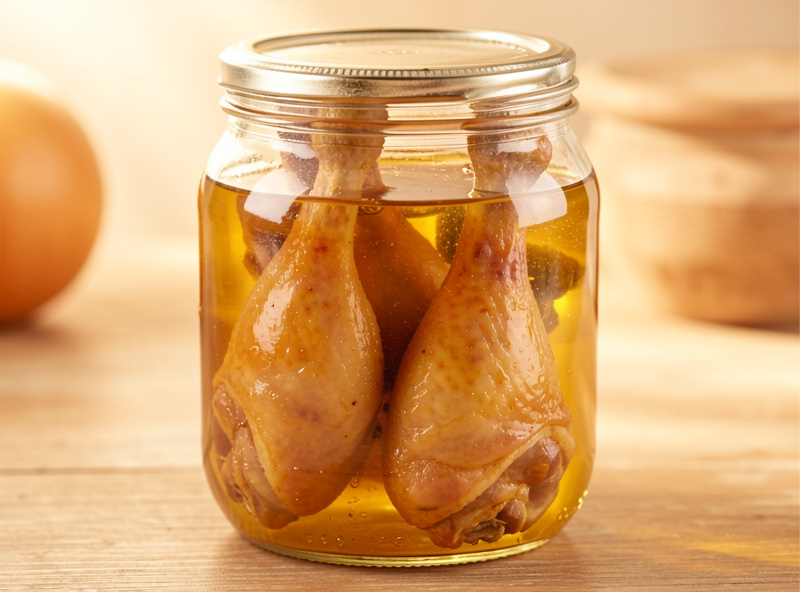
Let the legs cool in the fat until they are warm, not hot, then lift them gently into a clean jar or crock and strain the fat over them so they are completely covered, leaving the cloudy meat juices behind at the bottom of the dish (those juices are delicious but they shorten storage life, so keep them for a sauce instead). Top up with extra fat if needed so there is a clean, unbroken layer over everything. Cool, lid it, and refrigerate.
This is where I have to repeat the one rule that matters most: confit is refrigerated food. The old story of duck legs kept all winter in a stone crock in an unheated larder belongs to cold cellars and a level of risk we do not accept today. A fat-sealed, low-acid, anaerobic environment at room temperature is a botulism risk, and that toxin is invisible and tasteless. Keep your confit in the fridge, fully submerged, and you can draw legs out as you need them for weeks. The full storage logic — fridge times, freezing, how to tell when a batch has turned — is in preserving confit in fat, and the broader why is in the charcuterie food safety guide, backed by the home-preservation guidance of the National Center for Home Food Preservation.
Crisping and serving
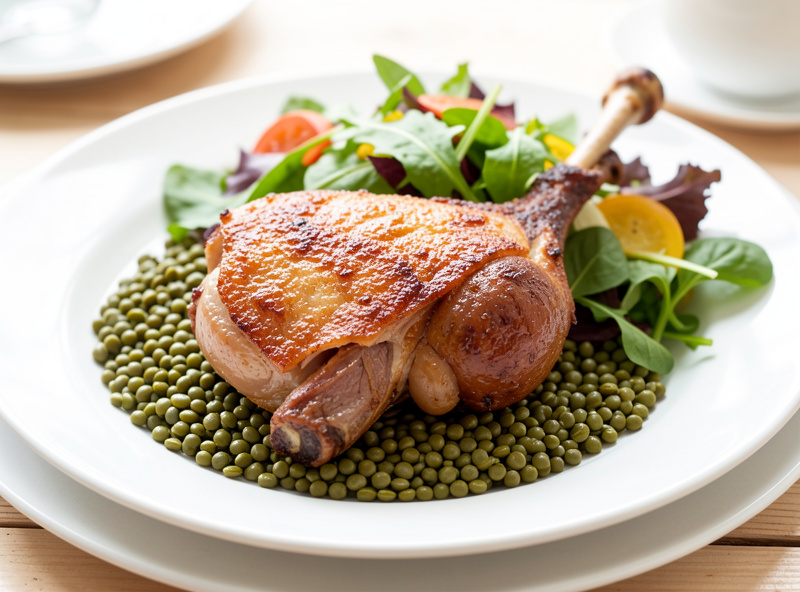
The magic of confit is that the hard work is done in advance; serving is a five-minute job. Lift a leg out, scrape off most of the clinging fat (back into the jar — never waste it), and lay it skin-side down in a dry, hot pan or a hot oven until the skin blisters and turns deep golden and shatter-crisp. The inside is already cooked and tender, so you are only crisping the skin and warming through. Served over lentils, with a sharp salad to cut the richness, or shredded into a cassoulet, it is restaurant food from your fridge.
If you want to push it further, a light cold-smoke over the cured legs before they go into the fat adds a beautiful dimension — keep it cold and brief, and follow the wood pairing notes (fruit woods like apple and cherry suit duck). Smoke is a flavour layer here, not a preservation step, exactly as it is everywhere on this site.
What to do with the leftover fat
After a batch you are left with a jar of beautifully duck-flavoured fat. Strain it through a fine sieve or muslin to remove meat bits and any settled juices, and it is ready to reuse for the next batch of confit two or three times before it gets too salty or meaty, or to roast the best potatoes of your life. If you cook a lot of duck, you can also save and render the trimmed skin and fat to build your own stock — the same thrift that runs through making pork rillettes and chicken confit, where the meat practically cooks in its own fat. You can buy rendered duck fat to get your first batch going.
As an Amazon Associate I earn from qualifying purchases.
Frequently Asked Questions
What temperature should the fat be for duck confit?
Hold the fat at about 85 to 90 C (185 to 195 F) for an oven confit, which is a lazy shimmer, never a simmer. In a sous-vide bath, 80 C (176 F) for 8 to 12 hours gives the silkiest result. Higher temperatures fry and dry the meat instead of poaching it tender.
How long does duck confit keep?
Fully submerged in fat in a clean sealed container, duck confit keeps several weeks to around two months in the fridge. It must stay refrigerated, not at room temperature. For longer storage, freeze the legs in their fat.
Do I need curing salt (pink salt) for duck confit?
No. Duck confit uses a short cure of plain salt and aromatics, then relies on the fat seal and refrigeration. Curing salt is for long air-dried products and for pates you keep for days, not for confit you store cold and submerged in fat.
Can I reuse the confit fat?
Yes. Strain the fat through a fine sieve or muslin to remove meat particles and juices, and reuse it for two or three more batches of confit before it becomes too salty or meaty. It is also excellent for roasting potatoes and vegetables.
Why is my duck confit tough or dry?
Almost always the fat was too hot. Above a gentle shimmer the meat fries and the proteins tighten and dry out. Keep the fat at 85 to 90 C and give it the full two to three hours, or use a sous-vide bath for precise low heat.
Related Guides
- Confit, Rillettes and Terrines: The Complete Guide
- Preserving Confit in Fat: How Long It Keeps and Why
- Chicken Confit at Home
- Pork Rillettes Recipe
- Duck Prosciutto: The 2-Week Beginner Project