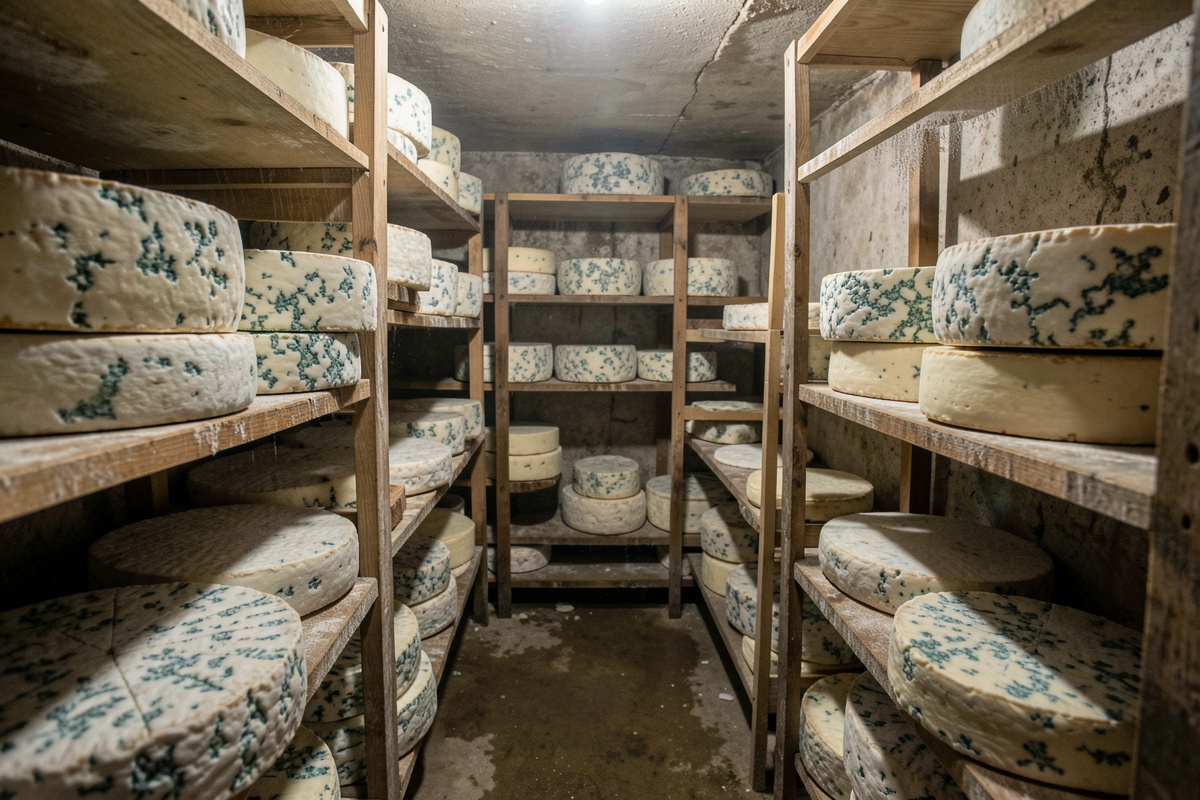

Making blue cheese at home hinges on two things the recipe rarely stresses: seeding the curd with Penicillium roqueforti, then piercing the salted wheel so air reaches the inside and the mould can bloom blue-green through the paste. Aged at 8–11 °C and a damp 90–95% RH for two to four months, a home blue is one of the faster, more dramatic cheeses you can run in a curing chamber.
Blue is the cheese that taught me my chamber could go wetter than charcuterie ever asks. Where my whole-muscle cures sit near 78% RH and a cheddar wants the low 80s, a blue wheel wants the air close to saturated. That single requirement — very high, very steady humidity — is why blue belongs in a controlled chamber rather than a kitchen fridge, and why I run it on its own cycle, away from anything I do not want turning blue. This guide covers the make in outline and the chamber affinage in detail, because the aging is where home blues are won or lost.
What makes a cheese “blue”
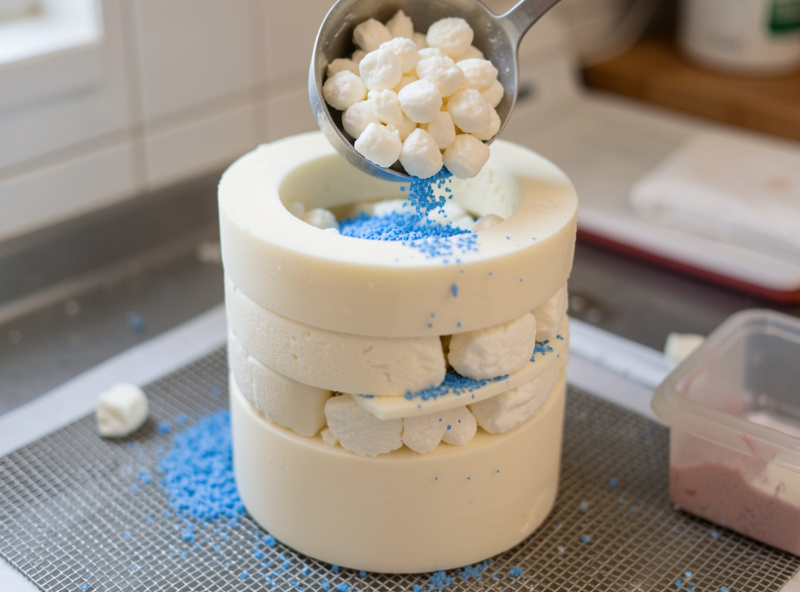
Penicillium roqueforti is the mould behind every blue, from Stilton to Gorgonzola to Roquefort-style sheep’s-milk wheels. It is added as a powdered culture, either stirred into the warm milk before the curd sets or sprinkled through the curds as they are ladled into the form. The spores sit dormant in the wheel until they get oxygen — which is the whole trick of the method. A blue wheel is built loose and not pressed hard, so it keeps open texture and small mechanical gaps for the mould to colonise once air is introduced.
Everything else about the make follows ordinary cheesemaking: culture and rennet set the milk, the curd is cut and drained, the wheel is formed and salted (Stilton is traditionally dry-salted on the surface, many blues are brined). The fresh-cheese end of that process overlaps what I cover for soft cheeses; here the emphasis is the chamber.
Piercing: the step that actually makes it blue
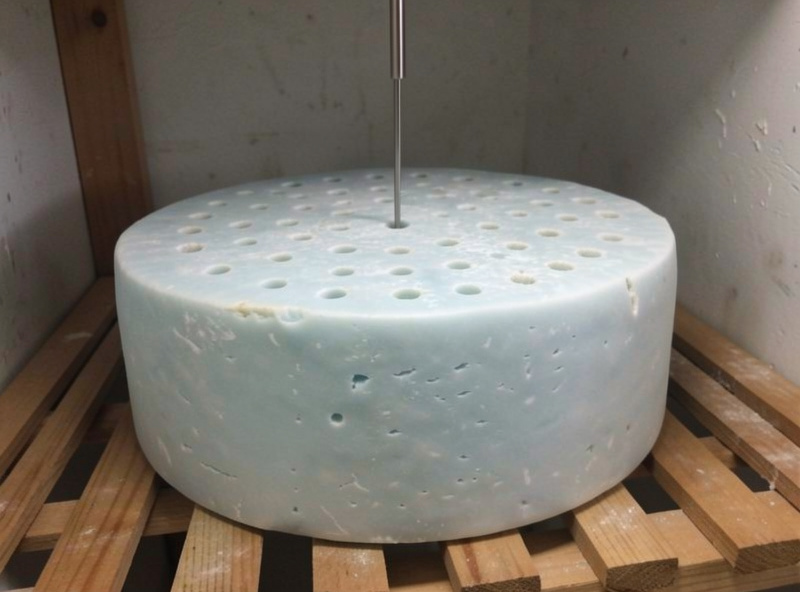
A freshly salted blue wheel is dense and airless inside, and the dormant P. roqueforti cannot do anything without oxygen. After the wheel has firmed and dried for roughly one to two weeks, you pierce it — driving a clean stainless skewer or a dedicated cheese needle straight through from top to bottom in a grid of holes, then again from the sides. Those channels let air into the core, and within days the blue veining races out along them. Pierce too early and a wet wheel just reseals; pierce too late and the surface moulds get a head start. I pierce when the rind feels dry to the touch and the wheel holds its shape firmly.
The pattern of piercing is the pattern of your veining — even, generous piercing gives an even blue, while a few timid holes give a pale, patchy wheel with a dense unblued centre. This is the single most common reason a home blue comes out disappointingly white in the middle.
The chamber envelope blue cheese wants
Blue wants it cool and very damp: about 8–11 °C and 90–95% RH. That is the wettest, coolest corner of the cheese map, and it is deliberately different from the 11 °C / 82% RH I hold for cheddar and hard cheese. The high humidity keeps the wheel’s surface from drying and case-hardening while the interior mould develops; the cooler temperature keeps the whole thing from over-ripening into a slumping, over-sharp mess. The full per-style breakdown lives in the cheese aging temperature and humidity chart, and blue sits at the extreme damp end of it.
Holding 90%-plus RH steadily is genuinely hard, and it is where chamber engineering earns its keep. I push the IHC-200’s humidify setpoint up and lean on the ultrasonic mister, cross-check a SensorPush HT.W at wheel height against an Inkbird IBS-TH3, and keep the 120mm fan on a short five-on, twenty-five-off cycle — blue needs damp air but not stagnant air, or the surface goes to slime. If you have not built for this kind of humidity yet, my cheese cave fridge conversion covers getting a converted fridge to hold the wet end reliably.
Home blue styles at a glance
Different blues are really the same organism handled differently — milk, salt, moisture, and time shifting the result from creamy and mild to dry and pungent.
| Style | Milk | Texture | Typical age | Character |
|---|---|---|---|---|
| Stilton-style | Cow | Firm, crumbly | 2–4 months | Mellow, complex, classic English blue |
| Gorgonzola-style (dolce) | Cow | Soft, spoonable | 2–3 months | Creamy, mild, sweet-savoury |
| Roquefort-style | Sheep | Moist, dense | 3–5 months | Sharp, salty, intense |
| Danish-blue-style | Cow | Semi-soft | 2–3 months | Strong, tangy, heavily veined |
For a first wheel, a Stilton-style cow’s-milk blue is the most forgiving — firm enough to handle, slow enough to ripen that you have time to react. I list other low-risk first cheeses in best cheese to age at home for beginners, though blue is a step up in humidity demands from a beginner cheddar.
Reading the rind: good blue vs trouble
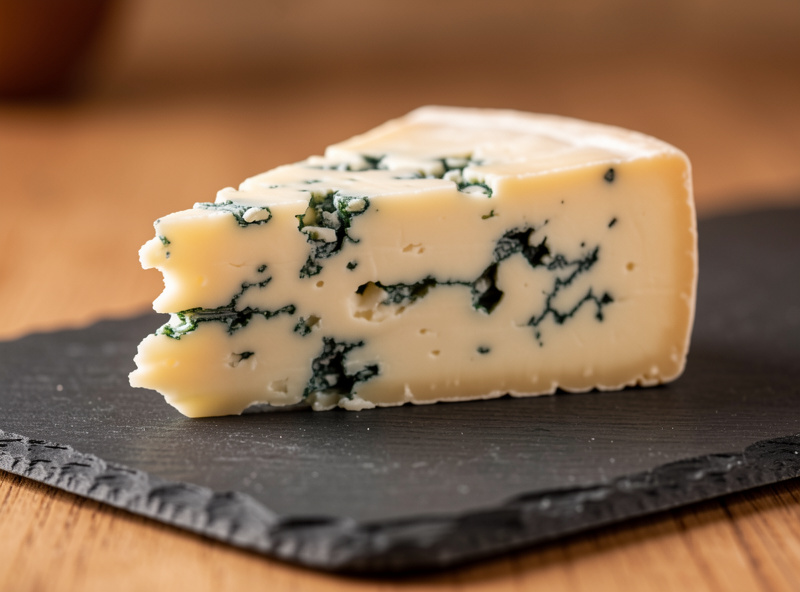
The blue-green of P. roqueforti is the mould you want, and on the surface it is often joined by some grey and white growth that is normal on a damp blue rind — I wipe surface growth back with a cloth dipped in saturated brine to keep it in check. What I do not tolerate is fuzzy black mould, bright pink or orange patches, or a sharp ammonia reek that means the wheel is over-ripening or contaminated. Fine brown dust at the base is mites, and the response is the same as for any aged wheel — see cheese mites on aged cheese. When a wheel turns genuinely slimy, smells of ammonia through and through, or grows something I cannot confidently identify as friendly, I throw it out; blue is not the cheese to gamble on.
Wrapping and finishing
Once a wheel has veined through and reached the flavour you want — usually two to four months, read by tasting a plug and by the weight log rather than the calendar — you slow it down. Wrapping the wheel in foil or proper cheese wrap cuts off oxygen, halts further mould growth, and lets the flavour mellow and the paste turn creamy in cold storage. This is also how you stop a blue before it over-ripens into something acrid. I cover the broader “is it ready” judgement in when is aged cheese ready; for blue, the honest signals are even veining, a clean mushroomy smell, and a weight-loss curve that has flattened off. This article sits under the complete home cheese aging guide.
The gear that makes blue easier
Blue needs little specialised kit, but two items matter: a clean stainless cheese needle or skewer for piercing, and a reliable P. roqueforti culture so you are seeding a known mould rather than hoping. As an Amazon Associate I earn from qualifying purchases. A sachet of Penicillium roqueforti culture and a stainless cheese needle are the only blue-specific buys; the chamber does the rest.
Frequently Asked Questions
What humidity and temperature does blue cheese need to age?
Blue cheese wants cool, very damp air: about 8 to 11 degrees Celsius and 90 to 95 percent relative humidity. That is wetter and cooler than hard cheeses like cheddar, which keeps the surface from drying while the interior mould develops.
Why is my homemade blue cheese white in the middle?
An unblued centre almost always means under-piercing. Penicillium roqueforti needs oxygen, so the wheel must be skewered in a generous grid from top and sides after about one to two weeks. Even, generous piercing gives even veining.
Is the blue mould in blue cheese safe to eat?
Yes. The blue-green veining is Penicillium roqueforti, the intended edible culture, deliberately added and grown. Unwanted moulds such as fuzzy black, bright pink, or orange growth are not safe, and a wheel that smells strongly of ammonia or has gone slimy should be discarded.
How long does home blue cheese take to age?
Most home blues are ready in two to four months, with sheep’s-milk Roquefort-style wheels often taking three to five. Judge readiness by even veining, a clean mushroomy smell, and a flattening weight-loss curve rather than the calendar alone.
Do I need to pasteurise the milk for blue cheese?
Many home makers use pasteurised milk plus added cultures for consistency and safety. If you age cheese from raw milk, follow your local aging rules; in the United States that means a minimum 60-day age. Always add Penicillium roqueforti as a known culture rather than relying on stray moulds.
When should I wrap a blue cheese in foil?
Wrap once the wheel has veined through and reached the flavour you want. Foil cuts off oxygen, stops further mould growth, and lets the paste mellow and turn creamy in cold storage. It is also how you halt a blue before it over-ripens into something acrid.
Related Articles
- Home Cheese Aging: The Complete Guide
- Aging Cheddar and Hard Cheese at Home
- Cheese Aging Temperature and Humidity Chart by Type
- Cheese Cave From a Mini Fridge: Full Conversion Guide
- When Is Aged Cheese Ready? How to Tell