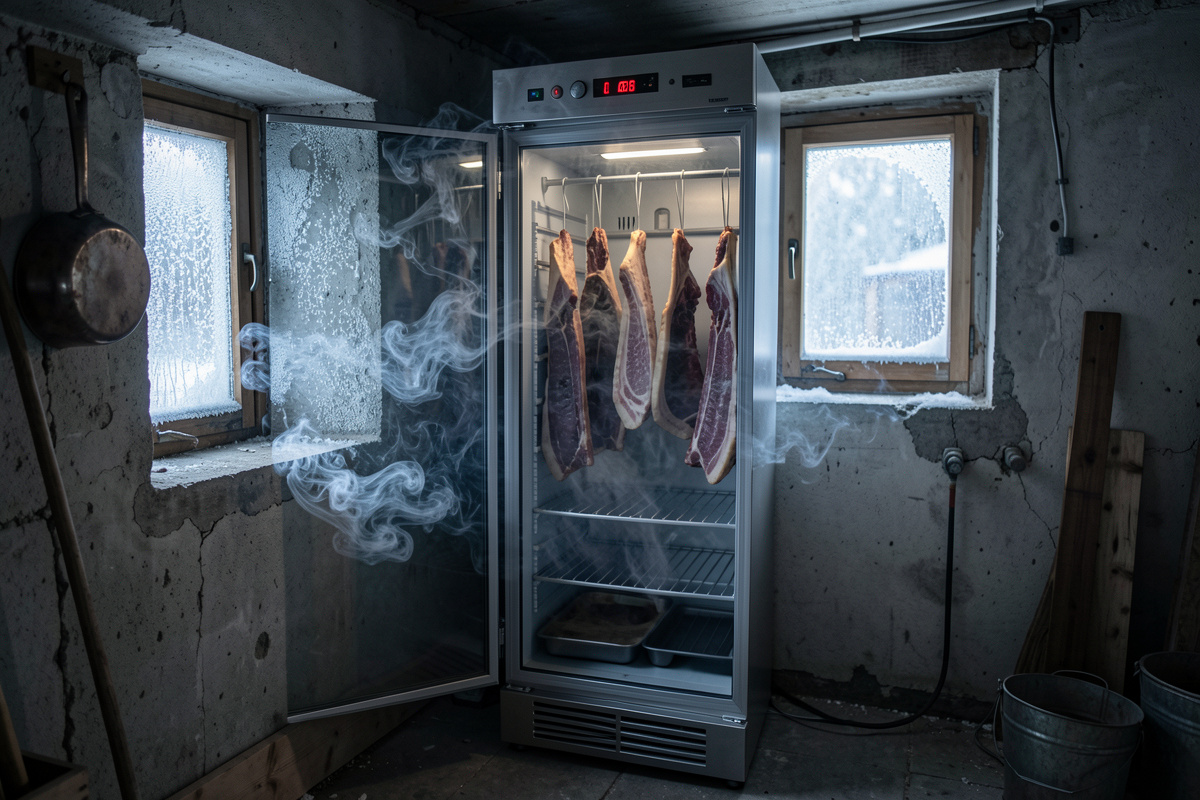

Cold smoking depends on ambient temperature more than any other variable, which is why winter and summer are effectively two different hobbies. The safe target stays the same year-round — keep the chamber under 30 C (86 F), and below 20 C (68 F) is better still — but in a Swedish winter the outside air does that work for me, while a July afternoon can push a tube smoker’s box to 35 C before the dust even gets going.
I run my cold-smoke sessions out of a converted larder fridge with the compressor on an Inkbird ITC-308, and across the chambers I’ve built the single biggest seasonal difference isn’t the smoke at all — it’s how hard I have to fight heat. Below I’ll walk through what actually changes between the cold and warm months, the temperature ceilings that matter, and the small rig adjustments that let me smoke productively across the calendar.
What Temperature Counts as Cold Smoking?
Cold smoking means smoking below the point where meat proteins begin to cook — practically, keeping the product under 30 C (86 F), and ideally in the 15 to 25 C (59 to 77 F) band. Above roughly 30 C you drift toward warm smoking, fat starts to render, and a cured surface can sweat.
The number I actually watch is the temperature at meat-shelf height, read off a SensorPush HT.W sitting next to the product — not the air at the smoke inlet, which runs warmer. A maze or tube generator burns at a tiny smoulder and adds only a degree or two of its own heat to a well-ventilated box; the heat that ruins a session almost always comes from the room, not the smoke. That distinction is the whole game once summer arrives, because in winter the room is your friend and in summer it’s the enemy.
Cold Smoking in Winter: Let the Cold Do the Work
Winter is the easy season. With ambient sitting at 2 to 10 C in my unheated basement, the chamber holds itself in the cold-smoke band with zero effort, and I can run a ProQ-style maze for an 8 to 10 hour stretch without the temperature ever creeping toward trouble.
The catch in winter is humidity and condensation, not heat. Cold air holds less moisture, so a cold smoker can dry the surface of a piece faster than you expect, and case-hardening becomes the real risk — a sealed-off shell that traps moisture inside while the outside looks done. I counter it by keeping the smoking sessions short relative to the drying that happens in the chamber afterward, and by watching the weight log rather than the clock. Cold, damp Swedish winters also mean the maze can struggle to stay lit if the dust picks up moisture, so I keep my pellets and dust in a sealed tub and dry a scoop near the radiator before a session. Winter is when I do most of my bacon and fish, because the ambient temperature gives me a wide safety margin I simply don’t have in August.
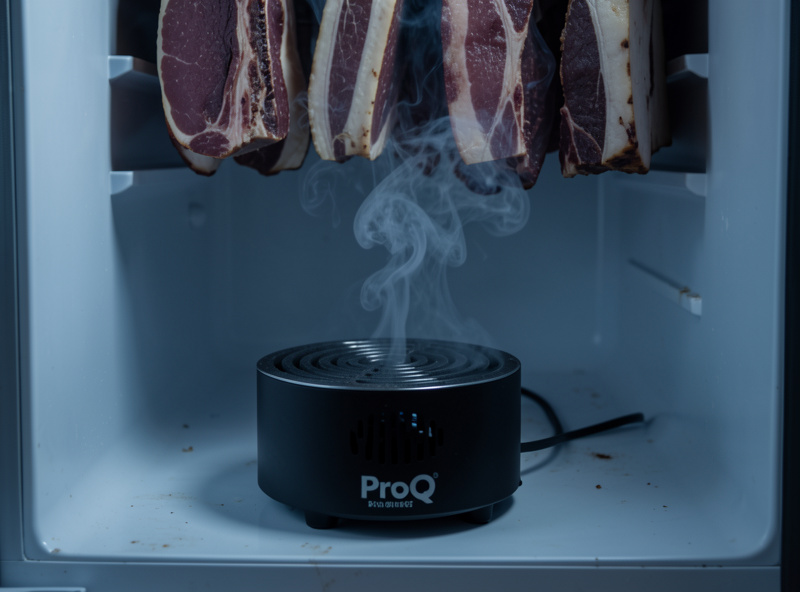
Cold Smoking in Summer: Fighting the Heat
Summer flips the problem. Once ambient climbs past about 22 C, an unaided chamber will sit too warm to cold smoke safely, and a tube smoker left in a sunlit shed can hit 35 C inside the box in under an hour. The smoke is fine — the temperature is not — and that’s where most summer attempts go wrong.
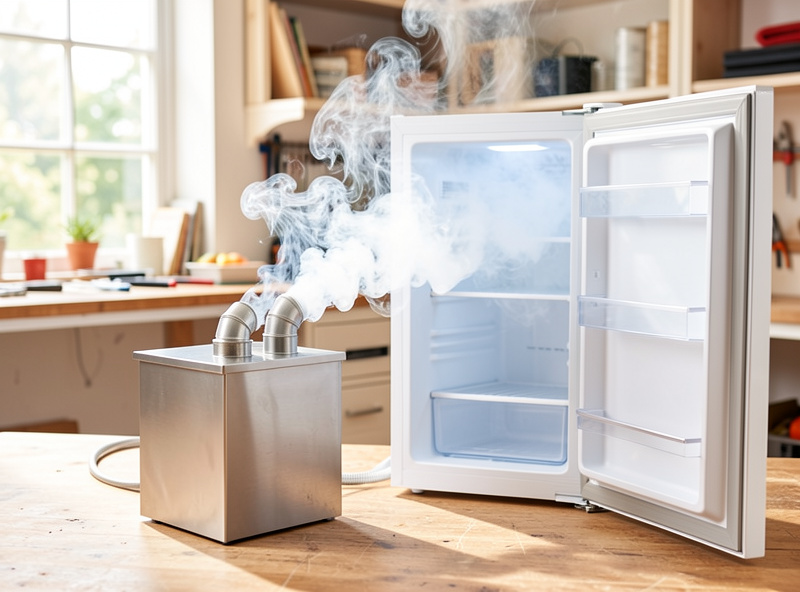
My summer approach is to move the smoke generation off-box entirely and duct cool smoke into a chilled chamber. I run the maze or tube in a separate cardboard or steel box, let the smoke drift through a short length of ducting, and feed it into the converted fridge whose compressor is still pulling the interior down toward 12 to 15 C. The fridge does the cooling; the external box does the burning; the meat never sees heat. The other reliable trick is timing: I smoke in the coolest part of the day, starting a session at 4 or 5 in the morning and finishing before the afternoon sun loads the building with heat. Frozen water bottles or gel packs sitting in the bottom of an unpowered smoking box buy you a couple of hours, but they’re a stopgap — for anything that matters, I use the powered chamber.
Winter vs Summer Cold Smoking Compared
The table below sums up how the same setup behaves across the two seasons. The constants are the safety ceiling and the woods; everything else shifts with ambient temperature.
| Factor | Winter (2–10 C ambient) | Summer (20–30 C+ ambient) |
|---|---|---|
| Main challenge | Condensation & case-hardening | Keeping product under 30 C |
| Cooling needed | None — ambient does it | Powered chamber or ice, mandatory |
| Best smoking window | Any time of day | Pre-dawn to mid-morning |
| Smoke generator placement | Inside or vented to box | Off-box, ducted into chilled chamber |
| Typical session length | 8–10 hours comfortable | Shorter, watch the box temp |
| Best products | Bacon, fish, cheese | Cheese (short), anything in a chilled chamber |
What About Spring and Autumn? The Best Cold-Smoking Windows
Spring and autumn are the quietly ideal seasons, and they are when I do a surprising amount of my smoking. With ambient sitting around 8 to 15 C, the chamber lands in the cold-smoke band with almost no intervention, and the air is neither bone-dry like deep winter nor heat-loaded like summer. If you only smoke a few times a year, target the shoulder seasons and you sidestep both the case-hardening risk and the heat fight.
The variable that catches people out in spring and autumn is the day-to-night temperature swing. A morning that starts at 9 C can climb to 24 C by mid-afternoon, so a long session that felt safe at dawn can drift over the ceiling by lunch. I plan around the forecast high, not the temperature when I light the maze, and on a borderline day I either start before dawn or keep the powered chamber on standby to pull the interior back down if the room warms. The SensorPush HT.W logging to my phone means I get an alert if the meat-shelf temperature climbs while I am not standing over it, which on a swingy shoulder-season day is exactly when a session quietly goes wrong. Watching the trend, not just the current reading, is what lets me run long autumn smokes with confidence.
One more seasonal habit worth stealing: I keep a simple log of which months actually worked in my building, because every basement, shed, and garage behaves differently. After a few years the pattern is obvious here in Sweden, my reliable cold-smoke window runs from roughly October through April, with the shoulder weeks at either end being the sweet spot for long, gentle sessions. Your own building might give you a longer or shorter window, but the principle holds: learn your space’s temperature behaviour across the year, and the calendar becomes a tool rather than an obstacle.
How to Hold a Safe Temperature Year-Round
The reliable way to cold smoke across every season is to decouple smoke from heat: generate smoke in one place and control temperature in another. A converted fridge on a temperature controller holds 12 to 15 C regardless of what the room is doing, so the calendar stops dictating whether you can smoke.
If you’re working without a powered chamber, lean on the seasons instead of fighting them — do your bacon and fish in the cold months and save summer for short cheese sessions or for days the weather cooperates. Keep a thermometer at meat height, not at the smoke inlet, and treat 30 C as a hard stop. The moment the product climbs toward that line, pull it and let it rest cool; a paused smoke is always recoverable, but a piece that sweated fat and grew warm in the danger zone is not worth the risk. Cold smoke is a flavour and surface step layered on top of a piece that’s already been salted and cured to a safe water activity — it never makes anything safe on its own, in any season.
Frequently Asked Questions
Can you cold smoke in summer?
Yes, but only if you control temperature separately from the smoke. Generate smoke in an off-box box and duct it into a chilled converted-fridge chamber holding 12 to 15 C. Unaided, summer ambient over 22 C will push product past the 30 C ceiling.
What is the maximum temperature for cold smoking?
Keep the product under 30 C (86 F), measured at meat-shelf height. The ideal band is 15 to 25 C. Above 30 C you drift into warm smoking, fat begins to render, and a cured surface can sweat.
Why is winter better for cold smoking?
Cold ambient air, around 2 to 10 C, holds the chamber in the safe cold-smoke band with no powered cooling. That wide margin makes winter the easiest season for bacon and fish, though dry winter air raises the case-hardening risk.
Does cold smoking make meat safe to eat?
No. Cold smoke is a flavour and surface step on a piece that has already been salted and cured to a safe water activity. It never substitutes for proper curing salt, salt levels, or drying in any season.
How do I keep a cold smoker cool in hot weather?
Move smoke generation off-box and feed it into a powered chamber, smoke pre-dawn before the sun heats the building, and as a stopgap add frozen water bottles to an unpowered box. A temperature-controlled fridge is the only fully reliable method.
Related Guides
- Cold Smoking at Home: The Complete Guide
- Cold Smoke vs Hot Smoke Bacon: What Is the Difference?
- Cold Smoking Fish at Home: Safety and Method
- Cold Smoke Generator Comparison: Maze vs Tube vs Venturi
- Cold Smoking Salami: When to Add Smoke and at What Temperature