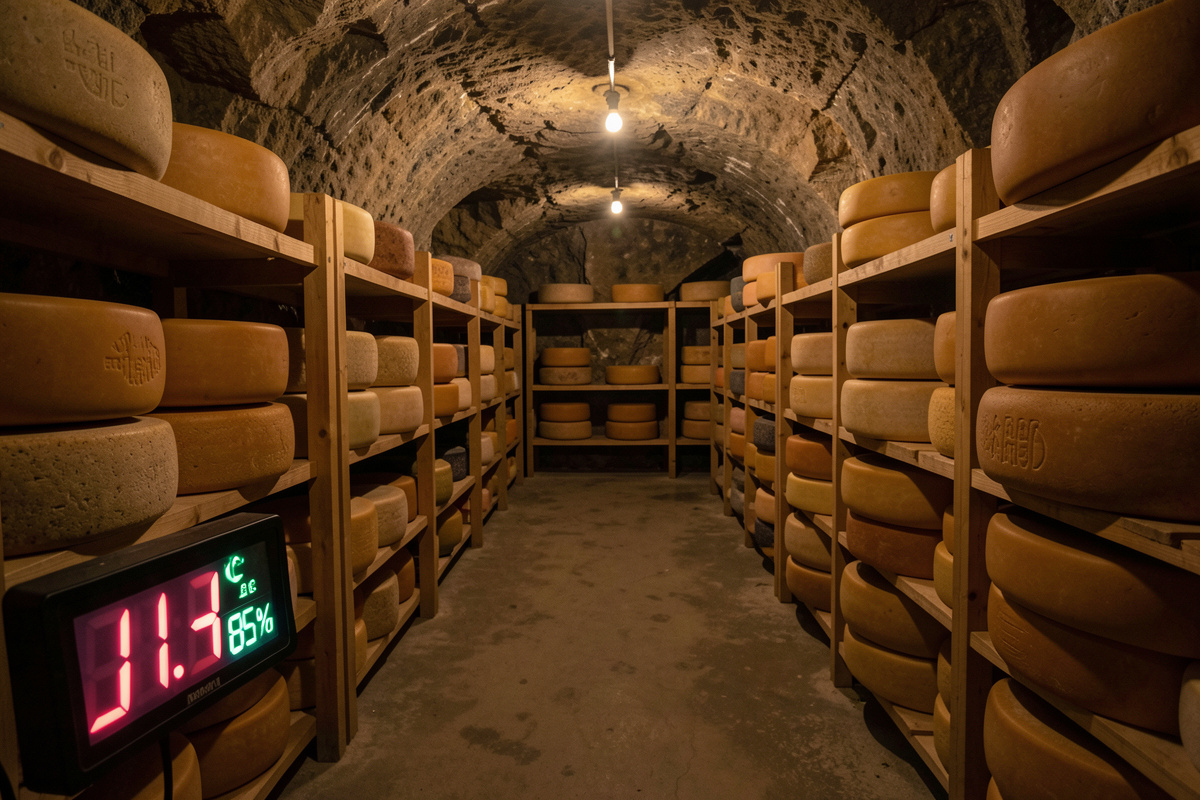

Most aging cheeses want roughly 10–13 °C and 80–90% relative humidity, but the right numbers shift by type: hard alpine wheels take the warmer, drier end, bloomy and washed-rind cheeses the cooler, damper end, and blues sit in the middle with high humidity. Dial the chamber to the cheese rather than to a single average, and you avoid the case-hardening and slip-skin that wreck wheels held at the wrong setpoint. The chart below is the cheat sheet I keep taped inside my own cheese chamber.
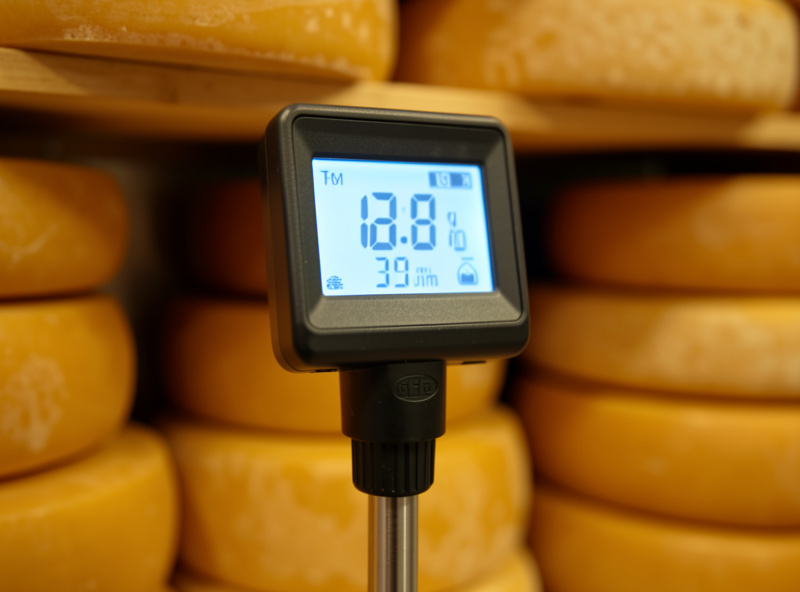
The single most useful thing to understand is that temperature sets the pace of ripening and humidity sets whether the rind survives — and different cheese families have evolved to want different combinations. Get those two numbers right for the style in front of you, hold them steady, and ripening takes care of itself. Hold the wrong numbers and even a perfectly made wheel goes sideways.
The Cheese Aging Temperature and Humidity Chart
Here are the target ranges by cheese family. These are aging-room (cave) conditions, not fridge storage — the goal is active ripening, not cold-holding.
| Cheese type | Temperature | Humidity (RH) | Notes |
|---|---|---|---|
| Hard / alpine (Gruyère, Comté) | 12–14 °C | 80–85% | Warmer, drier; long age |
| Cheddar (natural rind) | 10–13 °C | 80–85% | Steady; turn and tend |
| Gouda / Edam | 11–13 °C | 80–85% | Waxed needs less RH |
| Tomme / rustic natural rind | 10–12 °C | 85–90% | Damp for grey rind |
| Bloomy (Brie, Camembert) | 8–11 °C | 90–95% | Cool, very humid |
| Washed rind (Taleggio, Munster) | 10–12 °C | 90–95% | Damp; wash regularly |
| Blue (Stilton, Roquefort style) | 9–12 °C | 88–95% | High RH; pierce for air |
| Feta (brined) | 4–8 °C | In brine | Brine, not air; cold |
Why Temperature Differs by Type
Temperature controls how fast enzymes and cultures work, so cheeses with aggressive surface ecology age cooler to keep them in check, while slow, dense hard cheeses tolerate a degree or two warmer to push their long ripening along. The window almost everything fits in is 8–14 °C.
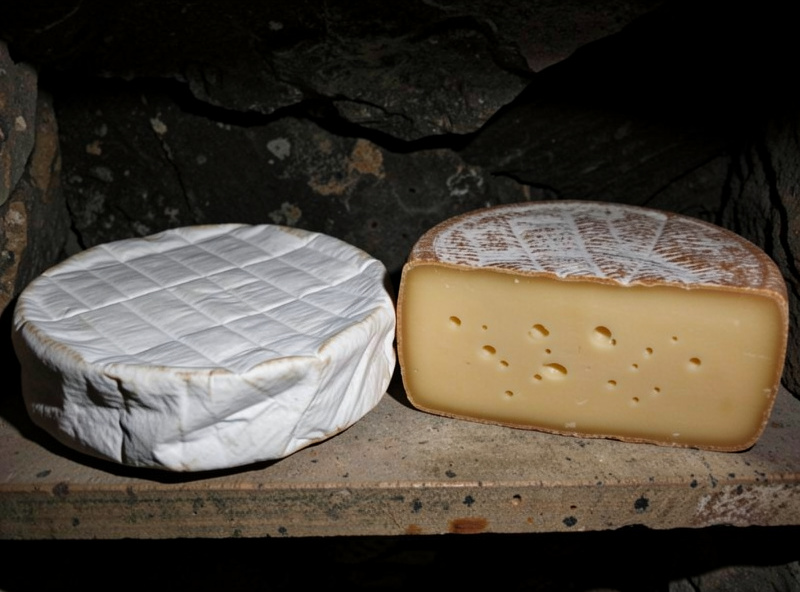
Bloomy and washed-rind cheeses ripen from a fast-working surface mold or bacteria, so they go at the cool end, around 8–11 °C, or the rind races ahead of the paste and the cheese turns to ammonia. Hard alpine wheels are the opposite: dense, low-moisture, and slow, they sit happily at 12–14 °C to keep a months-long ripening moving. Most firm cheeses — cheddar, Gouda, tomme — land in the comfortable 10–13 °C middle. I run my main cheese chamber at 11 °C as a single safe compromise when I have mixed wheels in at once, nudging it cooler if there’s a bloomy cheese in the mix.
Why Humidity Differs by Type
Humidity decides whether a rind stays alive or dries and cracks, so cheeses that depend on a moist living rind want 90–95% RH, while waxed or vacuum-protected cheeses don’t care about chamber humidity at all. Natural-rind firm cheeses sit in between at 80–85%.
Washed-rind and bloomy cheeses need the high end — 90–95% — because their surface ecology is moisture-hungry and dries out fast; too low and the rind dies and the cheese cracks. Blues also want high humidity to keep the paste from drying while the veining develops. Firm natural-rind cheeses like cheddar and Gouda do well at 80–85%, dry enough to firm the rind without case-hardening. And anything waxed or vacuum-sealed is sealed off from the air, so you can age it in a plain fridge — the whole reason those methods exist. The common failure is running everything at 90%+, which suits washed rinds but drowns a cheddar in slime.
Aging vs Storage: Two Different Temperatures
The chart above is for aging — actively ripening a cheese — not for storing a finished one. Once a cheese has hit the character you want, you slow it down by moving it colder, into ordinary fridge territory around 2–5 °C, often wrapped in cheese paper. People mix these up constantly: aging temperatures are warm enough to keep enzymes working, storage temperatures are cold enough to nearly stop them.
This is why you cannot age cheese in your kitchen fridge — 4 °C is a storage temperature, not an aging one, and the cheese simply sits there barely changing while the dry air cracks the rind. It also means there’s a natural workflow: age a wheel at 11 °C and high humidity until it’s where you want it, then drop a cut portion into the cold fridge in cheese paper to hold it. Trying to “store” a cheese at aging temperature just keeps ripening it past its peak.
Reading the Chart for a Mixed Chamber
Most home agers, myself included, don’t run a separate chamber per cheese family — we put mixed wheels in one box and pick a compromise. The safe single setting for a mixed natural-rind load is 11 °C and 83–85% RH, which keeps cheddar, Gouda, and tomme all happy at once. Nudge cooler if a bloomy cheese joins the shelf, since bloomy and washed rinds are the least tolerant of the warm end.
What you should not do is mix wildly different humidity needs in one tightly-packed box and expect all of them to thrive — a washed-rind Taleggio wanting 92% and a hard alpine wheel wanting 82% genuinely conflict, and one will suffer. If you regularly age across families, that’s the argument for a second chamber, which is exactly why I run an overflow bar fridge alongside the main one: it lets me hold a damp high-RH zone for washed rinds separate from the firmer cheeses. For one mixed box, choose the setting that protects the most vulnerable cheese on the shelf and accept the rest will age a touch off-ideal.
Holding the Numbers Steady

Stability matters as much as the setpoint. A chamber that swings between 70% and 95% RH stresses a rind far more than one held a few points off target but rock-steady. I hold my envelope with an Inkbird ITC-308 on the compressor and an IHC-200 switching an ultrasonic humidifier, cross-checked against a calibrated SensorPush HT.w at shelf height.
Place your sensor where the cheese sits, not against the cold back wall, and calibrate it with the salt test before you trust a single reading — an uncalibrated hygrometer reading 5% off will have you chasing a problem that isn’t there. Gentle daily air exchange keeps the readings honest and clears ripening gases. And keep a weight log: steady, expected weight loss tells you the cheese is drying and concentrating correctly, which is the real-world confirmation that your temperature and humidity numbers are actually right for that wheel. For the full build behind these controls, see my mini-fridge cheese cave conversion guide.
The cheese itself is the last instrument on the panel, and I read it as carefully as the hygrometer. A rind that feels dry, tight, and faintly papery under the thumb is telling you the humidity has been sitting too low for that style; a wheel that feels tacky or slick and smells sharply of ammonia is the opposite signal — too warm, too damp, ripening faster than the paste can keep up. A correctly held cheese feels supple, dry-to-the-touch but not parched, and gains a slow even bloom rather than patchy wet slicks. I check three things on every visit to the chamber: the number on the SensorPush, the figure on the scale, and how the rind feels and smells. When those three agree, the chart on the door is doing its job. When the cheese contradicts the gauge, I trust the cheese and recalibrate the gauge — the wheel does not lie, but a hygrometer drifting 5% off quietly will.
Frequently Asked Questions
What temperature and humidity is best for aging cheese?
Most aging cheeses want 10 to 13 degrees Celsius and 80 to 90 percent relative humidity. Hard alpine wheels take the warmer, drier end near 12 to 14 degrees at 80 to 85 percent; bloomy and washed-rind cheeses want cooler and damper, around 8 to 11 degrees at 90 to 95 percent.
Why do bloomy cheeses age cooler than hard cheeses?
Bloomy and washed-rind cheeses ripen from a fast-working surface mold or bacteria, so they age at 8 to 11 degrees Celsius to keep the rind from racing ahead of the paste. Dense hard cheeses are slow and tolerate 12 to 14 degrees to push their long ripening along.
What humidity do blue cheeses need?
Blue cheeses want high humidity, around 88 to 95 percent RH, to keep the paste from drying while the veining develops. They are also pierced to let air reach the interior so the Penicillium roqueforti can grow its blue veins through the cheese.
Do waxed cheeses need controlled humidity?
No. Waxed and vacuum-sealed cheeses are sealed off from the air, so chamber humidity is irrelevant and they can age in an ordinary fridge. That is the entire reason those methods exist: they let firm cheese age without a high-humidity cave.
What happens if the humidity is too low for cheese?
Too-low humidity dries the rind, which case-hardens, a firm outer crust that traps moisture inside and stops the cheese ripening evenly. Below about 75 percent RH a natural-rind wheel can crack within a week or two. Raise humidity and slow airflow to recover.
Related Guides
- Home Cheese Aging: The Complete Guide
- Build a Cheese Cave From a Mini Fridge
- Natural Rind vs Waxed vs Vacuum Aging
- Best Cheeses to Age in 3 Months or Less