Rancidity in Cured Meats: Why It Happens and How to Prevent It
June 16, 2026

Every cured-meat maker eventually pulls a piece that looks fine but tastes wrong: a faint cardboard, paint-thinner, or crayon note riding under the cure, with fat that has gone from creamy white to a dull yellow. That is rancidity, and it has nothing to do with mold or microbial spoilage. It is the fat itself oxidizing. After years of logging weight loss on every piece across the chambers I’ve built, I have learned to spot it early and, more usefully, to stop it before it starts.
What Is Rancidity in Cured Meat?
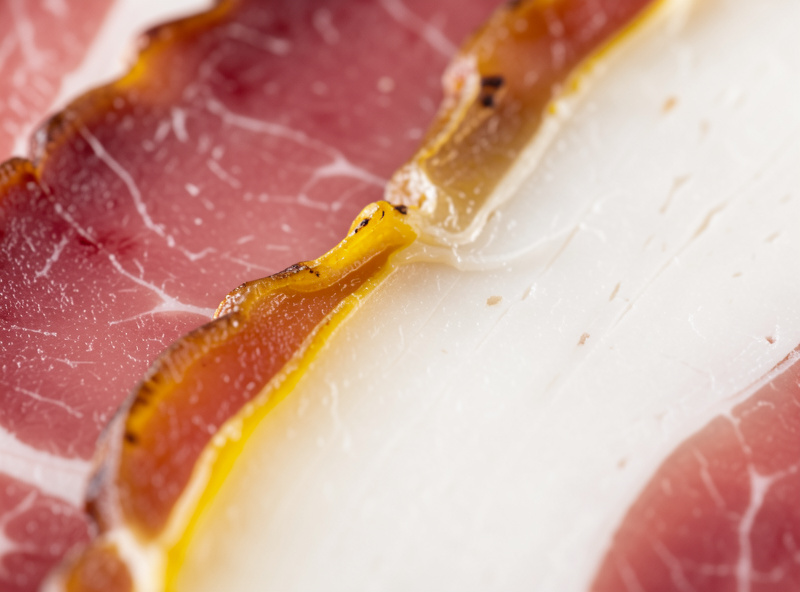
Rancidity is the chemical oxidation of fat, where oxygen attacks unsaturated fatty acids over time and produces off-flavor aldehydes that taste like cardboard, paint, or metal. It yellows the fat and dulls flavor, but it is a quality problem, not a pathogenic one. It will not make you sick the way spoiled meat can.
This distinction matters more than anything else in this article. When the last coppa I pulled went slightly cardboard at the fat edge, the meat was still perfectly safe. It just was not good. Rancidity degrades flavor and aroma through lipid oxidation; spoilage is microbial and can be dangerous. Conflating the two leads people to either eat genuinely spoiled meat or throw out merely tired meat.
Why the Fat Goes Rancid: Lipid Oxidation
Lipid oxidation is a chain reaction. Oxygen reacts with the double bonds in unsaturated fatty acids, forming unstable peroxides that break down into the aldehydes and ketones you taste as rancidity. Once it starts, it accelerates itself, which is why a piece can seem fine one week and clearly off the next.
Four things drive the reaction forward: oxygen, light, warmth, and time. Each one feeds the chain. Reduce any of them and you slow the whole process. Eliminate several at once and a well-made piece will hold its flavor for months in the chamber I run. The chemistry here is well documented in food science; a 2019 study in Antioxidants (Basel) on sodium nitrite and lipid oxidation confirms that curing salts retard exactly this oxidative degradation of fat.
Soft Fat Is the Weak Link
Not all fat oxidizes at the same rate. The more unsaturated a fat, the more double bonds it carries, and the faster it goes rancid. Soft, oily fat from pork jowl and belly, especially from grain- or nut-fed pigs, is the first to turn. Firm backfat from a leaner, well-fed animal holds up far longer in long-dried product.
Root Causes I See Most Often
When a piece comes out rancid, it is almost always one of these, and usually a combination. I keep a weight log on every cut, which doubles as a timeline for diagnosing what went wrong and when.
- Chamber too warm. Every few degrees above my target ~12-15°C speeds oxidation. A warm chamber over a long dry is the single most common cause I see.
- Light exposure. Light, especially UV and bright LED, drives photo-oxidation of fat. A clear-door fridge under shop lights will yellow fat faster than a dark cabinet.
- Over-aging soft-fat cuts. Pushing jowl or belly past its peak weight loss invites rancidity. The fat simply runs out of runway before the lean does.
- Oxygen exposure after slicing. A cut face exposed to air oxidizes quickly. Whole pieces last; open slices do not.
- Salt without nitrite or nitrate. Salt alone is mildly pro-oxidant. Without the antioxidant protection of cure #2 on a long dry, the fat is left exposed.
Cure #2 and the Antioxidant Role of Nitrate
Here is the part most home curers miss. Nitrite and nitrate do more than block Clostridium botulinum. They are genuine antioxidants for the fat. Nitric oxide derived from the cure stabilizes heme iron and chelates the metal ions that otherwise catalyze lipid oxidation, slowing rancidity directly.
The peer-reviewed work bears this out: the 2019 Antioxidants (Basel) study found the lowest level of secondary fat-oxidation products in the samples carrying the most sodium nitrite. This is exactly why cure #2 (nitrite plus nitrate) belongs in any fermented or long-dried piece, not just for safety but for flavor longevity. Cure #1 (6.25% sodium nitrite) is for short or cooked products; it does not carry the nitrate reservoir that a months-long dry needs.
Critically, a no-nitrate long dry-cure is not a safe substitute for cure #2. You lose both the botulism protection and the antioxidant effect. The fat is left to oxidize freely, and the safety margin disappears with it.
How to Prevent Rancid Cured Meat
Prevention is mostly about removing the drivers of oxidation one at a time. None of it is exotic; it is just disciplined. This is the routine I follow across every batch I have hanging.
Control the Chamber
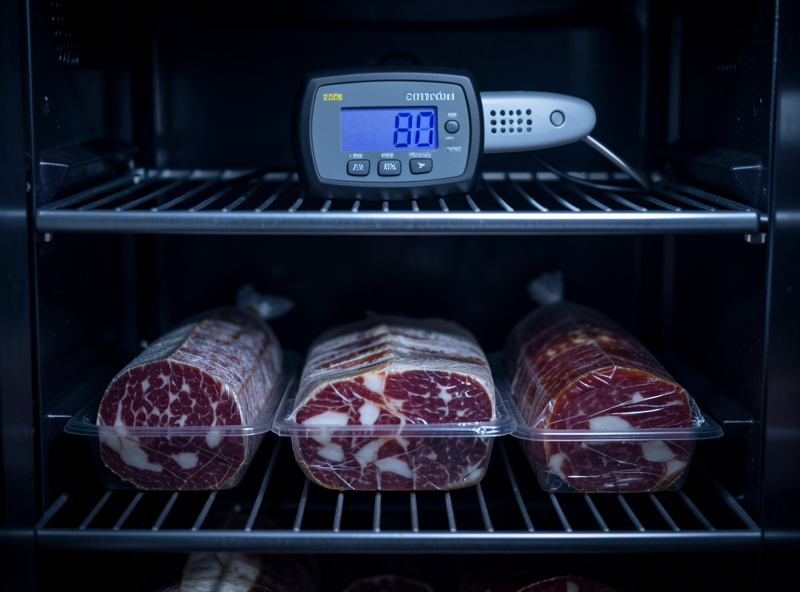
Keep the chamber cool and dark. My setup runs ~12-15°C on an Inkbird ITC-308, with no interior light and an opaque or covered door. Cool and dark alone removes two of the four oxidation drivers and buys you months of extra shelf stability.
Cure and Cut Wisely
Use cure #2 on anything fermented or long-dried so the nitrate antioxidant is working for you. Choose firmer backfat over oily belly fat for pieces you intend to age hard, and do not over-age soft-fat cuts like guanciale-style jowl. Pull them at target weight loss, not later.
Finish and Store Right
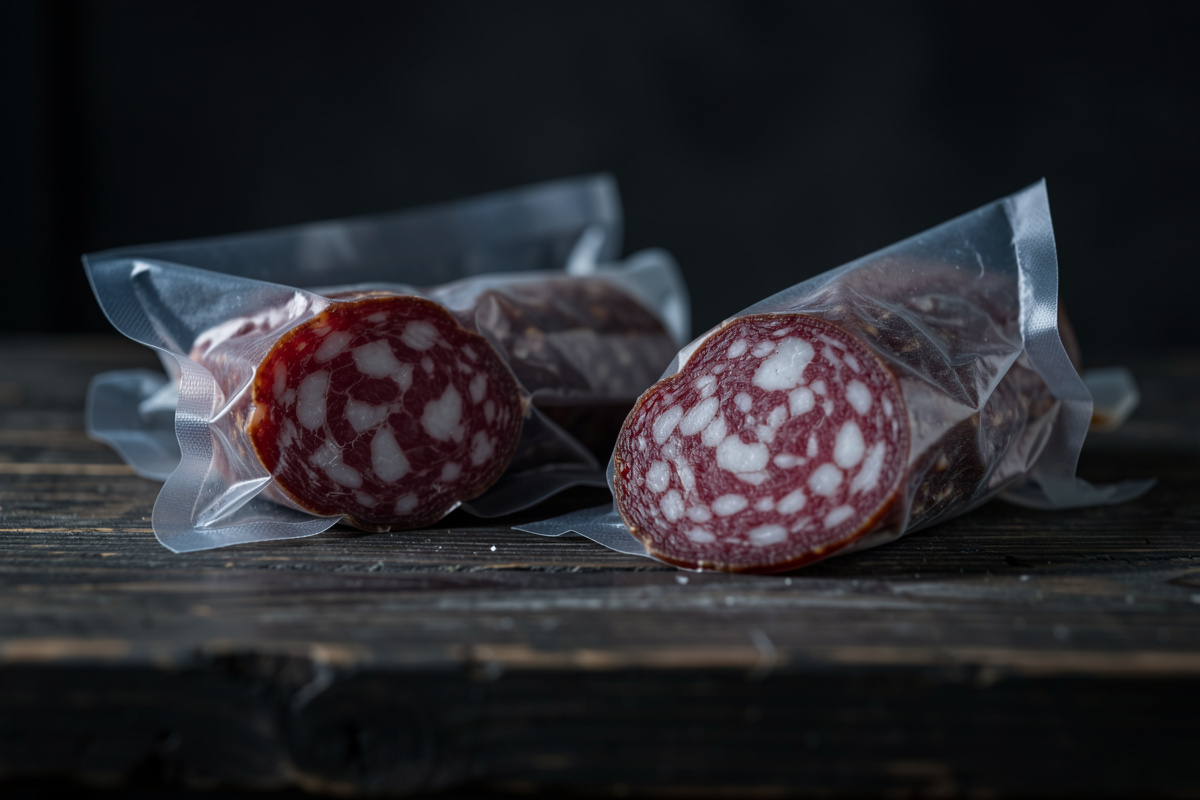
Once a piece hits its target weight-loss percentage, get it out of the oxygen. Vacuum-seal or tightly wrap finished pieces and hold them cold and dark. For sliced product, keep it sealed and cold and eat it within a reasonable window rather than letting cut faces sit exposed.
Rancid vs Spoiled: How to Tell Them Apart
This is the table I wish I had when I started. The two are completely different problems with completely different responses. Rancidity is an off-flavor you can choose to tolerate or trim; spoilage is a safety call where the answer is always to discard.
| Sign | Rancid (oxidation) | Spoiled (pathogenic) |
|---|---|---|
| Cause | Fat oxidizing (oxygen, light, heat, time) | Microbial growth (bad bacteria) |
| Smell | Paint, crayon, cardboard, metallic | Sour-putrid, ammonia, rotten |
| Look | Yellowed, dull fat | Slime, fuzzy black/green mold, sheen |
| Texture | Normal, firm | Slimy, sticky, mushy |
| Safety | Off-flavor only, not pathogenic | Can make you sick |
| What to do | Trim, tolerate, or discard for quality | Discard, no exceptions |
If a piece is slimy, sticky, sheets with grey-green or black fuzzy growth, or smells genuinely putrid or of ammonia, that is spoilage and it goes in the bin. Never eat through bad mold or off, slimy meat to test a theory. Rancidity, by contrast, smells of solvent and crayon and looks dull but clean.
Catching It Early in the Chamber
The earliest tell is the fat color. Creamy white fat turning faintly yellow or grey at the edges is the first warning, well before the off-flavor is obvious on the palate. I check the fat on every piece when I take a weight reading, because the weight log already has me handling each cut on a schedule.
A SensorPush HT.W and an Inkbird IBS-TH3 logging into Home Assistant let me see if the chamber crept warm during a heat spell, which is usually the hidden cause when an otherwise good piece turns. Catch the temperature drift and you catch the rancidity before it ruins a three-month coppa.
Is rancid cured meat dangerous to eat?
No. Rancidity is fat oxidation, a quality and off-flavor problem, not a pathogenic one. It will not make you sick the way spoiled meat can. It tastes of cardboard or paint and the fat yellows, but it is distinct from microbial spoilage, which is the actual safety risk.
How do I tell rancid from spoiled cured meat?
Rancid meat smells of paint, crayon, or metal with dull yellowed fat but normal firm texture. Spoiled meat is slimy or sticky, may carry fuzzy black or green mold, and smells putrid or of ammonia. Spoilage is a safety problem; discard it with no exceptions.
Does cure #2 prevent rancidity in cured meat?
Yes. Beyond blocking botulism, the nitrite and nitrate in cure #2 act as antioxidants, stabilizing heme iron and chelating pro-oxidant metals to retard lipid oxidation. A 2019 Antioxidants study found the least fat-oxidation in samples with the most sodium nitrite, which is why cure #2 belongs in long-dried product.
What temperature stops cured meat going rancid?
Keep the chamber cool. I run mine at roughly 12 to 15 degrees Celsius on an Inkbird controller. Every few degrees warmer speeds lipid oxidation, so a warm chamber over a long dry is the most common cause of rancidity I see across my batches.
Why does pork jowl and belly fat go rancid faster?
Soft fat from jowl and belly, especially from grain or nut-fed pigs, is highly unsaturated, carrying more double bonds that oxygen attacks. Firmer backfat from leaner animals holds up far longer. Do not over-age soft-fat cuts; pull them at target weight loss rather than pushing them past peak.
How should I store finished cured meat to prevent rancidity?
Once a piece hits its target weight-loss percentage, vacuum-seal or tightly wrap it and store it cold and dark to remove oxygen, light, and warmth. Keep sliced product sealed and cold, and eat it within a reasonable window rather than leaving cut faces exposed to air.
Related Guides
- Curing Chamber Troubleshooting: The Complete Guide for the full diagnostic playbook on chamber problems.
- Curing Chamber Climate Control to hold the cool, stable temperature that keeps fat from oxidizing.
- Case Hardening in Curing Chambers for another drying-phase defect and how to prevent it.
- Homemade Guanciale since soft jowl fat is the most rancidity-prone cut to manage.
- Home Salami Making: The Complete Guide where cure #2 and fat selection matter most.
- Best Beef Cuts for Dry Aging for choosing cuts with the right fat for long aging.