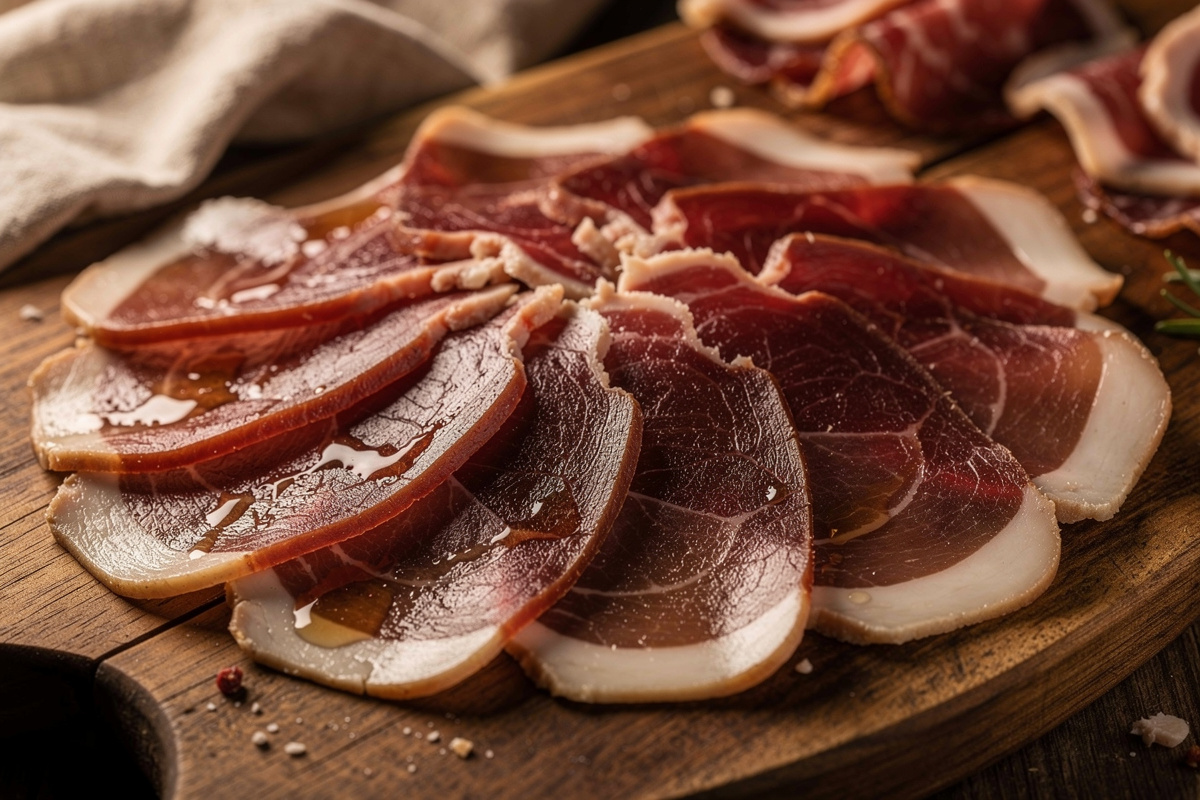

Duck breast prosciutto is the famous beginner cure, the two-week project that hooks people on charcuterie, and for good reason. But once you have a few duck breasts under your belt the obvious next question is the goose: a bigger, fattier breast that promises more of everything. I have cured both across the chambers I run, often side by side on the same shelf, and the honest answer is that they are close cousins with real differences in size, fat, cure time, and how forgiving they are. This is the comparison, not the beginner recipe; if you have never done a single duck breast, start with the dedicated beginner duck prosciutto guide first and come back here when you want to scale up to goose.
The reason to treat these together is that the method is shared, salt-cure then air-dry a whole breast, but the goose changes the variables enough that copying a duck timeline onto a goose breast will leave you with an under-dried bird. Understanding what the extra size and fat do is the whole point of this piece. The whole muscle charcuterie hub places poultry prosciutto in the wider family.
Size and Fat: The Two Real Differences
A duck breast, especially a Moulard or Pekin, is a manageable, single-portion piece of meat under a generous cap of fat. A goose breast is markedly larger and even fattier, with a thick, dense fat layer over a deep red muscle. Those two differences, size and fat, drive everything downstream. More mass means a longer cure and a longer dry; more fat means slower moisture loss and a more buffered, forgiving piece that resists case hardening better than lean meat ever does.
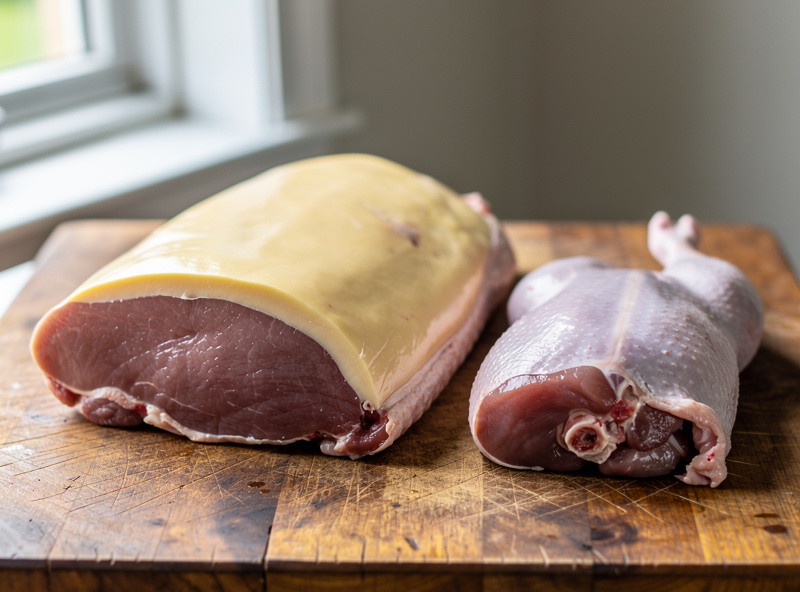
The fat is the headline. Duck and especially goose carry a deep, flavourful fat that renders subtly into the cured muscle and keeps the finished prosciutto supple. It also means neither bird is as twitchy as a lean beef bresaola; the fat buffers the dry. The trade-off is that you cannot rush a goose: that mass and fat take their time, and the scale, not the calendar, tells you when it is done.
| Factor | Duck breast | Goose breast |
|---|---|---|
| Typical size | Small, single portion | Markedly larger |
| Fat cap | Generous | Thick and dense |
| Salt cure (dry-rub box) | ~24–36 hours | ~2–3 days |
| Hang to ~30% loss | ~2–3 weeks | ~4–6 weeks |
| Forgiveness | Forgiving (fat-buffered) | Even more forgiving, but slower |
The Cure: Where Poultry Prosciutto Differs From Pork
Both birds take a salt cure, and here poultry prosciutto genuinely differs from the long pork and beef cures. A duck or goose breast is a short cure eaten after a few weeks, not a months-long hang, so many home curers treat the classic salt-box duck breast as a Cure-#1 short cure or, traditionally, a heavy salt cure used promptly and kept refrigerated. My own rule is the conservative one: if the breast is going to hang past a couple of weeks, which a goose certainly will, I treat it as a long dry-cure and include Cure #2 at 0.25% of meat weight for the nitrate reservoir, exactly as I would for a pork loin. A quick two-week duck breast is the one cure on this site where a careful, salt-heavy, promptly-eaten, refrigerated approach has a long traditional track record, but the moment you scale to a goose and a longer hang, I do not skip the curing salt.
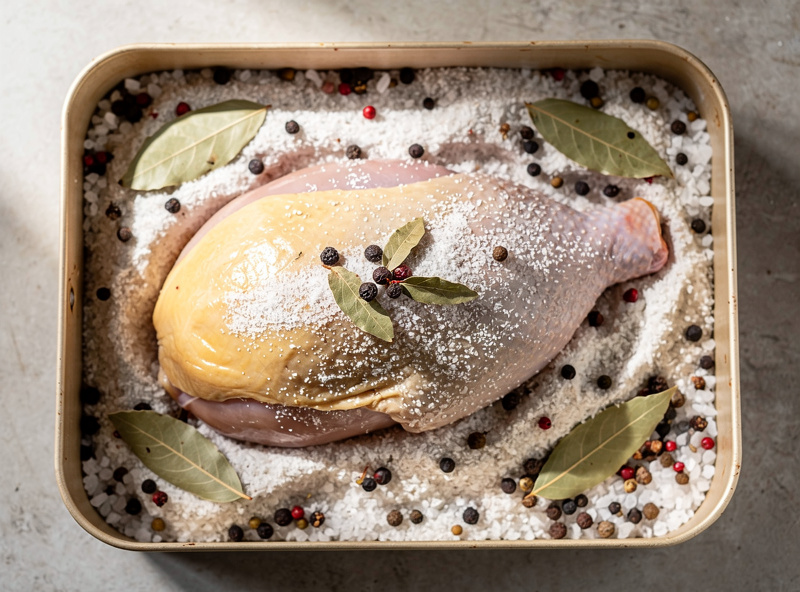
For the salt cure itself I bury the breast in a salt-and-sugar box, often with juniper, pepper, bay, thyme, and a little orange zest, fat-side up. Duck comes out in roughly a day to a day and a half; goose needs two to three days because of its mass. The breast firms noticeably as the salt draws water; a still-floppy goose breast needs another day in the salt. Then rinse, pat dry, and wrap.
Drying and Wrapping
After the salt cure I wrap each breast in muslin or cheesecloth and hang it in the standard chamber envelope: 12 to 15°C and 75 to 80% RH with gentle, cycled air exchange. The muslin keeps dust off, slows the surface dry a touch, and makes a fatty breast easier to handle. Because both birds are fatty, they are relatively forgiving here; the fat resists the case hardening that plagues lean cuts. Still, I keep the fan gentle so the lean side of the breast does not over-dry while the fat side lags.
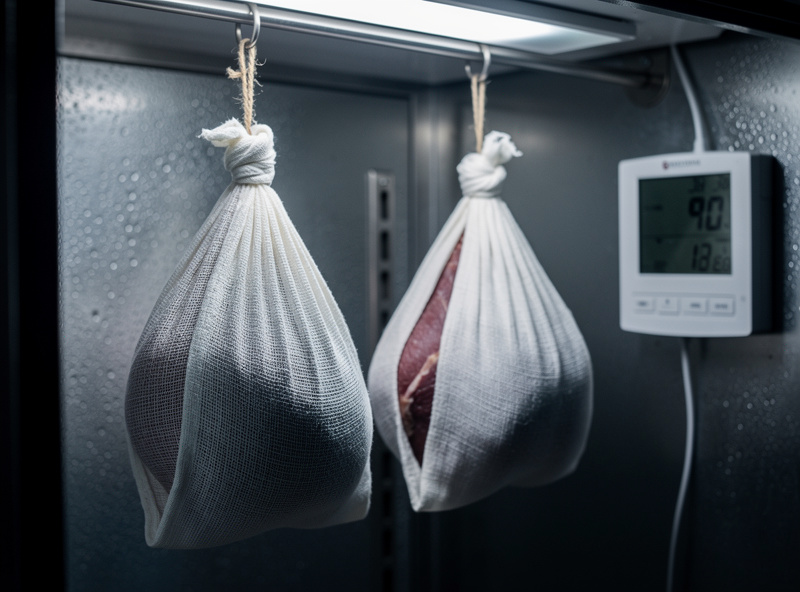
The goose simply takes longer: where a duck breast reaches its target in two to three weeks, a goose breast wants four to six because of its size and fat. Running them side by side on the same shelf, as I often do, makes the difference obvious, the duck is sliceable while the goose is still firming up. If a surface shell ever forms, the standard fix of raising humidity and easing the fan applies, detailed on the case hardening guide, and holding the envelope steady is the climate control work that underpins both.
When Are They Done? Weight Loss, Same as Always
Both birds are done at around 30% weight loss, the same honest signal as every whole-muscle cure. I weigh each breast in, tag the green weight, and pull at roughly 30%, when the meat is firm with a deep red, translucent edge and slices cleanly. The duck gets there fast; the goose takes its time. Because the fat keeps these supple, a breast can feel done before the scale agrees, so I trust the weight loss over the squeeze. A breast still light on weight loss is still wet inside.
Poultry prosciutto is eaten raw, sliced thin across the grain, which is why the cure and the weight loss matter, with no cooking step to fall back on. For a goose breast hanging well past two weeks, that means the Cure #2 I include up front is doing real work. Finished, both keep for a couple of weeks wrapped in the fridge; I vacuum-seal portions of anything I am not slicing soon, especially the goose, whose generous fat will eventually turn.
As an Amazon Associate I earn from qualifying purchases.
Poultry prosciutto is low-gear: the things that matter are muslin to wrap the breasts and a precision scale for the cure salt on the longer goose cure. I wrap in unbleached cheesecloth, weigh the Cure #2 on a 0.1g precision scale for the goose, and reach for a long, thin slicing knife to take the thin cross-grain slices that show off the deep red meat and rendered fat.
Flavour: How the Two Eat Differently
Side by side, the two birds taste like variations on a theme rather than the same thing. Duck prosciutto is clean and lean-tasting with a defined edge of rendered fat, bright enough to carry citrus and juniper in the cure. Goose is deeper, rounder, and frankly richer, the extra fat giving it a more luxurious, almost buttery mouthfeel when sliced thin. Neither is better in the abstract; the duck is the more versatile everyday slice while the goose is the special-occasion piece you bring out and let people marvel at.
The cure aromatics land differently on each because of that fat. On a leaner duck breast, assertive notes like black pepper and orange zest come through sharply. On a goose, the fat rounds and mellows the same spices, so I lean a touch heavier on the aromatics for goose to keep them from disappearing into the richness. Thyme, juniper, and bay all survive the goose’s fat better than delicate citrus does, which is worth knowing before you build the salt box.
Serving Poultry Prosciutto
Both are served the same way: sliced thin across the grain, fat and all, laid out so the deep red meat and the pale rendered fat show together. I like them simply, on bread with a little fruit or pickle to cut the richness, or draped over a salad where the residual chamber chill softens just slightly. The fat is the point on both, so I never trim it off; a slice of goose prosciutto without its fat cap is missing half of what you waited a month and a half for.
The one practical serving note is temperature. Both slice cleanest chilled firm, almost cold, where the fat is solid and the knife glides; let a fatty goose breast warm to room temperature and the fat smears under the blade. I slice straight from the fridge, fan the slices on the board, and let them come up to temperature on the plate rather than fighting warm fat with a knife.
The Verdict: Which to Cure
Cure duck first; it is the faster, simpler, more available bird and the perfect introduction, which is why it is the classic beginner project. Move to goose when you want a larger, richer, fattier prosciutto and have the patience for the longer hang and the chamber discipline to include Cure #2 on a piece that hangs a month or more. Neither is hard; the goose is just a scaled-up, slower version of the same idea, and running them together is the clearest way to learn what size and fat do to a cure.
More From the Whole Muscle Chamber
- Whole Muscle Charcuterie: The Complete Guide
- Duck Prosciutto: The 2-Week Beginner Project
- How to Calculate Salt Percentage for Equilibrium Curing
- Case Hardening: Causes, Prevention, and Fixes
- Lomo Embuchado: Spanish Cured Pork Loin