Is Home-Cured Fish Safe? Salt, Freezing, and the Parasite Rule
July 2, 2026

Home-cured fish is safe when you respect two hazards that salt alone doesn’t handle: parasites and certain bacteria. Freeze raw fish at −20 °C (−4 °F) for 7 days before curing to kill parasites, keep fresh cures refrigerated below 4 °C, and understand when a cure needs nitrite. Get those right and the risk drops close to zero; ignore them and salt won’t save you.
I take safety in this niche more seriously than almost anything else I write about, because cured fish carries real stakes that a slightly-too-salty coppa never does. The good news is that the rules are simple and the science is settled. Here’s exactly what can go wrong, why, and the specific controls that shut each hazard down — written from the same water-activity-and-weight-log mindset I bring to every piece in my chamber.
The Big Picture: Salt Is Not a Cure-All
Salt-curing preserves fish by pulling out water and lowering water activity — the amount of free water microbes need to grow. That controls most spoilage bacteria beautifully. But salt does two things it’s often wrongly credited with doing: it does not reliably kill parasites, and at the low salt levels of a fresh cure like gravlax it does not make fish shelf-stable at room temperature. Understanding those two gaps is the whole of fish-curing safety.
Every hazard below is real but every one has a clean control. The table lays them out; the sections that follow explain each. This is the same framework I use for meat in the charcuterie food safety guide, adapted to fish’s faster, softer, riskier nature.
| Hazard | Where it hides | The control |
|---|---|---|
| Parasites (Anisakis) | Raw wild fish, esp. salmon | Freeze −20 °C / 7 days before curing |
| Listeria monocytogenes | Cold cures, refrigerated storage | Cleanliness, cold, eat within days |
| Clostridium botulinum type E | Vacuum-packed, low-oxygen storage | Nitrite for long cold-smoked storage; keep cold |
| Spoilage bacteria | Warm, wet, under-salted fish | Adequate salt, cold chain, water-activity drop |
Parasites: The Freeze Rule
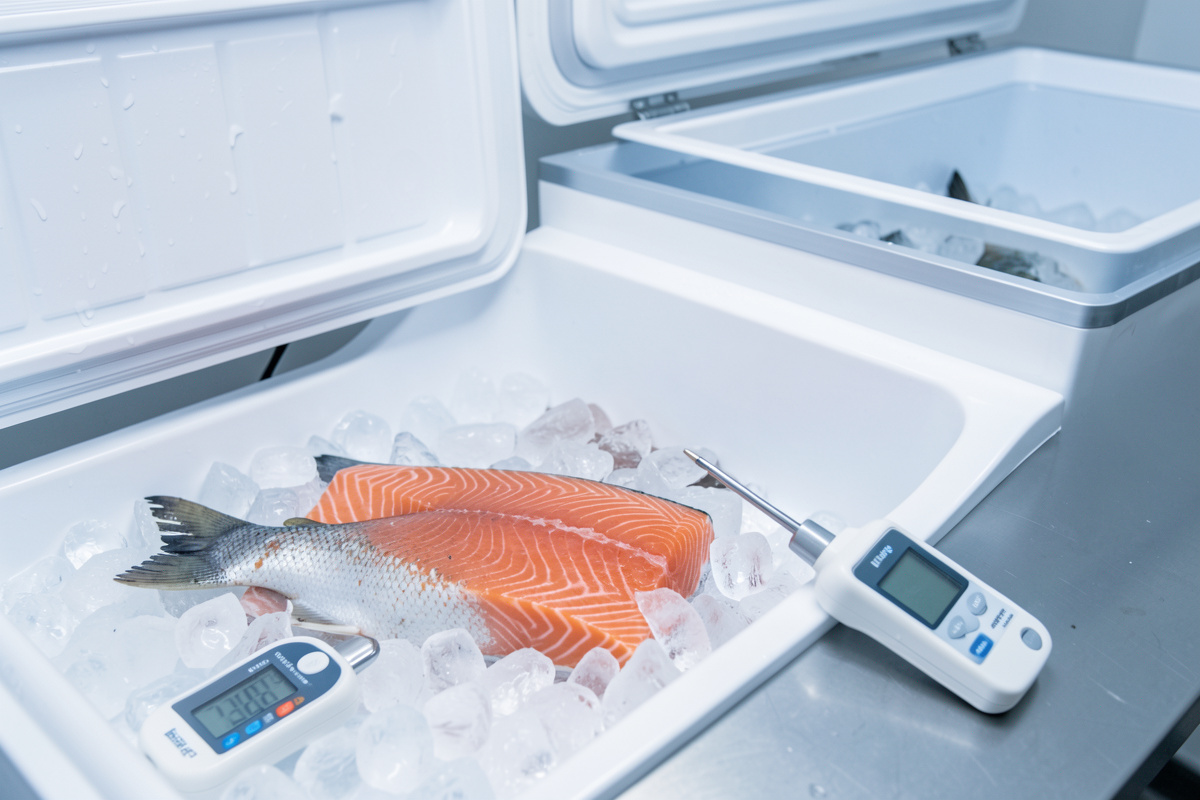
This is the one people skip, and it’s the one that matters most for anything eaten raw. Wild fish can carry parasitic worms, most notably Anisakis, and a salt cure does not reliably kill them. The single dependable home control is freezing. The FDA’s guidance for fish intended to be eaten raw or cured is −20 °C (−4 °F) or colder for 7 days, or −35 °C (−31 °F) for about 15 hours if you have a colder freezer.
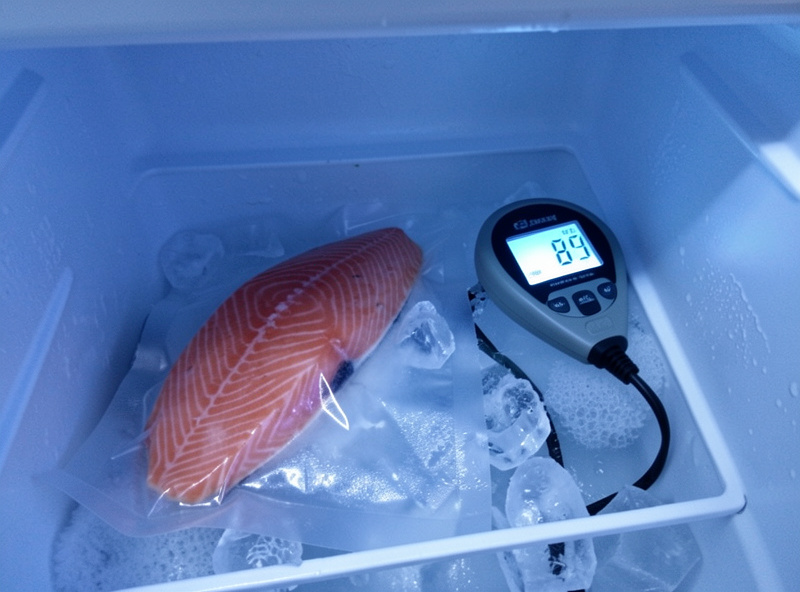
A typical domestic freezer runs near −18 °C, which is slightly warmer than the target, so I freeze for longer than a week when using my own freezer, or buy fish already frozen to spec — a great deal of retail salmon has been. This rule applies to gravlax and any cold, raw cure. It matters far less for a salt cod you’ll boil before eating, since cooking kills parasites anyway. But for the classic unsmoked cures eaten as-is, freezing is not optional. I keep it front and centre in the gravlax method for exactly this reason.
Bacteria: Listeria and the Botulism Question
Listeria monocytogenes is the bacterium that worries cold-cured-fish producers most, because it tolerates cold and salt better than many pathogens and can grow slowly even in the fridge. The home controls are unglamorous but effective: scrupulous cleanliness, dedicated boards and knives, cold storage below 4 °C, and eating fresh cures within about a week rather than hoarding them. Don’t let cured fish sit at room temperature, and don’t stretch its life to feel thrifty.
The more technical hazard is Clostridium botulinum type E, a cold-tolerant strain adapted to fish. It’s dangerous specifically in low-oxygen storage — vacuum-packed or tightly sealed fish held for extended periods. This is why commercial cold-smoked salmon uses nitrite: it suppresses botulinum in exactly that anaerobic niche. For a fresh gravlax eaten within days it’s a non-issue, but if you move into long-stored vacuum-packed product, that’s when the chemistry in pink salt and nitrates explained becomes essential reading. The dangerous myth to bury: “natural, no additives” is not automatically safer — in an anaerobic pack it can be the opposite.
Water Activity: The Number Behind Shelf Stability
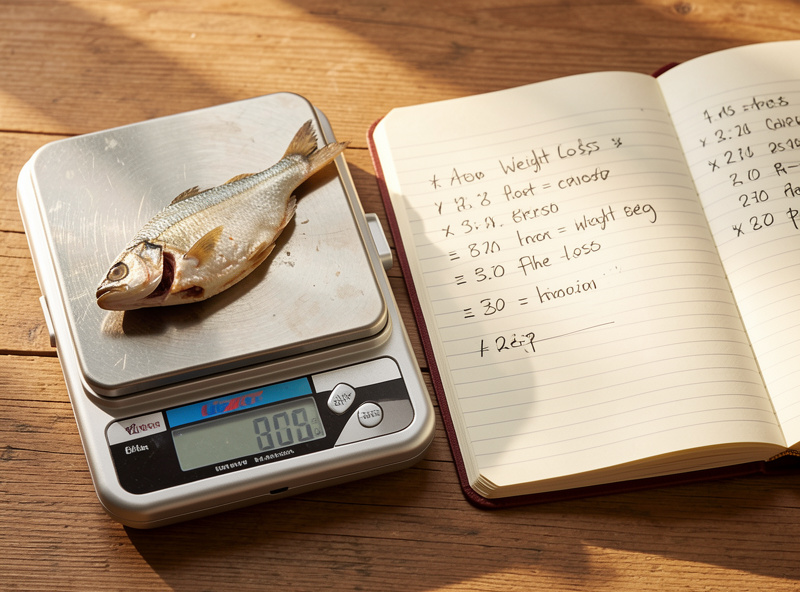
Whether a cured fish is a fridge product or a shelf-stable one comes down to water activity (aw). Fresh fish sits near 0.99. A light gravlax cure barely moves that — it’s still a cold, perishable product, safe only because it’s refrigerated and eaten quickly. A hard-dried salt cod, by contrast, drops below roughly 0.85, the threshold under which most pathogenic bacteria simply can’t grow, which is what earns it months of shelf life. At home you track this with the scale rather than a lab meter: weight loss is a reliable proxy, the same way I judge every piece in my chamber. The full explanation is in water activity and food safety in charcuterie.
Reading the Warning Signs
Your senses are the last line of defence, and they’re good at it. A cured fish that’s gone wrong will usually tell you: a sharp ammonia smell, a slimy or sticky surface beyond the normal firm tackiness of a cure, a sour or putrid odour, or any fuzzy coloured mold (black, green, or “spider”-like growth). Fish curing doesn’t invite the friendly white mold that belongs on a salami — on fish, visible mold means throw it out. When something is off, don’t taste-test to decide. The cost of a fillet is nothing against the cost of being wrong, and this is one hobby where “when in doubt, bin it” is the whole doctrine.
Who Should Be Extra Cautious
General food-safety authorities advise that people who are pregnant, very young, elderly, or immunocompromised take particular care with raw and cold-cured fish, because their tolerance for any Listeria exposure is lower. I’m not a medical professional and won’t pretend to be — if that describes you or someone you’re serving, follow your own health guidance and consider cooked preparations instead. For everyone else, the freeze-cold-clean routine is what keeps home curing firmly in the safe zone. Safety runs through the whole practice, which is why it anchors my guide to curing fish at home and why storage timing matters as much as the cure itself — see how long gravlax lasts.
Frequently Asked Questions
Is home-cured fish safe to eat?
Yes, when you freeze raw fish before curing to kill parasites, keep fresh cures refrigerated below 4 C, and eat them within about a week. Hard cures like salt cod are safe once dried to a low water activity. The main real risk is skipping the pre-cure freeze.
Does salt kill parasites in fish?
No, not reliably. Salt firms the flesh and controls bacteria by lowering water activity, but it does not dependably kill parasites like Anisakis. Freezing at minus 20 C for 7 days is the home control that does. This is why raw cured fish must be frozen first.
Can you get botulism from cured fish?
It is possible but specific: Clostridium botulinum type E is a risk mainly in vacuum-packed or low-oxygen fish stored for long periods, which is why commercial cold-smoked salmon uses nitrite. Fresh refrigerated gravlax eaten within days is not a botulism risk. Keep cured fish cold and do not over-store sealed packs.
How can I tell if cured fish has gone bad?
Trust your senses: a sharp ammonia smell, a slimy surface beyond normal cure tackiness, a sour or putrid odour, or any fuzzy coloured mold means throw it out. Unlike salami, fish should not grow mold. When in doubt, bin it rather than taste-testing.
Do I need pink curing salt for gravlax?
No. Fresh, refrigerated gravlax eaten within a week relies on salt, cold, and the pre-cure freeze, not nitrite. Pink curing salt matters mainly for long-stored, vacuum-packed cold-smoked fish where botulism risk rises. For a quick fresh cure, plain non-iodized salt is correct.
How long can I keep home-cured fish?
A fresh cure like gravlax keeps refrigerated for about 5 to 7 days, or a couple of months frozen. Hard cures like salt cod and bottarga last months because their water activity is low. Always store fresh cures cold and wrapped, and never leave them at room temperature.
Related Guides
- Curing Fish at Home: The Complete Salt-Cure Guide
- How to Make Gravlax: The Salt-Sugar-Dill Cure Step by Step
- Best Salt for Curing Fish: Coarse vs Fine and Why It Matters
- How Long Does Gravlax Last and How to Store It Properly
- Water Activity and Food Safety in Charcuterie