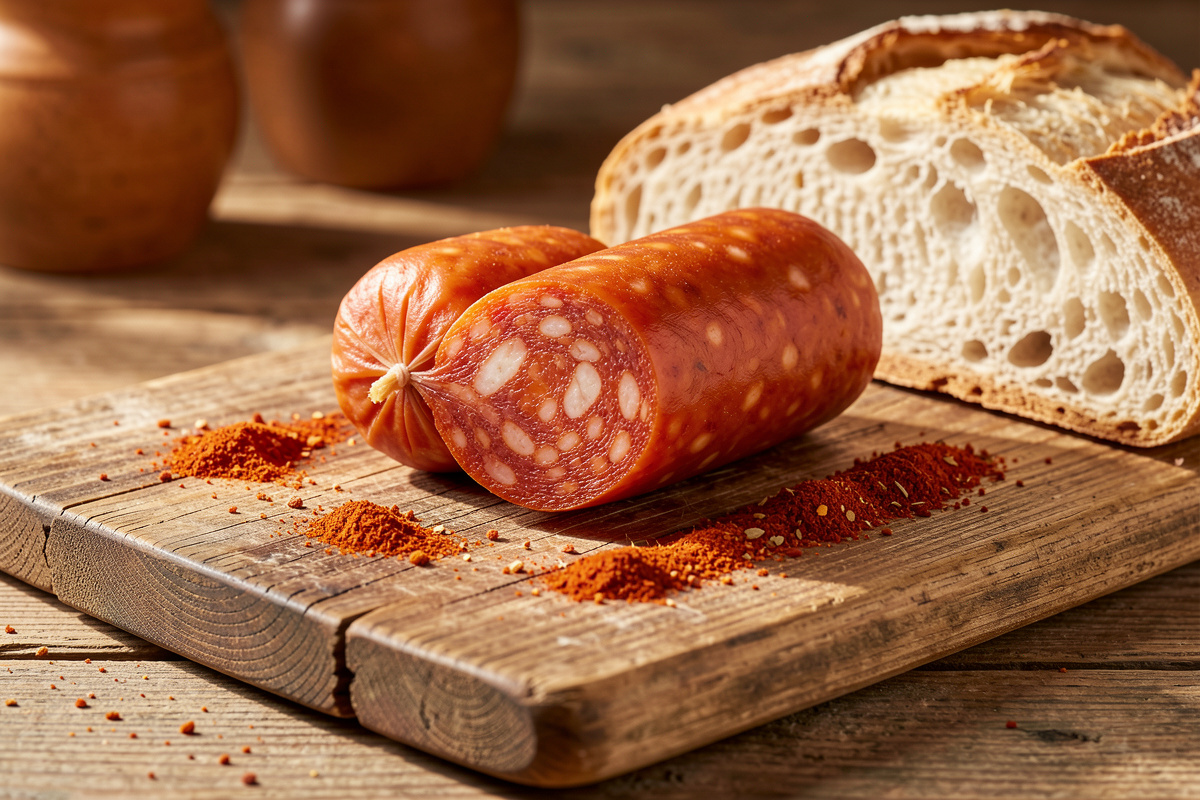

Sobrasada is a soft, spreadable Mallorcan cured sausage built on fatty pork and a heavy dose of sweet pimentón paprika — roughly 4–6% of the meat weight — salted at about 2.75%, cured with Cure #2, fermented to drop the pH below 5.3, then dried to a soft-spread endpoint around 25–30% weight loss. It is ‘nduja’s gentler Spanish cousin: same spreadable category, paprika instead of fire.
I make sobrasada in the same chambers as my ‘nduja and my sliceable salami, and it is the one I recommend to people who want a spreadable sausage the whole household will eat. The dried-paprika spice keeps the paste drier and the method a shade more forgiving than a fresh-chili ‘nduja. Here is how I build it, from the cure shelf to the spoon — with the safety steps kept genuinely correct, because a soft uncooked sausage gives you no margin to be casual.
What Sobrasada Is
Sobrasada comes from Mallorca in Spain’s Balearic Islands, where pimentón is the defining spice. It is a fermented, dry-cured pork sausage with a high fat content that makes it spreadable rather than sliceable, and a deep orange-red colour that comes entirely from sweet paprika. The standard version is mild and smoky-sweet; a spicier version, often called coent, adds hot pimentón. Either way it is a paprika sausage first and foremost — the gentle counterpart to the chili-driven ‘nduja. If you want the full side-by-side, I cover it in ‘nduja vs sobrasada.
The Ingredients
Sobrasada is a short ingredient list where the proportions are everything. Here is what I weigh for a 1 kg batch:
| Ingredient | Amount (per 1 kg meat) | Role |
|---|---|---|
| Pork (lean + fat, ~50% fat) | 1000 g | The body; high fat makes it spreadable |
| Sea or kosher salt (non-iodized) | 27.5 g (2.75%) | Flavour, water activity, controls ferment |
| Cure #2 | 2.5 g (0.25%) | Nitrite + nitrate reservoir for the long dry |
| Sweet pimentón (paprika) | 40–60 g (4–6%) | Colour and the defining flavour |
| Hot pimentón (optional, for coent) | 5–15 g | Heat in the spicy version |
| Dextrose | 4 g (0.4%) | Feeds the ferment |
| Starter culture | Per manufacturer dose | Drops the pH for safety |
Use good-quality pimentón — it is the entire flavour, so it is worth buying well. Never substitute iodized salt, which inhibits the ferment, and never skip the Cure #2: sobrasada is fermented and dried over weeks, exactly the long-cure situation cure #2 exists for. A “natural, no-nitrate” long-dried fermented sausage is the one shortcut that genuinely risks botulism, and I will not write it.
Grinding and Mixing
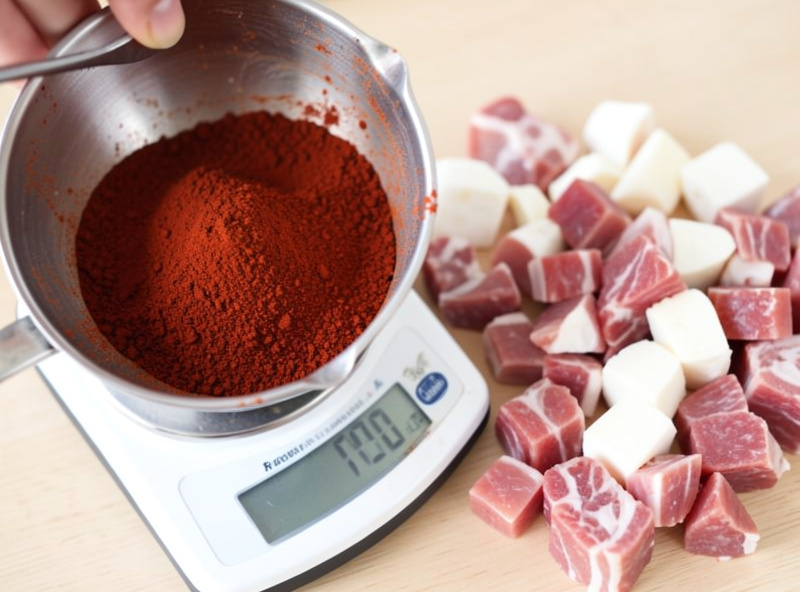
Sobrasada is ground fine — it is a spread, not a coarse salami, so you want a smooth paste with no visible fat dice. As with any high-fat sausage, temperature is everything: partially freeze the pork and fat until firm, chill the grinder plates, and grind cold so the fat cuts cleanly instead of smearing. Grind once coarse and then fine, or pass twice through a fine plate, keeping everything near freezing throughout. The cold discipline that protects a ‘nduja from going greasy protects sobrasada exactly the same way, and the fixes are identical to my greasy-paste troubleshooting.
Mix the ground pork with the salt, Cure #2, dextrose, pimentón, and rehydrated culture until the colour is a uniform deep orange-red and the paste is tacky — then stop. Over-mixing warms the fat and breaks the emulsion. Because the pimentón is a dry powder, it folds in without adding water, which is one reason sobrasada’s paste is a touch easier to manage than ‘nduja’s wet chili mix.
Stuffing
Stuff the paste into natural casings — sobrasada is made in a range of formats, from longer thinner links to fat round bufeta shapes. Beef middles or wide hog casings both work at home; a wider casing gives a longer dry and a more classic spreadable log, while a narrower one dries faster. Whatever you choose, pack it firmly with no air pockets, prick any visible bubbles, and wipe the casing clean. The same casing logic I lay out for ‘nduja casings applies here: natural and breathable for an even, multi-week dry. A vertical stuffer makes the soft paste far easier to handle than a grinder horn.
The Fermentation Phase
This is the safety step, and it is non-negotiable. After stuffing, hold the sausage warm and humid so the starter culture acidifies the meat. With a traditional culture I ferment around 20–24 °C (68–75 °F) at roughly 90% relative humidity for 24 to 72 hours, until the pH drops below 5.3 — I aim for the high 4s to low 5s. That acid drop, alongside the salt and cure, is the main hurdle that makes a soft, uncooked sausage safe. Never hold the sausage warm without an active culture acidifying it; a warm, moist, low-oxygen meat environment with no acidification is the botulism window. A commercial starter culture makes the pH drop reliable, and the chemistry — lactic acid bacteria eating sugar to drop the pH — is the same that ferments a jar of sauerkraut.
The Drying Phase
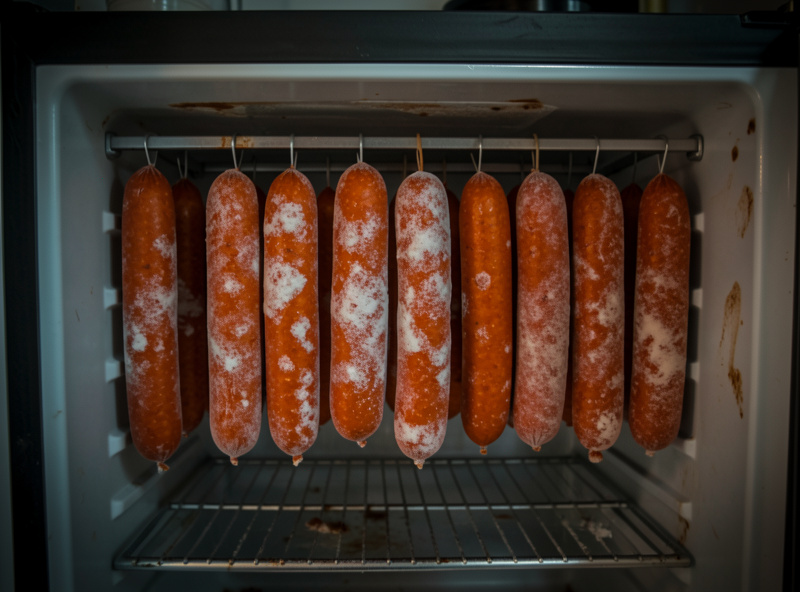
After the ferment, move the sausage to the drying chamber — for me, ~12–15 °C (54–59 °F) and ~75–80% relative humidity. Sobrasada is dried to a soft-spread endpoint, around 25–30% weight loss, much less than a sliceable salami’s 35–40%. You stop early on purpose so it stays soft and spreadable, letting the ferment acid and the cure do the preserving rather than extreme dehydration. Weight loss is the honest signal: I log the start weight and weigh until it hits target, exactly as in my drying endpoint guide. Hold the humidity steady to avoid case hardening, and expect a protective white mould bloom on the casing, which is normal and good.
Choosing the Pork and Fat
Sobrasada is a high-fat sausage, and the fat you choose decides the texture. I build it around roughly half fat to half lean, leaning on firm back fat for the bulk because it emulsifies cleanly and holds the paste together through the dry. Shoulder gives good lean with enough intramuscular fat to keep things rich; belly can supply some of the fat but, being soft, it smears more easily, so I keep it a minority and grind it coldest. The traditional Mallorcan version is associated with a particular local pig, but you do not need anything exotic — good fresh pork with the right fat ratio and proper cold handling makes excellent sobrasada anywhere. What matters is freshness and fat quality, not provenance.
Making the Spicy Version (Coent)
If you want heat, the spicy coent sobrasada simply adds hot pimentón to the sweet base. Start small — 5 to 15 g of hot pimentón per kilogram on top of your sweet paprika — because even the spicy version is meant to be warm and savoury rather than ‘nduja-level fire. The beauty of building with dried paprika is precision: you can taste a fried test patty of the raw mix, judge the heat, and adjust before stuffing, with none of the moisture worries that come with fresh chili. I keep a sweet batch and a coent batch going side by side and label them clearly, because once they are hanging in the chamber the colour barely tells them apart.
Serving Sobrasada
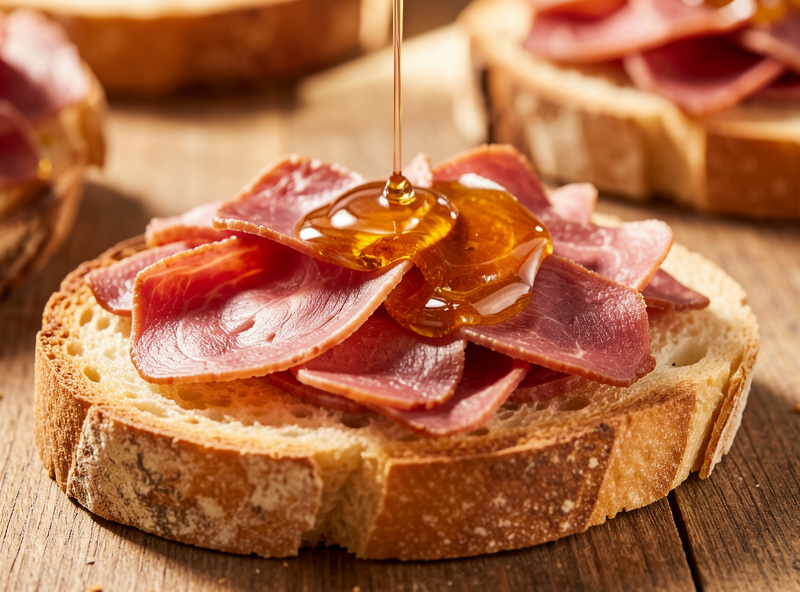
Once it reaches the soft-spread endpoint, sobrasada keeps for months refrigerated, wrapped in butcher paper. Classically it is spread thick on toasted bread, often with a drizzle of honey that plays beautifully against the smoky paprika. It also melts wonderfully into warm dishes — stirred into a sofrito, spread under cheese on toast, or folded through eggs. Because it is a stable cured product, any heat is for flavour, not safety. It sits naturally alongside Spain’s firmer cured pork like lomo embuchado on a board — soft paprika spread next to hard sliced loin.
Frequently Asked Questions
What makes sobrasada different from a normal salami?
Sobrasada is soft and spreadable rather than firm and sliceable, because it has a high fat content and is dried only to about 25 to 30% weight loss. It is also defined by sweet pimentón paprika, which gives it a deep orange-red colour and a smoky-sweet, mild flavour rather than heat.
How much paprika goes in sobrasada?
Around 4 to 6% of the meat weight in sweet pimentón, which for a 1 kg batch is 40 to 60 g. For the spicy coent version you add a smaller amount of hot pimentón on top. The paprika is the entire flavour, so quality matters more than for almost any other ingredient.
Does sobrasada need Cure #2?
Yes. Sobrasada is fermented and dried over several weeks, which is the long-cure situation Cure #2 is designed for. The nitrate reservoir converts to nitrite across the dry, protecting against botulism. Never make a long-dried fermented sausage without the correct curing salt.
What pH does sobrasada need to reach?
Below 5.3, and I aim for the high 4s to low 5s. The fermentation phase, held warm and humid with an active starter culture, drives that acid drop. The pH fall, with salt and cure, is the main hurdle that makes a soft, uncooked sausage safe to eat.
Is sobrasada easier to make than ‘nduja?
Slightly. Sobrasada’s spice is dried paprika powder, which adds no water to the mix, keeping the water activity lower and the ferment a little easier to manage. ‘Nduja uses a wet fresh-chili paste, so its safety margin is tighter and its texture more delicate.
Related Guides
- How to Make ‘Nduja at Home: Calabrian Spreadable Salami
- ‘Nduja vs Sobrasada: How the Two Spreadable Salamis Differ
- Is Spreadable Salami Safe?
- How Long to Dry ‘Nduja: Soft-Spread Endpoint by Weight
- Lomo Embuchado: Spanish Cured Pork Loin