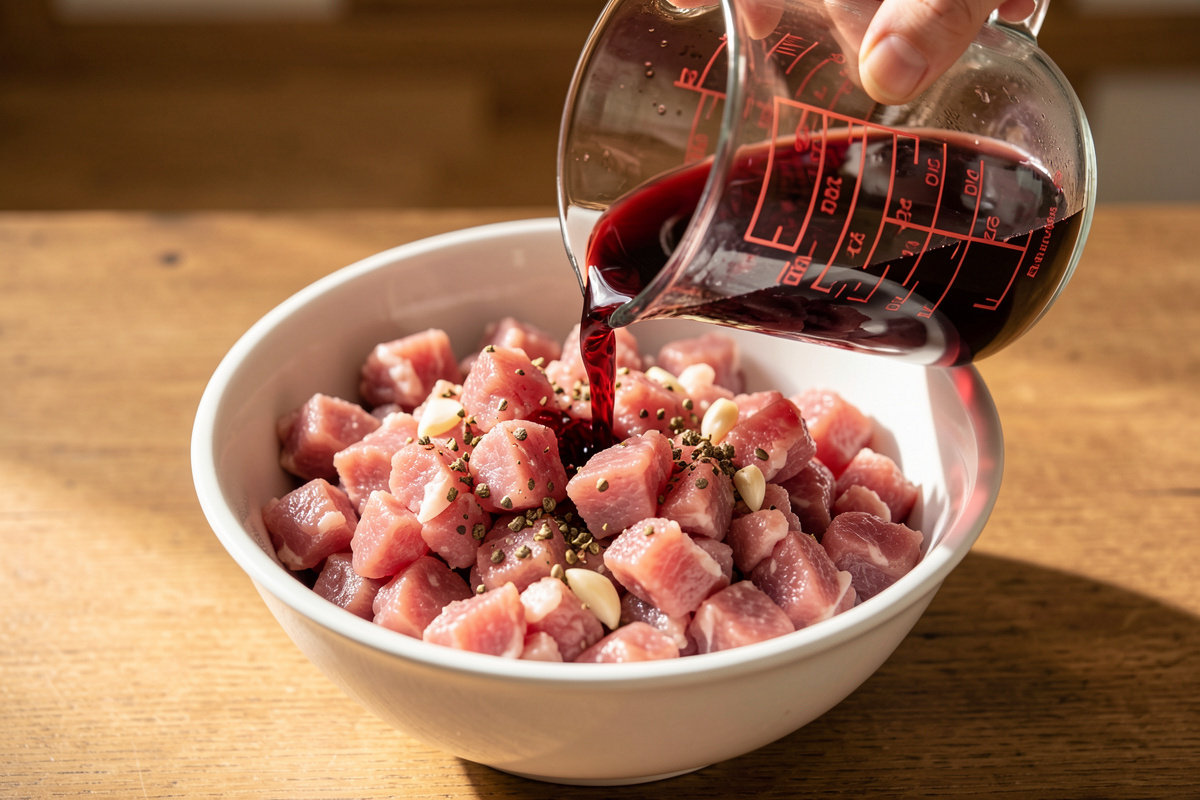

Use 30 to 50 ml of wine per kilogram of meat in salami — roughly 3 to 5% of the green weight. That is enough to add real flavor and a touch of supporting acidity without slowing your drying or diluting the mince. Chill it first, and treat it as a flavor and moisture ingredient, never as a preservative: the salt, cure #2 and the fermentation pH drop are what keep a salame safe, not the alcohol.
Wine is one of those touches that separates a salame you built on purpose from one you threw together. A dry red woven into a Tuscan-style salame, a crisp white behind fennel and garlic — these are real pairings with centuries behind them, and they add compounds no dry spice can. But wine is also easy to overdo, and too much brings problems you will not see until three months later. Here is exactly how much, which color, and why it does what it does.
How Much Wine Should You Put in Salami?
The working range is 30 to 50 ml per kilogram of green meat, and I default to 40 ml/kg for a red-wine salame. Below 30 ml/kg you can barely taste it; above 50 ml/kg you start adding enough free liquid to slow the early drying, dilute the meat flavor, and, at the extreme, risk a wetter mince that ferments unevenly. Measure it by volume against the meat weight the same way you weigh everything else in the charcuterie seasoning system — consistency is what lets you repeat a good batch.
Chill the wine hard before it goes in. Keeping the mince below about 2°C protects the fat from smearing, and warm wine works against that. My own trick is to freeze the measured wine into a slush — it goes in cold, and it helps keep the whole mix at temperature during mixing and stuffing. In the chambers I run, the batches where I let the temperature creep are the ones where the fat greases out and the texture goes pasty; cold wine is a small lever that helps hold the line.
One option for more flavor with less liquid: reduce the wine first. Simmer it down by half in a pan, cool it completely, and you get concentrated wine character at half the volume — useful in a bold red salame where you want the flavor without the moisture. It cooks off most of the alcohol, which does not matter here because the alcohol was never doing safety work anyway.
Red vs White Wine in Salami: Which Should You Use?
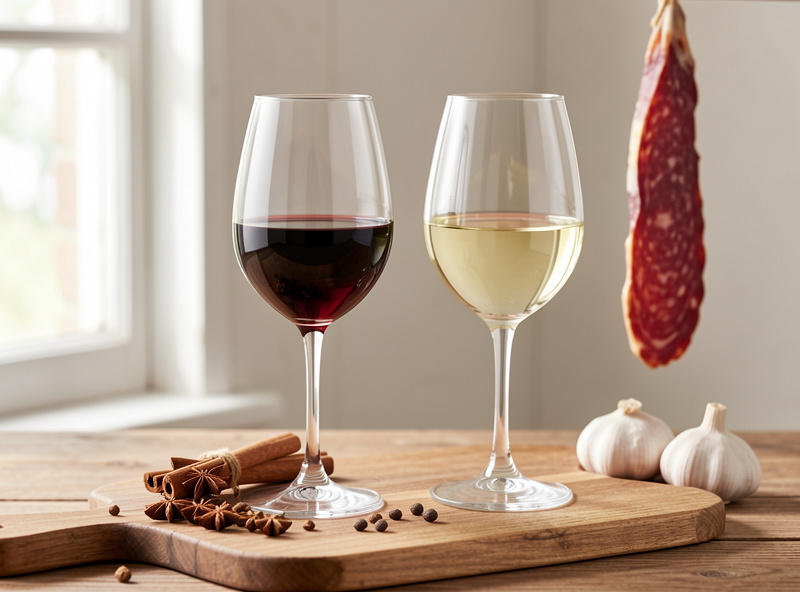
Red wine brings tannin, deeper color, and dark-fruit body that suits robust, pepper-and-garlic salami; white wine brings brighter acidity and a cleaner, lighter profile that flatters delicate, fennel-forward styles. Neither is “correct” — the choice follows the salame you are building. Here is how the two behave in a cure:
| Factor | Dry red wine | Dry white wine |
|---|---|---|
| Flavor | Dark fruit, tannin, body | Bright, crisp, lighter |
| Color effect | Deepens the red of the slice | Neutral; keeps color clean |
| Best styles | Tuscan salame, soppressata, pepe nero | Finocchiona, garlic-fennel, lighter salami |
| Acidity contribution | Moderate, supports the ferment | Slightly higher, brighter |
| Typical dose | 40–50 ml/kg | 30–40 ml/kg |
Use a dry wine you would actually drink, but not an expensive one — the nuance of a fine bottle is lost in a fermented sausage. Avoid sweet or off-dry wines; residual sugar in the wine is uncontrolled fuel for the ferment and muddies the pH management you are doing deliberately with dextrose. A clean, dry, honest table wine is exactly right. I keep a cheap dry red and a cheap dry white on the shelf purely for the chamber, and I match the color to the spice: red with the bold pepper batches, white with the fennel batches.
What Does Wine Actually Do in a Salame?
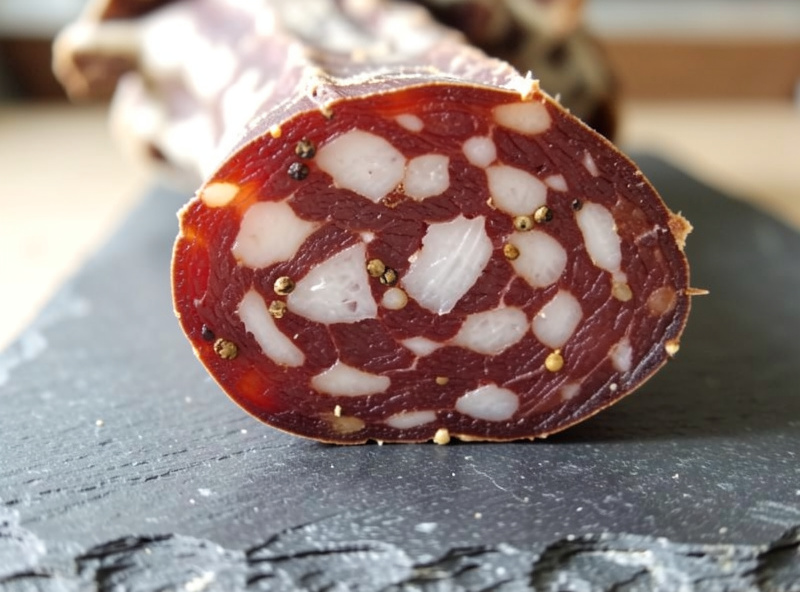
Wine does three jobs: it adds flavor compounds you cannot get from dry spice, it contributes a small amount of acidity that supports (but does not drive) the fermentation, and it adds a little moisture that helps distribute the salt, cure and spice evenly through the mince. That even distribution is quietly important — a splash of liquid carries the fine cure and dextrose into every corner of the grind better than dry mixing alone. The University of California’s viticulture and enology program at UC Davis is a solid reference for why wine’s acids and aromatic compounds behave the way they do.
What wine does not do is preserve the salame. Its acidity is mild and its alcohol content is low and largely irrelevant to safety at these doses. This matters because it is a genuine misconception: people assume the wine “helps keep it safe.” It does not. The lactic acid bacteria in your starter culture, fed by dextrose, drop the pH below 5.3 and do the microbial heavy lifting; cure #2 handles the nitrite/nitrate protection over the long dry; salt lowers the water activity. Wine is a passenger on a safe vehicle, not the engine. The USDA’s Food Safety and Inspection Service materials on fermented sausage make clear that acidification and drying — not incidental ingredients — are the controls that matter.
Does Wine Help or Hurt the Fermentation?
In moderation wine helps a little and hurts nothing; in excess it can work against you. The small acid contribution nudges the environment in the direction the ferment wants to go, and the moisture supports even culture distribution. But wine is not a substitute for a starter culture and dextrose, and pouring in more wine hoping it will “sour” the salame is a mistake — you will get a wet, slow-drying mince long before you get meaningful acidification. The controlled way to drop pH is the culture-and-sugar route I lay out in dextrose vs sugar in cured sausage.
The failure mode I hit early was too much wine in a rush of enthusiasm. I built a red-wine salame at close to 80 ml/kg because I loved the smell of the mince, and the batch dried slowly and unevenly, with a couple of pieces staying suspiciously soft in the core long after their siblings were done. Nothing dangerous — the cure and ferment held — but the texture was compromised and a couple had to be tossed for case-hardening as I overcorrected the humidity trying to push them along. Since then I stay in the 40 ml/kg lane and let the culture do the souring.
Can You Add Wine to Whole-Muscle Charcuterie Too?
Yes — wine works beautifully on whole muscle like coppa and lonzino, usually as part of a marinade or a wet equilibrium cure rather than mixed through a mince. Here the approach is different: I add wine to the vacuum-bag cure so the muscle sits in the seasoned liquid and slowly absorbs both the cure and the wine’s flavor over a week or two. A red-wine-and-juniper coppa or a white-wine-and-garlic lonzino picks up a lovely background note this way.
The dose logic shifts because the wine is a bath, not an ingredient in a grind, but the safety logic does not change one bit: the equilibrium cure still carries exactly 2.75% salt and 2.5 g/kg of cure #2 calculated on the meat weight, and the wine is flavor riding along. Weigh the meat, calculate the cure precisely, then add wine to the bag for character. If you want the arithmetic for turning any of these per-kilo figures into your actual batch, it is in how to scale a charcuterie spice recipe by meat weight.
Does the Alcohol Cook Off or Stay in the Salame?
In an uncooked, air-dried salame the alcohol is never heated, so it does not “cook off” the way it would in a braise — but the amount is tiny to begin with and a good deal of it evaporates slowly over the weeks of drying alongside the water. At 40 ml of, say, 13% wine per kilogram of meat, you are adding only about 5 ml of pure alcohol per kilo before any of it evaporates, and it is distributed through the whole piece. The finished salame carries a trace at most.
If you have reduced the wine on the stove first, most of the alcohol is already gone before it ever touches the meat, leaving concentrated flavor behind. Either way, alcohol is not a variable I manage for safety or worry about in the finished product — it is a rounding error next to the salt, cure and acidification that actually define the salame. The reason to chill or reduce wine is fat temperature and flavor concentration, not alcohol content.
What About Beer, Cider or Spirits in Charcuterie?
Beer, cider and small pours of spirits all work in charcuterie, following the same logic as wine: flavor and a little moisture, never preservation, always in modest amounts. A dark beer can give a malty depth to a coarse sausage; dry cider suits a pork-and-apple direction; a splash of grappa, brandy or fennel-friendly liqueur adds an aromatic top note to a salame. Keep total added liquid in the same 30 to 50 ml/kg neighborhood so you do not wet the mince.
Spirits are the one place to be lighter-handed, because their higher alcohol and concentrated flavor go a long way — I treat a spirit as a seasoning at maybe 10 to 15 ml/kg rather than a liquid at 40. And as with wine, choose dry over sweet: a sweet liqueur adds uncontrolled sugar that competes with your dextrose for the ferment’s attention. The safe framework never changes regardless of what is in the glass — salt, cure #2, culture, dextrose, drying — the alcohol is only ever there for pleasure.
How much wine do you put in salami?
Use 30 to 50 ml of wine per kilogram of meat, with about 40 ml per kilogram as a good default. Below 30 ml per kilo you barely taste it, and above 50 ml per kilo the extra liquid can slow drying and dilute the flavor. Chill the wine before adding it.
Should you use red or white wine in salami?
Use dry red for robust, pepper and garlic salami, where it adds body and deepens the color, and dry white for delicate fennel-forward styles, where its brighter acidity keeps things clean. Always choose a dry wine, never sweet, since residual sugar disrupts the controlled fermentation.
Does wine preserve salami?
No. Wine adds flavor, a little acidity and some moisture, but it does not preserve the salame. Safety comes from salt lowering water activity, cure #2, and the fermentation pH drop driven by a starter culture and dextrose. Wine is a flavor ingredient, not a preservative.
Can you use too much wine in salami?
Yes. Too much wine adds free liquid that slows the early drying, dilutes the meat flavor, and can leave the core soft and slow to dry. Stay near 40 ml per kilogram, and if you want more wine character with less liquid, reduce the wine by half first and cool it before adding.
Wine is a finishing flourish on a foundation that has to be right first. Get the salt, the cure #2 and the ferment nailed — the whole framework is in the charcuterie spice and binder guide — then reach for the bottle. From here I would read up on the sugar that actually drives the ferment and on how much pepper to run alongside your wine, because those three levers — wine, sugar, pepper — are what you will be adjusting batch to batch once the safety layer is second nature.
Related Articles
- The Charcuterie Spice, Seasoning & Binder Guide
- Dextrose vs Sugar in Cured Sausage: Feed the Ferment
- How Much Black Pepper in Salami: Whole vs Cracked
- How to Scale a Charcuterie Spice Recipe by Meat Weight