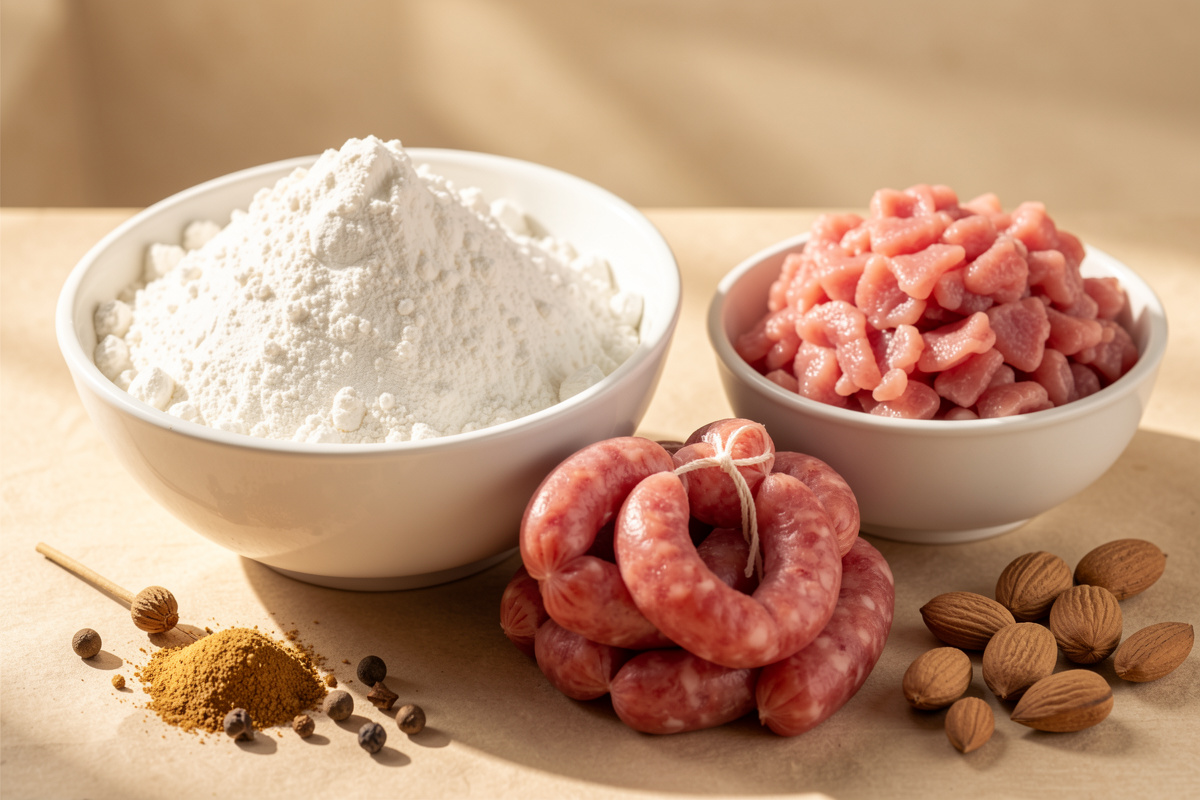

Add milk powder or soy to fresh and cooked sausage where you want it to hold water and fat and stay juicy — usually 1 to 2% of the meat weight. Leave it out of dry-cured and fermented salami, where the whole point is to lose water and a binder works against you. The rule in one line: binders belong to the cook-and-eat-soon world, not the hang-for-three-months world.
This is one of the most misunderstood corners of the craft, because a technique that is completely standard in a breakfast banger is actively wrong in a finocchiona. Beginners read a fresh-sausage recipe that calls for non-fat dry milk, then add it to a salami mix and wonder why the piece dries slowly and stays gummy. The binder is doing exactly its job — holding water — in exactly the piece where you did not want that. Let me sort out when a binder earns its place, at what percentage, and why most traditional dry salami skip it entirely.
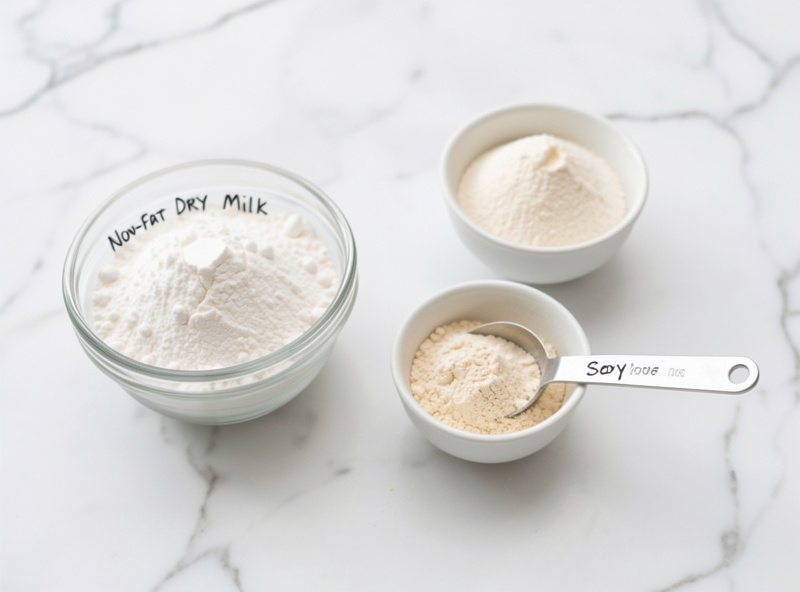
Should You Add Milk Powder or Soy to Sausage?
It depends entirely on the type of sausage. For fresh sausages (brats, breakfast links) and cooked/emulsified sausages (hot dogs, bologna), a binder like non-fat dry milk or soy protein helps hold moisture and fat so the links stay juicy and do not weep grease in the pan. For dry-cured and fermented salami, the answer is usually no — often “actively unhelpful” — because you are trying to drive water out, and a binder fights that.
So the first question is not “how much binder” but “what am I making?” A sausage you will cook and eat within days benefits from water and fat retention; a sausage you will hang for months to lose 35% of its weight does not. In the chambers I run, I never add milk powder or soy to a dry salame — the texture I want comes from the right fat-to-lean ratio, the fermentation, and the slow dry, not from a binder. This distinction is one of the cleaner lines in the whole charcuterie seasoning and binder system, and getting it wrong is a classic beginner stumble.
What Does a Binder Actually Do in Sausage?
A binder holds water and helps emulsify fat, giving a fresh or cooked sausage a juicier bite, a firmer set, and less shrinkage and grease loss during cooking. Non-fat dry milk, soy protein, and similar ingredients contain proteins that bind free water and stabilize the fat-and-water mixture so it does not break when heated. In a bratwurst, that is the difference between a plump, juicy link and a dry, greasy one that has wept its fat into the pan.
The key phrase is “holds water.” In a cooked sausage that is a virtue — retained water is retained juiciness. In a dry-cured salame it is the exact opposite of your goal, because your safety and texture both depend on water leaving. The honest doneness signal for a salame is weight loss — roughly 30 to 40% — and anything that clings to water slows that loss and can leave you with a piece that stays dangerously moist in the core. Same ingredient, opposite effect, depending on which sausage it is in. Meat scientists study exactly these binding and water-holding properties; the American Meat Science Association at meatscience.org is a solid technical reference.

Non-Fat Dry Milk vs Soy Protein vs Other Binders
The common binders each behave a little differently, and the right one depends on your sausage type and any dietary constraints. Here is how the usual options compare for the home sausage maker:
| Binder | What it does | Typical dose | Best for | Notes |
|---|---|---|---|---|
| Non-fat dry milk | Binds water, mild browning, subtle sweetness | 1–2% | Fresh & cooked sausage | Most common; not for dry-cure |
| Soy protein concentrate | Strong water/fat binding | 1–2% | Emulsified & cooked sausage | Dairy-free; neutral flavor |
| Non-fat dry milk (encapsulated) | Same, in cured products | 1–2% | Some cooked cured sausage | Choose non-fat to avoid rancidity |
| Rusk / breadcrumb | Absorbs water, softens bite | 5–10% | British-style bangers | Grain-based filler, not a protein binder |
| None | Relies on meat protein and fat balance | — | All dry-cured salami | The correct choice for fermented/dried |
Non-fat dry milk is the classic home binder because it is cheap, easy to find, and adds a faint sweetness and browning to fresh sausage. Use non-fat, not whole milk powder, because the milk fat can go rancid over time. Soy protein is the go-to when you want strong binding without dairy or added flavor, especially in emulsified sausage. And for any salami I am hanging in the chamber, the right “binder” is simply the correct fat ratio and a good fermentation — no additive at all.
How Much Binder Do You Use Per Kilo?
For fresh and cooked sausage, 1 to 2% of the meat weight — 10 to 20 grams per kilogram — is the usual range for milk powder or soy protein. Start at the lower end; too much binder gives a rubbery, bouncy, almost hot-dog texture in a sausage that is supposed to eat like coarse ground meat. I would rather under-bind a fresh sausage and keep a meaty bite than overdo it and get that springy, processed mouthfeel.
Weigh it as a percentage of the meat, the same way you weigh everything in a good sausage recipe, so the result is repeatable batch to batch. Rusk and breadcrumb, used in British-style bangers, go in much higher — 5 to 10% — because they are a grain filler doing a different, more absorbent job, not a concentrated protein binder. Whatever you use, hydrate the mix well and keep the meat cold so the binder can do its water-holding work during mixing. For turning any of these percentages into your exact batch, the method is in how to scale a charcuterie spice recipe by meat weight.
Why Do Most Dry-Cured Salami Skip Binders Entirely?
Dry-cured salami skip binders because the entire process is about controlled water loss, and a water-binding ingredient directly opposes that. Your salame gets safe and sliceable by fermenting to drop the pH, then drying slowly until it has shed 30 to 40% of its weight — lowering the water activity to a point where spoilage and pathogenic organisms cannot thrive. A binder that clings to moisture slows this drying, can trap water in the core, and works against the very mechanism keeping the salame safe.
Traditional salami recipes reflect centuries of getting this right without additives: meat, fat, salt, cure #2, culture, dextrose, spice. The texture comes from the fat-to-lean balance (usually around 20 to 30% fat) and the protein bind that develops as the meat is mixed and the pH drops — not from milk powder. When I want a firmer, more cohesive salame, I adjust the grind, the mix time, and the fat ratio, never a binder. If a dry salame comes out crumbly, the fix is in the fat ratio and mixing, and possibly a case-hardening problem from drying too fast — a binder would only mask it while creating a slower-drying, riskier piece.
Do Emulsified Sausages Like Hot Dogs Need Binders?
Yes — emulsified sausages such as hot dogs, bologna and mortadella rely heavily on binders and careful temperature control to hold their fine, stable meat-and-fat emulsion together through cooking. Here the binder is not optional garnish; it is structural. Non-fat dry milk and soy protein help keep the emulsion from breaking, which would leave you with a greasy, grainy fat pocket instead of a smooth, springy frankfurter. These sausages are also cooked to a safe internal temperature and eaten soon, so retained moisture is purely a quality win.
This is the far end of the spectrum from a dry salame: maximum binding, maximum water retention, cooked and eaten, versus zero binding, maximum water loss, air-dried for months. Understanding where your sausage sits on that spectrum tells you immediately whether to reach for the milk powder. A coarse fresh Italian sausage sits in the middle — a little binder is fine but not essential. A fermented soppressata sits hard at the no-binder end. The sugar-and-culture side of fermentation is what builds a salame’s texture instead, which is why the fermented styles never miss the binder.
How Do You Get a Firm Salame Without a Binder?
A firm, cohesive, cleanly sliceable salame comes from three things — the right fat ratio, a good protein bind developed during mixing, and a proper fermentation and dry — none of which is a binder. Aim for roughly 20 to 30% fat, keep everything cold so the fat stays in distinct particles rather than smearing, and mix the lean until it turns tacky and starts to bind to itself. That tackiness is the myosin protein extracting and knitting the mince together; it is the salame’s natural binder, and it does the job milk powder would do in a fresh sausage.
Then the fermentation and dry finish the texture. As the pH drops, the proteins set and the meat firms; as the piece loses 30 to 40% of its weight, it tightens into a sliceable density. The last coppa-run soppressata I pulled sliced clean and held together with no additive at all — just cold fat, a good mix, a healthy ferment, and patience. If your salame is crumbly, look at fat ratio and mix time first, and check for case-hardening from drying too fast, rather than reaching for a binder that would slow the dry and mask the real problem. I made exactly that mistake on an early finocchiona, adding 1.5% non-fat dry milk out of habit from a bratwurst recipe — the piece stalled well short of its weight-loss target, stayed soft and pale in the core weeks past when its siblings from the same batch were ready, and I ended up cutting my losses and tossing it rather than risk hanging it further. That single stalled piece is why binder and dry-cure now never share a mixing bowl in my chamber.
Do Binders Affect the Cure, Color or Safety?
Binders do not replace or interfere with the curing salt, and they are not a safety ingredient — they are a texture and moisture tool, and the cure does its own separate job. In a fresh or cooked sausage you still use cure #1 if the recipe calls for it, and the milk powder or soy simply rides alongside. Non-fat dry milk does contribute a little browning and a faint sweetness on cooking, which some people like in a breakfast link, but it is a flavor and color side effect, not a cure function.
The one place binders touch safety is indirectly, and only in the wrong application: putting a water-binding agent into a dry-cured salame keeps moisture and water activity higher for longer, which is the opposite of what makes a dried sausage safe. That is not the binder being unsafe; it is the binder being used in the wrong product. Used correctly — in a cooked sausage eaten soon — a binder has no safety downside. Used incorrectly — in a piece you hang for months — it undermines the drying that keeps the salame safe. Right tool, right sausage: that is the whole message.
Should you add milk powder to salami?
No. Dry-cured and fermented salami should not contain milk powder or other binders, because the process depends on losing water and a binder holds water in. Milk powder belongs in fresh and cooked sausage, where retained moisture keeps the links juicy, not in salami you hang to dry.
What does non-fat dry milk do in sausage?
Non-fat dry milk binds free water and helps emulsify fat, so fresh and cooked sausages stay juicier and shrink less, with a firmer set and a little browning. Use non-fat rather than whole milk powder, since the milk fat in whole powder can turn rancid over time.
How much binder do you put in sausage?
Use about 1 to 2 percent of the meat weight, or 10 to 20 grams per kilogram, of milk powder or soy protein in fresh and cooked sausage. Start at the low end, since too much binder gives a rubbery, hot-dog texture. Grain fillers like rusk go higher, around 5 to 10 percent.
Can you use soy instead of milk powder in sausage?
Yes. Soy protein concentrate is a strong, neutral-flavored binder that works well in emulsified and cooked sausage and is a good dairy-free alternative to non-fat dry milk. Use it at a similar 1 to 2 percent of the meat weight. Like milk powder, it is not used in dry-cured salami.
Why do dry salami not use binders?
Because dry-cured salami must lose 30 to 40 percent of its weight as water to become safe and sliceable, and a water-binding ingredient slows that drying and can trap moisture in the core. Salami get their texture from fat ratio, mixing and fermentation instead of from an added binder.
Further Reading
- The Charcuterie Spice, Seasoning & Binder Guide
- Dextrose vs Sugar in Cured Sausage: Feeding the Ferment
- How Much Black Pepper in Salami: Whole vs Cracked vs Ground
- How to Scale a Charcuterie Spice Recipe by Meat Weight