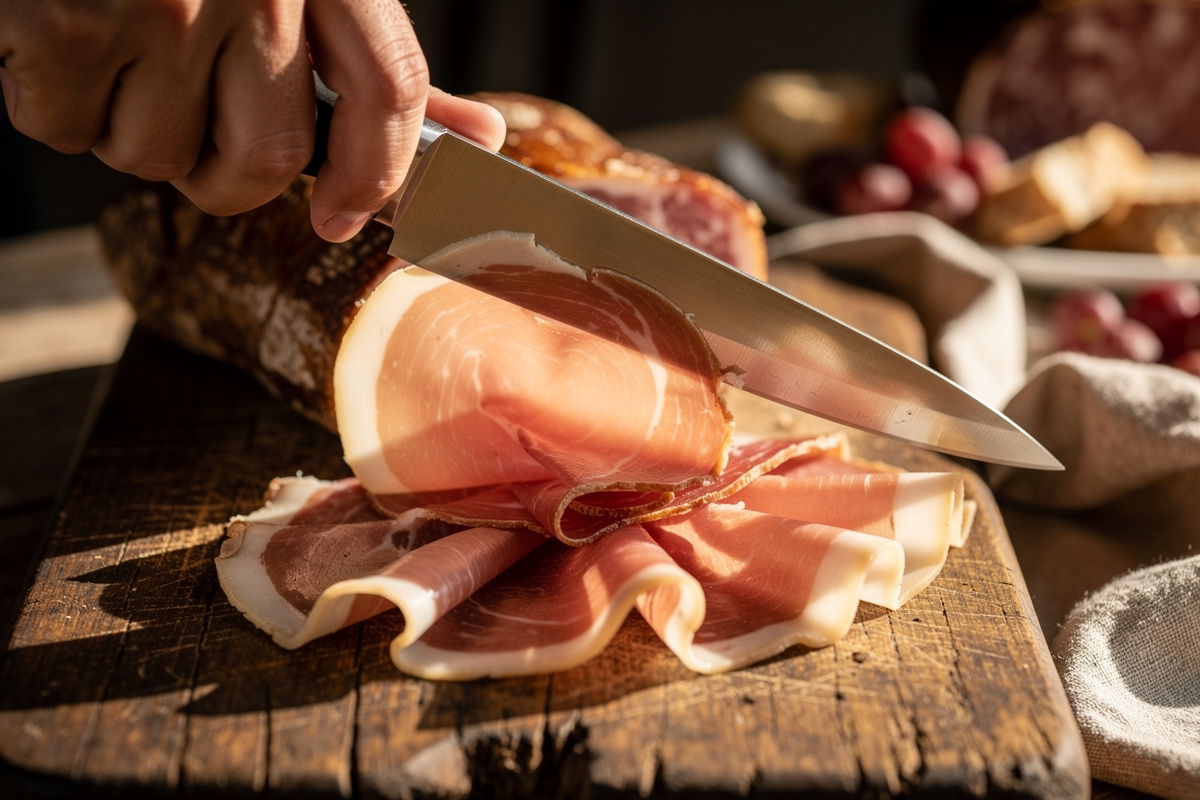

A coppa you waited three months for can be let down in thirty seconds by a bad knife and a warm board. Slicing is the last skill in whole-muscle charcuterie, and it matters more than people expect: cured meat eaten thick is dense and chewy, while the same piece sliced translucent melts on the tongue. You do not need a deli slicer to get there. Across the pieces I pull from the chambers I run, almost everything I serve is sliced by hand, and the difference between a clumsy slice and a paper-thin one is entirely technique, temperature, and a sharp blade, not an expensive machine.
This guide is the hand-slicing method I use, the variables that actually control thinness, and the few tools worth owning. It applies across the whole-muscle family, a lean bresaola, a marbled coppa, a fatty lomo, each wants slightly different handling, which I will cover. The whole muscle charcuterie hub covers making the pieces; this is how you finish them at the board.
Cold Is Everything
The single biggest lever on slice thinness is temperature, and it is the one most people ignore. Cured meat slices thin when it is cold and firm; it tears and smears when it is warm and soft. I chill every piece hard before slicing, into the coldest part of the fridge for an hour or two, or briefly into the freezer until the surface is just firming, almost but not quite frozen. At that firmness the muscle holds its shape under the blade and the fat is solid rather than greasy, so the knife shears cleanly instead of dragging.
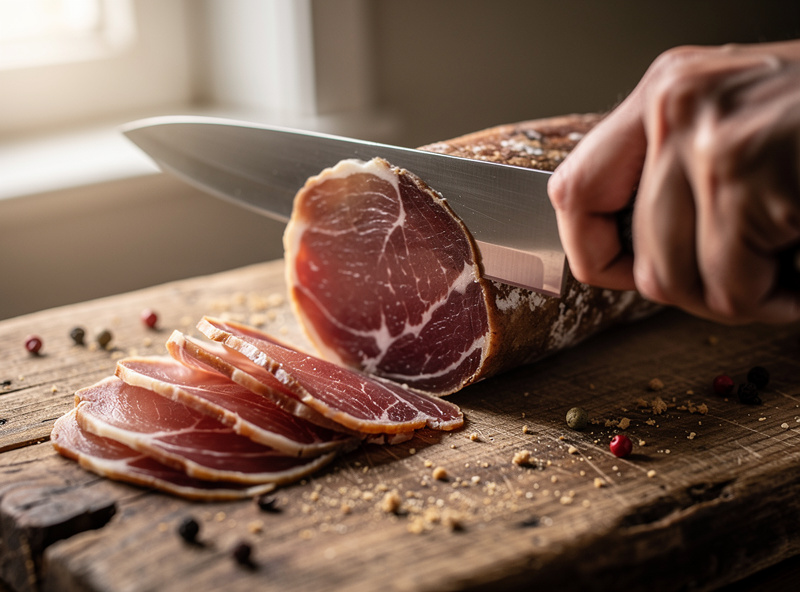
This matters most on fatty cuts. A warm coppa or goose-breast prosciutto smears its fat across the blade and the slice, fogging the cut and gumming the knife. The same piece cold cuts into clean, distinct slices where the lean and the fat both hold their edge. If you take one thing from this guide, it is this: slice cold, let the slices warm to eating temperature on the plate, never the other way round.
The Knife: Long, Thin, and Sharp
The right knife is a long, thin, flexible blade, the kind sold as a slicing or carving knife, ideally with a Granton (scalloped) edge whose hollows release the slice so it does not stick to the blade. Length matters because thin slicing is a single smooth draw, not a sawing motion: you want the cut made in one long stroke from heel to tip, and a short knife forces you to saw, which tears. A 25 to 30cm slicing knife covers any home charcuterie piece.
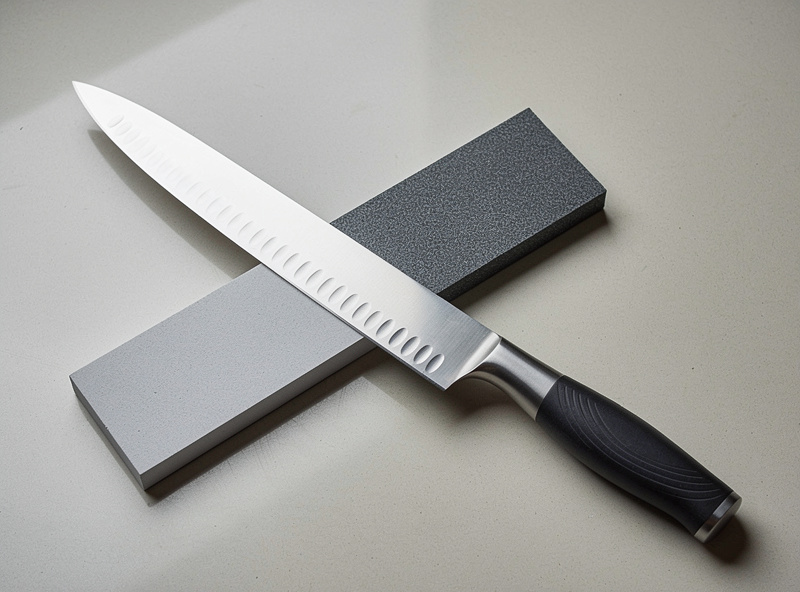
Sharpness is non-negotiable and it is where most home slices fail. A dull knife crushes and tears rather than shearing, and no amount of technique rescues a blunt blade. I keep my slicer hair-shaving sharp, touching it up on a whetstone before a slicing session, because the edge that glides through cold cured meat is sharper than the edge most people accept for kitchen work. A sharp knife also slices more safely, because you are pushing far less and the blade goes where you aim it.
| Variable | For thin slices | Why |
|---|---|---|
| Temperature | Cold, almost freezing | Muscle and fat hold shape, no smear |
| Knife length | 25–30cm | One smooth draw, no sawing |
| Edge | Razor-sharp, Granton ideal | Shears cleanly, releases slice |
| Stroke | Single long draw | Tearing comes from sawing |
| Angle | Slight bias, across grain | Wider, more tender slice |
The Technique: Angle, Grain, and Stroke
Slice across the grain, not along it, so each slice cuts the muscle fibres short and eats tender rather than stringy. For a long muscle like a lomo or bresaola I slice at a slight bias, angling the knife across the cylinder rather than straight down, which both widens the slice and shortens the fibres further. The stroke is a single long draw: lay the heel of the blade on, draw it back through the meat to the tip in one motion, and let the weight of the knife do the work rather than pressing down.
Anchor the piece with a fork or your guiding hand kept well clear of the blade path, and take your time, thin slicing is unhurried. The first slice or two often comes off uneven as you find the firmness and angle; that is normal, and they are the cook’s slices. Once you settle into the rhythm, the slices come off translucent enough to read through. If they are tearing, the meat is too warm or the knife is too dull, in that order, and both are fixable before you ruin more of the piece.
Adjusting by Cut
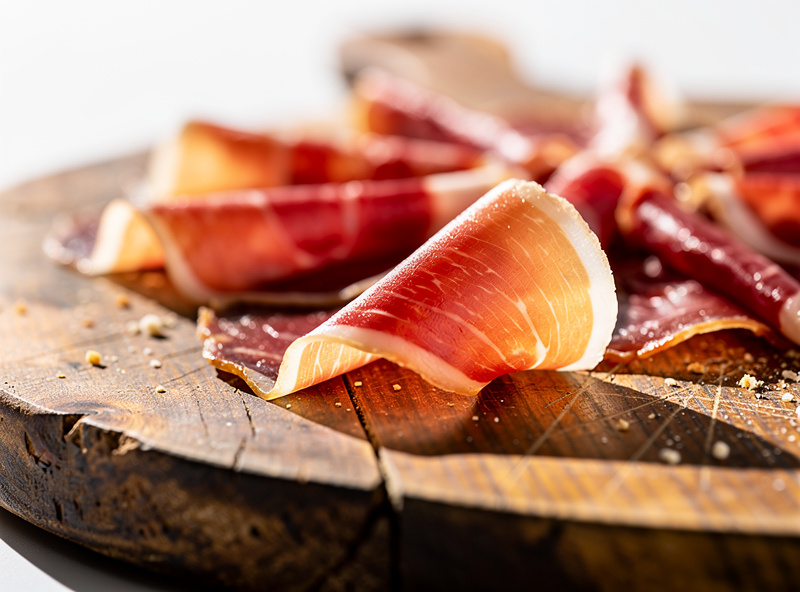
Lean cuts and fatty cuts want slightly different handling. A lean bresaola or lomo slices easily once cold and sharp, and the main risk is slices so thin they fall apart, so I back off a hair on thinness for the leanest pieces. A marbled coppa wants to be properly cold so the fat seams cut clean rather than smearing, and it rewards the bias angle to show the mosaic. The fattiest pieces, a guanciale you are slicing raw-thin or a goose prosciutto, demand the coldest temperature of all, because their fat smears the fastest.
A finished piece also has to be properly dried to slice well in the first place, which loops back to doneness: a piece pulled wet at the centre will never slice cleanly because the soft core drags and tears. If your slices are clean at the edge but mushy toward the middle of the muscle, the piece was under-dried, not badly sliced, and the fix is on the doneness guide. Good slicing starts with a properly finished piece.
As an Amazon Associate I earn from qualifying purchases.
You can slice charcuterie well with two tools and no machine. The first is a long, thin slicing knife, ideally with a Granton edge; I reach for a Granton-edge slicing knife for every piece. The second is something to keep it genuinely sharp, which for me is a two-sided whetstone touched up before a slicing session. If you would rather not hand-slice the very fattiest pieces, a manual adjustable manual slicer is the one machine worth considering, but it is genuinely optional.
Storing What You Slice
Slice only what you will eat, and keep the rest of the piece whole. A whole muscle keeps far better than cut slices, because every cut face is a new surface exposed to air, which dries and eventually goes rancid faster on the fat. I slice to order, wrap the remaining piece in paper or vacuum-seal it, and return it to the fridge. Pre-sliced charcuterie loses its edge within a day or two; a whole piece sliced fresh each time eats like the day it finished for weeks. If I am building a board for guests I slice everything at the last moment and lay it out just before serving, rather than pre-plating and letting the slices sit and oxidise. The few minutes it takes to slice to order is the difference between charcuterie that looks and tastes freshly cut and slices that have gone tacky and dull at the edges. A whole muscle is also far easier to store and travel with than a tray of loose slices, so I keep pieces intact until the moment they are needed.
Frequently Asked Questions
How do you slice charcuterie thin without a slicer?
Chill the piece hard until firm, almost freezing, use a long thin razor-sharp slicing knife, and cut across the grain in a single long draw rather than sawing. Slicing at a slight bias widens the slice and shortens the fibres. Cold meat plus a sharp blade plus one smooth stroke gives translucent slices with no machine needed.
Why does my charcuterie smear or tear when I slice it?
Almost always because the meat is too warm or the knife is too dull, in that order. Warm fat smears across the blade and slice; a dull edge crushes and tears instead of shearing. Chill the piece until firm and sharpen the knife to hair-shaving sharpness. If the centre is mushy, the piece was under-dried rather than badly sliced.
What knife is best for slicing cured meat?
A long, thin, flexible slicing or carving knife of about 25 to 30 centimetres, ideally with a Granton scalloped edge that releases the slice so it does not stick. Length lets you make the cut in one smooth draw instead of sawing, which is what tears slices. Whatever the knife, it must be kept razor-sharp.
Should I slice charcuterie cold or at room temperature?
Slice it cold and firm, then let the slices come up to eating temperature on the plate. Cold meat holds its shape and the fat is solid, so the knife shears cleanly. Warm meat smears and tears. This matters most on fatty cuts like coppa and goose prosciutto, whose fat smears fastest when warm.
Should I slice the whole piece at once?
No. Slice only what you will eat and keep the rest of the muscle whole. Every cut face is a new surface exposed to air that dries and can go rancid faster, especially on the fat. A whole piece sliced fresh each time stays good for weeks, while pre-sliced charcuterie loses its edge within a day or two.
More From the Whole Muscle Chamber
- Whole Muscle Charcuterie: The Complete Guide
- When Is Whole-Muscle Charcuterie Done?
- Bresaola Recipe at Home: Air-Dried Beef
- Homemade Coppa (Capocollo): Cured Pork Collar
- Lomo Embuchado: Spanish Cured Pork Loin